Portuguese
 Spanish


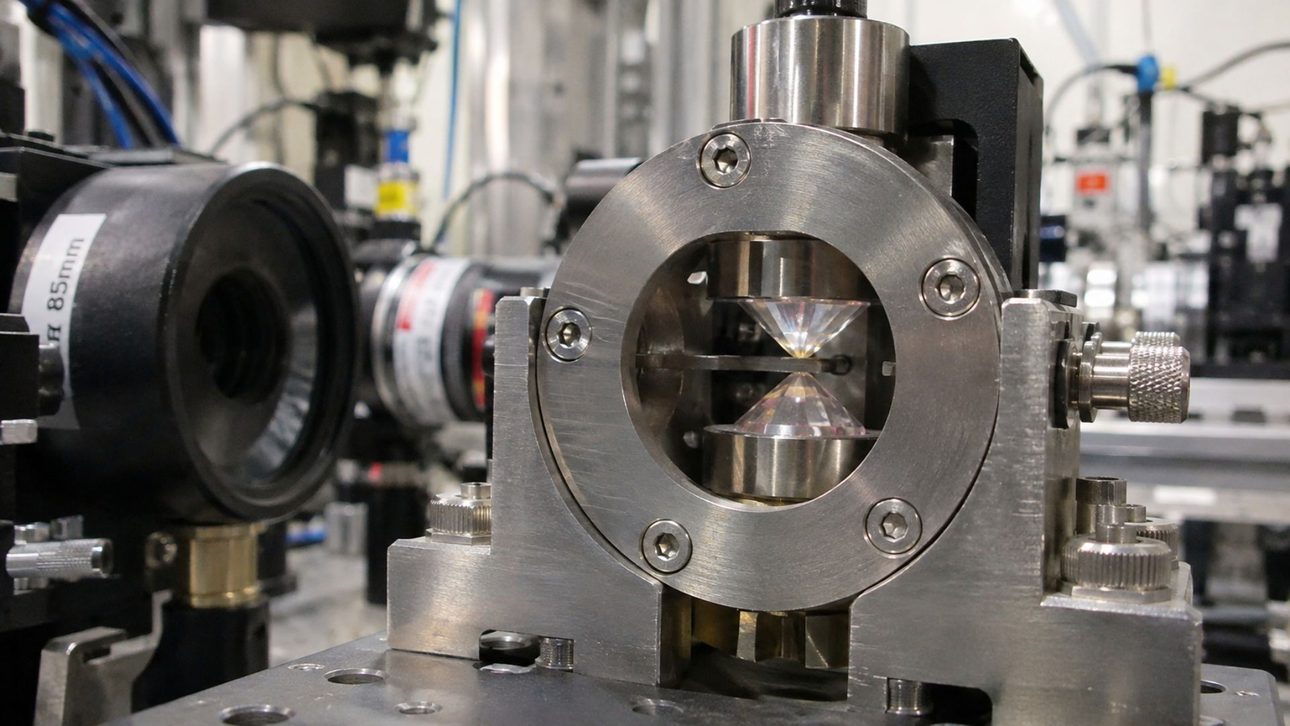

A doctoral study at Unicamp investigated hydrogen-rich compounds associated with superconductivity using a compression chamber just 0.05 millimeters in diameter. The concentrated synchrotron radiation made it possible to examine the materials without removing them from the extreme conditions required for the experiment.
A study conducted at Sirius, a particle accelerator in Campinas, in the state of São Paulo, reached 127 gigapascals of pressure while investigating materials with potential superconducting properties.
The experiment was part of the doctoral research of Lucas Henrique Francisco of the University of Campinas (Unicamp) and, at the time, set the highest pressure ever recorded at the facilities of the Brazilian Center for Research in Energy and Materials (CNPEM).
-
A 6-by-2-centimeter sensor guides irrigation and helped a coffee farm cut water use from 70,000 to 50,000 liters per hectare

-
SpaceX receives partial radio authorization for project of up to 1 million data-processing satellites, with regulatory deadline for the first to operate by November 2033
-
To measure graphene properties and analyze gases used in industry, Brazil’s Inmetro opens seven-laboratory complex in Xerém with 1,240 square meters of indoor space
-
Smartphone doubles as a two-way radio with a push-to-talk button, set for Brasília testing
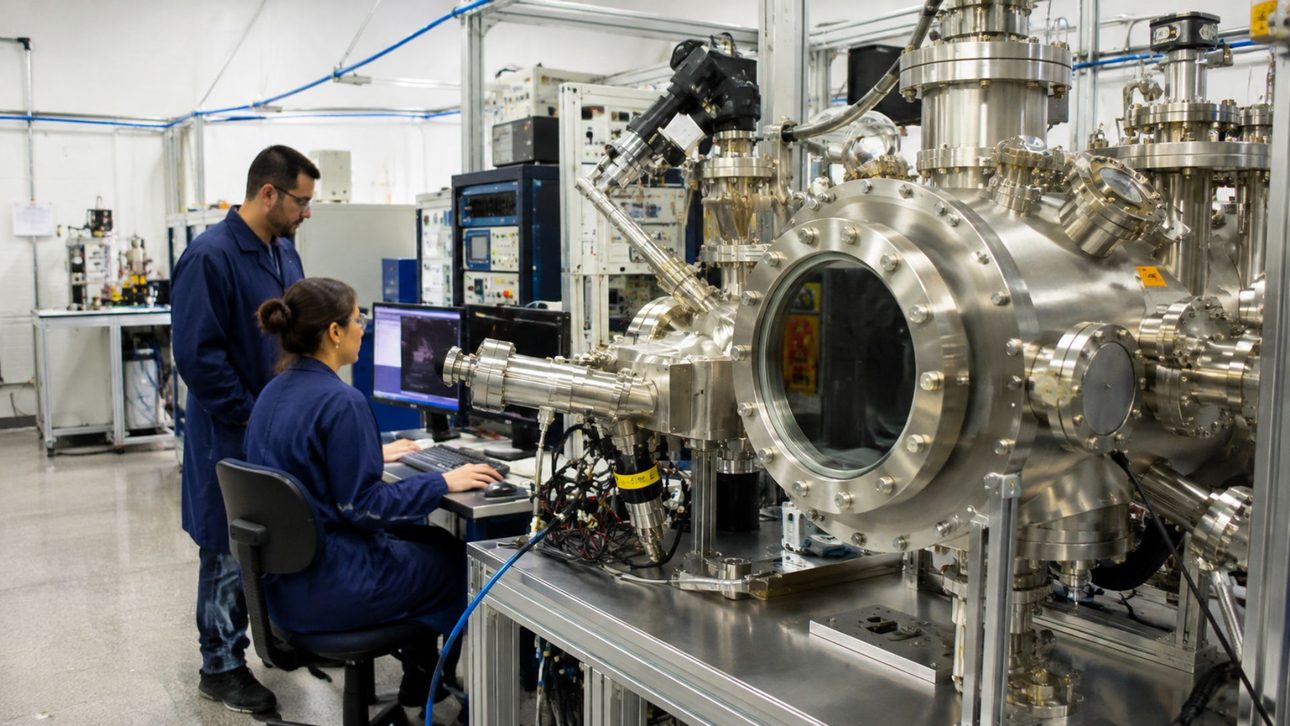

Published in July 2023 by the Brazilian Synchrotron Light Laboratory (LNLS), the work was the first doctoral study completed at Sirius and investigated substances with high hydrogen content, known as superhydrides.
To study these compounds, researchers had to reproduce pressures more than one million times greater than atmospheric pressure at sea level.
How two diamonds generate extreme pressure
The equipment used in the study is known as a diamond anvil cell, or DAC.
Its operation relies on a fundamental principle of physics: the smaller the surface over which a given force is applied, the greater the pressure exerted in that area.
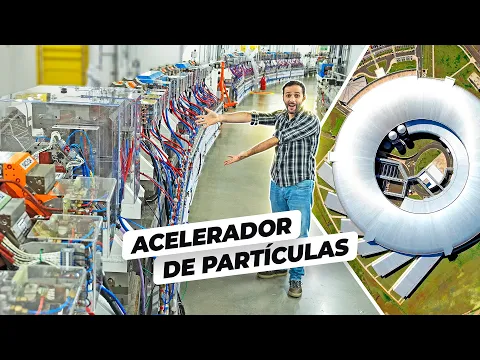

Inside the device, two diamonds positioned opposite each other concentrate force on a microscopic area, making it possible to reach high pressures without applying a proportionally greater force.
The diamonds used in measurements at Sirius had tips approximately 100 micrometers in diameter, while the opening that held the material was about 50 micrometers across, smaller than the thickness of many human hairs.
The compression chamber consists of a hole in a small, usually metallic disk placed between the diamond tips to keep the sample confined during the experiment.
Researchers also place a substance inside this opening to transmit the pressure generated by the equipment to the material.
Diamond is used because of both its mechanical strength and its transparency to different ranges of electromagnetic radiation. This property allows researchers to examine the sample without stopping the compression.
Sirius X-rays reveal how atoms are arranged
On Sirius’s EMA beamline, researchers can track the behavior of compressed materials using X-ray diffraction, a technique that uses radiation scattering patterns to reveal information about the crystalline arrangement of substances.
When a crystalline material is compressed, the distances between its atoms can decrease and, depending on the experimental conditions, the crystal structure itself can undergo transformations.
These changes alter the patterns recorded by detectors, making it possible to identify different structural configurations and track the material’s behavior as the pressure applied to it varies.
The size of the X-ray beam is particularly important in this procedure, since the region being examined has an opening just a few dozen micrometers wide.
The doctoral research began at the UVX facility, Brazil’s former synchrotron light source, whose beamline dedicated to experiments under extreme conditions produced beams with a minimum width of about 100 micrometers.
With Sirius, concentrating the radiation into smaller areas made it possible to use cells fitted with diamonds with narrower tips, allowing higher pressures to be reached without compromising the measurements.
Why scientists study hydrogen-rich materials
Superhydrides are part of a family of compounds being studied in the search for physical conditions under which superconductivity can occur at higher temperatures.
The phenomenon is characterized by the absence of electrical resistance and the expulsion of the magnetic field from inside the material, a property known as the Meissner effect.
In a conventional conductor, some electrical energy is dissipated as heat as current flows, while a superconducting material can conduct electricity without this resistance-related loss.
Certain hydrogen-rich compounds require extreme pressures to remain stable, which means their properties must be investigated inside the equipment used to compress them.
In the work conducted in Campinas, the team studied cerium superhydrides and used ammonia borane, a substance that served two purposes in the experiment: transmitting pressure and supplying the hydrogen needed to form the compounds.
The pressure achieved during the research does not, by itself, demonstrate superconductivity at room temperature or under conditions suitable for commercial applications.
Sirius’s EMA beamline combines pressure, temperature and magnetic fields
Designed for research under extreme physical conditions, the EMA beamline has instruments for studying materials under different combinations of pressure, temperature and magnetic field.
Available equipment includes diamond anvil cells with an operating range of 0.1 to 400 gigapascals, as well as systems that can heat or cool samples during experiments.
The facility also supports X-ray absorption spectroscopy, a technique used to investigate electronic properties and obtain information about the chemical environment of atoms in the materials being analyzed.
Researchers can use their own pressure cells at the experimental station by contacting the EMA beamline team to make the necessary adjustments to the sample mounts.