Portuguese
 Spanish


Mermaid Subsea Services has developed a strategy that allows oil companies to share vessels, equipment and specialized resources during offshore facility decommissioning campaigns.
Offshore decommissioning could become more cost-effective under a new operating model introduced by Mermaid Subsea Services, a company based in Aberdeen, Scotland. Called i-DECOM, the initiative aims to cut costs by up to 45% and reduce the time required to carry out operations in the North Sea by 30%.
The proposal, presented on November 23, 2026, involves coordinating decommissioning projects for facilities owned by different operators and sharing marine resources and specialized teams.
Offshore Magazine reported that the percentages came from a simulation involving four clients, comparing the costs of shared campaigns with those of projects carried out individually.
-
Petrobras installs 4,425 seismic stations at a depth of 2,100 meters to monitor 220 km² of the pre-salt and boost oil recovery at Mero

-
Australian oil company plans to invest up to US$950 million to recover 60 million barrels of oil in the Santos Basin, reusing an FPSO and drilling four subsea wells, with production set to begin in 2030
-
Vår Energi strikes $4.4 billion deal to take over ConocoPhillips’ historic North Sea fields, targeting production above 500,000 barrels a day
-
China orders 59 offshore vessels for $1.64 billion, betting on natural gas-powered ships and preparing a new fleet for oil exploration by 2030
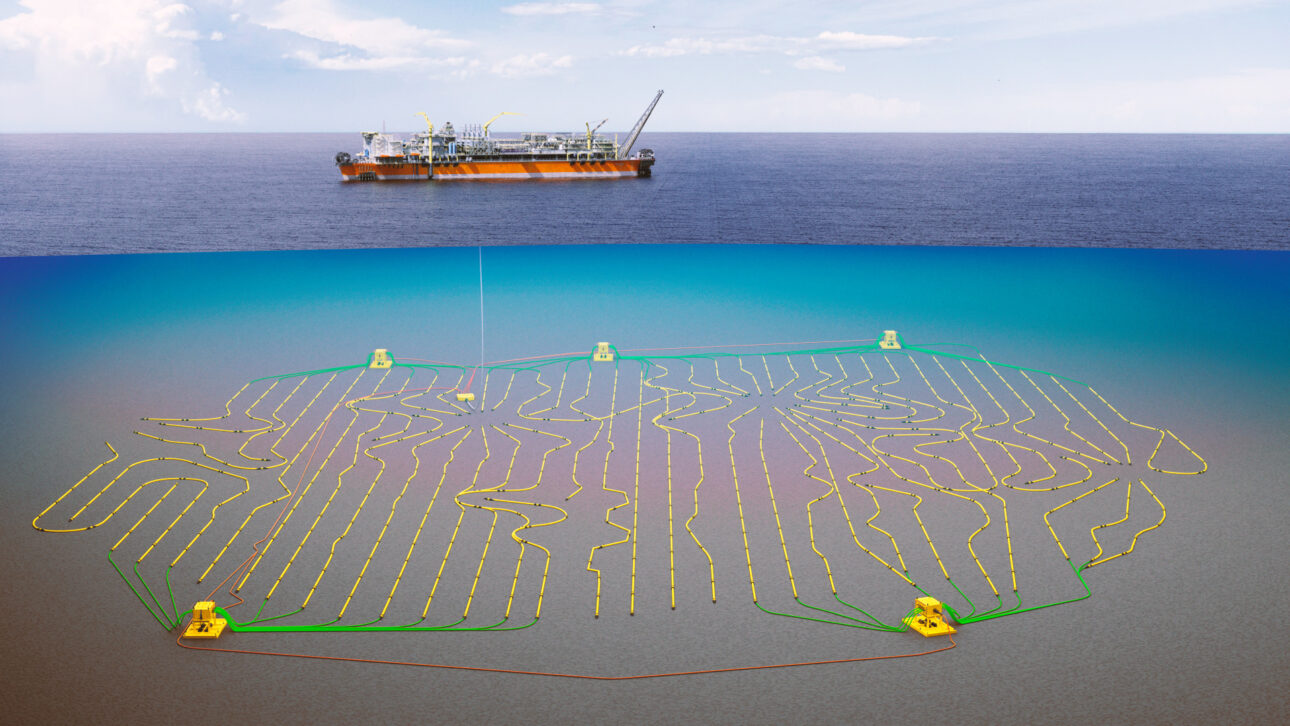


Vessel sharing could lower offshore costs
Traditionally, oil and gas operators organize their own decommissioning campaigns, hiring vessels, subsea equipment and engineering services.
The i-DECOM model proposes integrating these activities through joint planning, reducing repeat marine mobilizations and making better use of available resources.
The strategy also changes the sequence in which operations are planned. First, the technical requirements of each project are assessed. Vessels and equipment best suited to carry out the work are then selected.
The economic advantage lies in the ability to distribute operating costs among different oil companies, particularly for activities requiring specialized vessels with high mobilization costs.
Aging platforms expand the decommissioning market
The North Sea is home to oil facilities that began operating decades ago. As reservoirs reach the end of their productive lives, demand for decommissioning services is growing.
Decommissioning can involve a range of activities:
- Permanent plugging of oil and gas wells;
- Removal of subsea equipment;
- Decommissioning of pipelines;
- Dismantling of offshore structures;
- Transport of materials to onshore facilities;
- Disposal and recycling of industrial components.
These operations require engineering planning, financial resources, and compliance with environmental and safety requirements.
The concentration of mature facilities in one region creates favorable conditions for campaigns shared by different companies.
Mermaid draws on subsea operations experience
Development of i-DECOM is being led by Mermaid’s team in Aberdeen, which specializes in offshore asset end-of-life operations.
The initiative builds on the company’s experience in campaigns to recover subsea equipment and decommission wells.
On Nov. 10, Offshore Energy reported the completion of a decommissioning campaign involving five wells on the UK Continental Shelf.
Commercial deployment of the new model could show how much of the savings projected by Mermaid can actually be achieved in operations involving different oil companies.
The results will depend on the technical compatibility of the projects, vessel availability and operators’ ability to coordinate schedules.