





 Portuguese
  English
  Spanish
  4 min of reading
  0 comments


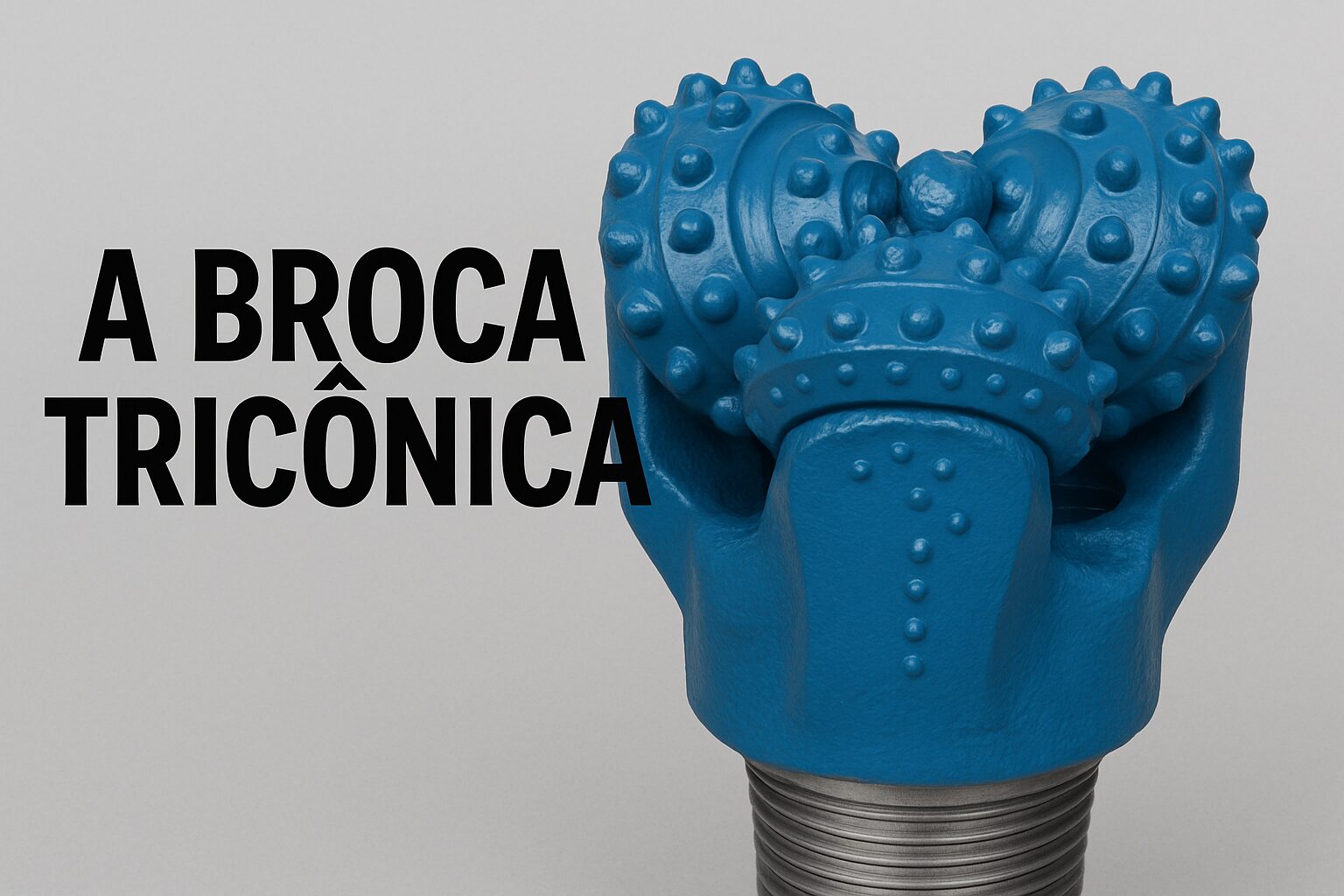
Essential Tool in Well Drilling, the Tricone Bit Combines Resistance, Precision, and Technology to Conquer the Hardest Rocks on Earth.
It may seem like a simple piece of metal, but it is one of the most sophisticated and resistant elements in drilling engineering. The tricone bit, also called a roller cone bit or tricone bit, is responsible for breaking through hard rocks at the bottom of the ground, facilitating the exploration of oil, gas, water, and minerals.
Its importance goes far beyond the technical aspect — it defines the efficiency and cost of operations that can last for months and consume millions of reais.
What Is a Tricone Bit
The tricone bit is a type of tool used at the end of the drill string.
-
Mysterious object on Mars divides NASA and Harvard after Curiosity image reignites suspicions about what was really found on the planet.

-
Giant structures 14 meters beneath Egypt are revealed by satellites and expose a millennia-old secret buried in Buto.
-
Children have been making clay pieces for 15,000 years in Southwest Asia, and fingerprints preserved on 142 ornaments helped archaeologists prove this.
-
New semi-autonomous legged robot technology challenges the limitations of space exploration by operating almost without human intervention on the Moon.

It has three rotating cones that move independently as the bit is rotated by the rig.
These cones are covered by metal teeth or inserts made of ultrahigh-resistance materials, such as tungsten carbide.
Unlike fixed bits, tricone bits use the movement of the cones to crush, grind, and break the rock material.
This combined action allows for continuous advancement even in extremely hard geological formations.
How It Works in Practice
During drilling, the weight of the drill string presses the bit against the ground. At the same time, a rotary system causes it to spin.
Each of the three cones rotates upon contact with the bottom of the well, creating a crushing and chipping effect on the rock material.
At the same time, drilling fluids are pumped through the bit.
These fluids help cool the components, remove debris from the hole, and maintain stable pressure to prevent collapses of the well walls.
Types of Teeth and Materials
Tricone bits can be classified mainly into two groups, according to the type of teeth on the cones:
- Steel Tooth: more suitable for softer formations, where abrasiveness is low. The teeth are large and sharp, providing quick penetration.
- Tungsten Carbide Inserts (TCI): ideal for hard and abrasive rocks. The teeth are small and round, and they last much longer. They are widely used in oil and gas drilling.
The type of tooth used directly influences the drilling speed, wear of the bit, and cost-effectiveness of the operation.
Applications of the Tricone Bit
Although closely associated with the oil industry, this tool is extremely versatile. Here are where it is most commonly used:
- Oil and Gas Well Drilling: both on offshore platforms and in land operations.
- Mining Drilling: opens paths for surveys and geological analyses.
- Deep Water Wells: essential for accessing aquifers in rural or isolated areas.
- Engineering Works and Foundations: used in geotechnical investigations for major civil works.
Each application requires a specific configuration of the bit, with adjustments to the teeth, bearings, and even the fluid flow.
Bearings and Sealing Systems
An important technical aspect of tricone bits is the cone bearing system. These bearings allow each cone to rotate smoothly, even under extreme pressure.
There are two main types:
- Open Bearings: cheaper but with a shorter lifespan. Used in simpler or shorter duration drilling operations.
- Sealed Bearings: have rubber or metal sealing that protects the interior from mud and debris. They are more expensive but ensure superior durability, even in harsh environments.
Additionally, some modern models feature pressurized lubrication to ensure the bearing operates without overheating.
Advantages of the Tricone Bit
The main reason for the popularity of the tricone bit lies in its ability to handle a wide variety of soils and rocks. Among the main benefits are:
- Versatility: can be used in soft soils and extremely hard rocks.
- Cost-Effectiveness: has a competitive price and good performance in various operations.
- Established Technology: it is a tool that has been used for decades with continuous improvements.
- Easy Replacement: it is possible to find replacement parts or new models easily in the global market.
Limitations
Despite the advantages, the tricone bit has limitations.
It tends to wear out more quickly in very abrasive formations, especially if the drilling fluids are not well controlled.
Additionally, under certain specific conditions, PDC bits may offer superior performance — especially in homogeneous and less fractured formations.
Another challenge is transporting debris to the surface. If the hole is not cleaned properly, the accumulation of fragments can lock the rotation or cause accelerated wear.
Technological Evolution
In recent decades, tricone bit technology has evolved significantly. Today, many of them come with built-in temperature and pressure sensors, allowing real-time monitoring during drilling.
Furthermore, modeling software assists engineers in selecting the ideal model for each terrain, saving time and avoiding failures.
The integration with digital drilling systems has made the operation more precise and efficient.
Companies such as Baker Hughes, Schlumberger, and Sandvik are among the leading global manufacturers of tricone bits, with comprehensive catalogs for different types of applications.
The tricone bit was developed by engineers at Hughes Tool Company in 1933, nine years after the death of Howard Hughes Sr., who passed away in 1924. Therefore, he could not have patented this invention.
The model created by Hughes revolutionized the oil industry and became the basis for the modern design we know today.







-

Uma pessoa reagiu a isso.