





 Portuguese
  English
  Spanish
  5 min of reading
  0 comments


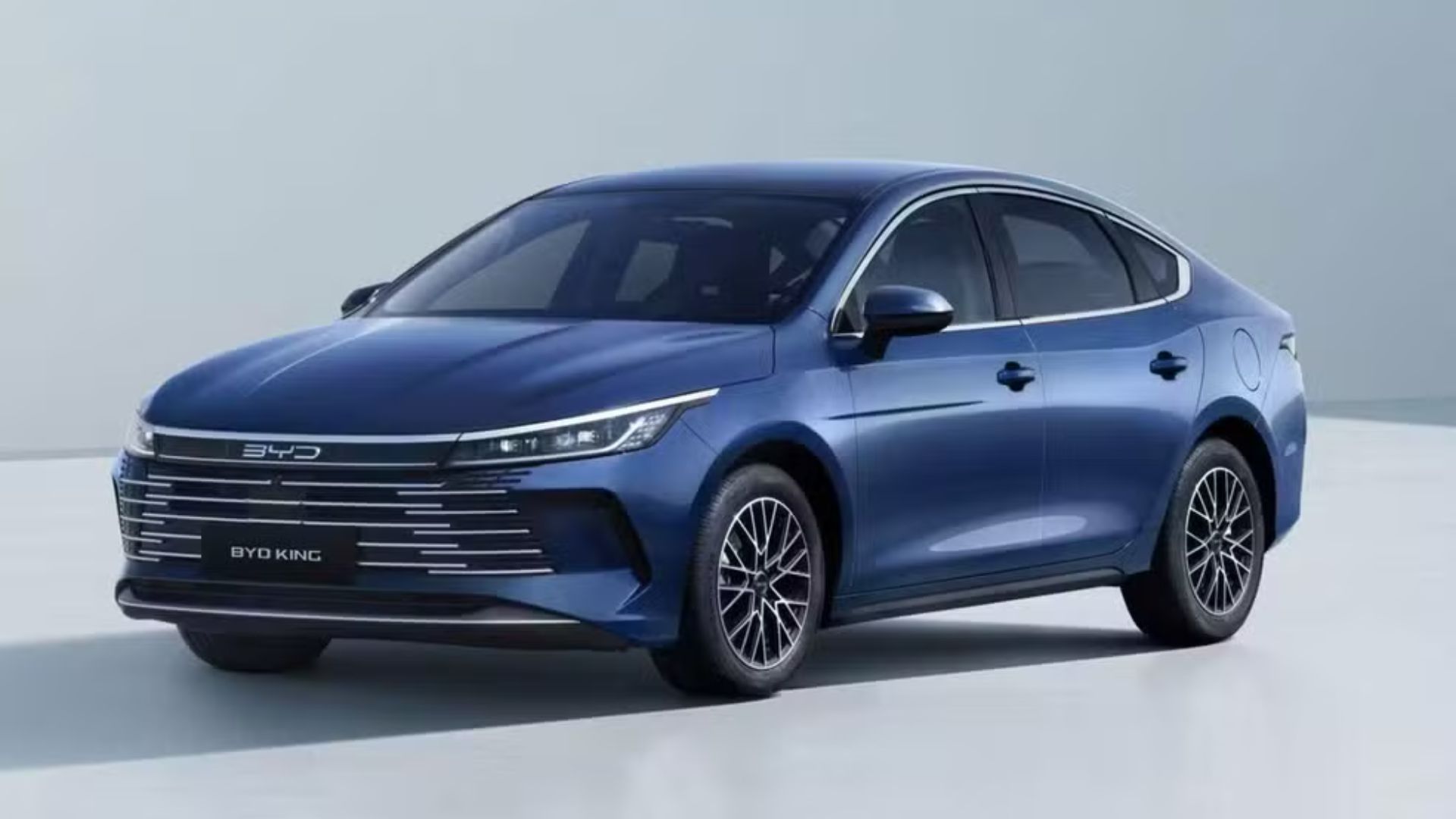
BYD’s Plug-in Hybrid Sedan Gains ADAS 2 Package, Updates Combustion Engine to Meet Proconve L8, Subtle Visual Adjustments, and Price Repositioning in a New Attempt to Compete with the Toyota Corolla in Brazil.
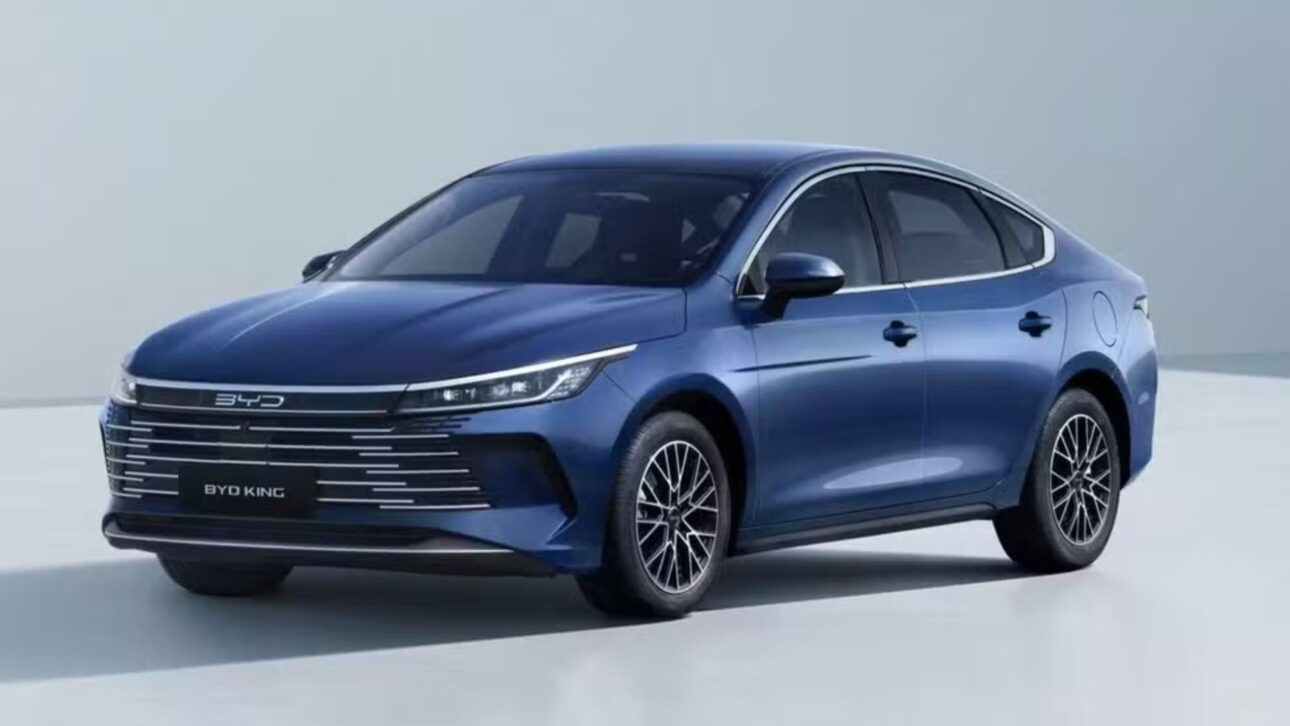
The BYD King arrives in the 2026 lineup in Brazil focusing on active safety, a slight design adjustment, and mechanical changes to meet Proconve L8 standards.
The plug-in hybrid sedan maintains 235 hp of combined power in the GS version and 209 hp in the GL, now offers ADAS 2 package, and has a price repositioning for the top-of-the-line model, now at R$ 175,990, while the GL remains at R$ 169,990.
However, the electric range of the GS, measured by the Brazilian Inmetro standard, is now 62 km in the latest technical sheet.
-
Less than a Tera TSI, up to 710 km of range and charging in 9 minutes: the new BYD Song Ultra expands the Chinese brand’s bet on increasingly faster, more technological, and competitively priced electric SUVs.

-
With a 1.0 engine producing 75 hp and costing less than R$ 70,000, Fiat’s car returns to the podium as the cheapest in the country; a temporary promotion for the 2026 Like version reduces the price of the Fiat Mobi.
-
With a mild hybrid system of 48 V, 176 hp and a price of R$ 175,990 in the Sahara version, the new Jeep Renegade changes mostly on the inside, improves slightly in fuel consumption, and remains almost the same car.
-
With a 293.5 cm³ engine and a range of up to 400 km with a 14.1-liter tank, the Honda CB 300F Twister 2026 has up to 24.7 hp, an initial price of R$ 25,150, and already exceeds R$ 29,000 in the Fipe Table.

Changes in the Mechanical Set
To meet the emissions requirements of phase L8 of Proconve, the calibration of the combustion engine has been revised.
The 1.5 naturally aspirated gasoline engine, which previously delivered 110 hp, now produces 98 hp and has 12.5 kgfm of torque.
The electric components remain the same, preserving the 209 hp (GL) and 235 hp (GS) of combined power stated by the manufacturer.
Thus, the declared performance does not change: 0 to 100 km/h in 7.9 s (GL) and 7.3 s (GS).
Even though the official technical document from the brand provides NEDC values for the electric range, and in previous versions of the sheet, the power of the 1.5 combustion engine was listed as 110 hp, the update to 98 hp with the L8 is pointed out by specialized publications and press releases for the 2026 lineup.
In summary, the hybrid powertrain has not been redesigned.
The environmental adjustment only reduced the power of the thermal engine, preserving the total delivery of the system.
Electric Range and Batteries
In practice, the GS version continues with the 18.3 kWh Blade battery, while the GL retains the 8.3 kWh package.
According to the technical sheet for the Brazilian market, the electric range of the GS by the Inmetro methodology (PBEV) is 62 km, while the GL had 32 km in the previous material.
The brand did not detail any changes for 2026 in this entry-level version.
It is worth noting that the 120 km (GS) and 55 km (GL) published in the sheets are NEDC cycle figures, which is a different standard from that used by Inmetro.
In addition to capacity, the charging features of each configuration also change.
The King GS offers 6.6 kW AC charging and a V2L function, while the GL has a 3.3 kW AC charger and does not offer V2L.
These differences help explain the range and everyday use of each version, especially for those who aim to maximize electric mode use in urban cycles.
Subtle Visuals and Familiar Cabin
On the outside, the update has been modest.
The sedan gained a new shade of blue in the palette and 17-inch wheels with a new design, but retains the proportions and familiar visual signature.
Inside, it continues with the 8.8” digital instrument panel, the 12.8” rotating multimedia screen with mirroring, the elevated center console, and soft-touch materials.
The GS version retains dual-zone climate control and a sound system with eight speakers.
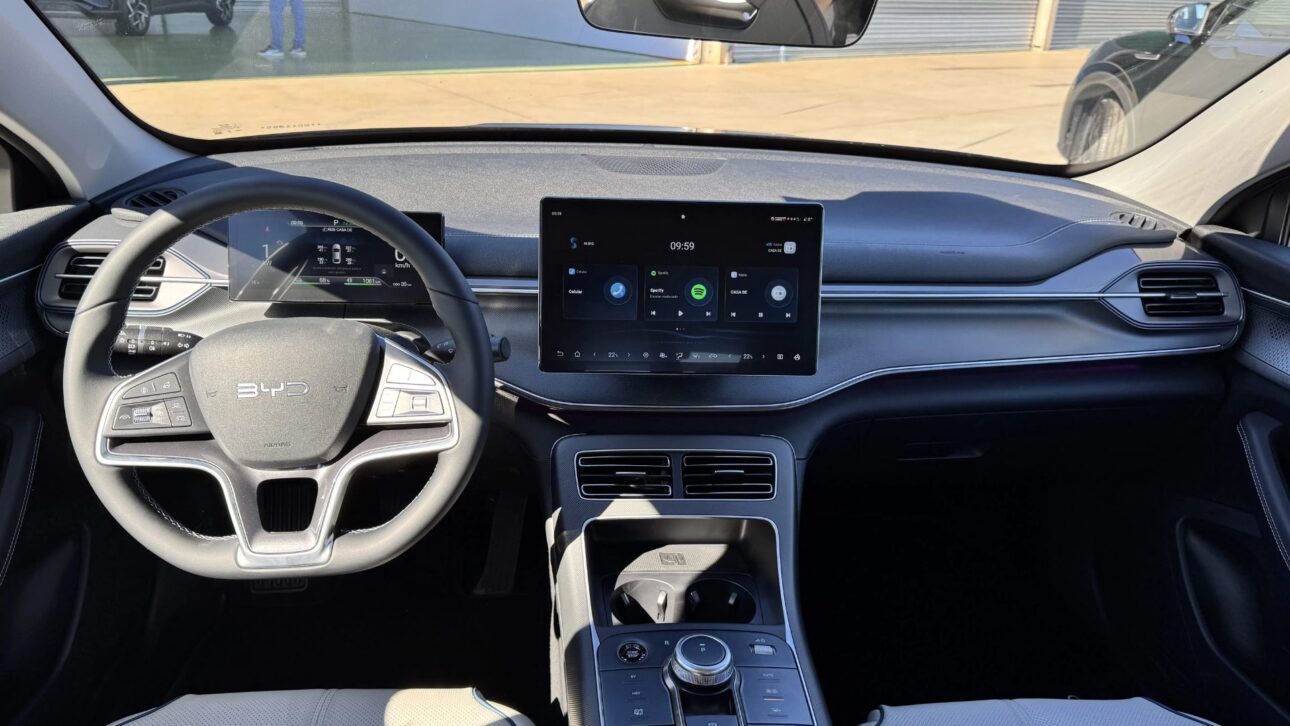
The GL has one zone and six speakers.
Safety: ADAS 2 Package
The main advancement of the 2026 lineup is the inclusion of the ADAS 2 package, which was previously absent in the King sold in the country.
Among the features, the sedan now includes adaptive cruise control (ACC), autonomous emergency braking with collision alert, blind spot alert, and lane keeping/centering assist.
In some communications, the intelligent speed limiter also appears, a feature that interacts with sign reading.
The arrival of this set brings BYD closer to direct rivals and meets a recurring demand in the segment.
Prices and Positioning Against the Corolla
There has been a repositioning of prices across the range.
The GS has become R$ 15,910 cheaper, now priced at R$ 175,990, while the GL remains at R$ 169,990.
Meanwhile, it is still possible to find 2025 units with specific discounts at dealerships to clear stocks.
At the same time, BYD emphasizes that the King maintains a combined range of up to 1,200 km when a full tank and a charged battery are combined, a figure in line with the brand’s official material.
In the duel with the Toyota Corolla hybrid flex, the BYD King aims to stand out with its plug-in setup, allowing daily electric operation and, when necessary, resorting to the combustion engine without range anxiety.
The arrival of ADAS 2 also helps narrow the gap in driving assistance, while the new price of the top-of-the-line version attempts to enhance competitiveness without compromising comfort and connectivity features.

Standard Equipment
The equipment list remains extensive in both versions.
From the base GL, the model offers a 360° camera, 8.8” digital panel, 12.8” rotating screen, keyless entry, wireless phone charging, tire pressure monitoring, and front and rear parking sensors.
The GS adds dual-zone air conditioning, a superior sound system, and 6.6 kW AC charging with V2L, in addition to the new complete ADAS 2 assistance package.
The differences in equipment, combined with the batteries of different capacities, help define target audiences.
Those who prioritize price and mixed use may opt for the GL.
Meanwhile, those looking to explore more of the electric mode and extra conveniences tend to aim for the GS.
Range from Specs and Real World
There is a point of caution for consumers.
The BYD technical sheets state NEDC ranges of 55 km (GL) and 120 km (GS), a cycle that tends to be more favorable and is not used on the Inmetro labels.
In the Brazilian practical scenario, the reference is PBEV, in which the GS has 62 km of electric range in the 2026 lineup.
Previously, local communications indicated 80 km.
This change in methodology and calibration explains the discrepancy between promotional figures and label values.
With ADAS 2, revised price, and the known efficiency of the DM-i powertrain, the BYD King 2026 seeks to bridge the gap with the hybrid Corolla in a segment of customers sensitive to technology and operating costs. What aspect weighs more for you in choosing an electrified sedan?






Seja o primeiro a reagir!