





 Portuguese
  English
  Spanish
  5 min of reading
  0 comments


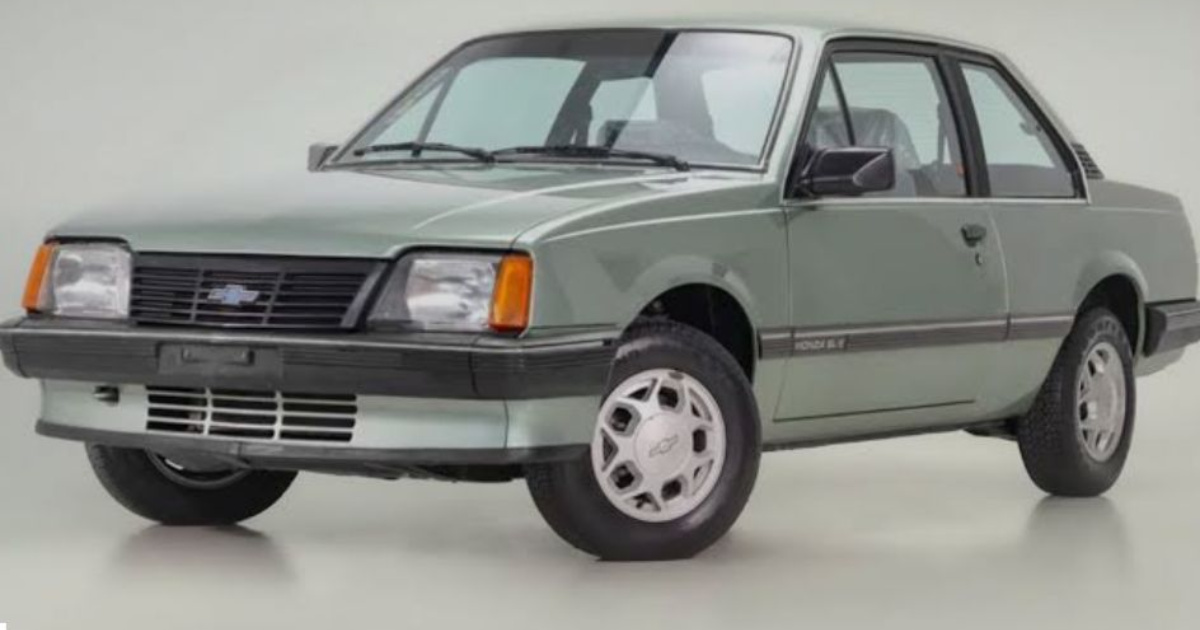
The Chevrolet Monza became one of the most iconic cars of the 80s in Brazil. With luxury, power, and comfort, this mid-size sedan conquered the streets and the heart of a generation, maintaining its relevance even after almost three decades off the line.
The Chevrolet Monza was a milestone among mid-size sedans in Brazil and led the market for three consecutive years between 1984 and 1986.
Manufactured by General Motors do Brasil, the model had over 850,000 units produced by the time it made its definitive farewell from the assembly lines in 1996.
Derived from the German Opel Ascona, the Monza played a crucial role in consolidating the mid-size sedan category in the country.
-
These are the drivers who may stop paying tolls on highways in a project that promises to reduce costs for those who live from transportation in Brazil.

-
(Video): Italian pilot lands plane on moving train at 120 km/h and achieves unprecedented feat in aviation, even with a narrow runway and without direct visual contact.

-
It seems to have come out of a science fiction movie: A Brazilian city where it rains almost every day, recording over 4,000 mm per year, driven by climatic factors — a direct result of its strategic location in the Amazon.

-
The water crisis that could change everything this year has already begun; it’s not just about the climate, it affects technology, raises product prices, and can halt entire companies without warning.


Its trajectory, marked by innovations, special editions, and strategic changes over the years, still sparks interest among enthusiasts of classic cars and the national automotive industry.
With a strong emotional appeal, the Monza remains a symbol of the 80s and 90s.
Next, understand how it became an icon on Brazilian streets.
The Beginning of a Legend: The Arrival in 1982
The Chevrolet Monza landed in Brazil in April 1982, initially only in the two-door hatchback version.
This configuration was rare for mid-size cars at the time, usually aimed at families who preferred the traditional sedan.
Even so, the Monza drew attention for its balanced combination of comfort, drivability, and modern design.
Its 1.6-liter engine with 73 hp, combined with a four-speed manual transmission, pleased from the start.
Shortly after, General Motors launched an unusual limited edition: the Monza Clodovil, signed by designer Clodovil Hernandes, offered in exclusive trim by a São Paulo dealership.
Still in 1983, GM introduced the long-awaited sedan body style, which soon surpassed the hatch in sales.
The sedan version with a 1.8-liter engine and a five-speed manual transmission marked the beginning of the model’s commercial leadership.
Along with this, the Monza Classic debuted as the top-of-the-line version, featuring differentiators such as air conditioning, power steering, power windows, and superior trim.
These items were considered luxurious for a domestic car in the early 1980s.
The Peak of Popularity: From 1984 to 1986
In 1984, the Monza became the best-selling car in Brazil, surpassing traditional models like the Volkswagen Beetle and the Fiat 147.
This title was maintained for three consecutive years, consolidating its reputation as a reliable, modern, and comfortable sedan.
While rivals like the Ford Del Rey and the VW Santana sought to stand out with their own technologies, the Monza excelled through its overall balance and refined finish.
The mechanical robustness also contributed to its success: it was an easy-to-maintain car with good performance on the road.
First Restyling: More Power and New Equipment
In 1988, the Monza underwent its first major visual update.
The front was redesigned with new rectangular headlights, a renewed grille, and subtle changes at the rear.
Inside, there were ergonomic improvements, new fabrics, and more modern panel options.
The lineup also incorporated single-point electronic fuel injection in some versions, making the model more efficient and aligned with global trends in consumption and emissions reduction.
In 1989, the introduction of the 2.0-liter engine further elevated the Monza’s status in the market.
The sporty SR and Classic SE versions added visual appeal with exclusive wheels, sport seats, and distinctive trims.
Even with the arrival of new competitors, the Monza remained among the best-selling cars in the country.
The 90s: Heavy Competition and Signs of Aging
The 1990s brought new challenges for the Monza, now facing strong rivals like the Fiat Tempra, Ford Versailles, and Japanese Honda Civic.
In response, General Motors promoted another restyling in 1991, with subtle visual changes and improvements to the equipment list.
The multi-point electronic fuel injection was extended to more versions, increasing efficiency and performance.
The interior finish was refined, but the original design, with nearly a decade on the road, began to show signs of wear.
The lack of a new generation — as happened with competitors — became a critical point.
In 1994, GM launched the Chevrolet Vectra, which took over as the brand’s mid-size sedan and began to overshadow the Monza at dealerships.
From then on, sales of the veteran model began to decline drastically.
End of Production: Farewell to a National Classic
In 1996, the production of the Monza was officially ended after 14 uninterrupted years on the assembly lines in São Caetano do Sul (SP).
In total, over 850,000 units of the model were produced in Brazil.
Despite the end of production, the legacy of the Monza remains alive in the collective imagination.
Today, it is increasingly valued by collectors and enthusiasts, especially in the Classic versions with a 2.0-liter engine and luxury trim.
With the growth of classic car events and groups dedicated to its preservation on social media, the Monza has found a new space among national classics.
The Monza Today: Collectible Status
Although it is no longer on the streets like in the 80s and 90s, the Monza continues to be a nostalgic reference for those who lived through that era.
In 2025, the model is recognized as one of the most emblematic automobiles in the recent history of the national industry.
Enthusiast groups organize meetings, exhibitions, and even complete restorations to preserve its memory.
Its historical and emotional value grows each year.
On buying and selling platforms, well-preserved units can exceed R$ 35,000, especially if they are special versions or have low mileage.
An Eternal Icon of Brazilian Streets
The Chevrolet Monza marked an era when the automobile was a symbol of status, comfort, and innovation.
With its commercial success, mechanical innovation, and refined finish, the model established itself as one of the most important cars ever produced in Brazil.
Even almost 30 years after its farewell, the Monza continues to inspire new generations of car enthusiasts.





-

-

2 pessoas reagiram a isso.