






 Portuguese
  Spanish
  3 min of reading
  0 comments


First Patients Are Learning to Control Robotic Arms Just with Thought, Thanks to the New Beinao No.1 Brain Chip. Chinese Project Already Surpasses Competitors in Advancement Pace, with Clinical Trials and Unprecedented Bidirectional Interface.
China has just taken a bold step in neural technology: three people with paralysis are already testing, in practice, a brain chip capable of turning brain signals into commands for external devices. The implant, dubbed Beinao No.1, was developed by scientists from the Chinese Institute of Brain Research (CIBR) and the startup NeuCyber NeuroTech — and could put the country at the forefront of the global race for neural implants.
Unlike what was imagined a few years ago, the future of chips that “read” thoughts and transform brain waves into actions has already begun. And it speaks Mandarin.
What the Chinese Brain Chip Can Already Do
In initial tests, patients used the Beinao No.1 to control robotic arms and perform movements such as picking up objects with precision — using only thought. Videos released by state media show, for the first time, real scenes of these interactions happening in real time.
-
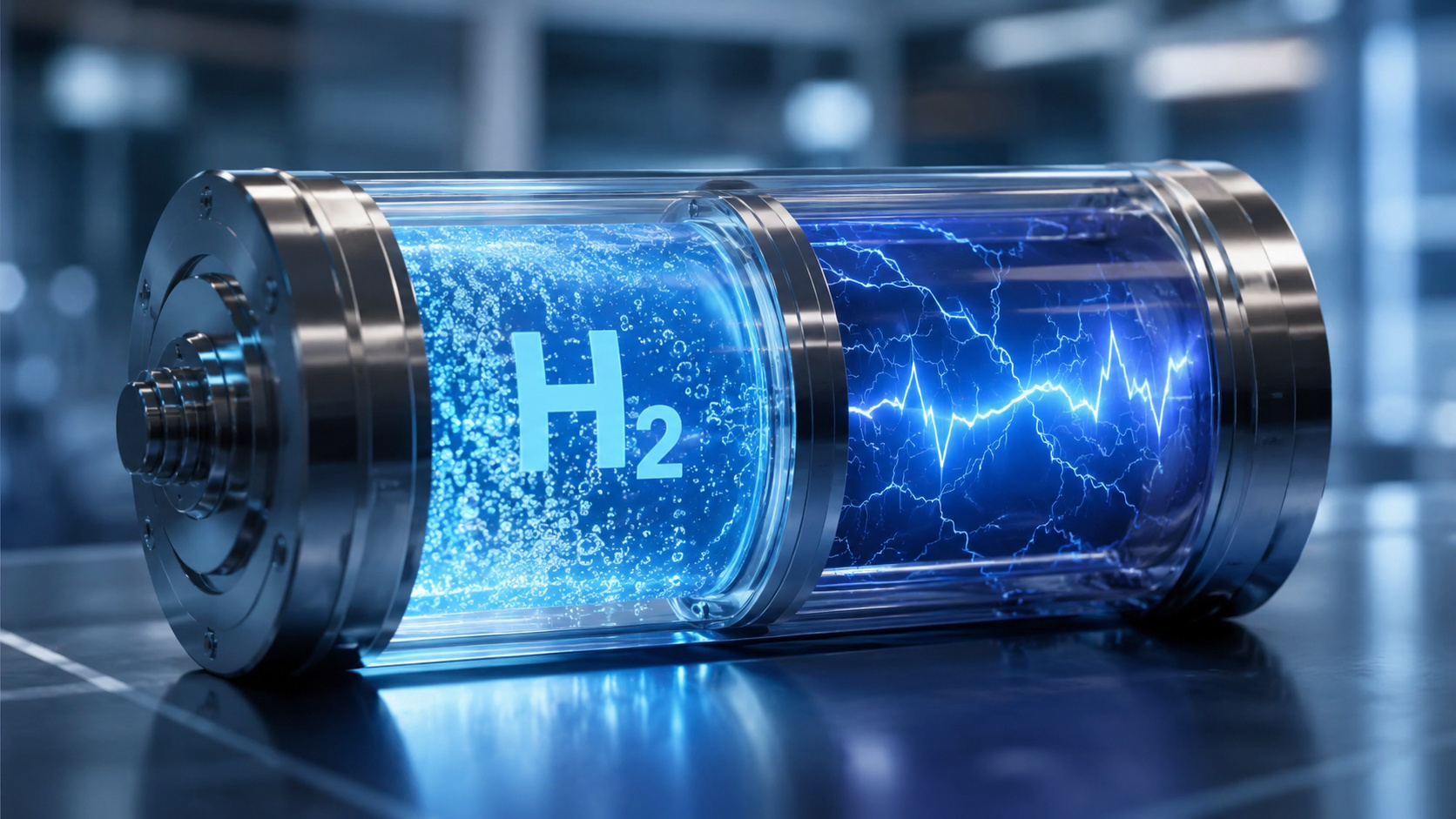
Researchers present a hydrogen ion battery capable of storing energy in two different forms, an innovative solution that promises to increase the autonomy of renewable systems and simplify energy transportation.

-
Embrapa takes cashew, peanuts, and sesame to the world’s largest seed bank in Norway, where Brazil has already stored more than 8,000 samples since 2012 against pests and climate change.

-
Finnish company creates recycled plastic and biomass blocks that fit together without cement, are 10 times lighter than common blocks, and have already been used to build schools in earthquake-affected areas.
-
A US startup wants to build a 10 km space cannon to launch multi-ton payloads into orbit at Mach 23, replacing part of the rockets with a colossal structure that looks like a science fiction weapon.



The chip is wireless, semi-invasive, and capable of decoding brain signals with high accuracy. This paves the way for the recovery of mobility and autonomy for people with severe motor disabilities.
More Tests in 2025 and Expansion to 50 Patients
NeuCyber has already confirmed plans to expand human testing to an additional 10 volunteers in 2025, totaling 13 implants. The goal, however, is even more ambitious: in 2026, the company aims to conduct clinical trials with 50 patients, which could make the Beinao No.1 the brain chip with the highest number of human implants in the world.
This pace even surpasses that of Neuralink, Elon Musk’s company, which has also started its clinical trials in the U.S. but with a more limited initial scale.
A Technological (and Ethical) Leap
In addition to the Beinao No.1, Chinese researchers also announced the development of the first bidirectional brain-computer interface on the planet. This means that, in addition to sending commands from the brain to devices, the system could also return sensory stimuli to the brain — something crucial for more natural experiences with prosthetics and virtual environments.
The innovation uses memristors, devices that simulate human synapses, and promises to be 100 times more efficient and 1,000 times more economical in energy than previous models.
At the same time, China has published ethical guidelines for this type of research, including rules on informed consent, neural privacy, and safety protocols to prevent abuse or misuse of the technology.
How Does This Change Real Life?
With a functional brain chip, people with tetraplegia or neurodegenerative diseases will be able to perform simple daily tasks — such as moving a wheelchair, typing on a computer, or feeding themselves — just with thought. The technology may have future applications in areas such as:
- Augmented and immersive reality
- Personalized neurorehabilitation
- Remote control of machines by operators with motor disabilities
- Real-time human-machine interaction, without physical commands





-

1 person reacted to this.