






 Portuguese
  Spanish


After 27 years of construction and 5.9 billion euros, Austria inaugurated the largest new railway in the country in over a century
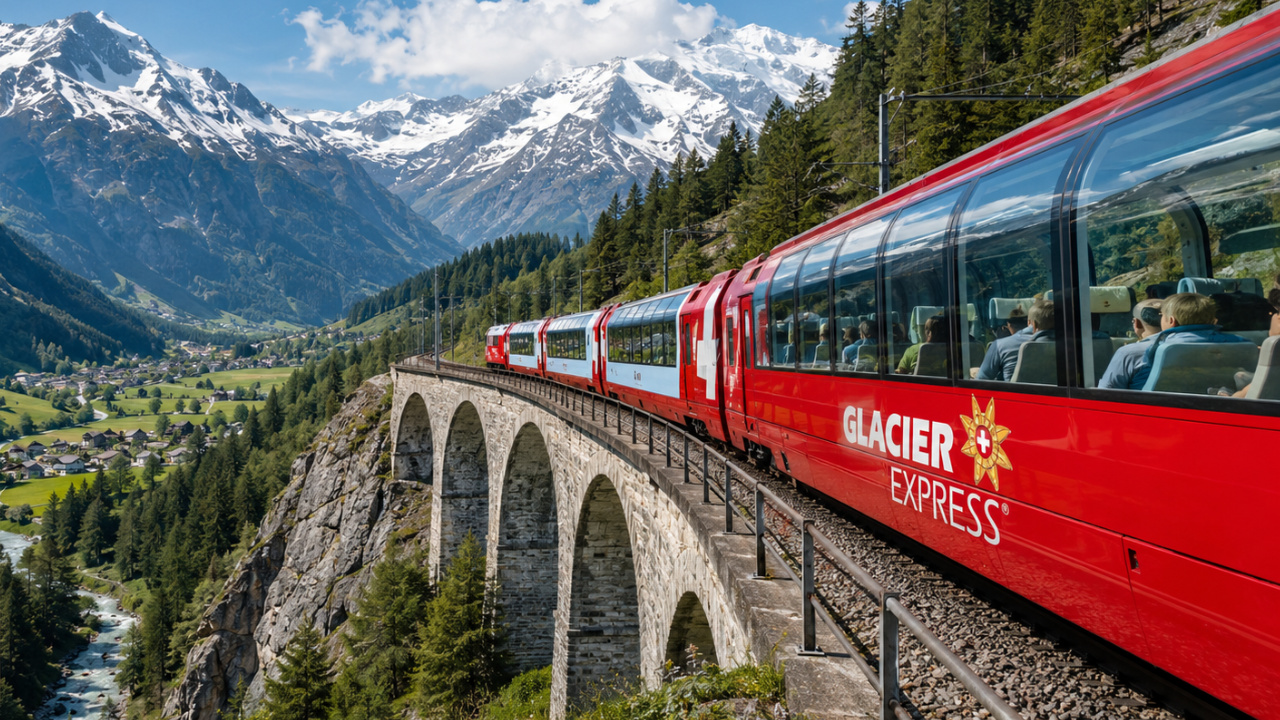
On December 14, 2025, Austria put into operation the Koralmbahn — a 127 km railway that connects the cities of Graz and Klagenfurt through the Alps.
According to ÖBB Infrastruktur, the Austrian state operator, the project cost 5.9 billion euros, co-financed by over 600 million euros from the European Union.
However, the most impressive aspect is not the cost — it is what the engineers did to cross one of the most imposing mountain ranges on the planet.
-
Cost of Installing Subflooring in 2026: The Importance of Proper Slope to Prevent Water Damage and Costly Repairs

-
New Offshore Borehole Mining Technique Extracts Lithium and Cobalt Without Damaging Ocean Floor
-
Vale Doubles Copper Drilling in Brazil’s Carajás, Plans to Drill 120 Kilometers of Rock by 2026
-
Innovative Vertical Cistern Becomes Water Tank in Container Home Amid Pressure Issues, Offering a Compact 1,000-Liter Solution Without a Tower or Underground Tank


The line includes 100 bridges, 23 modern stations, and the Koralm Tunnel, which alone is 32.9 km long — the 6th longest railway tunnel in the world.
Thus, Austria delivered the first high-speed railway inaugurated in Europe outside of China in years.

The tunnel that cut through the Alps: 33 km up to 1,250 meters below the surface
The Koralm Tunnel is the centerpiece of the Koralmbahn and the largest railway tunnel in Austria.
According to the technical documentation of the project, the tunnel has two parallel galleries of 32.9 km each, with points reaching 1,250 meters below the surface of the mountains.
Moreover, the maximum gradient is only 5.4 per thousand — practically flat — allowing trains to maintain speeds of up to 250 km/h even inside the tunnel.
Consequently, the journey between Graz and Klagenfurt that previously took almost 3 hours can now be made in just 41 minutes on the fastest Railjet Xpress services.
Therefore, the difference is drastic: the old railway went around the mountains; the new one goes through them.
There are 29 trains per day crossing the Alps — and the fastest journey takes 41 minutes
The ÖBB now operates 29 daily connections between Graz and Klagenfurt via the new line.
The fastest trains complete the journey in 41 minutes, while regular services take about 45 minutes.
Similarly, the line is part of the Baltic-Adriatic corridor of the European TEN-T network — a route that will eventually connect ports in Poland to ports in Italy.
In this sense, the Koralmbahn is not just a regional railway: it is a piece of a continental logistical puzzle.
Indeed, Voestalpine, an Austrian steel company, provided the rails and switches that enable maximum speed on the line.

Workers took 27 years drilling rock: the Koralmbahn began when the world still didn’t have smartphones
The Koralmbahn project was approved in 1998 — a year before the launch of the first BlackBerry and almost a decade before the iPhone.
Over 27 years of construction, thousands of workers drilled rock in the Alps, facing high temperatures inside the mountain and unpredictable geological pressures.
Additionally, the project had to deal with underground aquifers, geological faults, and the need to keep two parallel galleries perfectly aligned over 1 km below the mountain peaks.
Still, the work was completed within the revised budget — something rare in infrastructure projects of this scale.
On the other hand, the highest railway in the world in Tibet faced similar challenges: permafrost, extreme altitude, and insufficient oxygen for workers.
Why the Koralmbahn matters: outside of China, almost no one inaugurates high-speed rail
According to Railway Gazette, the Koralmbahn stood out precisely for being a global exception.
Worldwide, practically no country outside of China has inaugurated a significant high-speed railway in recent years.
China added 12,000 km of high-speed lines between 2021 and 2025, while the rest of the planet inaugurated less than 500 km combined.
Likewise, projects like the British HS2 have been canceled, the California High-Speed Rail has decades of delays, and the Brazilian bullet train never got off the ground.
Above all, Austria proved that it is possible to build world-class railway infrastructure in Europe — but the price is high and patience must be measured in decades.

The lesson the Koralmbahn leaves for the rest of the world
The railway cost 5.9 billion euros and took 27 years — but now it cuts 2 hours from a journey that was once arduous and lengthy.
As a result, cities that were once isolated in the Alps are now just 41 minutes apart.
However, the big lesson is that quality infrastructure requires long-term commitment — something that few governments can maintain over nearly three decades.
A Austria began drilling through the Alps when Google didn’t even exist — and only finished when cars were already driving themselves. Few countries have that discipline.
The lingering question is: in light of projects like the Koralmbahn, will countries like Brazil ever have the institutional patience necessary to build something comparable?
The numbers of the Koralmbahn that impress engineers worldwide
The railway has a total length of 127 km, of which 32.9 km are within the Koralm Tunnel — meaning that over a quarter of the route is underground.
Moreover, the tunnel reaches depths of up to 1,250 meters below the surface — deeper than any gold mine in South Africa.
Consequently, Railjet Xpress trains complete the crossing of the Alps in just 41 minutes, cutting through the mountain instead of going around it as was done over a century ago.
Similarly, the maximum gradient of 5.4 per thousand is so gentle that passengers hardly notice they are over a kilometer below the mountain peak.
On the other hand, the rock temperature at the deepest points of the tunnel reached 50°C during construction — extreme conditions that required industrial cooling systems to protect the workers.
Above all, the Koralmbahn connects Austria to the Baltic-Adriatic railway corridor of the European Union, creating a direct route between Polish and Italian ports that previously relied on slow and inefficient mountain detours.






HS2 is not cancelled, only the section north of Birmingham. London to Birmingham is under construction.
You’re right, Richard — only the Birmingham-to-Manchester leg of HS2 was cancelled in October 2023. The London-to-Birmingham section is still under construction and remains the largest active railway project in the UK. Thanks for the correction.