





 Portuguese
  English
  Spanish
  4 min of reading
  0 comments


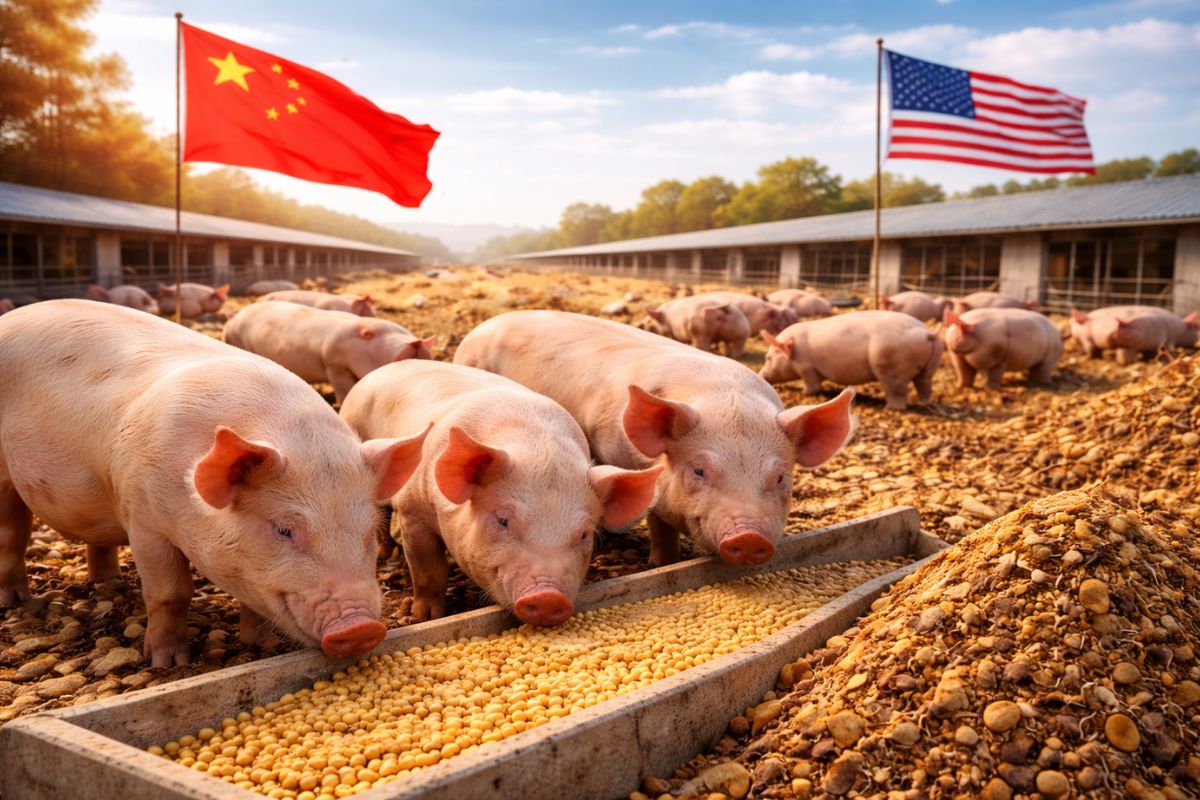
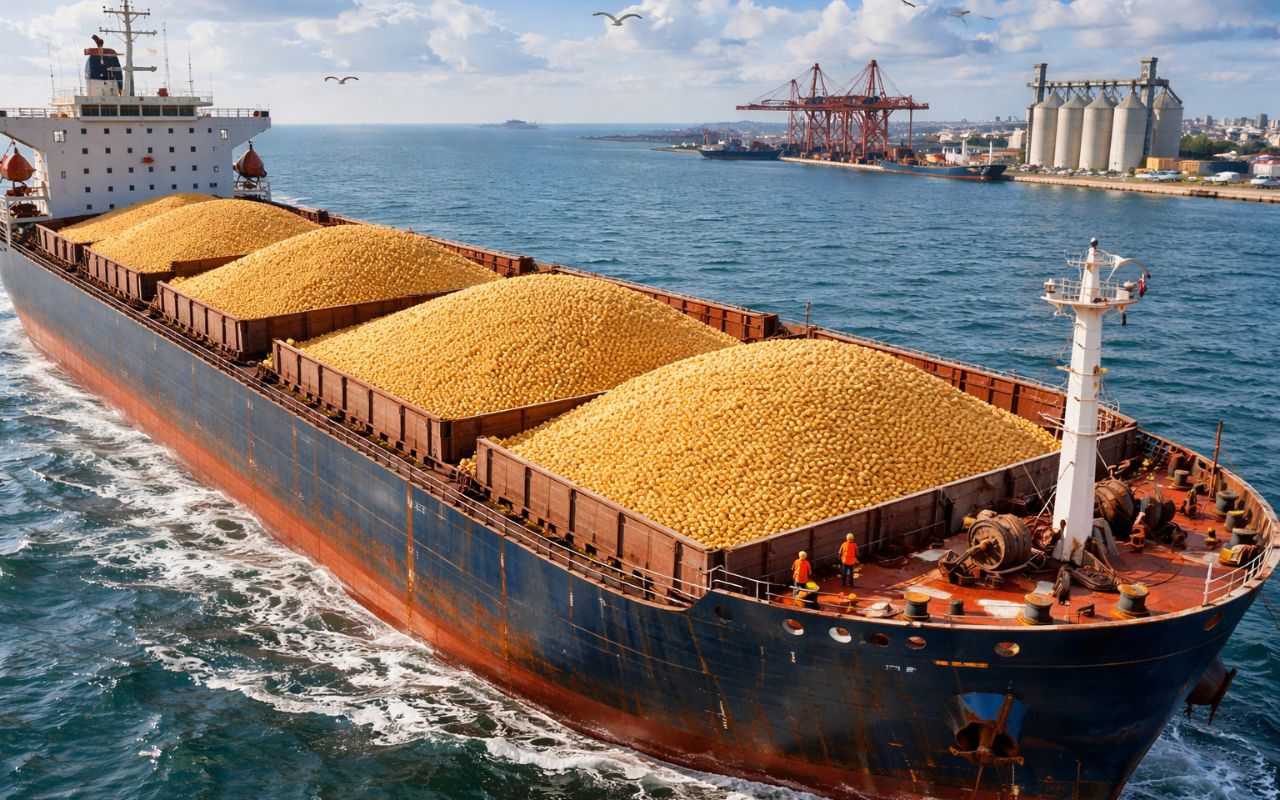
China imports more than 50 billion dollars in soybeans per year, but now uses fermented feed that reduces the need for grains in pig farming by half, and if the target of 15% of industrial feed by 2030 is confirmed, soybean imports could fall by up to 6.3%, with a direct impact on Brazil and the USA.
China is the world’s largest importer of soybeans, with purchases exceeding $50 billion per year, and about 80% of all the soybeans consumed in the country come from abroad, mainly from Brazil and the United States. But a silent change is underway on Chinese farms: producers and the Beijing government are replacing part of the soybean meal with locally produced fermented feed, which is cheaper and made from agricultural waste and by-products from the industry itself. In practice, this could reduce soybean use in pig feed by half.
The immediate motivation is economic. Feed accounts for about 70% of production costs in Chinese pig farming, and the price of soybeans, pressured by trade tensions and geopolitical conflicts, has been squeezing producers’ margins. But behind the change in the field lies a strategic guideline from the government: to reduce dependence on soybean imports, especially from the United States, in a context of recurring trade disputes. If projections hold true, China could reduce its soybean imports by up to 6.3%, which would take billions of dollars away from exporting countries.
How fermented feed that is replacing soybeans in China works
According to the portal CompreRural, on farms like Gao Qinshan’s in the Taizhou region, tanks with fermented mixtures are already part of the routine. The system uses agricultural waste and local by-products such as bran, stems, and fermentation leftovers, which are transformed into highly digestible feed.
-
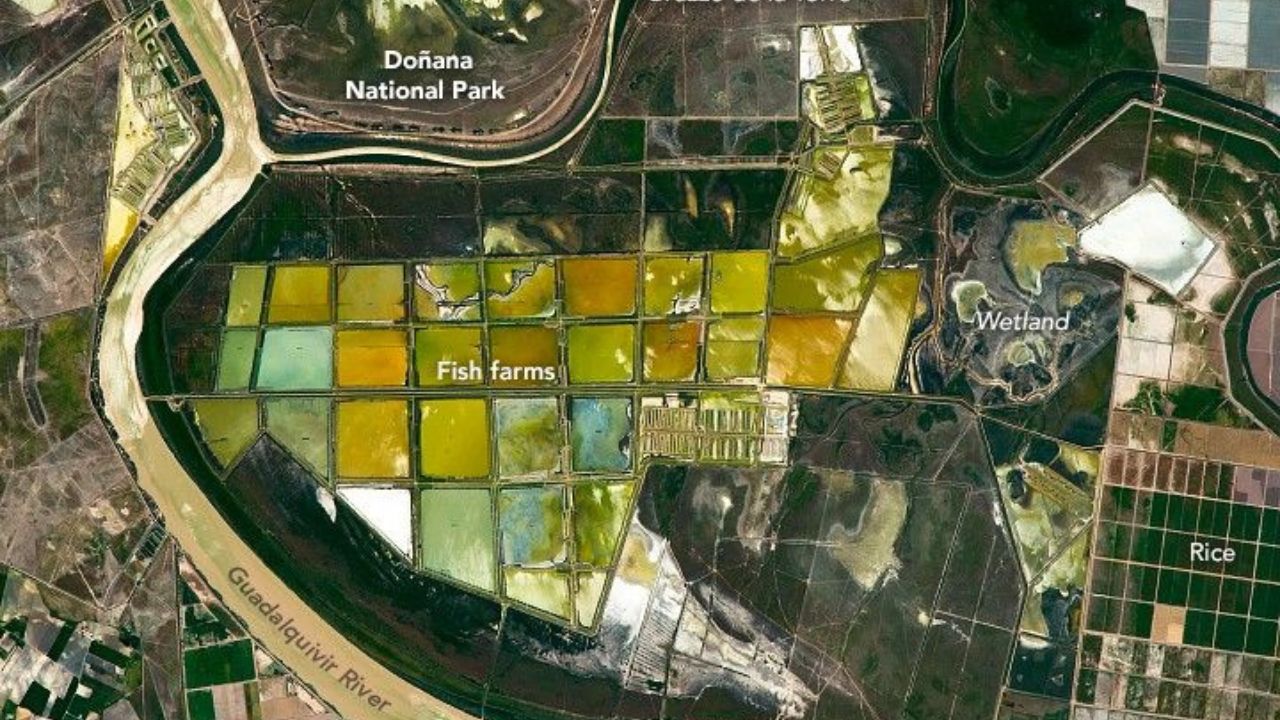
More than 36,000 hectares of rice fields and aquaculture farms have transformed the Guadalquivir delta into a geometric grid visible from space, where channels, dikes, and tides operate one of the largest agro-hydraulic systems in Europe in southern Spain.
-
Dry weather accelerates soybean harvest, but threatens to devastate crops in Southern Brazil: losses already reach 50.4% and the climate scenario raises maximum alert for producers in 2026.

-
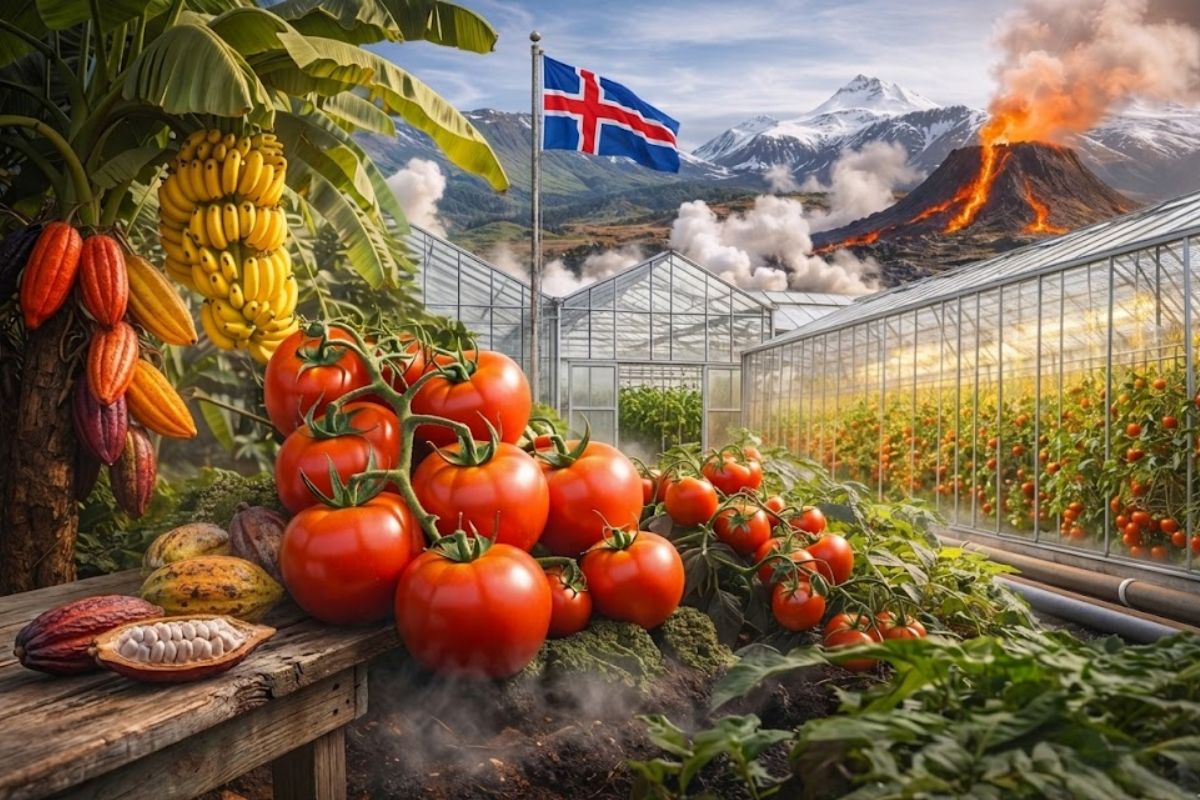
Iceland uses the heat from its volcanoes to grow tomatoes as good as Italian ones, tropical bananas, and even cocoa near the Arctic Circle, where the temperature barely exceeds 12 degrees, and almost 70% of the tomatoes consumed are already produced there.
-
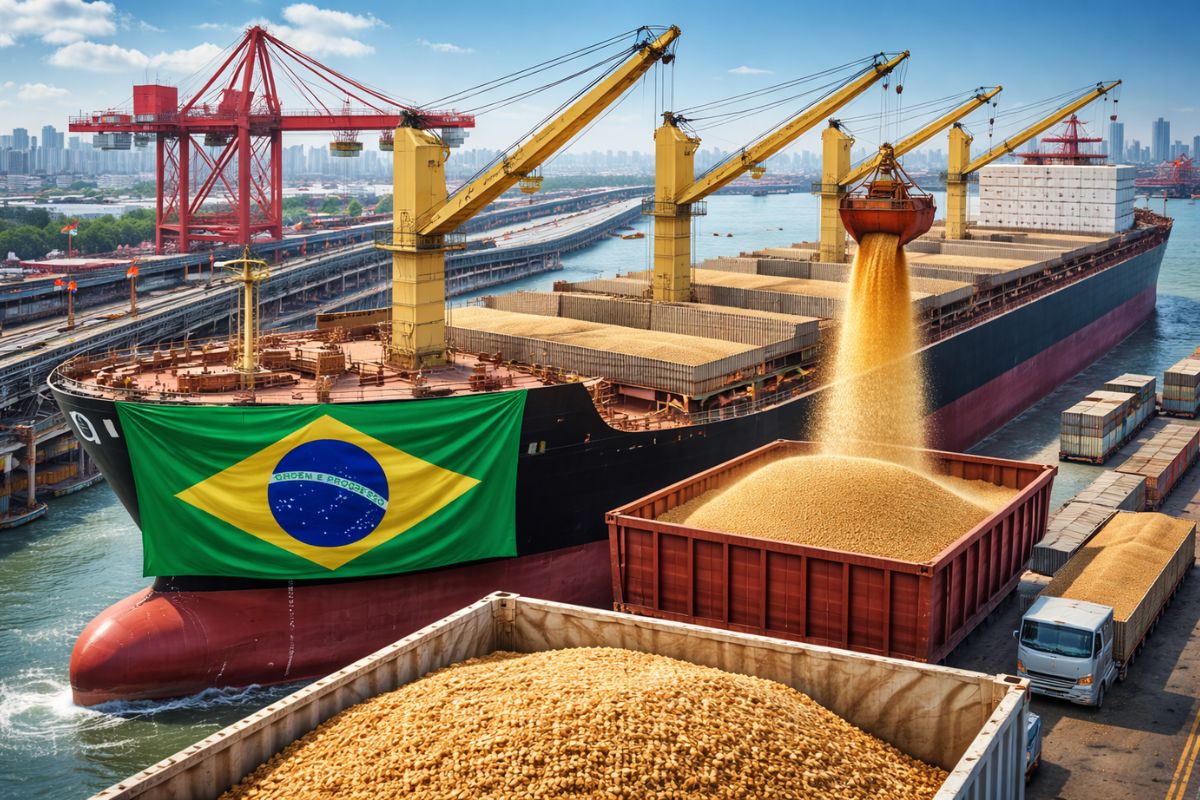
Brazil sends unprecedented product to China and a ship with 62 thousand tons has already arrived at its destination: a new billion-dollar market opens for Brazilian agribusiness.
The difference lies in the process: fermentation breaks down proteins beforehand, facilitating absorption by the animals and reducing the need for high-quality proteins like those found in soybeans.
The result is cheaper feed that delivers equivalent nutrition at a lower cost. For producers facing pig prices at their lowest levels in 16 years, excess supply in the domestic market, and weakened consumer demand, fermented feed is not an option; it is survival.
The possibility of cutting soybean use in animal feed by half without sacrificing productive performance completely changes the cost equation of Chinese pig farming.
The Chinese government’s goal to reduce dependence on imported soybeans
Beijing has intensified, especially from 2025, policies to decrease the use of soybean meal in feeds and diversify sources of animal protein.
The goals are ambitious: gradual reduction of soybean meal, encouragement of the use of alternative fermented, synthetic, and plant proteins, and increased feed efficiency in production systems. Fermented feed represented only 3% of Chinese industrial feed in 2022, now reaches about 8% and could reach 15% by 2030.
If these numbers hold true, the impact on the global soybean market will be concrete.
A 6.3% reduction in Chinese soybean imports would mean billions of dollars less for exporting countries like Brazil and the United States, the two largest suppliers of the grain to China. This is not a change that happens overnight, but the direction is clear, and investments are already being made on an industrial scale.
The large Chinese companies that are already abandoning soybeans
The transition is not limited to small producers. Large Chinese corporations are leading the process. Muyuan Foods, one of the largest pig farmers in the world, has already reduced soybean use in feed by replacing it with synthetic amino acids.
New Hope develops completely soybean-free diets for poultry. Dairy giants like Yili and Mengniu have cut soybean use by up to 20% in their operations.
The fermented feed market in China is already worth about $6 billion, approaching the size of the European market.
Global companies like Louis Dreyfus, one of the largest soybean traders in the world, are already planning to set up fermented feed production units in China, signaling that the transformation is structural and long-term. When the soybean trader itself invests in alternatives to soybeans, the message to the market is unequivocal.
The risks of the transition and why soybeans will not disappear from China
Despite the advances, the transition still faces obstacles. The lack of standardization in fermentation processes can lead to losses due to feed deterioration, slower animal growth, and greater susceptibility to diseases.
Experts warn that reducing soybeans, recognized for their superior nutritional profile, could affect flavor and productive performance if not well balanced.
Soybeans will not disappear from the diet of Chinese pigs. The herd is immense—the largest in the world—and even with a percentage reduction in the use of the grain, the absolute volumes of soybean imports will remain significant in the short term.
But the medium and long-term trend is clear: China wants to depend less on foreign sources to feed its pigs, and fermented feed is the tool that enables this strategy.
For Brazil, which has China as its largest buyer of soybeans, this change requires attention: demand remains strong today, but the future is already being rewritten on the farms of Taizhou.
What do you think: should Brazil be concerned about this change in China, or will the demand for soybeans continue to grow? Leave your opinion in the comments.









Seja o primeiro a reagir!