






 Portuguese
  Spanish


China has approved one of the most audacious engineering projects of the decade: a railway tunnel that will run for about ninety kilometers under the sea to connect two major cities currently separated by a ferry crossing that disappears when the weather turns, transforming hours of uncertain travel into a corridor that operates year-round.
Look at the map of northeast China and you’ll see two peninsulas almost touching, separated by the Bohai Strait. On one side, the port city of Dalian; on the other, Yantai. In a straight line, it’s just over a hundred kilometers of water, but by land, the detour exceeds 1,400 kilometers, and the ferry crossing the strait depends on the sea’s mood. The solution approved by Beijing is as ambitious as it is obvious: dig underneath.
The project envisions double railway tunnels totaling more than 120 kilometers, of which about ninety would be under the seabed, making it by far the longest submarine tunnel ever constructed. It’s not a distant dream on a drawing board: it’s a project with the green light to come off the paper, nestled in the heart of one of the most industrialized regions on the planet.
The scale that challenges the imagination
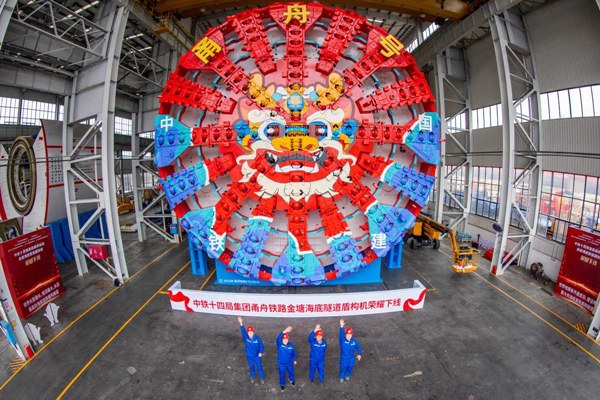
To get an idea of the size, the current record holder for a submarine tunnel, in South Korea, is a fraction of this. The Bohai would cross a stretch of sea with strong currents, seismic activity, and considerable depth, requiring engineering of another level. The project should combine enormous tunnel boring machines, the steel worm-shaped machines that excavate and line the tunnel simultaneously, with sections sunk into the seabed like prefabricated blocks.
-
18 m² Home Built in Two Days by Teto Volunteers Provides Shelter from Insects and Cold for Resident in Brazilian Community; 43 Delivered in 2026

-
$134.7 Million Project in São Paulo Installs Over 5 Kilometers of Pipes, Creates New Underwater Crossing to Boost Water Supply for Over 450,000 People

-
At 61, Former Homeless Wheelchair User Receives Key to Container Home in Brazil, Declares Independence
-
São Paulo Highway to Receive Over $260 Million in Upgrades, Including 90 Kilometers of Service Roads and New Infrastructure, by 2027




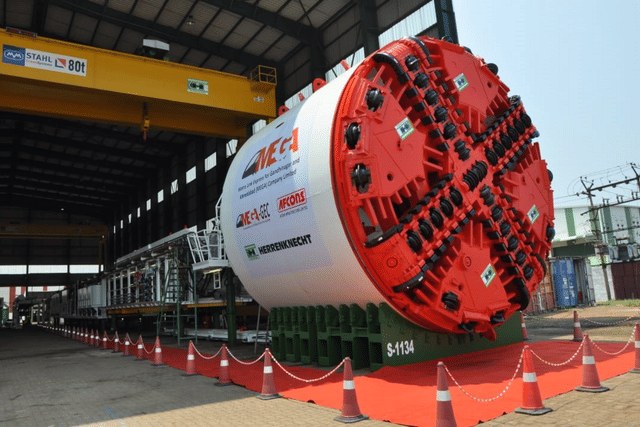
Each of these tunnel boring machines is a mobile factory the size of a laid-down building, capable of advancing meters per day, chewing through rock and mud while assembling concrete walls behind it. Coordinating several of them dozens of meters under the sea, keeping the water pressure outside controlled, is the kind of feat that only a handful of countries today could even plan. China is, by far, the one with the most experience in this type of project.
Why connect Dalian to Yantai
The reason is purely economic. The Bohai Strait is on the edge of the Bohai Economic Rim, one of the densest industrial regions in China, filled with ports, steel mills, petrochemicals, and factories. Today, goods and passengers wanting to go from one side to the other face the giant land detour or risk the ferry. A fixed railway corridor would cut this journey to about an hour, every day, rain or shine.
The logistical impact is enormous. Shortening this connection means cheaper cargo transport, integrating markets that currently operate somewhat separately, and boosting ports and industries on both sides. It’s the kind of project justified not by beauty, but by economics: fewer kilometers traveled, less time wasted, more trade flowing. For an economy that thrives on moving volume, this is worth billions over the decades.
How it compares to the world’s largest
To gauge the boldness, it’s worth comparing. The Channel Tunnel, which connects France and England and is one of the most famous in the world, is about fifty kilometers long, with less than forty under the sea. The Gotthard Base Tunnel in Switzerland, the longest railway tunnel, is around fifty-seven kilometers but cuts through a mountain, not the sea. The Bohai, with ninety kilometers underwater, would put all these numbers to shame.
Crossing so much sea presents challenges that a mountain tunnel does not. Water pressure increases with depth and constantly pushes against the walls, any infiltration becomes an emergency, and ventilation and escape routes in case of an accident need to be designed for enormous distances far from any exit. Solving all this over ninety kilometers is an engineering problem that no one in the world has yet faced at this scale.
The Chinese mega-project machine
The Bohai Tunnel doesn’t stand alone. It’s another chapter in an impressive sequence of giant projects that China has been delivering, from sea bridges to high-speed railways crossing the entire country. The country has built a true mega-project industry, with state-owned companies, its own tunnel boring machine factories, and specialized labor, capable of tackling challenges that intimidate the rest of the world. I imagine the accumulation of knowledge that such a project will still generate.
It’s worth being honest: approval is not the same as inauguration. A project of this magnitude takes years, faces costs that tend to rise, and encounters technical risks that only appear when the tunnel boring machine is already deep down. Some question whether the return justifies the billion-dollar investment, and this is a legitimate discussion that will accompany the project from start to finish.
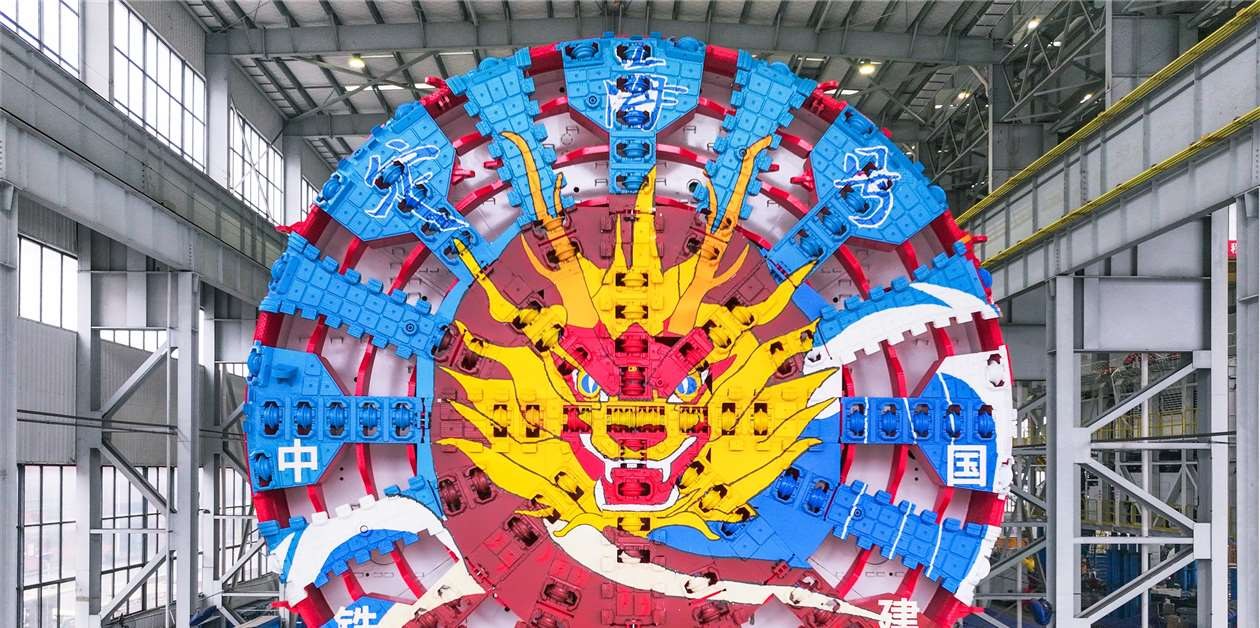
For those looking from the outside, the contrast is striking. While many countries debate for decades whether to build a railway, China approves a ninety-kilometer tunnel under the sea as just another item on the list. It’s not just money: it’s an industrial and decision-making machine built to erect what seems impossible, and that continues to push the boundaries of what human engineering can achieve.
If it comes off the paper as planned, the Bohai Tunnel will go down in history as the longest submarine passage ever opened by man, and as further proof that, in projects of absurd scale, there’s a country playing in a league of its own.
Is a ninety-kilometer tunnel under the sea a brilliant audacity or an overly extravagant expense?


