





 Portuguese
  English
  Spanish
  4 min of reading
  0 comments


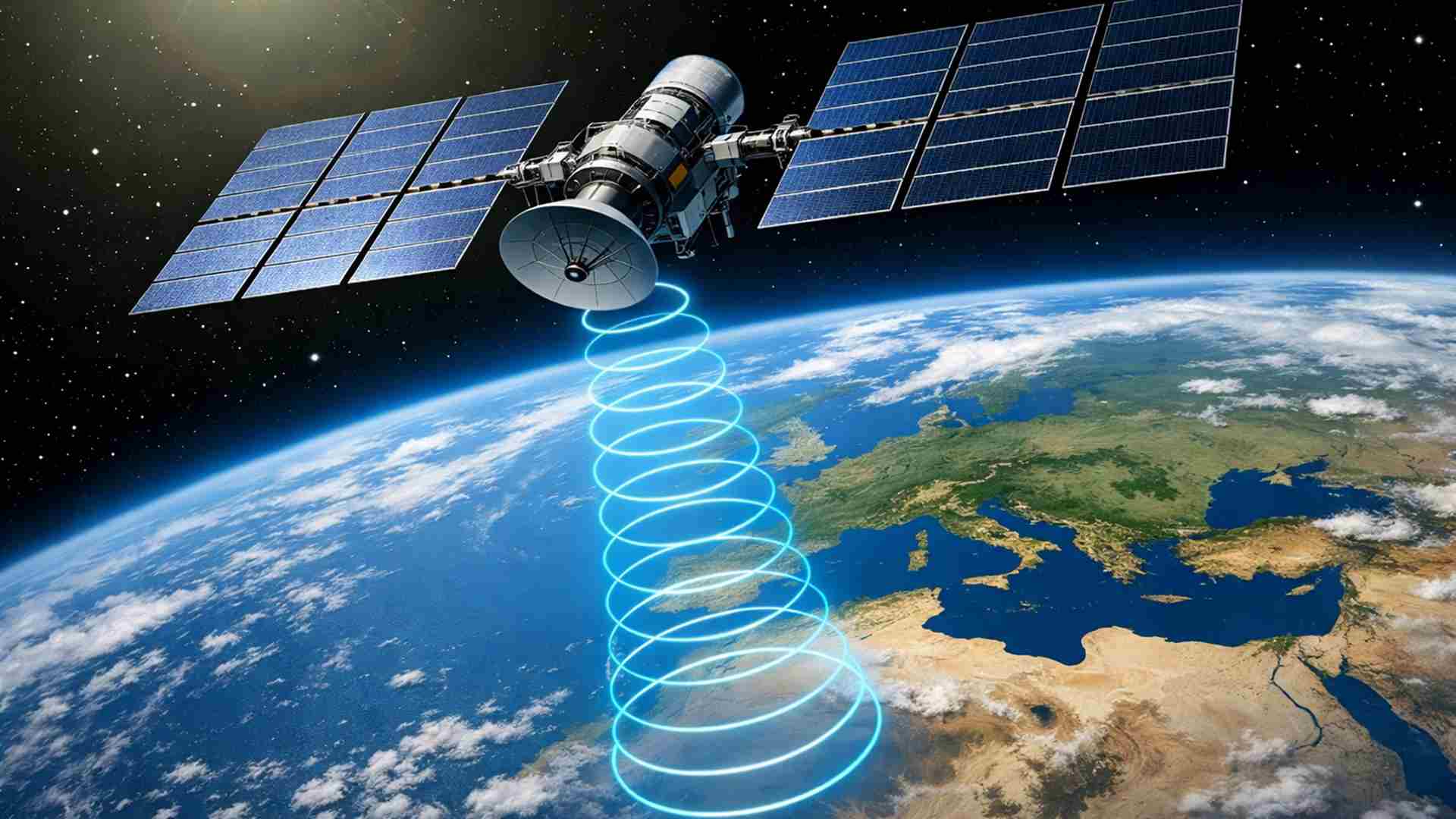
China’s space solar power plant, created to capture nearly continuous solar energy in orbit and transmit it to Earth via highly controlled microwave beams, has also come to be seen as a strategic asset with potential for communication, navigation, electronic interference, and support for military operations
The space solar power plant planned by China has returned to the spotlight after scientists indicated that the same infrastructure designed to generate clean energy in orbit could also support military operations, such as communication control and electronic warfare.
The project envisions a large-scale orbital structure capable of capturing solar energy in space and transmitting it to Earth through highly focused microwave beams.
The proposal is linked to the concept of space-based solar energy, which seeks to harness the nearly continuous incidence of sunlight in orbit, free from weather interference or the day-night cycle.
-
Australian engineers have created a robot dolphin that cleans oil from the ocean by absorbing oil and repelling water at the same time with over 95% purity, and they are now working on versions the size of a real dolphin to operate autonomously at sea.

-
Civil Defense issues red alert for Santa Catarina with rainfall of up to 130 millimeters between Monday and Tuesday and very high risk of flooding, inundations, and landslides in the Itajaí Valley and Greater Florianópolis, which are already feeling the impacts.

-
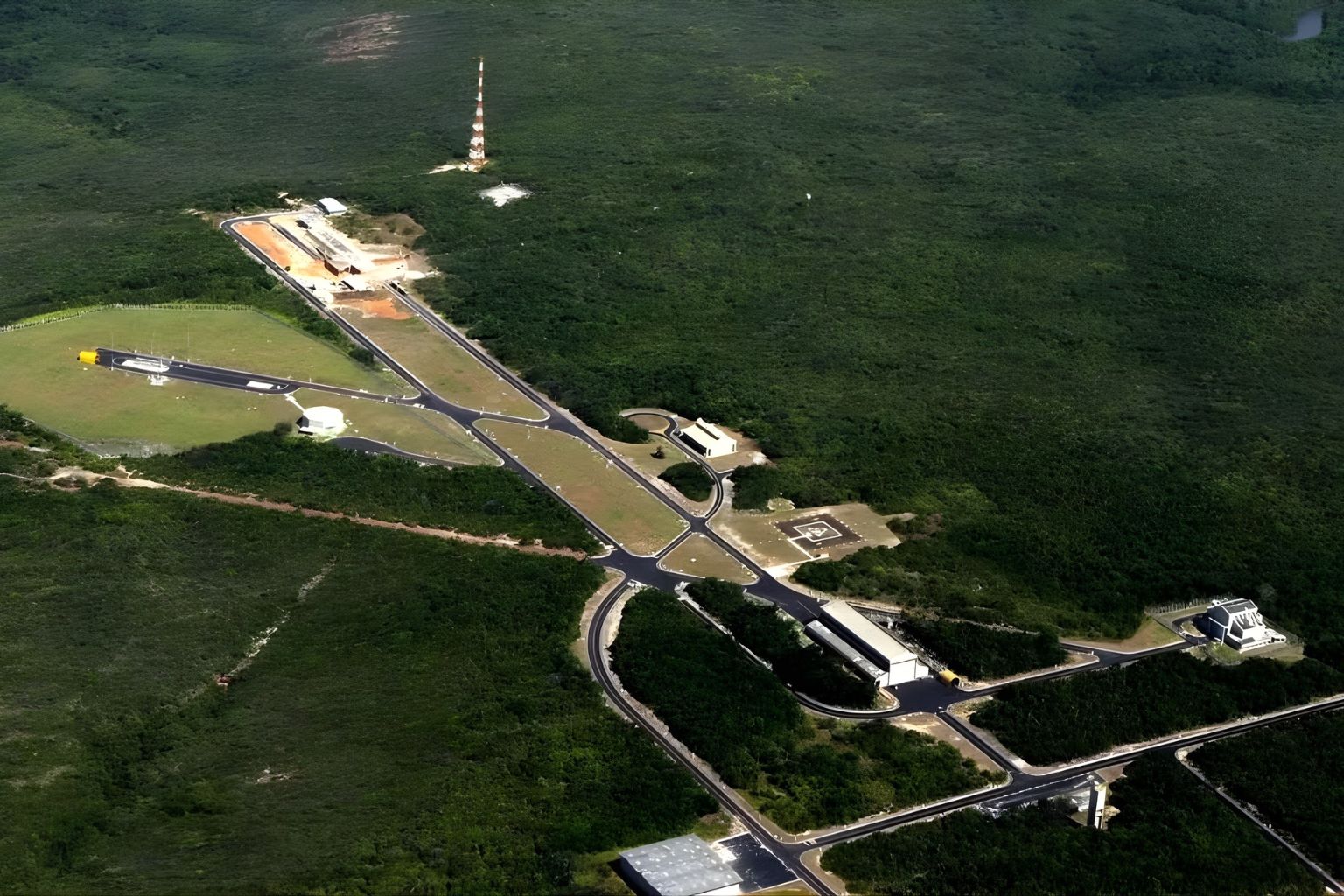
A few kilometers from the equator, the Brazilian space base in Alcântara has a position that can drastically reduce rocket fuel, appears in satellite images, and rivals French Guiana, while bearing the weight of an explosion that killed 21 technicians and stalled the program for years.
-
ABB integrates generative artificial intelligence into the energy management system and accelerates operational insights in the industry with more efficiency, sustainability, and data-driven decision-making.

In this model, the captured energy is converted into electricity and sent wirelessly to receiving stations on Earth, typically via microwaves or lasers.
The space solar power plant system may have military functions
The debate gained momentum following the publication of an article by Duan Baoyan, a professor at Xidian University and identified as one of the main architects of the Chinese initiative “Zhuri,” also known as “solar pursuit.”
In the study, he describes a restructured architecture for the system, capable of performing multiple functions beyond energy transmission from space.
Among these functions are communication, navigation, reconnaissance, interference, and remote control, which expands the strategic reach of the proposal. The technology continues to be presented as a future source of clean energy, but the potential for dual use has become one of the central points of the project.
The architecture utilizes extremely narrow and steerable microwave beams with high precision, capable of transmitting energy from orbit to terrestrial receivers over long distances. Although the primary goal is efficient energy transfer, this same beamforming capability could theoretically be applied to target communication systems, interfere with signals, or protect military communications.
How China’s orbital project works
The technological basis of the space solar power plant lies in harnessing sunlight in orbit, where the panels operate without atmospheric losses and without cloud cover. Researchers estimate that, under these conditions, orbital systems can produce much more energy per unit area than terrestrial solar farms.
The Chinese design is named OMEGA, an acronym for Orbit M-shaped Exploration and Gigawatt Application, and was first presented in the 2010s.
Since then, the concept has evolved into a modular architecture, composed of several smaller solar collection units, a choice aimed at reducing engineering challenges, improving thermal management, and keeping the system operational even with failures in some modules.
Despite the conceptual advances, the project still faces significant technical and economic obstacles. Among them are the construction of kilometer-scale structures in orbit, the transmission of energy over tens of thousands of kilometers, and the need to maintain precise control of the beams throughout the operation.
International race for solar energy in space
China is not alone in this competition, and the search for space solar energy systems mobilizes agencies and research centers in different countries. In the United States, NASA has already explored the SPS-ALPHA concept, based on large networks of modular units to capture solar energy and transmit it to Earth.
In California, researchers at the California Institute of Technology launched the Space Solar Power Demonstrator prototype in 2023. The project tested deployable structures, advanced photovoltaic cells, and a microwave array capable of wirelessly transmitting energy in orbit.
Europe is also studying the topic through the SOLARIS initiative of the European Space Agency, which evaluates whether orbital plants could provide continuous renewable energy to Earth in the coming decades. The growing interest in different regions reinforces that the space solar power plant has ceased to be just a distant hypothesis and has become part of concrete research plans.
The space solar power plant within the Chinese strategy
The Chinese effort in this field appears alongside other long-term space projects that reveal the scale of the country’s planning. Among them are concepts like the “Nantianmen Project,” described in Chinese media as a theoretical space aircraft carrier system, as well as proposals for building a nuclear reactor on the Moon in the early 2030s.
Other ongoing missions follow the same line of experimentation, such as Tianwen-2, which is set to carry out an asteroid sample collection operation with robotic arms designed to anchor to a rotating space rock. The country has also discussed futuristic launch concepts, including an electromagnetic platform capable of accelerating spacecraft using terrestrial systems instead of conventional rockets.
In this context, the Zhuri space solar power plant emerges as part of a broader strategy aimed at creating long-lasting orbital infrastructure. Its primary goal remains the continuous generation of clean energy, but the ability to transmit highly controlled microwaves and support communication and navigation functions indicates that the system could also integrate into a larger orbital network supporting satellites and other space systems.
The technology is still treated as experimental, but advances in wireless energy transmission, modular space structures, and orbital manufacturing bring practical applications closer to ideas previously confined to theoretical studies.
Thus, the Chinese space solar power plant begins to attract interest not only as an energy project but also as a strategically valuable asset in future operations in space and on Earth.







Seja o primeiro a reagir!