





 Portuguese
  English
  Spanish
 4 min of reading
  0 comments


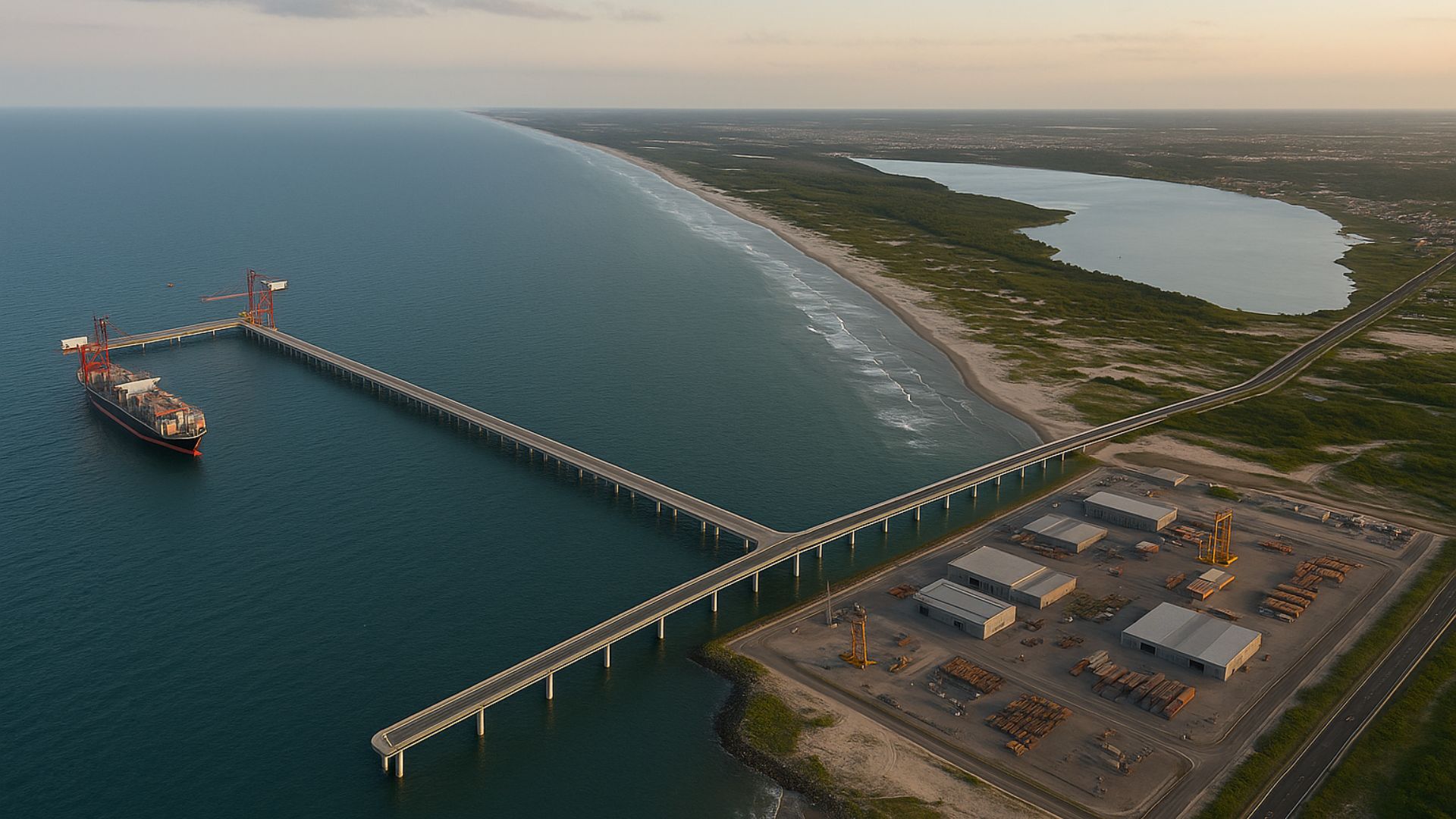
Arroio do Sal, on the southern coast, received federal authorization to install a billion-dollar offshore port with an L-shaped pier, railway access, and capacity for the largest ships in the world. The project could transform the local economy.
Arroio do Sal, on the Northern Coast of Rio Grande do Sul, obtained authorization from Antaq for the establishment of the Porto Litoral Norte, a private use terminal in an offshore model.
The approval was published in the Official Gazette of the Union on September 4, 2025, opening the next stage of federal processing and licensing.
What Was Authorized and What Still Needs to Be Done
The decision recognizes the project presented by Porto Litoral Norte S.A. and allows progress in formalization with the Ministry of Ports and Airports, in addition to the other required licenses, including environmental ones.
-
Inflation in March reaches 0.88% according to IBGE and pressures the Brazilian economy, impacting family budgets and requiring more strategic decisions to maintain financial control.

-
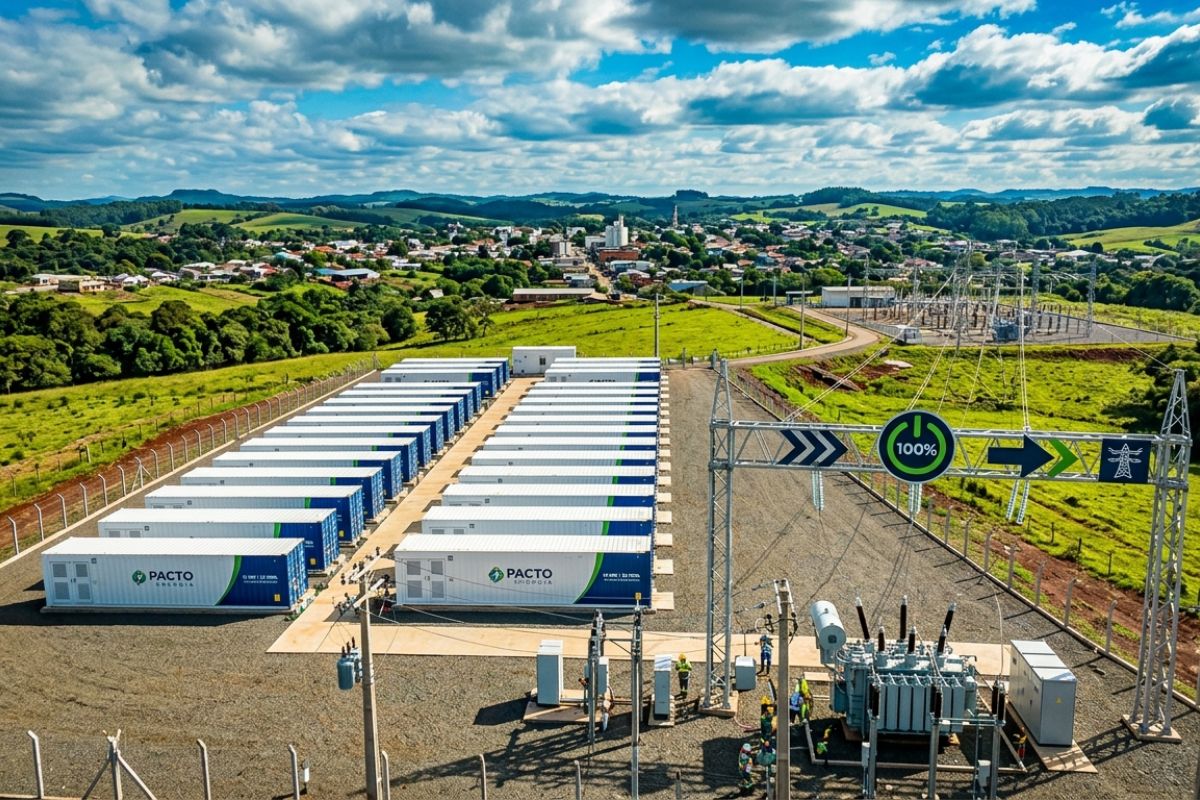
In Paraná, distributor Pacto connects 100% of the load in Coronel Vivida to batteries: a BES of 10 MW and 20 MWh costs just over R$ 30 million and lowers the local tariff now.
-
With a dependence of up to 80% on gas imported from the United States, Mexico is responding with a robust energy strategy, betting on shale gas, creating a scientific committee, and preparing to expand natural gas production to reduce vulnerability and strengthen its energy security in the coming years.

-
The United States proposes to Brazil a critical minerals agreement with a minimum price to combat Chinese dumping and priority for investment, but the Planalto is blocking the signing out of fear of upsetting China and due to electoral calculations in a year of competition.

The official publication delineates the grant for construction and operation of the terminal offshore.
The city hall and the proponents point out that, after the DOU, the enterprise still needs ministerial signature and licensing.
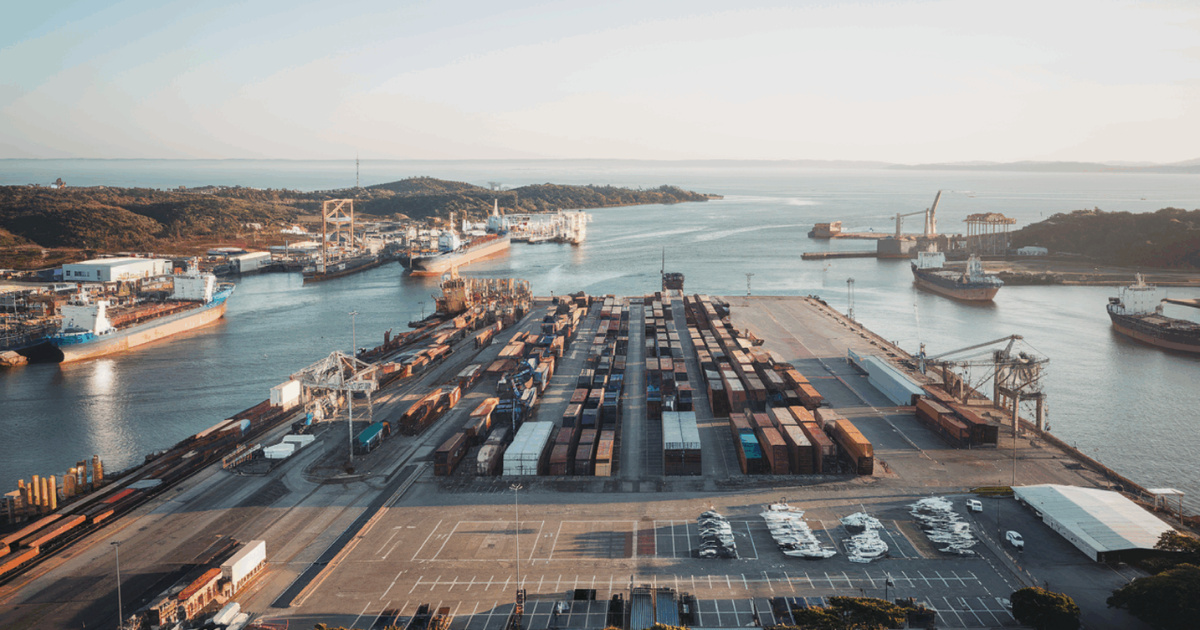
Structure of the Offshore Terminal
The design foresees an L-shaped pier installed about 2.8 kilometers from the coast, accessed by a bridge over the Lagoa Itapeva.
The terminal will have a draft of up to 30 meters, allowing the operation of large vessels.
On land, the plan includes an industrial complex and passenger terminal in an area of 150 hectares in the Arroio Seco resort, with direct connection to BR-101 via viaduct.
Promotional materials mention 1.8 km of transverse extension of the pier and 500 meters breakwater, in addition to the access bridge extending nearly 3 km into the sea.
Capacity and Operation Profile
The projected annual capacity is up to 43.9 million tons, a level that would place it among the largest terminals in the country.
The project also foresees the reception of ships with up to 23.4 thousand TEUs, size equivalent to the largest vessels currently in operation worldwide.
Connections by Rail and Road
In addition to road access, the proposal mentions a railway connecting Arroio do Sal to Paraná (Terra Roxa), with a length of 1,549 kilometers.
Documents indicate that the idea resumed processing at ANTT in 2024 and is still under discussion, with no official construction schedule.
The rail connection is presented as an option to transport industrial and agricultural production from the South.
Two Ports in Arroio do Sal
The Northern Coast of RS also houses the Porto Meridional, another private terminal planned for Arroio do Sal and located about 5 kilometers south of the new area.
The state government declared public utility for the Meridional works on May 27, 2025.
The official estimate points to R$ 6.5 billion in investment and capacity of up to 53 million tons/year.
The forecast is to begin construction in the first quarter of 2026 and operation starting in 2028.
Investment Values
The values disclosed for the Porto Litoral Norte vary depending on the source.
Local reports mention US$ 11 billion (about R$ 55 billion), while other informational documents from the proponent itself cite US$ 5.1 billion (over R$ 27 billion).
As the DOU does not fix a financial amount, the public reference is an interval of estimates disclosed by the parties involved.
National Investment Context
The initiative in Arroio do Sal occurs in parallel to public programs.
The New PAC projects R$ 54.9 billion in port investments by 2030, combining public and private resources in 151 projects, from dredging to leases.
This portfolio, presented by the federal government in August 2025, provides the national panorama in which the new private terminals are inserted.
Impacts on the Local Economy
With two large-scale projects underway, the city of 11,400 inhabitants (IBGE estimate 2025) is likely to see increased demand for services, new supply chains, and attraction of companies to the hinterland.
The design with a passenger terminal opens up space for cruise scale, a segment still little explored on the northern coastline of Rio Grande do Sul.
Job projections are mentioned in local presentations, but the consolidated number for the Northern Coast is not listed in official documents.
Environment and Licensing
The implementation depends on environmental licensing and impact studies.
As it involves offshore operations with a large draft, assessments will need to detail dredging, maritime traffic, marine fauna, and coastal dynamics, in addition to mitigation measures for the access bridge and the hinterland.
The regulatory stage will follow the current legislation and will be decisive for the definitive schedule.
Perspectives for Southern Logistics
If the projected capacities are confirmed, the Porto Litoral Norte could reduce logistical costs and increase the availability of docking windows in southern Brazil.
Integration with a dedicated railway, if implemented, would have the potential to relieve highways and improve the competitiveness of industrial and agricultural cargoes from the South and Northern Paraná.
With the authorization published and two major projects in the same city, what should be the next priority step: accelerate environmental licensing of the offshore terminal, unlock the railway, or consolidate the Porto Meridional?








-

2 pessoas reagiram a isso.