





 Português
  Inglês
  Espanhol
  4 min de leitura
  0 comentários


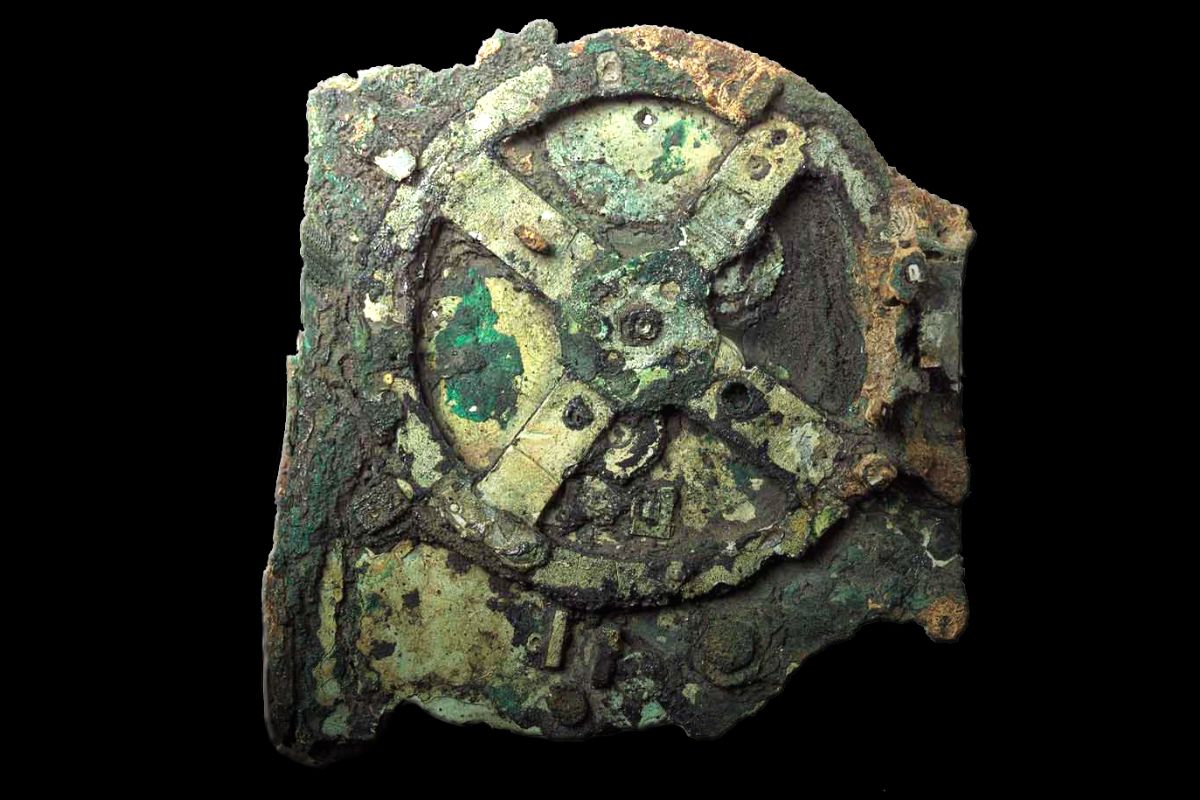
Found In A 2,000-Year-Old Shipwreck, The Artifact That Looked Like A Corroded Rock Proved To Be The Most Advanced Technology Object Of The Ancient World, A “Computer” Capable Of Calculating The Cosmos.
In 1901, a group of Greek sponge divers discovered the wreck of an ancient Roman ship near the island of Antikythera. Among statues and artifacts, they recovered a corroded and encrusted bronze block the size of a shoebox, which was sent to the National Archaeological Museum of Athens and largely ignored, considered just a piece of twisted metal. Little did they know they had rediscovered the most extraordinary and anachronistic technological object of antiquity.
Decades later, with the aid of X-rays and computer tomography, scientists managed to look inside the corrosion, and what they found shocked the world. Inside that “rock” was a complex system of at least 30 interlinked bronze gears with astonishing precision. It was a device whose mechanical complexity would not be seen again in history for over 1,000 years. It was, in practice, the first computer in the world.
How Was It Rediscovered?
The story of the rediscovery of the Antikythera Mechanism is as fascinating as the object itself. After being retrieved from the seabed in 1901, the artifact remained in a museum storeroom for years. It was only in 1902 that archaeologist Valerios Stais noticed that one of the pieces had an embedded gear wheel. The discovery was initially met with skepticism, as the idea of such complex machinery was incompatible with what was known of technology at that time.
-
With an unusual prize, Japan transforms office chairs into a resistance race on the streets, ISU-1 Grand Prix grows, fills stages, and pays 90 kilograms of rice.

-
House in England with a 7.6-meter shark embedded in the roof attracts attention worldwide and becomes a curious attraction in Oxford.

-
Masterpiece in Spain, under construction since 1882, receives 4.8 million visits in a year and impresses with its gigantism and architecture.

-
Attracting around 250,000 people a year, a lighthouse 200 meters from the sea, on a 60-meter high cliff, on the North Sea coast in Denmark, becomes one of the most impressive examples of how nature can threaten historical buildings.


The true leap in understanding only occurred from the 1970s onward, particularly in the 21st century, with research teams using cutting-edge technology. Scientists from the “Antikythera Mechanism Research Project” (AMRP) used high-resolution computed tomography to create a 3D model of the interior of the artifact, revealing the function and interaction of each of the 82 surviving pieces and gears.
What Was The Antikythera Mechanism Exactly Used For?
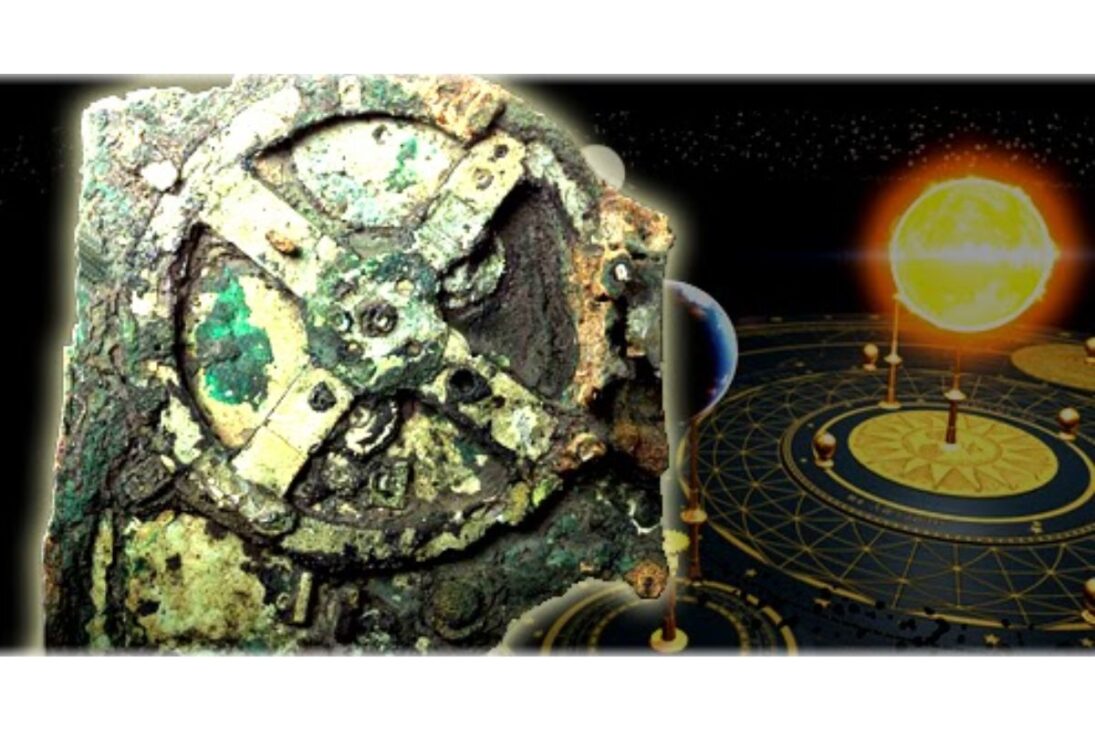
This was not a simple clock. The Antikythera Mechanism was, in fact, a sophisticated analog computer and a portable planetarium. By turning a side crank, the user set the entire gear system in motion, which in turn moved a series of pointers on dials at the front and back of the device.
Research confirmed that the mechanism had several functions:
Predicting Eclipses: a spiral rear dial, called Saros, accurately predicted the dates of future solar and lunar eclipses.
Astronomical Calendar: the front dial showed the position of the Sun and Moon in the zodiac, as well as the phases of the Moon.
Planetary Movements: distinct pointers indicated the positions of the five planets known to the Greeks (Mercury, Venus, Mars, Jupiter, and Saturn).
Events Calendar: a smaller dial indicated the date of the Panhellenic Games, including the Olympic Games, showing when the next four-year cycle would begin.
How Did They Manage To Build Something So Complex 2,000 Years Ago?
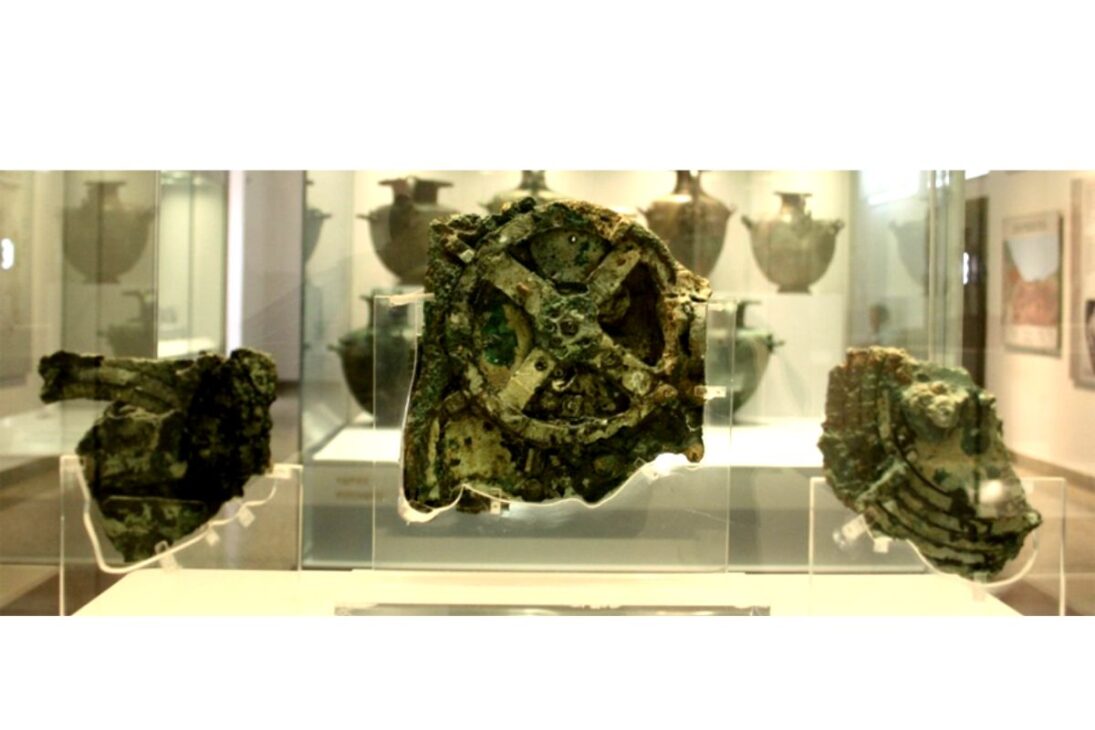
This is the question that most intrigues scientists and the reason why the artifact is considered the first computer in the world. The precision required to design and cut dozens of bronze gears, some with tiny teeth of just 1 millimeter, and make them work in harmony presupposes a level of knowledge in mathematics, astronomy, and mechanics that was thought not to exist in the 2nd century BCE.
The most accepted theory is that the mechanism was the pinnacle of a long tradition of Greek mechanical engineering that was lost to history. The differential gears used in the device to calculate the complex movements of the Moon, for example, are of a sophistication that would not reappear in cathedral clocks in Europe until the 14th century. The construction required not only a genius designer but also highly skilled craftsmen.
Who Built The Antikythera Mechanism?
Although there is no name inscribed on the artifact, the clues lead to some possibilities. The inscriptions on the mechanism are in Greek and the technology is linked to the astronomical tradition of the civilization. Many researchers believe that the device may have been built in an academy founded by the Stoic philosopher Posidonius on the island of Rhodes, which was an important center of astronomy and engineering at the time.
Cicero, the Roman orator, mentioned in his writings a mechanical device built by Posidonius that showed the movements of the Sun, stars, and planets. It is highly likely that the Antikythera Mechanism is that device or a very similar one, representing the height of the history of astronomy and engineering of Ancient Greece, knowledge that unfortunately was lost for more than a millennium.
Were you already familiar with the story of the Antikythera Mechanism? What surprises you most about the technological capabilities of ancient civilizations? Please leave your opinion in the comments!










Seja o primeiro a reagir!