





 Portuguese
  English
  Spanish
  5 min of reading
  0 comments


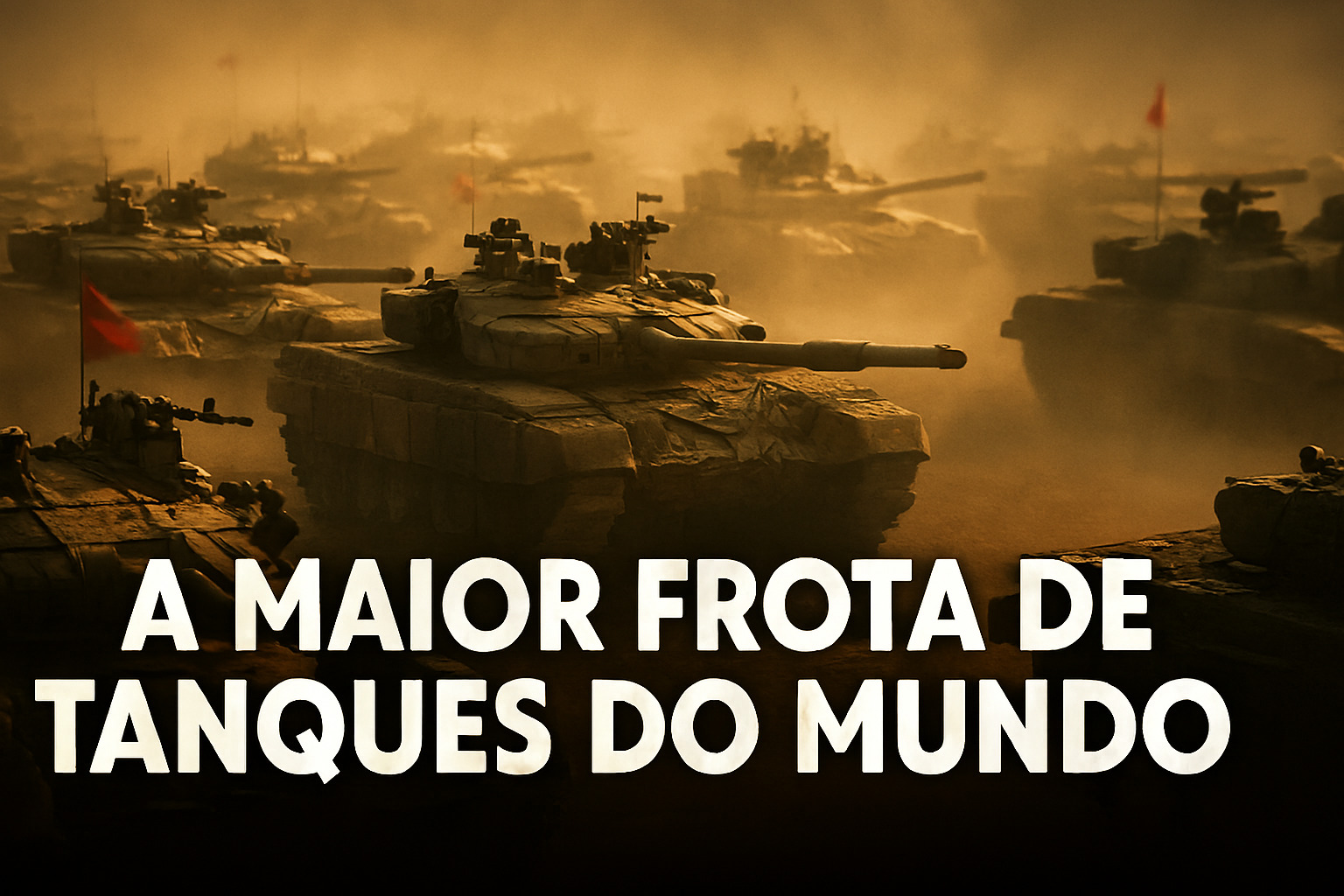
With More Than 13,000 Active And Stored Tanks, Russia, Brazil’s Ally In BRICS, Has The Largest Armored Fleet In The World, A Symbol Of Power And Military Engineering.
The Russia currently maintains the largest tank fleet in the world, an arsenal that exceeds 13,000 units among active and stored vehicles, far surpassing any other military power. The scale of this armored force reveals the heart of the Russian military strategy: deterrence, mobility, and large-scale control of terrain. It is a mechanized empire that withstands the test of time, resisting sanctions, wars, and geopolitical transformations, remaining the ultimate symbol of the nation’s industrial and military capability.
This land supremacy is not merely a legacy of the Soviet Union, but the result of a continuous effort of modernization and industrial rebuilding. Spread across the Urals and Siberia, dozens of factories operate steadily to recover, adapt, and upgrade tanks that, despite decades of use, return to the battlefield equipped with digital technology and enhanced armor. The total number would be around 13,000 tanks — including operational models like the T-72B3, T-80U, and T-90M Proryv-3, as well as thousands of stockpiled and upgradable units.
Uralvagonzavod And The Industrial Power That Supports The Largest Tank Fleet In The World
The secret of Russian resilience lies in its self-sufficient military industry, centered at Uralvagonzavod in Nizhny Tagil, the largest tank factory on the planet. It is in this gigantic complex that armored vehicles are assembled, rebuilt, and adapted to new combat standards.
-
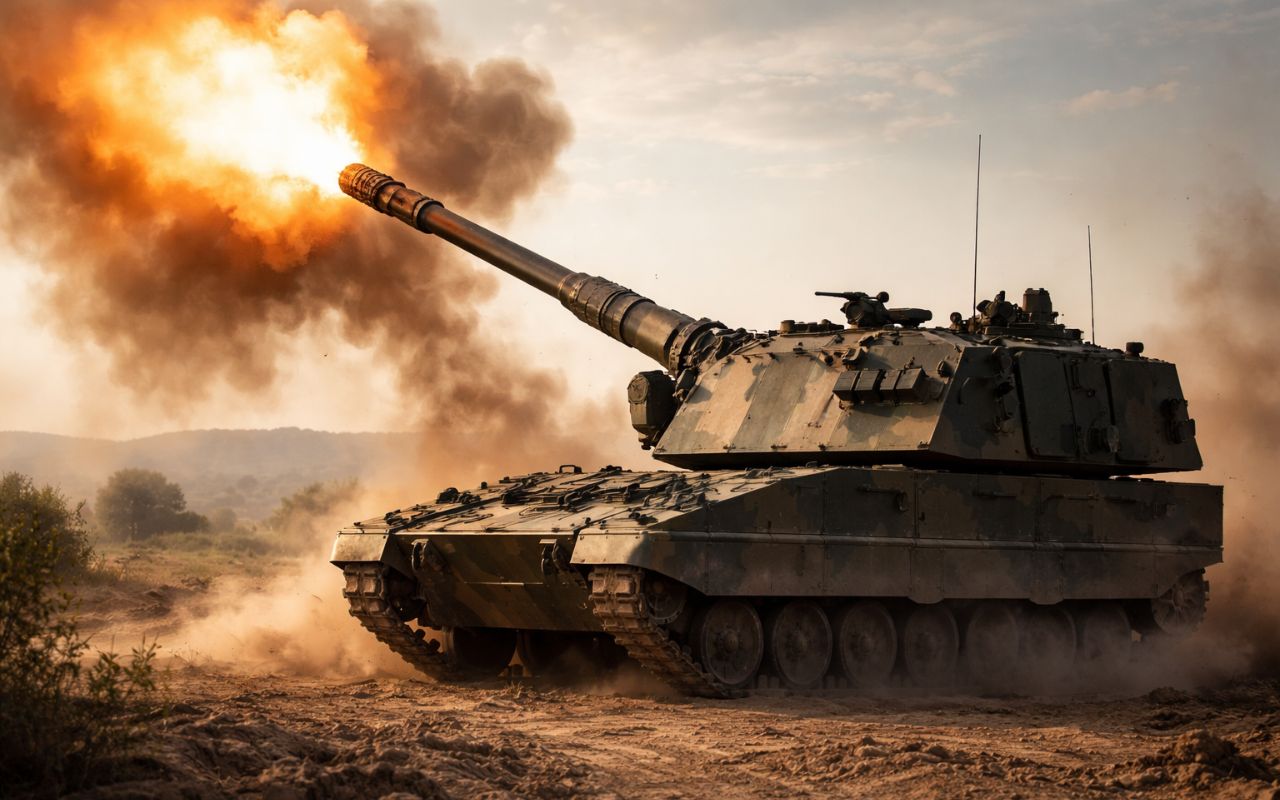
The German “steel monster” weighing 55 tons fires up to 10 projectiles per minute at over 40 km and avoids counterattacks on the battlefield by moving quickly to escape enemy attacks; meet the Panzerhaubitze 2000.
-
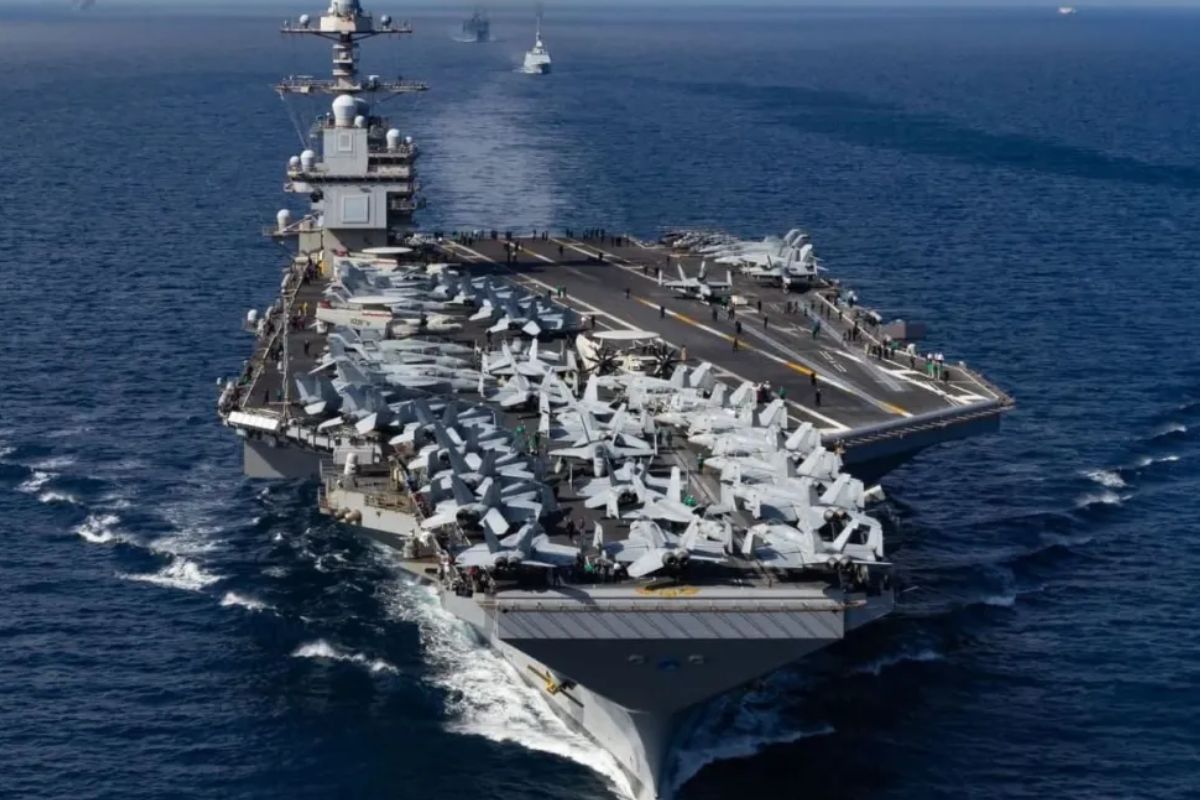
USS Gerald R. Ford, the largest aircraft carrier in the world, returns to sea after a fire in the laundry in the Red Sea; repaired in Crete, it resumes missions of Operation Epic Fury against Iran.
-
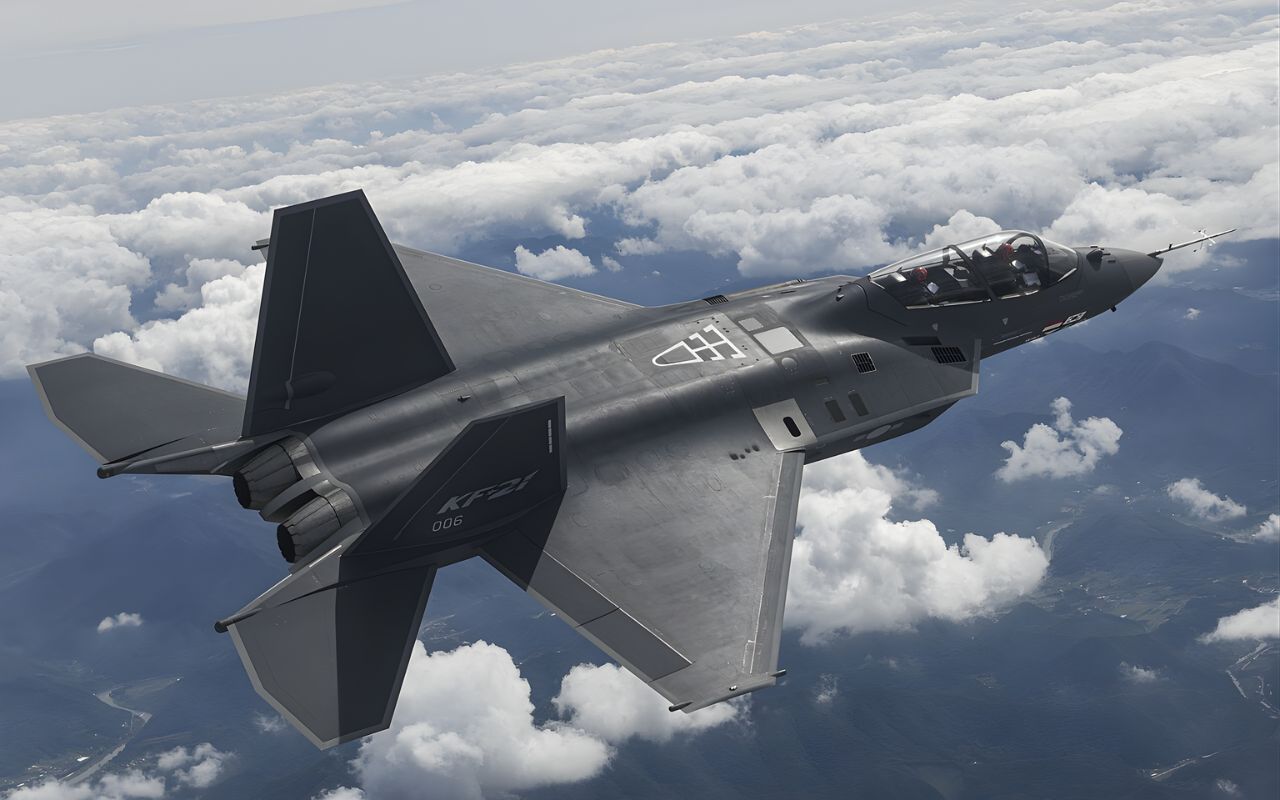
Military power: South Korea’s new KF-21 fighter jet will be a key component in replacing the aging aircraft of the air force, placing the country on the map of air military powers.
-
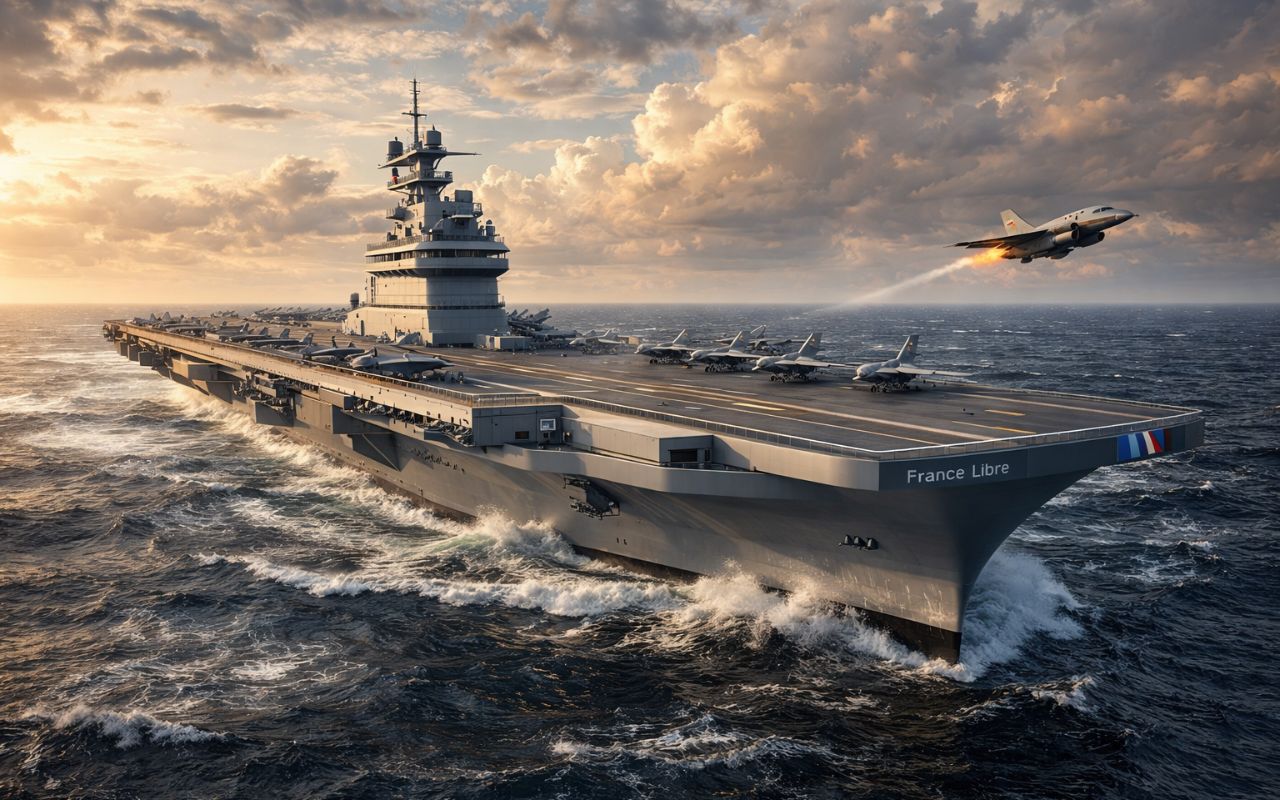
With 310 meters, 80 thousand tons, and capable of operating for 45 years, the new nuclear aircraft carrier France Libre will be the largest in France and will enter service in 2038.
Unlike other countries, which rely on private contracts and lengthy bidding processes, Russia maintains a permanent production line under direct state control, capable of delivering hundreds of refurbished tanks per month.
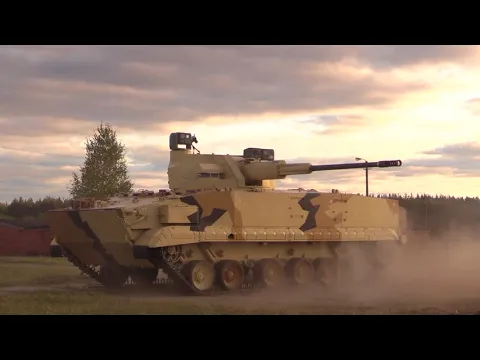

This industrial scale ensures that, even amid prolonged conflicts, the Russian fleet continues to operate. Damaged tanks are sent to factories, disassembled, and rebuilt almost from scratch.
The process includes engine replacement, installation of state-of-the-art optical systems, and application of additional layers of reactive armor. In terms of military engineering, it is a closed ecosystem, where obsolescence is virtually nullified by the ability of continuous modernization.
T-72, T-90 And T-14 Armata: The Line Of Armored Vehicles That Shaped Russian Military History
The ground power of Russia has the T-72 as its backbone, a tank born back in the 1970s, but which survives today as a basis for modernization.
The combination of simplicity, robustness, and low maintenance cost has made it the most produced armored vehicle in the world, with more than 25,000 units produced over five decades.
Its direct evolution is the T-90, which received new thermal sight systems, composite armor, and an automated turret.
The latest version, T-90M Proryv-3, represents the synthesis between tradition and technology — a tank designed to withstand impacts from modern missiles, operate in extreme temperatures, and interact networked with drones and precision artillery.
But it is the T-14 Armata that places Russia at the forefront of military engineering. Officially presented in 2015, it is the first battle tank with a unmanned turret, complete digital control, and an active protection system capable of intercepting missiles before impact.
Its 1,500-horsepower engine allows it to reach speeds of up to 90 km/h, even weighing over 50 tons. Although its mass production is still limited, the Armata symbolizes Russia’s transition to an era of smart mechanized warfare — connected, automated, and integrated into the digital battlefield.
The Size Of The Russian Fleet In Numbers And Comparisons
According to the International Institute for Strategic Studies (IISS) and Global Firepower 2025, Russia maintains around 2,000 tanks in active operation and over 10,000 stored. The United States ranks second, with approximately 9,000 tanks, followed by China, with between 6,000 and 7,000. This difference reveals the weight of the Russian doctrine, which prioritizes volume and replacement capacity over unit cost.
The country also possesses more than 30,000 armored transport and support vehicles, making its mechanized force the largest on the planet. In the event of a total mobilization, Russia could activate, within weeks, a ground fleet superior to the entire sum of NATO tanks.
This capability is supported by a dedicated military railway network and underground logistics centers capable of replenishing and relocating entire armored columns between borders.
The Russian Doctrine: Mobility And Scale In The Field
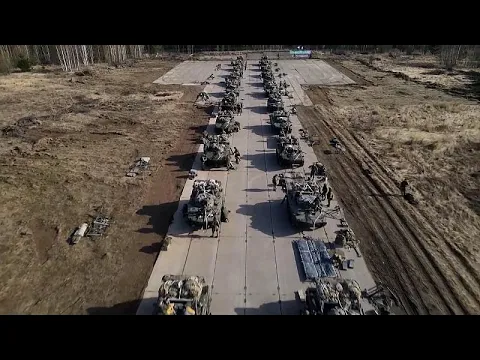
The Russian strategy for employing tanks is based on three principles: quantity, mobility, and adaptation. Armored units are integrated with mechanized infantry forces, heavy artillery, and attack aviation, forming columns that move as a single organism.
On flat terrain, the movement of hundreds of tanks occurs synchronously, supported by reconnaissance drones and GLONASS navigation systems, the Russian version of GPS.
This doctrine allows for rapid responses and large-scale offensives. The central command can transfer entire divisions of armored vehicles via military trains, repositioning forces over continental distances in less than 72 hours.
It is this projection capability that keeps Russia a global reference in mechanized warfare — a direct legacy of World War II and the Soviet doctrine of “strategic depth.”
The Economic And Geopolitical Impact Of Maintaining 13,000 Tanks
Maintaining a fleet of this magnitude requires a huge industrial and financial apparatus. It is estimated that Russia allocates around 4.5% of its GDP to the defense sector, with a significant portion directed towards the maintenance and upgrading of armored vehicles.
The arms industry, which directly employs more than 2 million people, is considered essential to national sovereignty.
In addition to domestic use, the country is also one of the largest tank exporters in the world, supplying T-90 and T-72 models to more than 20 nations, including India, Algeria, Vietnam, and Syria. This global presence transforms the Russian fleet not only into a defense instrument but also into a diplomatic tool — a form of political and economic influence that strengthens alliances, including within BRICS, a bloc of which Brazil is a part.
A Force Built On Iron, History, And Strategy
The Russian supremacy in tanks is not just a number, but a reflection of a military tradition forged over a century.
From the battles of Kursk and Stalingrad to modern combat, the tank has become part of national identity, a symbol of resistance, engineering, and power. Each model manufactured carries the mark of the doctrine that has made Russia the land power it is today: the belief that control of terrain is still decisive in any war.
With 13,000 tanks, factories operating full-time, and a doctrine that combines historical experience with technological innovation, Russia remains the nation with the greatest mechanized power on the planet, reaffirming its role as a protagonist in the global military balance and as a strategic ally of Brazil within BRICS.




Seja o primeiro a reagir!