





 Portuguese
  English
  Spanish
  4 min of reading
  0 comments


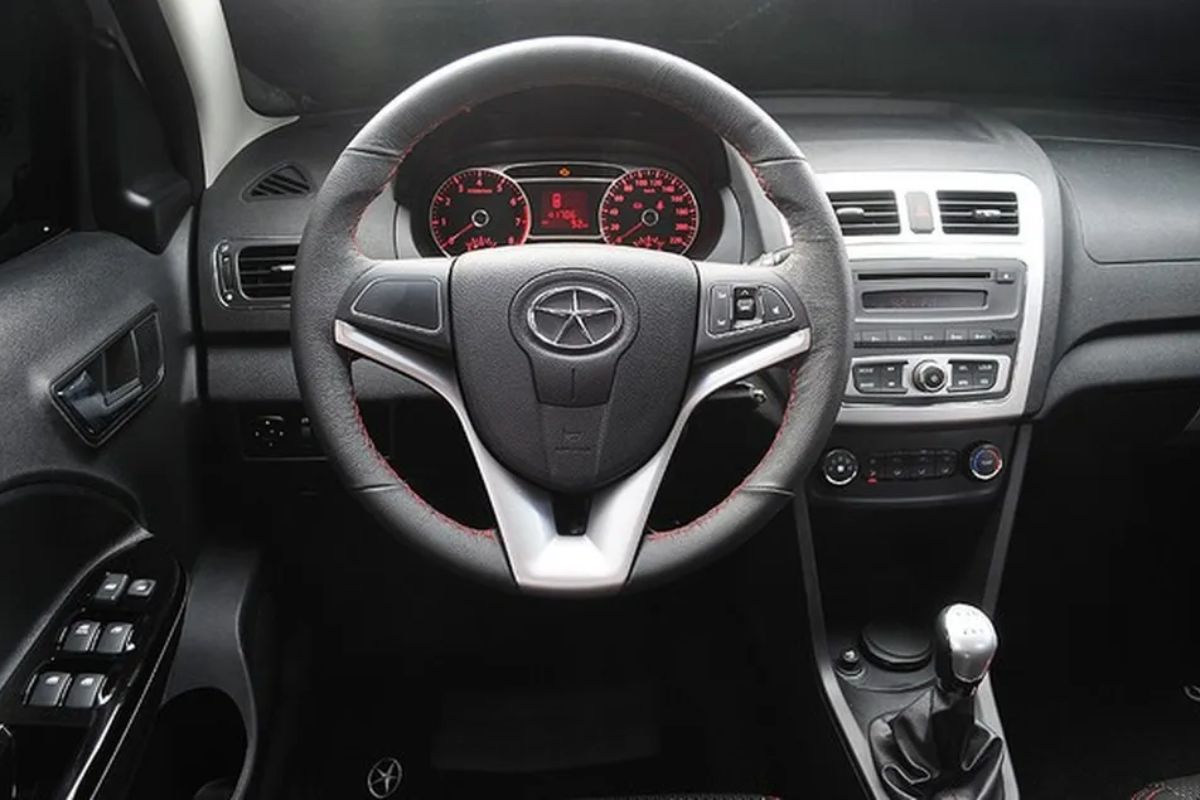
With 1.5 16V Jet Flex engine, 490 liters trunk and complete package for an entry price in the used market, the Jac J3 Turin breaks stigmas, shows honest performance in day-to-day and delivers space, equipment and viable maintenance for those seeking a rational compact sedan.
The Jac J3 Turin has been marked by common prejudices against early Chinese cars in Brazil, especially regarding parts and resale. The reality of use, however, reveals a competent compact sedan, with a matured design in the 2014/2015 facelift and a set that meets urban and highway driving without surprises.
In practice, the model competes with Siena, Voyage, Prisma, and Versa offering generous standard features and internal dimensions that surprise the category. The average price observed in the used market, often between R$ 20,000 and R$ 25,000, reposition the cost-benefit and helps explain why satisfied owners defend the car vehemently.
Mechanics, Performance and Dynamic Tuning

Under the hood, the Jac J3 Turin features the 1.5 16V Jet Flex with dual cam, variable valve timing (VVT), and chain instead of a timing belt.
-
The car stored for 38 years: when opening the barn door, what appears is breathtaking and looks like a scene from a movie!

-
Fiat works miracles in the Brazilian market, lowers the price of its 0 km hatch to R$ 69,990, reestablishes the model as the cheapest car in the country, and reignites the battle against Kwid and C3.
-
Chevette with cooking gas: How the gas cylinder ends up being used in cars clandestinely and why this makeshift solution can result in leaks, explosions, damaged engines, and seized vehicles.
-
Fiat launches the new 2027 Toro hybrid with 48V, 176 hp, an electric motor of 15.5 hp, a 0.85 kWh battery, up to 7% fuel savings, 8% fewer emissions, and possible exemption from IPVA.


It produces 125 hp and 15.5 kgfm at 4,000 rpm, delivering more power above 3,000 rpm.
It is a typical setup for a modern naturally aspirated engine: progressive at low revs and eager when the driver explores medium and high revs.
The 5-speed manual transmission prioritizes simplicity and robustness.
In real use, the sedan shows stable and predictable behavior, with light power steering and front disc brakes with electronic distribution.
For everyday use, the setup is honest and predictable, as long as the driver respects the characteristic of revving a bit more to get the best out of the engine.
Internal Space, Trunk and Ergonomics

Measuring 4.15 m long, 1.65 m wide, and 1.46 m high, the Jac J3 Turin provides a cabin with good legroom and headroom, aided by soft foam seats in the 2014/2015 line.
The highlight is the 490 liters trunk, a volume comparable to that of midsize sedans, which enhances usability for families and trips.
Ergonomics is satisfactory in day-to-day use: easy driving position to adjust, controls within reach, and good visibility.
The sound insulation improved in the facelift, reducing typical internal noises from the model’s early years. For those who prioritize function and load capacity, the package is convincing.
Equipment and Perception of Value
Even in the more affordable units, air conditioning, power steering, power windows on all four doors, central locking, electric mirrors, fog lights, ABS, and dual airbags are common.
In many cars, you’ll find 15-inch wheels and an audio system with steering wheel controls.
This is a content that is hard to replicate in the same price range, especially among national competitors of the time.
This perception of value increases when you realize that comfort and safety items come standard in a large portion of the units.
For those buying with a spreadsheet in hand, the package makes sense and reduces future spending on upgrades.
Fuel Consumption, Insurance, and Maintenance in the Real World
Usage reports indicate typical fuel consumption of city with gasoline between 8 and 9 km/l and highway between 12 and 13 km/l.
With ethanol, around 5 km/l in the city and up to 10 km/l on the highway, consistent with a 1.5 naturally aspirated engine of its time.
These numbers are comparable to direct rivals, without unrealistic promises.
For maintenance, wear items like filters, spark plugs, sway bars, shock absorbers, and auxiliary belts have competitive prices from various aftermarket brands; the timing chain eliminates one of the most expensive periodic services.
The point of attention lies in trim parts (upholsteries, lights, headlights, internal details), which may require sourcing and longer lead times.
To avoid surprises, thorough inspection, proven history, and consulting part number catalogs are essential steps before purchasing.
How It Drives Against Classic Rivals
In urban use, the Jac J3 Turin keeps up with Voyage, Prisma, and Siena effortlessly, delivering linear responses and good comfort.
On the highway, accelerations require downshifting to maintain power on inclines, but stability and brakes instill confidence within what is expected of a compact sedan.
It is not a sporty car, it is a rational companion, and in this proposal, it delivers on its promise.
For those needing a large trunk, low acquisition cost, and complete package, the Jac positions itself as a logical alternative.
The initial depreciation becomes an advantage for the second owner, provided the car is intact and free of structural issues.
The Jac J3 Turin doesn’t need myths to defend itself.
It behaves like a well-rounded compact sedan, offering larger sedan space, plentiful features, and simple and well-known mechanics, with the bonus of a very competitive entry price in the used market.
Those who look beyond prejudice find a coherent design for real use.
What is your experience with the Jac J3 Turin or with compact sedans in this price range? Is it worth switching to it now?







Seja o primeiro a reagir!