





 Portuguese
  English
  Spanish
  10 min of reading
  1 comment





Liliana Alfiero Assumed Lupo In The Middle Of The 1990s Crisis, Restructured Debts, Changed Family Management, Invested In Retail And Innovation, And Transformed The Company Into A Group Worth R$ 1.8 Billion In 2024 In Brazil.
At 48, Liliana Alfiero decided to face a scenario that many considered lost. Lupo, founded in 1921 by her grandfather Henrique Lupo, was suffocated, with no bank credit and sales practically deemed certain to fail. The family saw little way out for a company that was in debt, disorganized, and exposed to a hostile economic environment.
She asked for one year. One single year before selling Lupo. The plan was simple on paper and brutal in practice: organize the house, buy time, renegotiate debts, and make the company worth more. What was supposed to be a transitional move turned into a historic turnaround. Three decades later, Lupo is a leader in socks and intimate apparel in Brazil, with four factories, around 6,000 direct employees, and revenue of about R$ 1.8 billion in 2024.
From Handcrafted Socks To The Lupo Brand Recognized In The Country
The history of Lupo begins well before the crisis. It starts with the trajectory of Henrique Lupo, an Italian immigrant who arrived in Brazil in 1888, at the age of 11, landing in Santos and establishing himself in Araraquara with his family.
-
(Video): Italian pilot lands plane on moving train at 120 km/h and achieves unprecedented feat in aviation, even with a narrow runway and without direct visual contact.

-
It seems to have come out of a science fiction movie: A Brazilian city where it rains almost every day, recording over 4,000 mm per year, driven by climatic factors — a direct result of its strategic location in the Amazon.

-
The water crisis that could change everything this year has already begun; it’s not just about the climate, it affects technology, raises product prices, and can halt entire companies without warning.

-
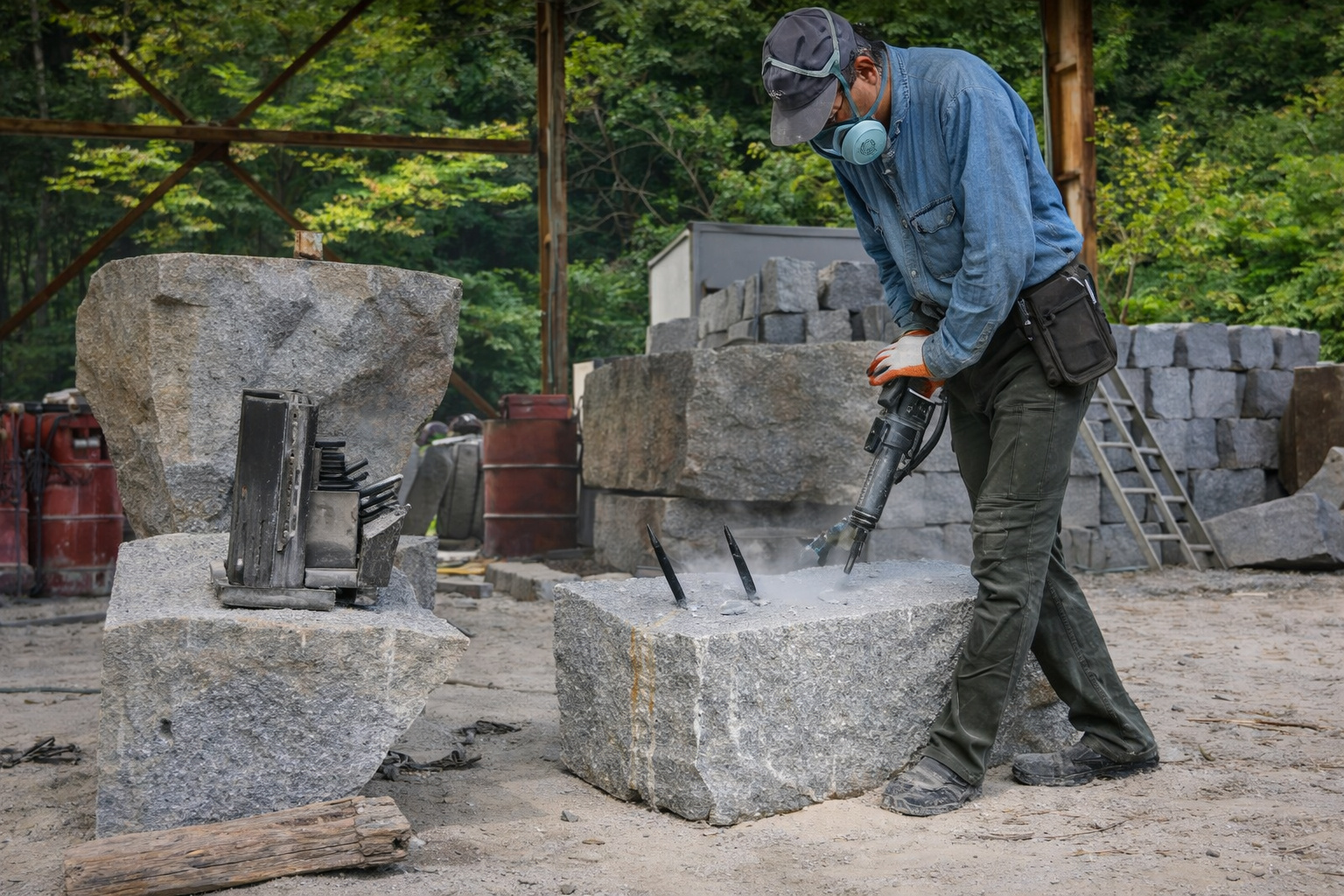
A Japanese mason transforms raw granite into small cups and handcrafted utensils, collects giant stones, cuts with precision, and impresses with detailed manufacturing and finishing.

A watchmaker and goldsmith, Henrique spent decades in his father’s trade until he decided to change fields to support the family. By purchasing two sock-making machines, he set up the first factory in 1921 in his own home. Production was entirely family-run, even the dyeing of the pieces in the bathtub.
The socks were expensive and hard to sell, but Henrique made a strategic decision that would shape the company’s culture. Instead of competing on price, Lupo chose to compete on quality. The mandate was to produce the best sock possible, justifying the higher price compared to competitors.
With this focus, Lupo grew. By 1924, it was able to purchase land and build a factory in the backyard of the house. By 1938, the building had four floors. Over the following decades, the family diversified investments in farming, radio, and other fronts, but it was in socks that the brand established itself as a major manufacturer in Brazil.
In the 1940s, the arrival of nylon opened a new era for the market, while World War II brought prejudice against Italian immigrants, even impacting the company’s name, which had to be temporarily changed. Nevertheless, Lupo continued to grow.
In the 1950s, the famous clock installed on top of the old factory became a symbol of the city of Araraquara, reinforcing the bond between the brand and the community. In the 1960s, the company recognized the growing entry of women into the workforce and launched women’s lines, expanding its portfolio. Lupo was also one of the pioneers in advertising on billboards in soccer fields, including at Santos games featuring Pelé.
By the late 1970s, construction began on a new manufacturing unit along the Washington Luís highway, inaugurated in 1980, covering over 20,000 m². In 1987, the company changed its legal name to Lupo S.A., preparing it for new lines. In 1988, the launch of the Loba brand, focused on women’s socks, opened another avenue for growth with a striking advertising campaign.
Lupo Grows, Diversifies, And Hits The Limits Of Family Management
The early 1990s seemed promising commercially. Lupo launched a modern collection of underwear, catering to the male audience with comfort and design, marking a new phase of expansion. But behind the scenes, the company’s structure revealed serious vulnerabilities.
The command was with Elvio Lupo, one of the founder’s sons. However, management was pressured by a large, fragmented family. More than 80 shareholders, all relatives, were intensely involved in decision-making, with no consistent alignment on strategy. Frequent meetings were held, but there was little consensus and much interference.
Family governance became a central problem. Without a clear direction, the company accumulated poorly coordinated decisions and lost the ability to react in a turbulent economic scenario.
When trade liberalization and the economic plans of the 1990s came, the business environment became even more hostile. The Collor Plan, with the confiscation of resources, hit Lupo‘s cash flow hard.
For Liliana, the impact was double. While the company saw its reserves locked and payroll threatened, she faced, that same weekend, the death of her husband in a car accident. On Monday, Lupo had no money to pay employees, and Liliana had to go to the bank while processing her own grief.
The company didn’t directly owe suppliers, but it had exhausted its credit capacity. Without working capital, financing, and with a heavy structure, Lupo was heading for a dead end.
In this context, shareholders began to openly discuss selling the company. In a decisive meeting, when the idea of selling was put on the table, the silence revealed more despair than consensus.
The Year That Would Change Everything: The Entrance Of Liliana As President Of Lupo
In this bleak environment, Liliana Alfiero stood up and made a proposal. She asked for a year to work at Lupo before the sale. Her logic was straightforward, almost cold: if the company were sold in those conditions, it would be sold for a pittance.
She argued that by minimally restructuring the house, it would be possible to negotiate a sale on better terms for all shareholders. The main motivation wasn’t even to embark on a long-term career, but rather to prevent the wealth built over decades from being liquidated hastily and unfavorably.
The shareholders agreed, not so much out of agreement, but from a lack of alternatives. In 1993, at 48, Liliana became Lupo’s president. At first, she would admit that had she known the real scope of the problem, she might not have volunteered.
From then on, the year began in which Lupo was supposed to be organized for sale and ended up being saved to grow.
The Four Fronts That Saved Lupo
Upon entering the presidency, Liliana found a company with a lack of cash, promissory notes everywhere, and no confidence from the financial system. In response, she devised a plan with four major fronts.
1. Financial Restructuring And Tough Negotiation With Banks And Government
The first decision, perhaps the riskiest, was not to pay the promissory notes at that moment. A few months later, banks realized that the new management was not going to simply watch the deterioration and called the company to renegotiate the debt.
Liliana accepted to negotiate with the banks and, to honor the payments, decided to prioritize these debts over taxes. The total focus was on bank payments. Once the company’s name was cleared with the banks, Lupo then proceeded to a deal with the government, arranging to pay overdue taxes in installments.
It was more than three years of intense financial strain, but the strategy worked. At the end of this process, the company had regained credibility in the financial system and organized a payment line with tax authorities. This fiscal and financial foundation was crucial for Lupo‘s survival.
2. Consolidation Of Factories And Technological Modernization
The second front of action was operational. Lupo maintained two production units, one in central Araraquara and another on the Washington Luís highway. Liliana’s decision was to concentrate everything in the industrial park along the highway, which would reach 90,000 m².
By unifying production, she reduced costs, increased control, and created scale. This consolidation was accompanied by a continuous movement of replacing old machinery with modern equipment, boosting productivity and allowing for better quality and competitiveness in products.
3. Strategic Committee, Product Cut, And Streamlining Of Structure
Right in the first year of her management, Liliana created a strategic committee to rethink how Lupo operated. The group analyzed product by product, mapping real profitability, and eliminated from the portfolio everything that did not significantly contribute to revenue.
The same rigor was applied to the administrative structure. The number of managers was reduced, and about 250 employees were laid off, in a harsh measure but necessary to restore the company’s balance.
By doing this, Liliana touched on one of the most sensitive points of any family organization: cutting people, redefining powers, and reviewing products that often had emotional value for some shareholders.
4. Entry Into Retail And Diversification Of Lupo’s Portfolio
The fourth front was strategic and pointed to the future. In 1994, at the invitation of administrators of Shopping D in São Paulo, Lupo opened its first own store.
This decision changed the brand’s relationship with consumers. Lupo ceased to be just an industry selling to retailers and began to speak directly to the end consumer. This demanded a broader portfolio that was coherent with the customer’s real life.
From then on, the company expanded beyond socks. Leggings, underwear, tops, pajamas, and more recently, sportswear under the Lupo Sport brand were introduced. The first Lupo Sport store was opened in 2012 on Oscar Freire street in São Paulo, one of the most symbolic addresses of fashion retail in the country. In Araraquara, the company also opened its own megastore.
Retail, technology, and focus on higher value-added products were the tripod of Lupo’s new phase.
Who Is Liliana Alfiero, The Engineer Who Became CEO Of Lupo
Before taking the helm of the company, Liliana Alfiero built an 18-year career in civil engineering, working at two firms in São Paulo. In 1986, she was invited to join the commercial board of Lupo, marking a return to her family’s company but in a concrete executive role.
Seven years later, in 1993, she took over the presidency of the company during a crisis. She would become the first woman to hold this position at Lupo, in a traditional company marked by a strong family culture.
What began as a “year to organize the house” extended. In 2025, at 80, Liliana continues as CEO of Lupo, leading a company that has traversed crises, reinvented itself, and consolidated as a sector leader.
Lupo Buys Its Biggest Rival And Consolidates Leadership
Saving the company would already be an achievement; Liliana went further. In 2016, Lupo completed the acquisition of the Escalina group, owner of the Trifil and Scala brands. For decades, these brands were direct rivals to Lupo, at times even more prominent in market relevance.
With the purchase, Lupo not only surpassed its historical competitor but also decisively expanded its market share in the Brazilian sock and intimate apparel sector. The operation consolidated the group at a higher level, with a broader portfolio and an even more dominant presence in points of sale.
Lupo’s Response To The Pandemic And Job Preservation
The pandemic put companies of all sizes to the test. For Lupo, the initial shock was a decline in demand for traditional products. Instead of stopping, the company used what it did best: fabric, thread technology, and industrial scale.
The company began producing protective masks for social use. This movement started with an urgent demand from the Santa Casa of Araraquara, which lacked masks for doctors and nurses. Lupo stepped in to help and subsequently developed an optimized product, using its own looms and threads with antibacterial protection, previously used in lingerie and intimate pieces.
This initiative met an immediate social need and, at the same time, compensated for the drop in sales in other segments, helping to avoid mass layoffs and preserve the company’s structure during the crisis.
Lupo In 2024: Scale, Women, And An Empire Born From Socks
After decades of restructuring, expansion, and acquisitions, the image of Lupo in 2024 is that of a consolidated powerhouse.
The company closed the year with 862 franchises and own stores, over 34,000 points of sale, and 78 exclusive stores spread throughout Brazil.
Its revenue reached around R$ 1.8 billion, with four manufacturing parks producing a mix of 20,000 products. In 2024, Lupo manufactured around 155 million pieces, supported by a team of approximately 6,000 direct employees.
A symbolic figure reinforces the brand’s identity. About 85% of Lupo’s employees are women, something that has accompanied the company since its inception when production was still family-run and done at home. Today, this translates into an organization where female presence is structural, from the factory to leadership.
Despite the scale, Lupo remains a family business in essence. Control is in the hands of shareholder heirs from the third to the fifth generation of Henrique Lupo. Not everything is simple, and the typical tensions of family businesses continue to exist. Still, the recent trajectory shows a capacity for adaptation, professionalization, and long-term vision.
Future Uncertain: What Comes After A Century Of Lupo
When asked about the future, Liliana often says that predicting is the hardest part. During the worst phase, when Lupo barely knew if it would survive the upcoming months, she would laugh at questions about the next five years.
Today, the company is a century old, a leader in its sector, and has a history marked by innovation, crises, courage, and tough decisions. Growth seems less an option and more a natural consequence of everything that has been built.
The story of Liliana Alfiero and Lupo shows that saving a struggling company involves facing numbers, cutting excesses, addressing power structures, and simultaneously having the courage to invest in new paths, such as retail, technology, and strategic acquisitions.
In the end, a sock factory that started in a living room turned into a R$ 1.8 billion empire in 2024.
And you, which decision in Lupo’s history do you think was most crucial to transform a company on the brink of bankruptcy into a market leader?







Liliana Alfiero é uma mulher incrível! Sempre usei as meias Lupo pela sua ótima qualidade. Não sabia que por trás dessa grande marca existia essa grande mulher! Ao ler sua história, me tornei sua grande fã, e agora vou comprar meias Lupo com um novo olhar, um olhar para a importância da mulher Fênix que sempre renasce das cinzas e voa alto! Parabéns e obrigada por tudo, Liliana Alfiero!