





 Portuguese
  English
  Spanish
  5 min of reading
  8 comments


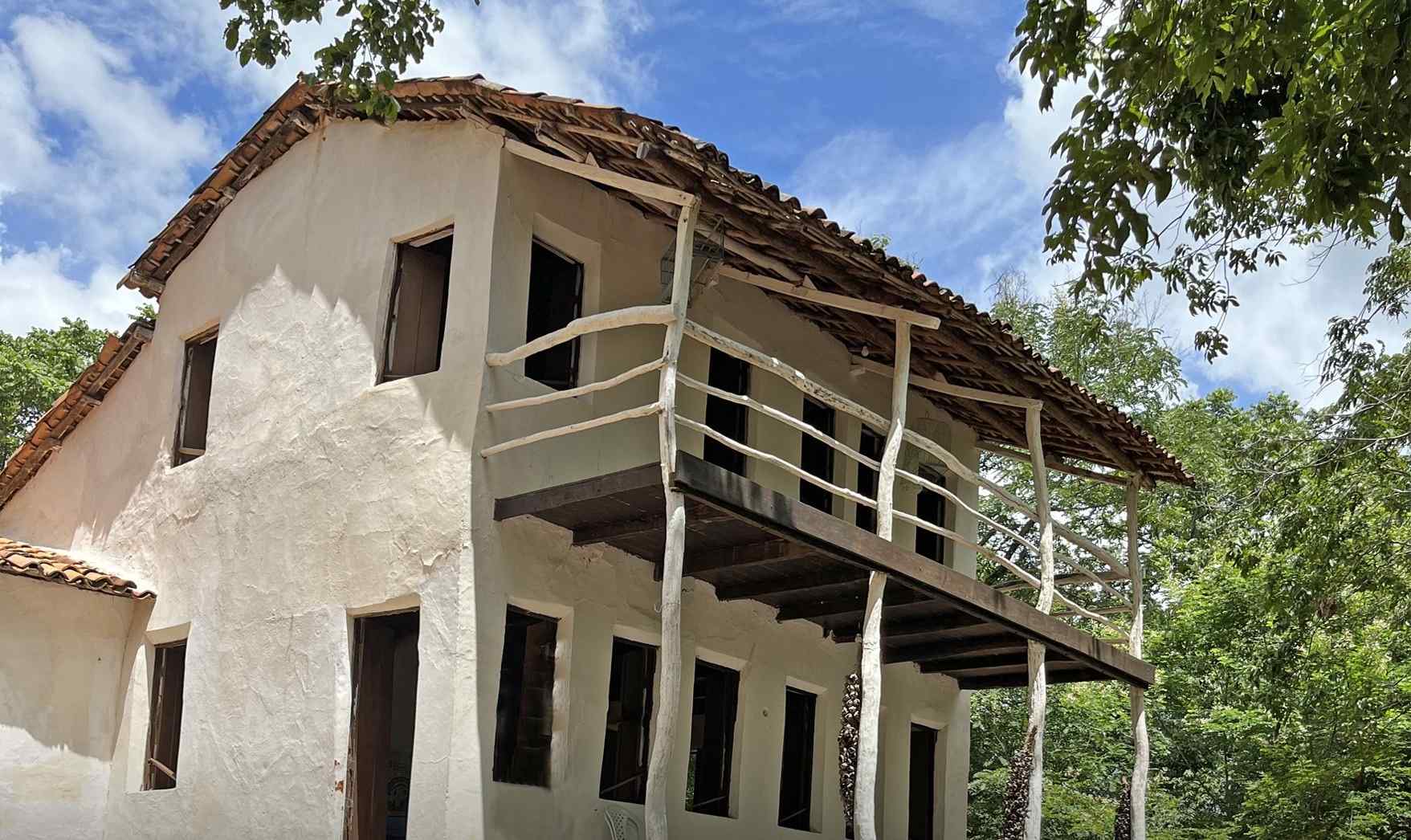


A Unique Construction in Brazil Preserves the Tradition of Taipa with an Unprecedented Feat: a First Floor Made Entirely of Clay
For centuries, clay has been one of the most democratic and fundamental materials in Brazilian architecture, used in the construction of taipa houses.
From the Amazon to the northeastern hinterlands, it has shaped homes, churches, and slave quarters.
ARTICLE CONTINUES BELOWSee also
Goodbye iron: new technology from Xiaomi promises to revolutionize the way we iron clothes with 500 kPa steam, continuous flow of 120 g/min, heating in 65 seconds, and six smart modes for different fabrics.

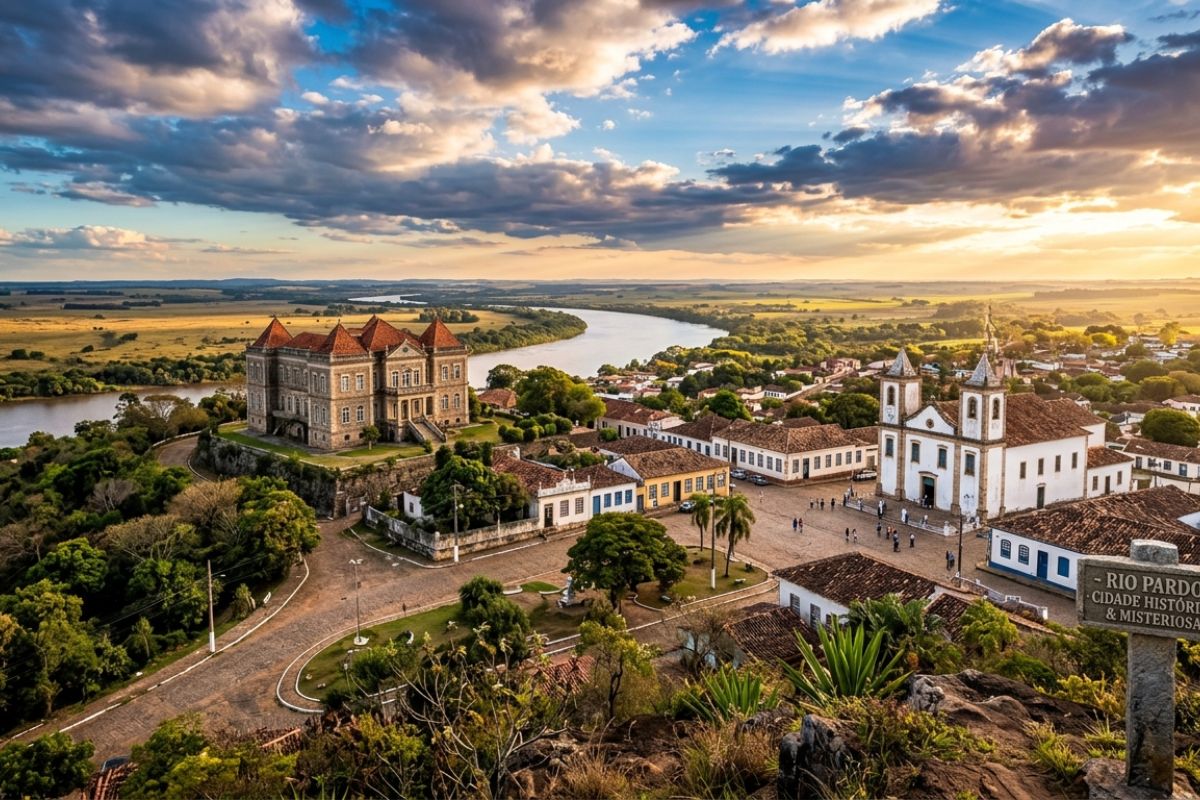
Rio Pardo, the most mysterious city in Rio Grande do Sul: untouched Pampas castle, the missing treasure of the Devil Boy, bride’s saint, invisible tunnels, and a 200-year curse today.
China retires the J-7 fighter after years of military protection and can now transform military items into drones, following more than 60 years of operation of the J-7, derived from the MiG-21, with thousands of units produced and strategic use in the PLAAF and PLANAF.

Volunteers are sought to live in the mountains for a month: a study pays people to stay at 2,500 meters, with 24-hour monitoring of sleep, metabolism, and blood pressure.
Taipa houses, in particular, represent not only a construction style but also a testimony to ancestral knowledge passed down through generations — a balance between simplicity, functionality, and adaptation to the environment.

The taipa technique originated in prehistory when humans realized that mixing wet earth with plant fibers, straw, or manure created a firm and durable mass after drying in the sun.
This rudimentary discovery paved the way for building the first permanent dwellings. Over time, the method spread across the world, receiving different names and improvements according to the climate and culture of each people.
The most sophisticated version of this method is known as “rammed earth,” originating from China between 2600 and 1900 B.C.
In this process, the earth is compacted within wooden molds, forming thick walls with great strength. The Romans improved the technique, bringing it to various regions of Europe, North Africa, and the Middle East.
In the 16th century, it arrived in Brazil through the Portuguese, becoming the primary method of construction in the early centuries of colonization.
Houses, churches, and entire sugar mills were built with rammed clay. The durability and thermal capacity of taipa — which keeps the interior cool even in intense heat — made it ideal for the tropical climate.
However, with the advancement of new materials such as fired brick and cement, taipa began to be seen as a symbol of poverty. Gradually, it ceased to be associated with the colonial elite and began to identify the popular housing of black, indigenous, and rural communities.
The oldest house in Brazil, the Taipa House of São Vicente, built between 1516 and 1520 in São Paulo, is a landmark of this period.
Still standing, it carries the marks of time and the ingenuity of those who learned to transform the earth into shelter. However, few would imagine that, four centuries later, clay would surprise again — this time in the Ceará hinterlands.
A Two-Story Clay House

In the heart of Cariri, a region marked by aridity and inventiveness, stands a construction that defies the logic of popular engineering.
Located in Sítio Fundão, a rural area of Crato (CE), the residence built in the 1950s by Jefferson da França Alencar is considered the first two-story taipa house in Brazil.
The feat is extraordinary because, under normal conditions, clay does not allow for great heights. The material’s natural instability and the additional weight of an upper floor require calculations and reinforcements uncommon in rural constructions. Even so, with empirical knowledge and creativity, Alencar found effective structural solutions.
He reinforced the base of the house with deeper foundations and used sturdy wood in the load-bearing walls and floors, creating a structure capable of supporting the weight of the second floor.
The result is a solid residence that has withstood the rains, the heat of the hinterlands, and the passage of decades, remaining standing for over 70 years.
For much of the 20th century, the house served as the dwelling for several generations of the Alencar family. It also became a point of reference for the local community — a kind of “monument of the people” symbolizing the pride of those who build with their own hands.

Restoration and Rebirth
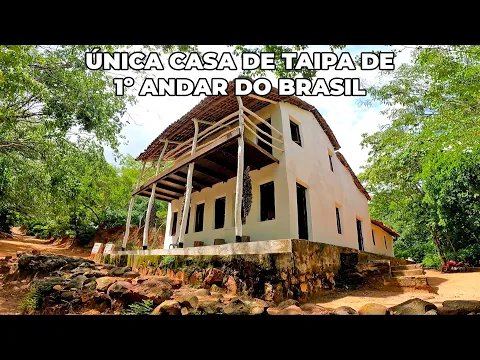
In 2017, the Government of Ceará recognized the historical value of the building and carried out a complete restoration, conducted by the Secretariat of the Environment.
The property became home to the Visitor Center of the Sítio Fundão State Park, integrating a project to enhance the culture and memory of Cariri.
The restoration work respected the original characteristics, reinforcing walls, replacing deteriorated wood, and recovering the roof.
Treatment against humidity and reconstruction of compromised architectural elements were also carried out. The intervention ensured not only the preservation of the heritage but also its educational and tourism function.
Today, the Visitor Center receives researchers, architects, students, and curious tourists seeking to understand how constructive simplicity can engage with modern concepts of sustainability. The clay walls, naturally insulating, regulate internal temperature without the need for electric energy, demonstrating how traditional wisdom anticipates solutions that are now seen as ecological.
Clay, Memory, and Identity
Beyond its structural importance, the site gained symbolic value. It became a point for school visits, a backdrop for audiovisual productions, and an inspiration for studies on vernacular architecture. For many, it encapsulates the creative spirit of the northeastern people: transforming the little into much, the rustic into beautiful, and the necessary into art.
Heritage specialists emphasize that taipa, far from being outdated, can be an ally in times of climate change.
The material is abundant, has a low environmental impact, and is highly recyclable. Furthermore, it keeps alive the connection between man and nature — a relationship often broken by industrial constructions.
In the case of Crato, clay tells a story of ingenuity and affection. Jefferson da França Alencar’s house is not merely a preserved residence; it is a living lesson on memory and sustainability, transcending generations and continuing to inspire new ways to build and live in the hinterlands.
While modernity erects skyscrapers of glass and steel, the clay of Cariri remains steadfast, reminding us that sometimes true greatness lies in simplicity. And that the first taipa house with a second floor in Brazil continues, silent and proud, proving that time may wear down the material — but never destroys the legacy of those who build with soul and wisdom.









Na virada do do século XIX para o XX só existiam sobrados em minha cidade com térreo e primeiro pavimento, de taipa. Logo essa casa não é a primeira de andar em taipa. No próprio Ceará deve ter tido aos montes.
Frans POST, pintor holandês da equipe de Maurício de Nassau tem várias pinturas de sobrados de taipa, em 1640-1650.
A técnica da taipa não se originou na África, como escreveu uma leitora. Ela é oriunda do Oriente Médio. Daí se espalhou para o Egito, a China e a África.
A técnica de taipa de pilão foi trazida da África os portugueses não sabiam utiliza-la foram os escravos negros que trouxeram e difundiram a técnica.