






 Portuguese
  Spanish
  4 min of reading
  0 comments


Bizarre Innovation: Device Converts CO2 into Reusable Fuel, Offering an Unusual Solution to Reduce Greenhouse Gases
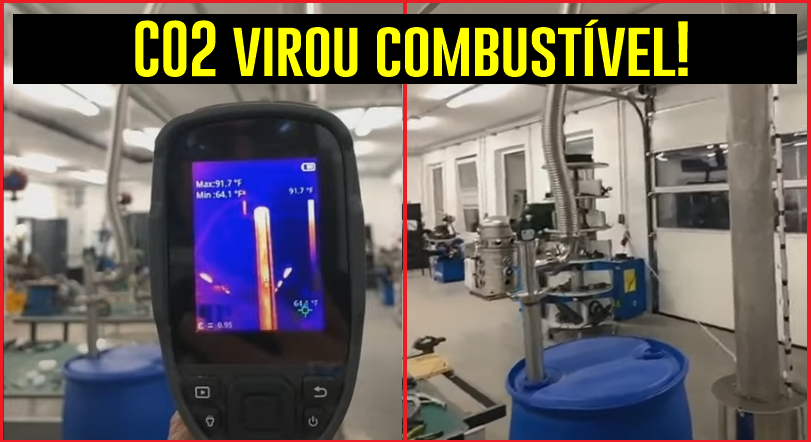
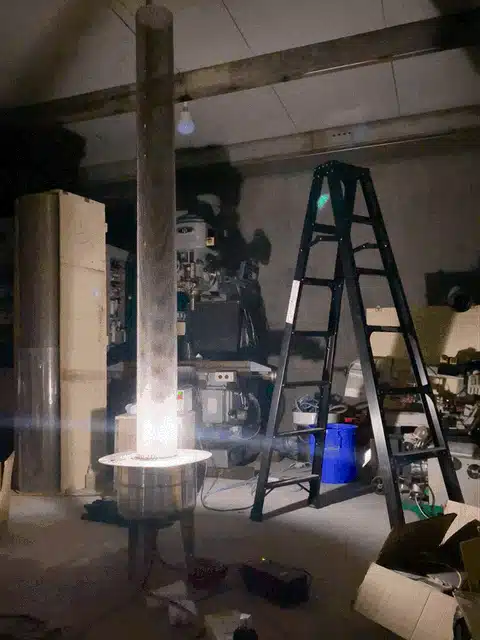
A new technology developed by the startup SpiralWave is gaining attention in the climate innovation sector. The company recently presented at the TechCrunch Disrupt 2024 event a unique device: a tall, translucent column that uses plasma to capture carbon dioxide (CO2) from the atmosphere and convert it into green methanol, a renewable fuel with low carbon emissions.
How Does the Device Work?
The device utilizes plasma, a state of matter often seen in fluorescent lights and old televisions, to capture and transform CO2. As the plasma moves through the device’s column, it breaks down the CO2 molecules present in the air.
According to SpiralWave’s CEO, Abed Bukhari, each pulse of plasma acts like a molecular “speed bump,” breaking down carbon dioxide into basic compounds.
-
Roblox changes the rules for children and teenagers in Brazil and promises a safer platform with selfies and parental control.

-
Water can carry pesticides invisible to common treatment, but nanosensors developed by Brazilian researchers promise to speed up the alert before the risk reaches the tap.

-
Gases created to save the ozone layer have become a new global warning: substitutes for CFCs have already released more than 335,000 tons of a “forever chemical” onto the Earth as invisible rain, contaminating everything from tap water to Arctic ice.
-
Researchers present a hydrogen ion battery capable of storing energy in two different forms, an innovative solution that promises to increase the autonomy of renewable systems and simplify energy transportation.



To achieve this transformation, the equipment uses three distinct microwave pulses, each at a specific frequency. This innovative process results in the formation of methanol, a type of fuel that releases 95% less carbon compared to traditional fossil fuels.
Prototypes and Energy Efficiency of the CO2 Device
So far, SpiralWave has created two prototypes of the device. One of them is the Nanobeam, a smaller and more compact version. The other is the Microbeam, a larger structure that stands about two meters tall and has been publicly demonstrated.
Both use approximately 10,000 kWh to produce one metric ton of methanol, which may seem high; however, with renewable energy sources, the environmental impact is considerably reduced.
With a higher concentration of CO2, the device becomes even more efficient. According to SpiralWave, it can operate with only 7,000 kWh under these conditions, representing a significant energy savings.
However, to produce fuel sustainably at scale, SpiralWave will need to optimize energy consumption and adapt to new energy sources.
The Dream of Giant Scale
For Bukhari, the goal is ambitious: to build a giant version of the device, over 90 meters tall. This structure would have the potential to remove up to one gigaton of CO2 per year from the atmosphere, significantly contributing to the fight against climate change.
It is worth noting that to control global warming, scientists estimate that it is necessary to remove about 10 gigatons of CO2 annually.
However, reaching that level of operation is a colossal challenge. SpiralWave still needs to overcome issues related to energy supply, operational costs, and especially the economic impact of large-scale production.
According to Bukhari, the success of this project depends on strategic partnerships and advancements in the development of renewable energy sources to meet the device’s demand without harming the environment.
Considerations on Environmental Impact and Viability
Although the device’s concept is innovative, it remains to be seen whether it can truly make a difference in a global context. Many carbon capture technologies have been developed over the years but face challenges in becoming viable at scale. SpiralWave believes its device could be an exception, as it not only captures CO2 but also transforms the gas into usable fuel.
However, critics point out that even with improved energy efficiency, the device still consumes a considerable amount of energy to operate. This concern becomes magnified when we consider that SpiralWave plans to build larger versions, which would require substantial energy infrastructure to support them.
Another important point is that even with the potential to remove CO2 from the atmosphere, the technology does not replace the need to reduce carbon emissions at the source. This means that, in addition to investing in capture devices, the world needs to adopt measures to prevent greenhouse gas emissions from the start, such as in industries and transportation systems.


Prospects for the Future
The SpiralWave device exemplifies the growing innovation in the climate technology sector. The search for practical solutions to the climate crisis is urgent, and the transformation of CO2 into fuel may be one of the viable alternatives to reduce the concentration of this gas in the atmosphere.
However, the real impact of technologies like SpiralWave’s will only be visible in the long term. Climate technology still faces challenges in gaining traction in the market and achieving the scale necessary to significantly reduce global emissions.







Be the first to react!