






 Portuguese
  Spanish


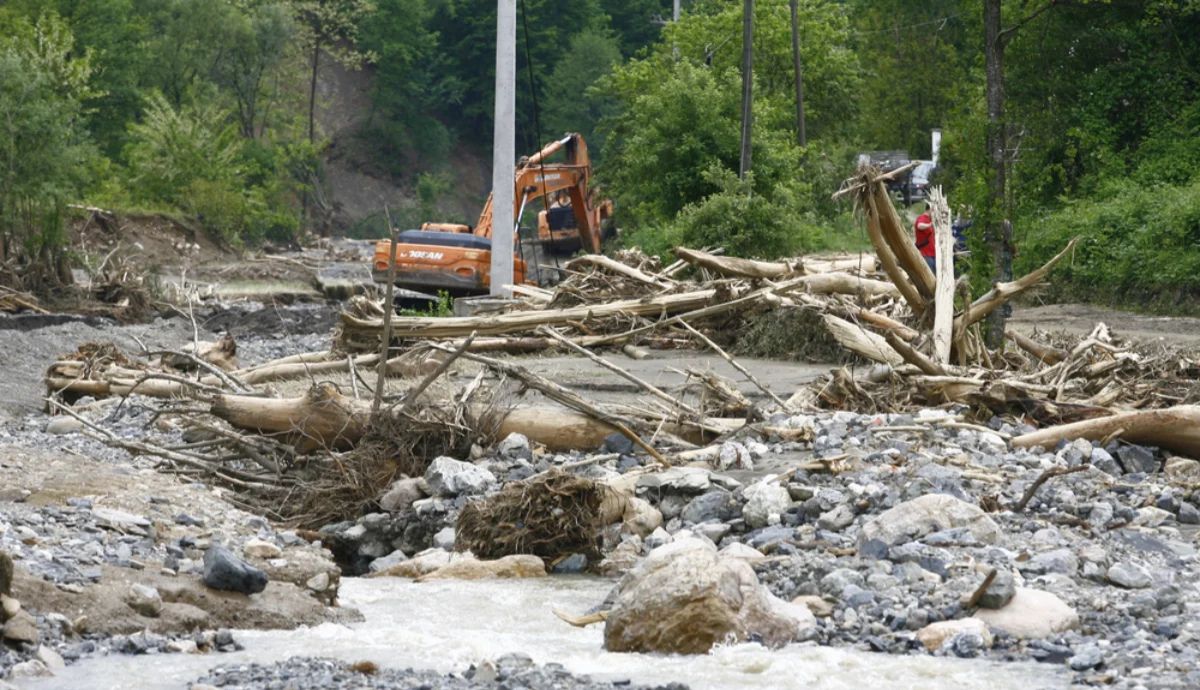

TRT-RS reverses just cause dismissal of worker who used excavator in flood and maintains R$ 20 thousand compensation for moral damages.
On April 30, 2026, a decision by the 2nd Panel of the Regional Labor Court of the 4th Region (TRT-RS) gained repercussion by confirming the reversal of the just cause dismissal applied to a worker who used a company excavator to try to escape, with colleagues, from an area isolated by a flood in Rio Grande do Sul. The case occurred in May 2024, during heavy rains that caused a river’s water level to rise, landslides, and road blockages in the region where the group was working on the construction of a tunnel for a dam.
The Court understood that the maximum penalty applied by the company was undue, converted the termination to dismissal without just cause, and maintained the compensation of R$ 20 thousand for moral damages. According to the process reports released by TRT-RS and legal media, the worker stated that he and his colleagues were stranded, without communication, water, or food, before using the machine to try to clear a path and remove the group from the location.
Understand below why the Court considered the punishment disproportionate, what amounts must be paid to the worker, and how this case rekindles the debate about just cause dismissal, climate emergency, and corporate responsibility in situations of extreme risk.
-
Court Upholds Just Cause Dismissal of Employee for Posting Social Media Videos During Work Hours

-
Dismissing a retired worker or one eligible for retirement constitutes ageism and creates a duty to compensate: a unanimous decision by the TRT mandates reinstatement to employment, payment of back wages, and upholds compensation of R$ 15,000 for discrimination.

-
Work less and produce more? Nobel Prize in Economics explains why shorter workdays can increase productivity

-
Unions are growing again in Brazil after more than a decade, but they face an urgent challenge to win back digital workers and maintain relevance.




Labor Court reverses just cause dismissal after worker used excavator in Rio Grande do Sul flood
The decision confirmed by the 2nd Panel of the TRT-RS upheld the first-instance understanding that the worker’s conduct did not justify dismissal for just cause. The penalty had been applied after the employee used a company excavator during a situation of isolation caused by intense rains, in a construction area linked to the building of a tunnel for a dam.
According to the process, the region was hit by heavy rains in early May 2024. The river level rose, there were landslides, and access roads were blocked.


In this scenario, the worker and other colleagues remained trapped on site, without immediate means of communication, water, or food. The excavator was used in an attempt to clear a path and remove the workers from the flooded area, but it ended up getting stuck during the maneuver.
The company held the worker responsible for the equipment damage and applied just cause dismissal. In the labor lawsuit, the employee requested the reversal of the penalty, payment of severance pay corresponding to dismissal without just cause, and compensation for moral damages. The Court granted the central requests and concluded that the emergency context needed to be considered when analyzing the conduct.
Company alleged damage to leased machinery, improbity, misconduct, and insubordination
The company’s defense argued that the worker had acted “deliberately and of his own free will” by driving expensive, leased machinery into a ditch, causing damage and operational disruptions. The company also claimed that, even with rains and obstructed access, the workers were not abandoned and had received instructions to move to another location.
Based on this interpretation, the company attempted to classify the conduct as an act of improbity, misconduct, and insubordination, hypotheses provided for in Article 482 of the Consolidation of Labor Laws for the application of just cause dismissal. This type of dismissal is the most severe punishment within the employment relationship, as it deprives the worker of a series of severance rights that would be due in a common dismissal.
The Court, however, assessed that the evidence produced in the process did not support the alleged serious misconduct. The judgment of the 2nd Labor Court of Santa Maria, upheld on appeal, considered that witnesses confirmed the extreme situation faced by the workers on that night of torrential rains.
Judge stated that just cause dismissal requires robust proof and considered worker’s attitude justifiable
In the first-degree decision, Judge Márcia Carvalho Barrili, from the 2nd Labor Court of Santa Maria, highlighted that the application of just cause dismissal requires robust proof of serious misconduct. This point was central to the reversal of the penalty, because dismissal for just cause cannot be sustained solely by a presumption of damage or by an isolated interpretation of the employee’s conduct.
The magistrate assessed that the worker acted in an exceptional context, where the preservation of the group’s life and physical integrity outweighed a cold analysis of equipment use. According to the decision reported in legal media, the attitude was considered justified and even commendable, as it sought to lead colleagues to a safe place amidst the extreme situation.
This understanding was upheld by the TRT-RS. For the 2nd Panel, there was no conduct serious enough to sustain the maximum penalty provided for in labor legislation. The reversal of the just cause dismissal, therefore, recognizes that the act could not be treated as improbity, insubordination, or misconduct given the concrete risk faced by the group.
Conversion of termination to without just cause guarantees prior notice, FGTS with 40% fine, proportional vacation and 13th salary
With the reversal of the just cause dismissal, the termination of the contract now produces the effects of a dismissal without just cause. This significantly changes the set of amounts due to the worker, as just cause dismissal restricts rights, and dismissal without cause guarantees broader severance payments.
According to the case’s disclosure, the worker should receive amounts such as prior notice, proportional vacation, proportional 13th salary, FGTS plus a 40% fine, and other amounts recognized in the process, including a medium-degree insalubrity bonus.

In practice, the decision not only removes the burden of just cause dismissal but also reestablishes economic rights that had been blocked by the penalty applied by the company.
The conversion also has a reputational effect. Dismissal for just cause carries a serious mark on a worker’s professional trajectory, as it suggests a serious violation of contractual duties. By reversing the penalty, the Court recognizes that the case should not be treated as a serious offense, but as a reaction to exceptional survival circumstances.
R$ 20 thousand moral damages compensation maintained because worker was punished after extreme risk situation
In addition to the reversal of the just cause dismissal, the Court upheld the compensation of R$ 20 thousand for moral damages. The central reasoning was the distress caused by the punishment applied to the worker even after he risked his own life and those of his colleagues in a flooded area, without food, without water, and in a situation described as imminent risk.
The decision considered that the punishment went beyond the scope of the contractual relationship and affected the employee’s dignity. Instead of analyzing the episode as an attempt at self-preservation and collective rescue, the company treated him as responsible for equipment damage and applied the maximum possible sanction within the employment contract.
The strongest legal point of the case is precisely the collision between corporate assets and the protection of human life. Although the company claimed material damage to the excavator, the Court understood that the emergency context removed the disciplinary severity attributed to the worker. The compensation, in this scenario, functions as reparation for the punishment considered undue and for the moral suffering resulting from the accusation.
Case reignites debate on floods, safety on construction sites, and corporate responsibility
The case also gains relevance because it occurs in the context of the floods that hit Rio Grande do Sul in May 2024, a period marked by extreme situations of isolation, blocked access, landslides, and risk to life in different areas of the state.
In the analyzed case, the workers were at a construction front and, according to reports accepted by the Court, faced a combination of lack of communication, lack of water, lack of food, and impossibility of safe exit.
The decision shows that, in extreme climatic events, the evaluation of labor conduct needs to consider the concrete scenario. An action that, under normal conditions, could be questioned by the company, can take on another nature when performed to preserve lives in an emergency. This is the element that transforms the case into a decision with strong social and legal impact.
For companies operating in isolated construction sites, infrastructure works, dams, tunnels, rural areas, or regions subject to severe climatic events, the case reinforces the importance of evacuation plans, emergency protocols, redundant communication, and minimum support provision to workers. The discussion is not limited to the use of the excavator but extends to risk prevention in activities carried out in vulnerable areas.
TRT-RS Decision Shows That Just Cause Cannot Be Applied Without Analyzing Context, Proportionality, and Real Gravity of Conduct
Just cause requires proportionality, immediacy, gravity, and consistent proof. In the case of the worker who used the excavator during the flood, the Court understood that these elements were not sufficiently present to uphold the penalty.
The conduct occurred in an exceptional situation, under concrete risk, and with the declared objective of removing people from an isolated area.
The decision of the 2nd Panel of the TRT-RS confirms that the employer’s disciplinary power is not absolute. The company can punish misconduct, but it needs to robustly demonstrate that there was serious conduct, incompatible with the continuity of the employment relationship, and that the applied punishment was proportional to the act.
When the context reveals an emergency and an attempt to preserve life, the legal interpretation changes substantially.
By upholding the conversion of the termination and the R$ 20,000 compensation, the Labor Court signaled that the protection of the worker’s life and dignity outweighs automatic accountability for equipment damage in a calamity scenario. This is the point that gives the case relevance beyond the individual relationship between employee and company.
In a country increasingly exposed to extreme weather events, the case leaves a direct question for companies and workers: in a real emergency, how far does the duty to obey internal orders go, and where does the right to act to save lives begin?


