





 Portuguese
  English
  Spanish
  4 min of reading
  0 comments


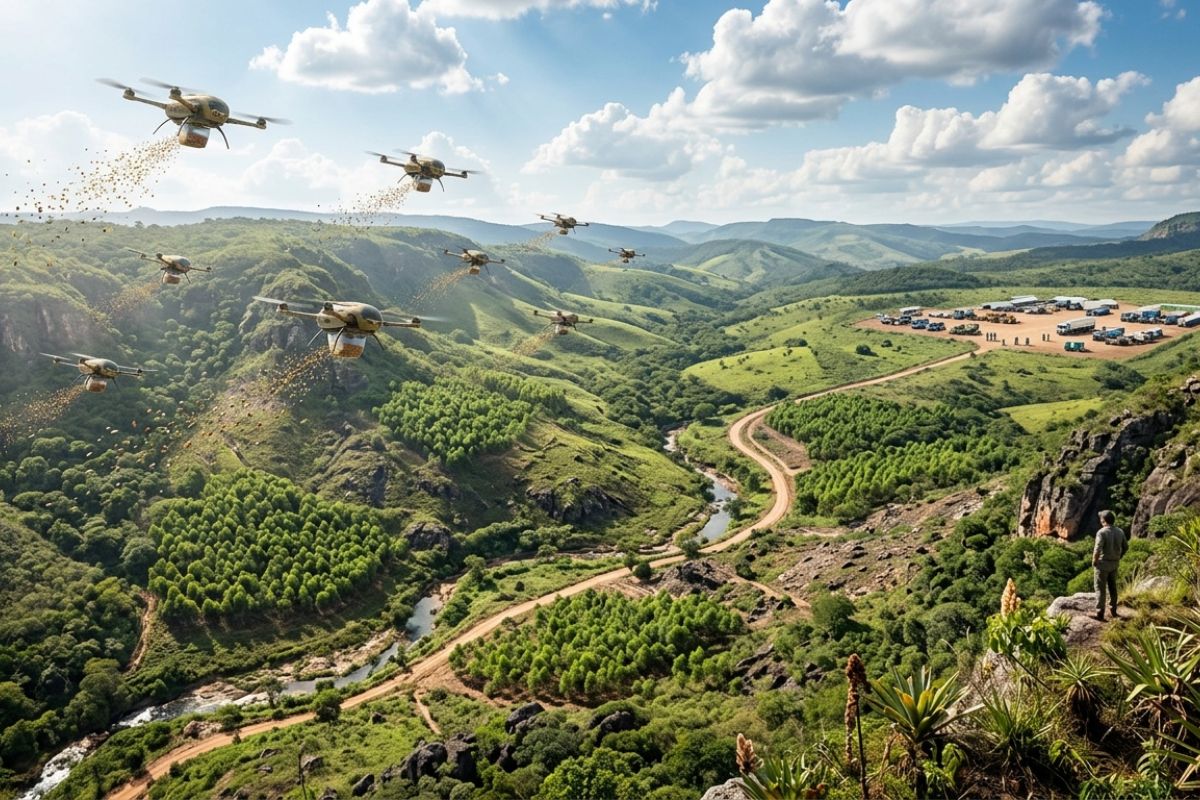
With drones, the Bacias & Florestas program has already planted 3 million trees and restored 15 thousand hectares in Brazil, but the germination rate is close to 10% and the cost can reach R$ 25 thousand per hectare
The use of drones to disperse native seeds in recovery areas is becoming one of the strongest bets to restore places where human access is difficult, such as slopes and regions near springs. In practice, drones take on a role similar to that of insects in nature, helping to recompose vegetation with greater reach and speed.
This innovation is part of the Bacias & Florestas program, which has been in existence for over 15 years and has already planted 3 million trees and restored 15 thousand hectares across Brazil. Even with high costs and a success rate around 10%, drones remain a viable alternative when the terrain prevents traditional methods.
Why drones have become “insects” in environmental restoration
In healthy ecosystems, seed dispersal happens all the time with the help of wind, water, and animals. When the area is degraded or isolated, this natural cycle is interrupted.
-
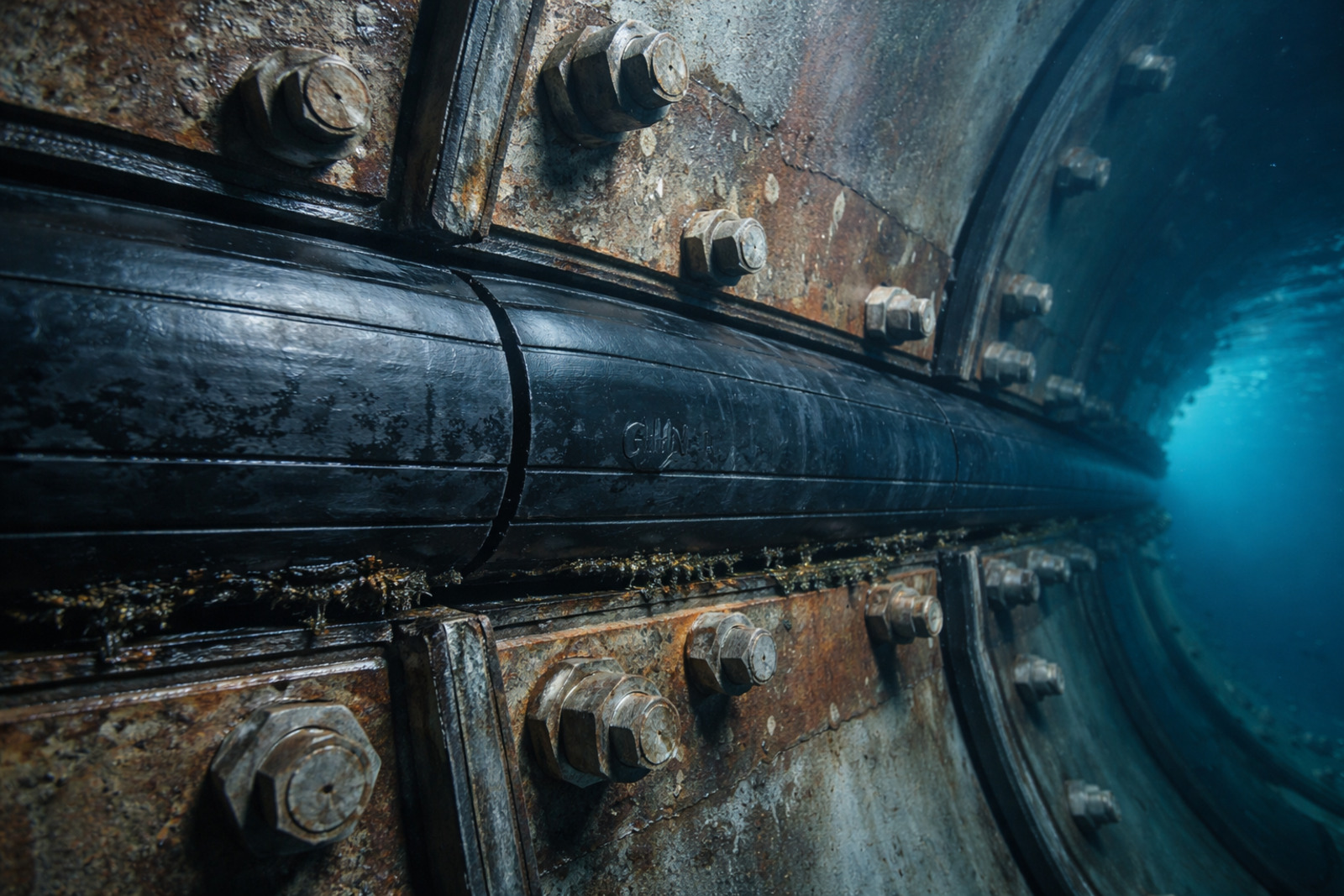
Alert in the underwater tunnels: the rubber sealing the entrance of the sea in a structure in China is deteriorating from the inside faster than expected.
-
A cyclone with unprecedented behavior will form in the Atlantic in the coming hours and will move from the sea to the continent instead of following the normal path, with gusts of up to 90 km/h and a risk of hail and waterspouts in southern Brazil.

-
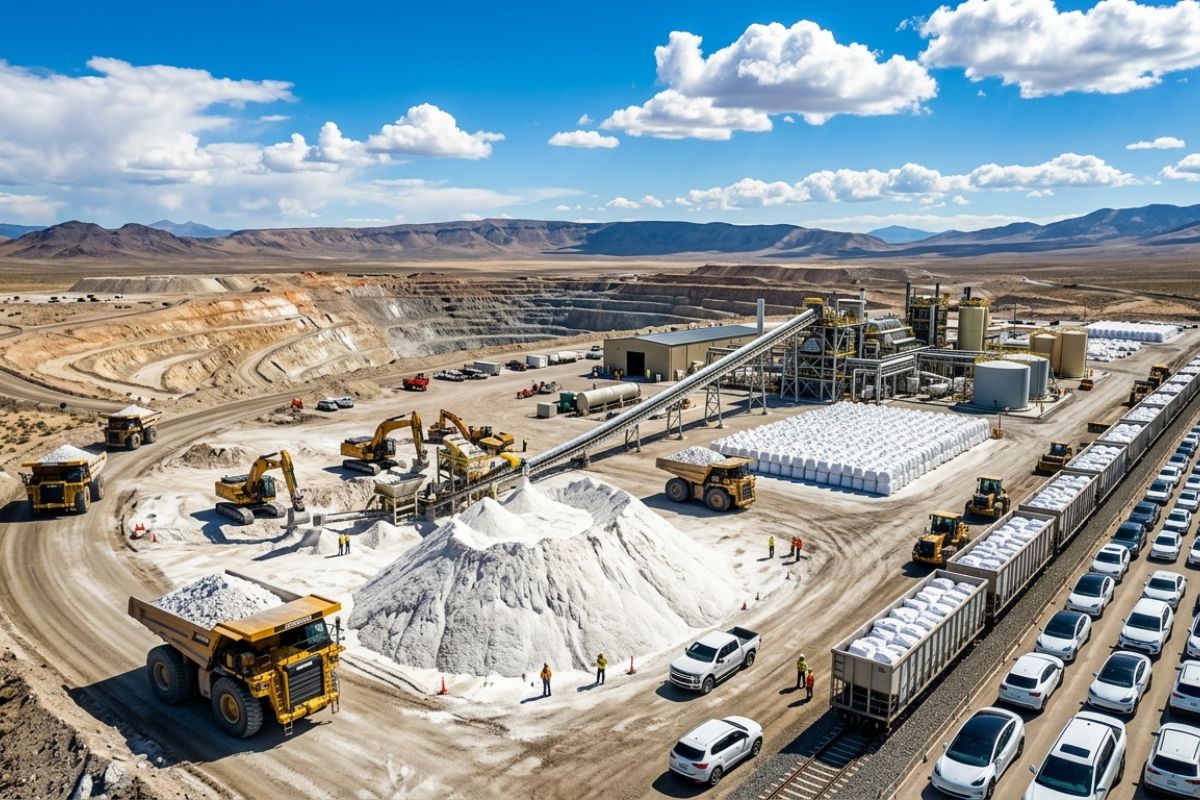
The “white gold” of Thacker Pass: the McDermitt caldera could be worth $1.5 trillion and hold nearly half of the world’s lithium; 40,000 tons/year could provide batteries for 800,000 electric cars already in the U.S.
-
The first nuclear submarine in Latin America is being built in Brazil, but the Navy warns that without an additional one billion reais, the project may halt, and the delivery forecast, which was 2029, has already been pushed to 2037 due to a lack of funds.


This is where drones come in as a practical solution to “bring life” to regions where spontaneous regeneration takes time or does not occur.
The idea is simple: to increase the scale of restoration without relying on easy access. Drones act as a conservation tool alongside environmental recovery initiatives, allowing seeds to be taken to specific points in the terrain.
How native seed dispersal works with drones
The method is based on the use of drones to drop native seeds in selected areas. This dispersal is used for the reconstitution of vegetation in places where it would be expensive, dangerous, or unfeasible to plant manually.
Drones are directed to strategic regions, such as slopes and areas near springs, enhancing the efficiency of restoration. The goal is to accelerate the reconstitution of native vegetation in critical points, where degradation affects soil, water, and biodiversity.
The size of the impact of the Bacias & Florestas program
The Bacias & Florestas program has been in existence for over 15 years and works on the recovery of watersheds. Over this period, the initiative has reached 3 million trees planted and 15 thousand hectares restored in Brazil.
In addition to the total volume, the project recovers an area equivalent to a continuous strip between São Paulo and Natal along the coast, conserving native vegetation along a stretch that represents about one-fifth of the entire Brazilian coast. This is a scale of restoration that reinforces why drones are gaining ground as a support tool.
High cost and low germination: the dilemma of drones

Planting through drones still has a high cost, which can reach R$ 25 thousand per hectare. And there is another decisive factor: the success rate is close to 10%, with the estimate that one in every ten seeds manages to germinate.
Even so, the technology continues to be considered viable for inaccessible areas. What weighs in the decision is not only the germination rate but the possibility of acting where the traditional method cannot reach. In certain terrains, the cost of “doing nothing” can be greater, especially when degradation affects springs and increases erosion.
What changes in the soil and water when vegetation returns
The reconstitution of native vegetation, also done with drones, brings direct effects on the functioning of the environment. Restoration contributes to the recovery of springs and improves water quality.
When the vegetation cover returns, there is a reduction in erosion, an increase in water infiltration in the soil, and strengthening of the resilience of communities against extreme weather events. In other words, the gain goes beyond the landscape: it impacts water security, soil stability, and territorial protection.
Partnerships that sustain field operations
To make the initiative viable, the program relies on collaboration from organizations such as The Nature Conservancy, WWF-Brazil, and Fundação Avina, as well as local partners who support the implementation and continuity of actions.
This network helps maintain consistent work over time, connecting technology, conservation, and territorial execution. Drones come in as a tool within a larger structure, which involves planning, area selection, and monitoring of results.
Why drones continue to grow as an environmental solution
Even with high costs per hectare and limited germination, drones are gaining traction for a clear reason: they expand reach and efficiency in areas where access is the biggest obstacle. When the mission is to recover slopes, remote regions, and areas near springs, technology becomes an operational shortcut.
The result is a scalable restoration, even with challenges. And, in a scenario of more extreme weather events, solutions that increase resilience and protect water and soil tend to become increasingly relevant.
Do you think drones are worth the high cost per hectare to recover inaccessible areas, or does the germination rate still need to improve significantly to justify it?



Seja o primeiro a reagir!