






 Portuguese
  Spanish


The US Invested $600 Million in the World’s Most Powerful Supercomputer to Protect Its Nuclear Arsenal from Hacker Attacks.
The United States is investing heavily to ensure the protection of its nuclear arsenal against potential cyber attacks. On January 9, more than 300 employees of the Lawrence Livermore National Laboratory (LLNL), government officials, and industry leaders gathered to celebrate the inauguration of El Capitan, the fastest supercomputer in the world.
This technological achievement marks a crucial step in securing the nuclear arsenal of the United States, representing the pinnacle of collaboration between science, industry, and government.
What Is El Capitan?
El Capitan is the first exascale computing system developed for the National Nuclear Security Administration (NNSA).
-
Chile’s Plan for a 20,000 km Undersea Cable to Hong Kong Halted by U.S. Pressure, Highlighting the Silent Data Control Battle in Latin America

-
In Somaliland’s Desert, Greenhouse Uses Sun and Seawater to Grow Lettuce, Cucumbers, and Tomatoes Without Rain: 1-Hectare Project Cools Crops, Desalinates Water, and Converts Brine into Commercial Salt
-
Trump Unveils $400 Million Boeing 747 Donated by Qatar as Temporary Air Force One Amid Boeing Delays, Sparking Debate on National Security, Costs, and Foreign Influence
-
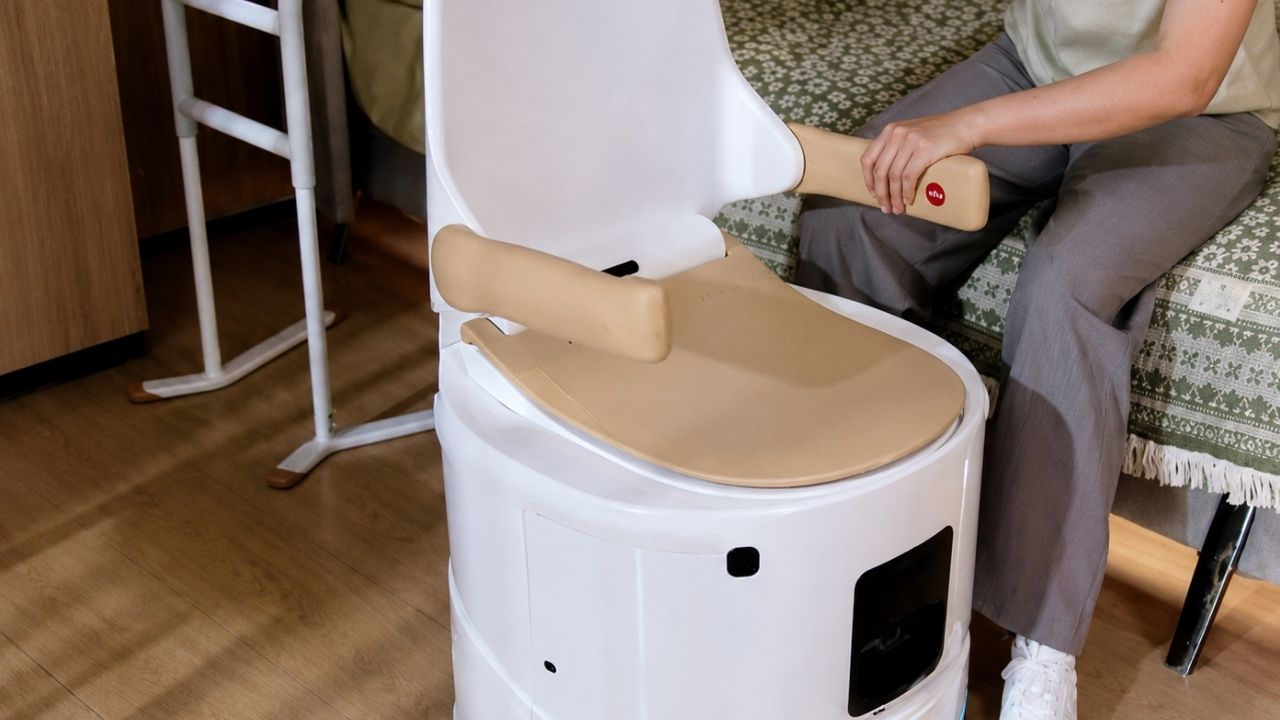
Chinese Company Unveils Robotic Toilet That Comes to You, Featuring Lidar Sensors, Voice Command, Bidet, Hot Air Drying, UV Light, and Self-Cleaning Waste Disposal



It can perform over 2 quintillion calculations per second, or 2.79 exaFLOPs at peak performance.
For comparison, it is more than a million times faster than the supercomputers used 30 years ago in managing the US nuclear arsenal.
With this impressive capability, El Capitan enables complex simulations of nuclear explosions, eliminating the need for physical testing and contributing to global security.
In addition, it is essential for maintaining and modernizing nuclear weapons without compromising international non-proliferation treaties.


Cutting-Edge Technology Serving Security
El Capitan was developed in partnership with leading industry companies such as Hewlett Packard Enterprise (HPE), AMD, and RedHat. Its architecture features advanced technologies, including:
- AMD Instinct MI300A Accelerated Processing Units (APUs), which provide superior performance for complex calculations;
- HPE Slingshot Interconnect, which ensures ultra-fast communication between system components;
- High-Performance Computing Capability, essential for addressing national security challenges, from weapon modeling to cyber threat detection.
These innovations make El Capitan a game changer in the field of high-performance computing, setting a new global standard.
The Power of Collaboration with the Supercomputer
The inauguration ceremony highlighted the importance of partnership between government and the private sector. Rob Neely, Associate Director of Weapons Simulation and Computing at LLNL, described the event as “a testament to partnership” and emphasized that collaboration between the NNSA, LLNL, and the industry was essential to the project’s success.
Antonio Neri, CEO of HPE, praised El Capitan as “the pinnacle of engineering collaboration,” emphasizing its impact on scientific discovery and innovation. Lisa Su, CEO of AMD, noted that the project is “the culmination of more than a decade of collaboration,” demonstrating the value of public-private partnerships.
Impact on National Security from the Supercomputer
The implementation of El Capitan represents a revolution in US nuclear security. It will enable:
- Continuous Monitoring of the Nuclear Arsenal, ensuring its effectiveness and safety;
- Modeling of Cyber Threats, helping to protect critical infrastructures against attacks from nation-states and hacker groups;
- More Accurate Simulations, allowing for strategic adjustments without the need for physical nuclear testing.
Additionally, the supercomputer will contribute to advancements in areas such as artificial intelligence, data analysis, and complex scenario forecasting.
Advances in Simulations and Artificial Intelligence
The Deputy Director of Strategic Deterrence at LLNL, Brad Wallin, stated that El Capitan is more than just a modeling and simulation system; it is a powerful tool for training and AI inference. “We are still exploring the full role of AI in our mission, but we are confident that it will accelerate our R&D capabilities,” said Wallin.
Another important aspect is the Predictive Science Academic Alliance Program (PSAAP) of the ASC, which prepares the next generation of scientists through high-level academic projects.
Complementing El Capitan, the Tuolumne supercomputer will support unclassified research. According to Pat Falcone, Deputy Director of Science and Technology at LLNL, this system will be available for various scientific projects, from quantum simulations to earthquake modeling. “These efforts strengthen computational science and empower new solutions,” explained Falcone.
Three Decades of Advances in Computing
During the event, the 30th anniversary of the ASC program was also celebrated, which began in 1995 as the Accelerated Strategic Computing Initiative (ASCI).
Thuc Hoang, Deputy Administrator of the NNSA, highlighted the advances from tera-scale systems to modern exascale systems like El Capitan, which offer unprecedented precision.
“It is not just about computing, but about providing validated tools to solve the country’s most challenging scientific problems,” stated Hoang.
El Capitan is more than a supercomputer; it is a fundamental pillar for US security and a driver of scientific innovation.
Its ability for detailed simulations and integration with AI places the United States at the forefront of global technology.
In the future, it is expected to contribute to new advances in security, science, and talent development, solidifying LLNL’s position as a center of excellence in high-performance computing.


Que conversa é essa? O arsenal atômico é todo analógico, justamente para não ter interferência ou ataque externo.