Portuguese
  Spanish


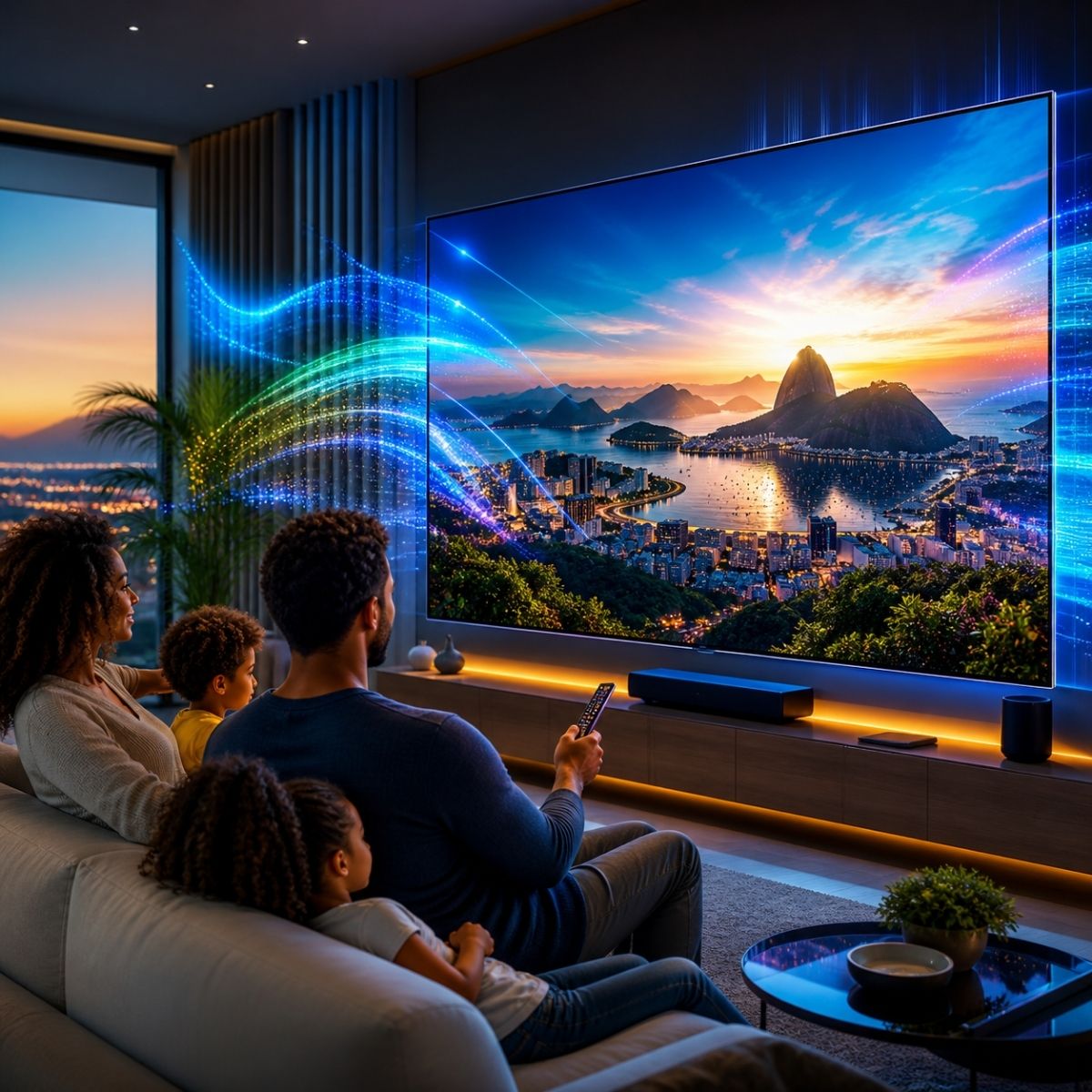

TV 3.0 (DTV+) was regulated by Decree No. 12,595 of August 2025, adopts the ATSC 3.0 standard and begins broadcasting in capitals in the first half of 2026 with 4K image and immersive sound, keeping free-to-air television free while national coverage can take up to 15 years.
TV 3.0 is coming to Brazilian free-to-air television, and the first information viewers need to know is that it will remain free, exactly as it always has been. Regulated by Decree No. 12,595 signed by President Luiz Inácio Lula da Silva on August 27, 2025, TV 3.0 represents the biggest technological leap for free-to-air television in Brazil since the migration from analog to digital completed in 2023, bringing with it 4K resolution images with 8K potential, immersive cinema-like audio, integrated applications, on-demand content, and interactivity that transforms the passive reception device into a connected platform. Tests have been ongoing in São Paulo since 2025 and in Brasília since April 2026, with public broadcasts scheduled for the first half of 2026 in major capitals.
The confusion circulating on social media about “free-to-air television becoming paid” has no basis in the legislation that regulates TV 3.0. The decree explicitly guarantees that the signal remains free for the entire population, and what changes is the transmission technology: the ATSC 3.0 standard, of North American origin, was chosen after technical evaluation by the SBTVD Forum (Brazilian Digital Television System) from three options that included Advanced ISDB-T (Japanese, current standard) and 5G Broadcast. “TV 3.0 represents more than a technological evolution. It symbolizes the renewal of broadcasting’s historical commitment to information, culture, and ethics,” stated Raymundo Barros, Director of Technology Strategy at Globo and president of the SBTVD Forum, at the decree signing ceremony recorded by Agência Brasil.
What TV 3.0 changes in practice for free-to-air television viewers

The changes brought by TV 3.0 are noticeable from the moment the viewer turns on the device. The native 4K resolution image with HDR (high dynamic range of colors) support delivers a wealth of detail that the current digital signal cannot achieve, and the immersive audio reproduces sound in layers that envelop the viewer in a way similar to a cinema experience. For sports viewers, TV 3.0 promises the ability to choose alternative cameras during live broadcasts, vote on programs in real-time, and access complementary news content without leaving the channel.
-
Pennsylvania Mine Creates Ice in Summer Heat and Melts in Winter, Turning a Mountain Crevice into a Reverse Natural Refrigerator

-
China Accelerates Global Expansion of Robotics: From Smart Vacuums to Industrial and Humanoid Machines, Millions Exported to Over 150 Markets
-
Polar Air Mass to Hit Brazil: Temperatures to Plummet in Nine States, Near Freezing in the South with Frost Risk Until Monday
-
Chinese “dark factories” produce electric cars 24/7 with minimal human intervention, as Zeekr assembles 800 units daily, raising concerns in Brazil.



The integration between free-to-air television and the internet is the element that differentiates TV 3.0 from all previous versions. Broadcasters will be able to offer on-demand programs to be watched at any time, applications integrated into programming, online shopping directly from the television, and access to public services such as the Gov.br app, TV Brasil, TV Câmara, TV Senado, and TV Justiça. For those without internet at home, traditional programming will continue to be received normally via the free-to-air television signal: interactive features are extras that only work with a connection, but TV 3.0 does not exclude those who are not connected.
Who will need to change their television with the arrival of TV 3.0

The transition to TV 3.0 does not mean that old devices will stop working overnight. The current digital signal will continue to be transmitted during the transition period, and televisions that receive programming today will continue to function normally as long as the two technologies coexist, a guarantee that keeps free-to-air television accessible for those who cannot immediately acquire new equipment. To take advantage of all TV 3.0 features with 4K image, immersive sound, and interactivity, it will be necessary to have a device compatible with the ATSC 3.0 standard or purchase a converter (set-top box) that the industry is developing.
The universe of households affected by the transition is significant. Brazil has approximately 80 million households, and more than 75 million of them have a television signal, which means that the renewal or adaptation of the device park will be a gradual process that will move billions of reais in the electronics industry over the next few years. Free-to-air television remains the main source of information for a large part of the Brazilian population, especially in classes C, D, and E, a public that the government and broadcasters need to ensure is not left behind during the transition to TV 3.0.
What is the TV 3.0 schedule and when will it arrive in your city?


The TV 3.0 implementation calendar is long and foresees stages extending over more than a decade. The preparatory phase was concluded in 2025 with the publication of the decree and the start of tests in São Paulo, and in April 2026, Brasília inaugurated a test station for the new generation of free-to-air television. The first public transmissions are expected in the first half of 2026 in major capitals, but full national coverage could take up to 15 years according to the schedule released by Planalto, a timeframe that reflects the complexity of bringing new technology to a country of continental dimensions.
During the transition, broadcasters will transmit simultaneously in both standards. Those living in cities that will receive TV 3.0 first will be able to compare the difference in image quality by connecting a compatible device and a conventional one, an experience that should accelerate adoption as consumers perceive the gain in 4K, sound, and functionalities. The government’s investment in the implementation policy was R$ 7.5 million, a value that covers regulation and coordination between Anatel, the Ministry of Communications, and broadcasters, while the costs of transmission infrastructure are borne by the television networks themselves.
What TV 3.0 means for the future of free-to-air television in Brazil
The arrival of TV 3.0 is broadcasters’ response to the advance of streaming services that have captured an increasing share of Brazilians’ screen time. The president of ABERT (Brazilian Association of Radio and Television Broadcasters), Flávio Lara, highlighted that the technology “will enable new business and revenue models, many currently available only on the internet and social media,” fully inserting free-to-air television into the digital economy that was previously the exclusive territory of platforms like Netflix, YouTube, and Globoplay. TV 3.0 attempts to reposition free-to-air television as a competitive platform in a market where audience migrates to smaller screens and personalized content.
The path will be long, but the direction is set. TV 3.0 represents a bet that Brazilian free-to-air television can reinvent itself without abandoning the characteristic that has defined it since its creation: free and universal access that brings information and entertainment to tens of millions of homes without charging viewers a cent. Over the next 15 years, Brazil will live with two generations of television operating side by side, and the transition will only be considered complete when the last municipality in the country receives the new signal. Until then, the free-to-air television that Brazilians know will remain there, free, and TV 3.0 will arrive as an evolution that maintains the essence: superior image and sound quality for everyone, without paying anything.
And you, did you know that free-to-air television will get 4K image and apps without becoming paid? Do you intend to change your television when TV 3.0 arrives? Leave your opinion in the comments.