





 Portuguese
  English
  Spanish
  4 min of reading
  0 comments


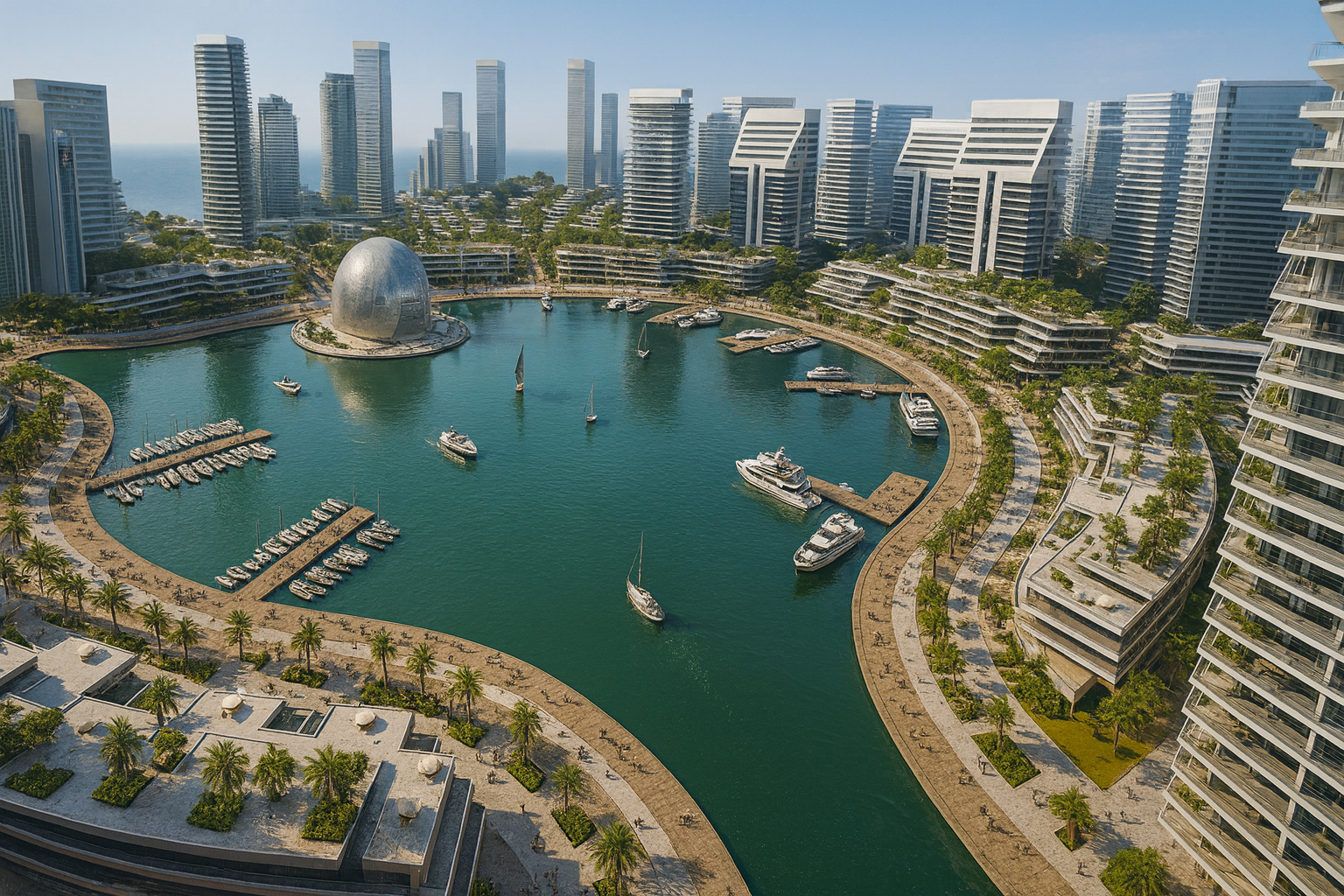
Eko Atlantic, Megacity Built Over the Atlantic Ocean in Lagos, Nigeria, Has 10 km of Avenues, Futuristic Towers, and an Investment of R$ 60 Billion, Being Called the ‘African Dubai’.
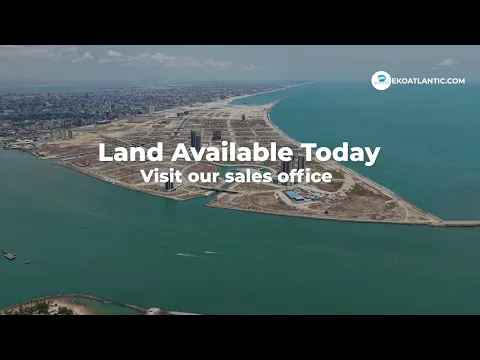
On the shores of the Gulf of Guinea, one of the most populous and chaotic cities on the planet is witnessing the birth of a project that challenges modern engineering and the power of the tides. This is Eko Atlantic, Nigeria’s coastal megacity, literally built over the Atlantic Ocean, in one of the largest land reclamation projects in Africa’s history. Expected to house more than 250,000 residents and 150,000 daily workers, the venture is often described by the international media as the “African Dubai”, due to the grandiosity and technological ambition it embodies.
According to data from the official project website (ekoatlantic.com) and reports from BBC, Reuters, and CNN Africa, the city is being constructed in an area of 10 million square meters reclaimed from the sea — equivalent to more than 1,400 football fields — and was planned to become the new financial and commercial center of Lagos, a metropolis that currently has about 23 million inhabitants.
A City Born from the Ocean to Resist the Rising Sea
Eko Atlantic emerged as a direct response to coastal erosion that threatened Lagos for decades. The advancing tides destroyed entire neighborhoods and forced the local government and private investors to seek a definitive solution. The response came in the form of a monumental project: to build a new city on reclaimed land, protected by a structure nicknamed the “Great Wall of the Atlantic” — a concrete barrier stretching 8.5 kilometers and 2.7 meters high, designed to withstand ocean waves and storms.
-
Goodbye iron: new technology from Xiaomi promises to revolutionize the way we iron clothes with 500 kPa steam, continuous flow of 120 g/min, heating in 65 seconds, and six smart modes for different fabrics.

-
Rio Pardo, the most mysterious city in Rio Grande do Sul: untouched Pampas castle, the missing treasure of the Devil Boy, bride’s saint, invisible tunnels, and a 200-year curse today.
-
China retires the J-7 fighter after years of military protection and can now transform military items into drones, following more than 60 years of operation of the J-7, derived from the MiG-21, with thousands of units produced and strategic use in the PLAAF and PLANAF.
-
Volunteers are sought to live in the mountains for a month: a study pays people to stay at 2,500 meters, with 24-hour monitoring of sleep, metabolism, and blood pressure.



The reclamation of the area began in 2008 and involved the dumping of more than 140 million tons of sand dredged from the seabed, with technical support from the Dutch company Royal HaskoningDHV. The project is funded by a consortium led by South Energyx Nigeria Limited, with participation from international banks and government support.
According to estimates from the Nigerian Investment Promotion Commission, the total investment is expected to exceed R$ 60 billion by 2030, considering infrastructure, commercial towers, residential zones, and smart transportation networks.
Smart City Infrastructure and Futuristic Architecture
The master plan of Eko Atlantic follows urban standards similar to those of the cities of Dubai and Singapore, with glass skyscrapers, self-sustaining energy systems, and streets designed for electric vehicles. The project includes six main districts: Marina, Business District, Ocean Front, Downtown, Eko Drive, and Harbour Lights — each with a specific function within the urban grid.
The first residential and commercial towers are already completed, among them the Eko Pearl Towers, a set of five luxury buildings that mark the new skyline of Lagos. The city will also have a subterranean telecommunications system, independent electrical network, and desalination stations to ensure potable water — a unique feature in African coastal cities.
According to Bloomberg Africa, multinational companies in energy, finance, and technology have already shown interest in setting up offices in the new metropolis, which aims to concentrate part of Nigeria’s financial operations and reduce reliance on Lagos’s chaotic infrastructure.
Environmental Critiques and Social Challenges
Despite its grandeur, the project is not free from criticism. Environmentalists and local urban planners warn about the ecological impacts of dredging and the displacement of fishing communities. BBC News Africa published a report in 2023 highlighting that entire villages around Victoria Island experienced accelerated erosion after the construction began.
However, the project’s developers assert that the Wall of the Atlantic was built precisely to contain the rising sea and protect adjacent coastal areas. They also guarantee that Eko Atlantic will create thousands of direct and indirect jobs, in addition to becoming a sustainable urban model for the African continent.
The City That Symbolizes the Future of Africa
Today, walking through the first blocks of Eko Atlantic, it is already possible to see wide avenues, tree-lined sidewalks, and mirrored façade buildings reflecting the deep blue of the Atlantic. From a helicopter, the city appears as an island of concrete and glass emerging from the sea, a perfect visual metaphor for the urban renaissance of Nigeria.
Still in the expansion phase, the megaproject is expected to extend until 2035, with the goal of becoming the first self-sufficient energy city in West Africa, connected to a smart transportation and solar-powered electrical grid. If it achieves its objectives, Eko Atlantic will not only be a new city — it will be a symbol of an Africa that builds its own future with its own hands, over the same ocean that once threatened to engulf it.








Seja o primeiro a reagir!