





 Portuguese
  English
  Spanish
  6 min of reading
  0 comments


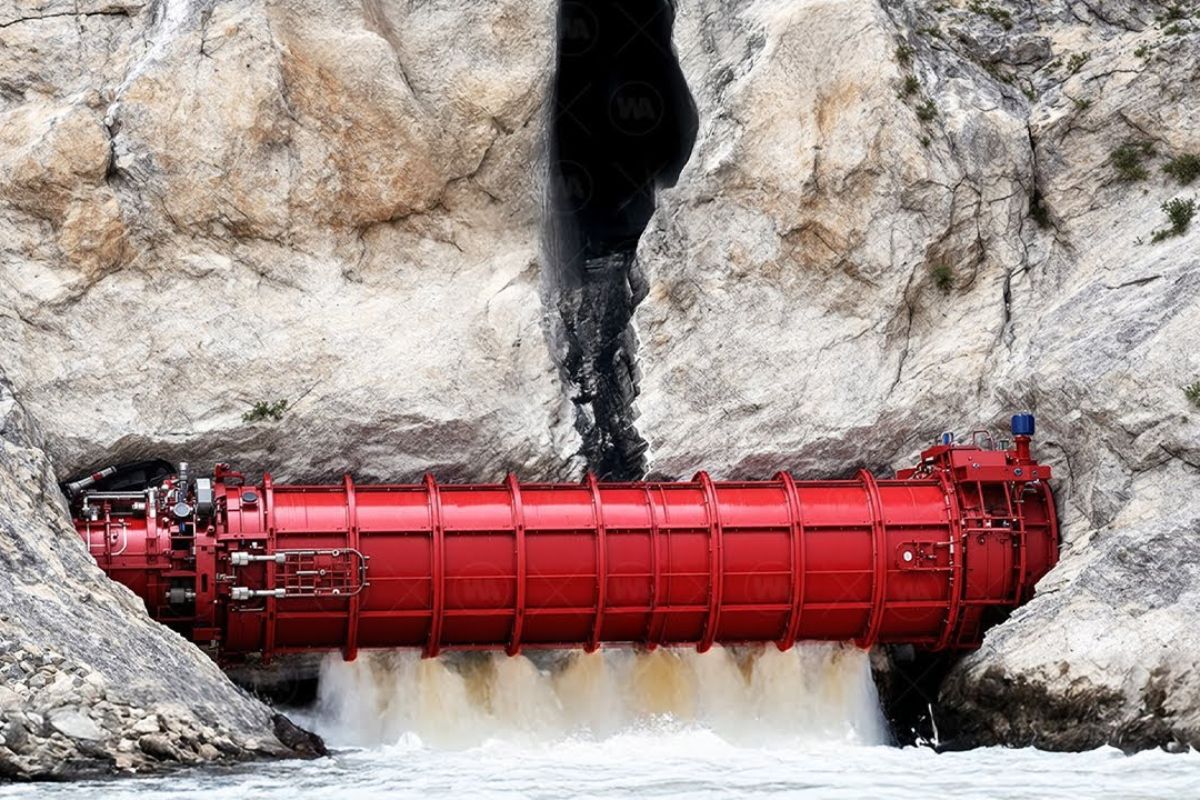
The Tunnel Was Planned To Cross 5,570 Feet Of Rock In A Straight Line, Allowing For The Passage Of Cruise And Cargo Ships Of Up To 16,000 Tons, With A Crossing Of About 10 Minutes At Eight Knots, Dodging Chaotic Waves And Frequent Storms On The Stad Land Peninsula Norway.
The planet’s first ship tunnel was conceptualized as a direct response to the most feared bottleneck along the coast: a section where currents, underwater topography, and wind combine to create rough seas for days. In Norway, the proposal is literally to cut the mountain in half and open a navigable channel within the rock.
The billion-dollar plan aims to reduce waits, shorten detours, and create predictability for vessels that now need to wait for windows of calm seas. At the same time, the planet’s first ship tunnel has become a political thermometer because the budget has ballooned, the timeline has fluctuated, and the cost has started to compete with other national priorities.
The Mountain Cut In Numbers

The Stad Ship Tunnel was designed as a straight fissure crossing an extremely dense section of ancient rock.
-
Neither the Pyramids nor the Great Wall of China, this gigantic construction in Spain is the human mark on planet Earth that intrigues the most when seen in images from space.
-
Surrounded by cliffs, mist, and chilling stories, the ancient Hotel del Salto has been reborn as a museum while still unable to shake off its reputation as a haunted place.

-
This star-shaped fortified construction, hidden near the border of Spain, may be the largest fortress on the planet.

-
Congonhas receives the monorail promised for the 2014 World Cup after more than a decade of delays and becomes the first airport in Brazil with integrated subway.

The main axis is 5,570 feet long and was conceived to accommodate cruise and cargo ships weighing up to 16,000 tons.
The crossing, at eight knots, is expected to take around 10 minutes when the flow is organized.
To open this path, Norway plans to blast and remove 8 million tons of rock.
The figure of 8 million tons is not a mere spreadsheet detail: it defines the size of the construction site, the excavation time, and the logistics of disposal.
That’s why the extracted material, right from the project stage, is treated as marine cargo.
The design specified for the tunnel section is aggressive: 118 meters serve as a dimensional reference, alongside an opening of 160 feet wide and 160 feet high, a scale thought out to ensure navigation occurs without tight maneuvers under the mountain.
The planet’s first ship tunnel, in this format, turns into a work of raw geometry.
How The Project Tries To Keep The Sea Outside

The most counterintuitive part of the planet’s first ship tunnel is constructing a corridor that, in the end, needs to receive seawater, but which during construction cannot be flooded.
For this, the Stad Ship Tunnel has been associated with temporary solutions: a stone dam or provisional barriers set at the entrances to prevent water from advancing while teams work inside.
The need for these barriers increases because the local rock is described as being in thick and very dense layers, making excavation slow and more sensitive to controlling work fronts.
By choosing to send excavated material by sea, Norway also reduces the risk of overloading local roads with cargo that simply wouldn’t fit the coastal infrastructure.
Why Stad Land Became A Nightmare For Ships
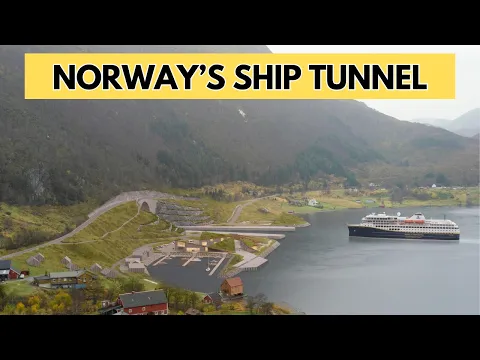

The Stad Ship Tunnel crosses precisely the narrowest part of Stad Land, and this is intentional.
The surroundings are described as a point where the North Sea and the Sea of Norway meet, generating water interactions that make navigation erratic.
Tide waves can reach 30 meters and come from different directions at the same time.
The region is noted as one of the most exposed areas along the Norwegian coast, with storms observed on about 100 days per year.
Even when the wind drops, swell can persist for days, pushing vessels into waiting.
Since the end of World War II, accidents in the area are associated with 33 lives, a figure that weighs in any discussion about operational risk.
The planet’s first ship tunnel, in this context, is marketed as an exchange of environments: leaving the chaotic sea and entering a controlled corridor.
Even in historical imagination, this appears with the reminder that Vikings would have preferred to drag boats overland rather than face these waters.
Passage Rules And Routine Inside The Tunnel
The operational design avoids the “bottleneck” scenario under the mountain.
The idea described is a slot system, with entry times defined in advance so that the interior never becomes congested.
The declared priority falls on passenger traffic, but other vessels also enter the plan.
A technical nuance appears in the size policy: ships under 229 feet (70 meters) would pass without charge, while longer vessels would require escort, in a model compared to driving on mountain roads.
The planet’s first ship tunnel, thus, becomes a corridor with traffic rules as strict as those of a terrestrial road.
9.4 Billion Kroner, Disputes, And The Ups And Downs Of The Timeline
When the idea returned to the table about ten years ago, the cost was described as 1.5 billion kroner, approximately 150 million dollars.
As planning progressed, the approved figure rose to 9.4 billion kroner.
The figure of 9.4 billion kroner is central because it redefines scale and political appetite: it transforms an expensive experiment into a state project.
This leap fueled criticism and revisions.
The planet’s first ship tunnel entered a state of interruption and resumption, with reports of the project being blocked by funds and price negotiations continuing, even without a guaranteed start.
The Stad Ship Tunnel also gained a rare competitive component: six contractors competing for the contract, with two from Norway, one from France, one from Spain, and two from China.
On the timeline presented, the contract should be signed by the end of 2025, and construction would begin in early 2026.
But the debate described at the end of 2025 indicates that, with the budget at the level of 9.4 billion kroner, the project may end up caught in a middle ground, technically ready and politically re-evaluated.
For Norway, the question becomes pragmatic: does the risk of not building outweigh the risk of paying this bill?
Why Other Mountains Have Already “Swallowed” Water And Tunnels
The logic of the planet’s first ship tunnel may seem unprecedented, but the engineering of opening mountains to conduct water already has parallels.
There is an example of an underground laboratory in Japan described as a gigantic tank, with thousands of sensors and 50,000 tons of ultra-pure water inside an old mine, hidden about 3,300 feet deep.
The same idea of cutting rock on a scale appears in irrigation channels and tunnels.
A canal in China is described as a 71-kilometer system, with dozens of tunnels and aqueducts, built with hand tools, dynamite, and work on cliffs, irrigating 99,000 acres and powering 14 hydropower plants.
There is also the example of a pumped storage hydroelectric plant in Wales, with water descending to turn turbines and rising back like a mountain battery.
These parallels do not replace the challenge of the sea, but help explain why Norway insists: cutting mountains is expensive, time-consuming, and risky, yet it is a familiar language in engineering when the alternative is to live with a chronic bottleneck.
What Changes For Routes, Ports, And Coastal Economy
The direct gain described is to reduce detours and shorten the route by about 35 miles, in addition to eliminating the need to wait days for calm seas.
For those operating in the coastal area, this means more predictable logistical windows and fewer cascading cancellations.
The planet’s first ship tunnel is also presented as a push to shift part of the cargo flow from trucks to ships, with the promise of a safer and more reliable route.
In the surroundings, the Stad Ship Tunnel is treated as a piece of regional transformation: a construction site that becomes a showcase of innovation, as well as a tourist attraction, allowing people to observe ships entering and leaving the mountain.
At the same time, the weight of 8 million tons removed and the cost of 9.4 billion kroner keep the discussion tied to the essential: real benefits need to compensate for the complexity.
The planet’s first ship tunnel may reshape the Norwegian coast, but only if the engineering and the budget find the same path.
To keep track of this dispute, it’s worth observing contract decisions, cost reassessments, and how Norway intends to unlock the Stad Ship Tunnel without losing control of the budget.
Do you think the planet’s first ship tunnel will unlock Stad Land or become a project that never surpasses 9.4 billion kroner?








-

Uma pessoa reagiu a isso.