





 Portuguese
 Spanish


Device created by Elon Musk’s company connects an external camera directly to the visual cortex to bypass damaged eyes, but the technology still requires regulatory approval and has no proven effectiveness in human patients
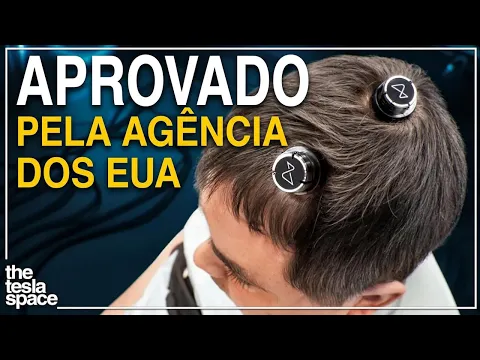
Neuralink, Elon Musk’s company, says it has completed the technical development of the Blindsight brain implant, designed to restore some vision to blind people. The device connects an external camera directly to the brain, but it has not yet demonstrated clinical effectiveness or received authorization for testing in patients.

How the device works without relying on the eyes
The system uses an external camera to capture images of the surroundings and send signals to the chip implanted in the patient’s head.
-
Does AI function like the human brain? New test shows machines use different shortcuts to recognize objects

-
The Secret of DNA’s Evolution: Study Reveals How the Molecule Became a Natural Sunscreen Allowing Life to Survive Extreme Radiation on Early Earth
-
Chinese scientists discover light itself can hinder space travel at 75% of light speed
-
Museum specialist Hanneke Jacobs found the first piece of jaw of a new 7-million-year-old civet of at least 20 kg on an island 265 km west of Abu Dhabi, the first animal of its family ever found in Arabia.



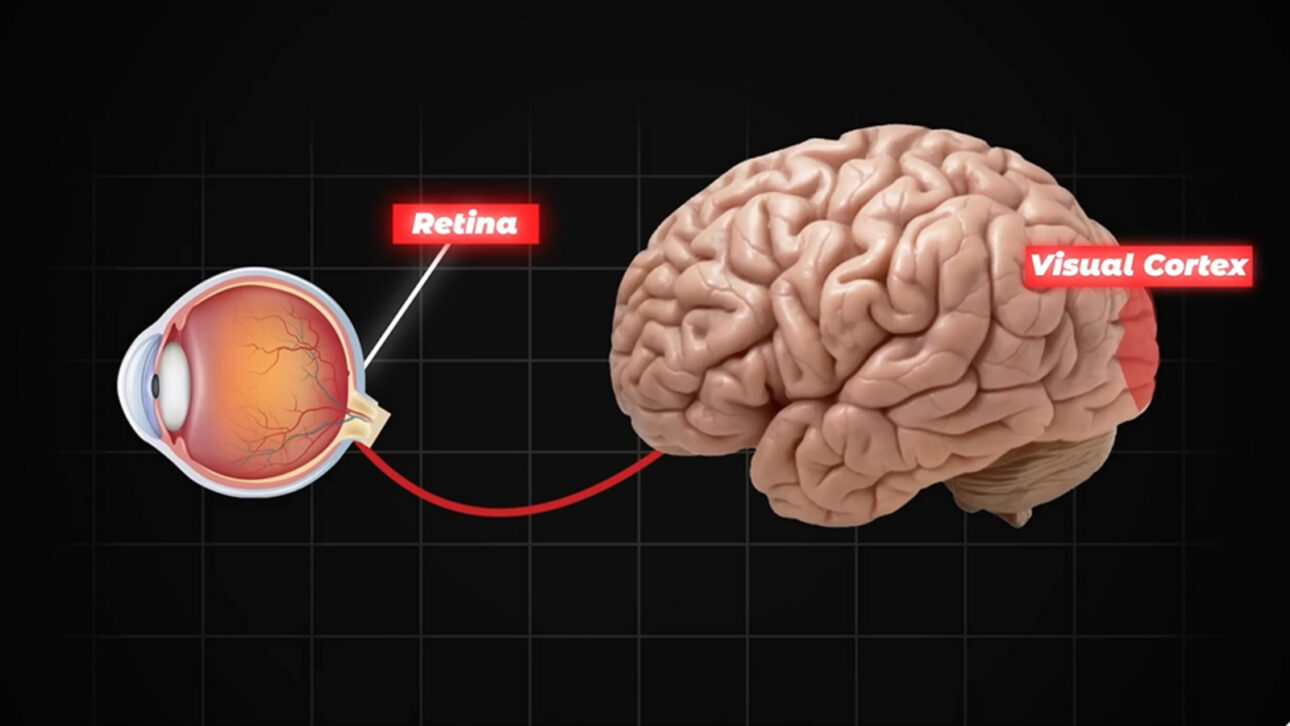
The goal is to bypass the eyes and damaged optic nerves entirely. The chip directly stimulates the visual cortex, the part of the brain responsible for interpreting what we see.
Elon Musk says the project could help even people who have lost both eyes or were born blind, provided the brain region responsible for vision is intact.
What animal tests have shown so far
Although the engineering is complete, the only practical evidence released so far involves monkeys. In June 2025, Neuralink engineer Joseph O’Doherty reported that an animal directed its eyes toward an artificial stimulus in at least two-thirds of attempts.
The experiment confirms that the brain interprets these electrical signals as visual information. However, the data do not guarantee that the device can restore human vision.
Experts have also urged caution about the quality of the image. In IEEE Spectrum, neuroscientist Ione Fine of the University of Washington warned that the system is unlikely to deliver anything resembling natural vision.
Initially, patients are likely to see only points of light and low-resolution shapes, without being able to forgo other ways of navigating their daily lives.
How it differs from the chip already tested in patients
The company is already conducting clinical trials with another device, Telepathy, which had reached 21 participants by January 2026. It allows people with paralysis to control computers using only their thoughts.
Its mechanism, however, is the opposite of that of the Blindsight brain implant. While Telepathy reads neural signals to move cursors on a screen, the visual prosthesis must send precise stimuli to the brain to create images.
Regulatory status and next steps
In September 2024, the project received Breakthrough Device designation from the FDA, the U.S. health regulator. The designation speeds up technical review but does not authorize medical use or certify safety.
Musk had predicted that the first surgery in humans would take place between late 2025 and early 2026, a timeline that was not borne out by public records.
The company’s website currently has only an open registration form for volunteers interested in future clinical trials in the United States, which have not yet been scheduled to begin.


