





 Portuguese
  English
  Spanish
  5 min of reading
  0 comments


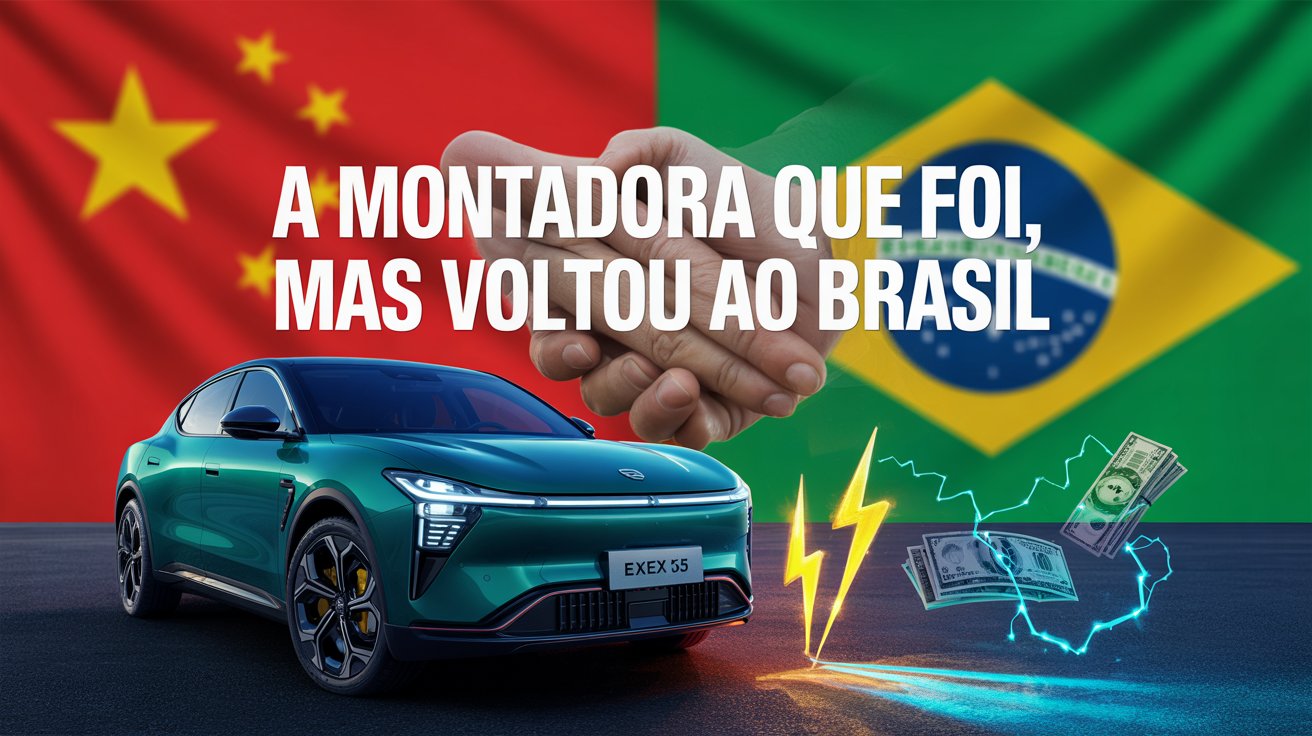
Geely Returns To The Brazilian Market Betting On Electric Cars And Unprecedented Partnership With Renault. Manufacturer Lands Hundreds Of Vehicles And Plans Local Production, Tightening The Dispute Between Traditional Manufacturers And Chinese Companies.
The Brazilian automotive landscape is undergoing a significant transformation with the return of the Chinese manufacturer Geely, which recently landed 680 electric vehicles at the Port of Paranaguá (PR), marking its comeback to the national market after nearly a decade of absence.
The move comes amid the intensifying presence of Chinese manufacturers in Brazil, driven by the search for new markets in light of increasing competition and the price war in the Chinese automotive sector.
Geely, which also controls Volvo, is betting on a robust strategy to gain traction among Brazilian consumers, highlighting the EX5 model as the main launch of its new phase in the country.
-
“No one will make us change the Pix,” says Lula after the US report.

-
Lula responds directly to Trump and says that Pix is from Brazil and will not change under pressure from anyone, after a report from the United States pointed out the Brazilian payment system as an American trade barrier.

-
Amazon has just announced a new fee on all deliveries, and your online purchases will become more expensive starting April 17, including for those buying from the United States here in Brazil.

-
He sold his share for R$ 4 thousand, saw the company become a giant worth R$ 19 trillion, and missed the opportunity of a lifetime.


According to the company, sales are expected to begin as early as July 2025, with the vehicle showcased in 22 shopping centers to bring the public closer to the new technology.
In addition to the first batch, new shipments of electric cars are scheduled for the coming weeks, reinforcing the brand’s intention to consolidate its local presence.
Strategic Partnership Between Geely And Renault
The main novelty in Geely’s strategy is the partnership with Renault Group, a traditional French manufacturer that has operated in Brazil for over two decades.
The agreement provides for the possibility of joint production of hybrid and electric vehicles at Renault’s factories in São José dos Pinhais (PR), utilizing the infrastructure already established by the European brand.
According to industry information, Geely is expected to become a minority shareholder in Renault do Brasil, gaining access to the entire production, sales, and services chain of the French company in the national territory.
Although it still depends on regulatory approvals, the agreement broadens the possibilities for both companies to cater to an increasingly interested market in electric and hybrid cars, but that still faces challenges related to charging infrastructure, pricing, and tax incentives.
For now, there is no set date for the start of joint manufacturing, but the plan envisions new models coexisting with Renault’s current lineup.
Advance Of Chinese Manufacturers In Brazil
The advance of Chinese manufacturers, led by Geely, BYD, and GWM, is generating reactions within the Brazilian automotive industry.
BYD, for example, has established itself as one of the leaders in the electrified segment after three years of intense expansion, with over 5% of the national market in retail sales, according to data from June 2025.
The company recently showcased the first vehicles produced at its plant in Camaçari (BA), including the electric Dolphin Mini and the hybrid Song Pro, both currently in testing phases.
This growth raises an alert among already established companies.
According to Igor Calvet, president of the National Association of Automotive Vehicle Manufacturers (Anfavea), imports accounted for 54% of the growth of the Brazilian market in May 2025, while domestic production declined by nearly 6% during the same period.
Anfavea has been actively working to protect the national automotive chain, positioning itself against the reduction of the Import Tax for semi-knocked down cars (SKD), advocated by some Chinese manufacturers.
Impact On Logistics And Ports
The intensification of imports also has a direct impact on national logistics infrastructure.
The vehicle terminal at the Port of Paranaguá, managed by Ascensus Group, recorded a 20% growth in vehicle movement in the first five months of 2025, totaling 41,600 units.
According to Flávio Rufino, director of ports for the group, Paranaguá has established itself as one of the main entry points for imported vehicles in Brazil, keeping pace with the accelerated rhythm of international transactions in the sector.
Global Context Of Chinese Electric Cars
The Chinese advance in Brazil is part of a global context marked by challenges such as the price war in the Chinese electrified vehicle market, a slowdown in local demand, and increasing international trade barriers.
Countries such as the United States and members of the European Union have been adopting high tariffs – of up to 100% in the U.S. and 45.3% in Europe – to curb the flow of Chinese cars, prompting manufacturers to seek alternatives in Latin America and Asia.
According to Stella Li, global vice president of BYD, the strategy of Chinese companies includes expansion into emerging markets in light of the growing restrictions in other continents.
Despite the difficulties, Li stated that international investments will remain a priority for manufacturers, including in Brazil, where competition is expected to intensify in the coming years.
Challenges For The Brazilian Automotive Sector
The return of Geely to Brazil and the strengthening of Chinese manufacturers open new discussions about the future of the national automotive sector.
In addition to concerns about job creation and balancing local investments, challenges arise related to sustainability and the adoption of new technologies, especially given the need to expand charging infrastructure for electric cars and to develop incentives that make these vehicles more accessible to the population.
In the meantime, the Brazilian economic scenario adds a layer of complexity.
The Selic rate at 15% per year and the increase in defaults in the automotive sector have made it difficult to access credit, directly impacting sales and companies’ planning.
Geely Bets On Approaching The Consumer
The strategy of showcasing the EX5 electric vehicles in shopping centers in major cities indicates Geely’s effort to get closer to the public and popularize electrified car technology.
With nearly 700 units imported in just this first shipment, the manufacturer shows ambition to quickly occupy a significant share of the Brazilian market.
The company is also banking on the strength of its partnership with Renault to ensure reach and agility in services, sales, and after-sales, leveraging the experience and infrastructure already established by the French brand.
The Future Of The Brazilian Automotive Market
The increasingly strong presence of Chinese manufacturers in Brazil reflects global transformations and the strategic movement of international expansion by these companies.
It remains to be seen how the national automotive industry will adapt to this new scenario, balancing innovation, competitiveness, and the need to preserve jobs and local investments.
In light of this context of rapid changes and intense competition, do you believe Brazilian manufacturers are prepared to face the competition from Chinese electric cars? Or will the market still need new strategies to maintain its relevance in the face of international offensives?







Seja o primeiro a reagir!