





 Portuguese
  English
  Spanish
  6 min of reading
  0 comments



The debate about the end of bricklayers has gained strength in construction, but the labor crisis goes far beyond Bolsa Família and Uber. The sector faces issues with demographics, low automation, turnover, historical stigma, and difficulty in modernization.
The talk about the end of bricklayers has returned to construction sites with full force. Everywhere, companies complain about the lack of labor and repeat the same usual targets: Bolsas Família, Uber, and even a supposed lack of willingness to work. The problem exists, but the easy explanation does not add up. The sector remains strong, continues to hire, and yet cannot attract enough people for work, renew teams, and make the profession desirable for those entering the market.
The crisis is already impacting the results of companies. A survey cited by FGV Ibre shows that more than 82% of construction companies report difficulty finding workers, and 21% have already delayed deliveries because of this.
At the same time, CBIC projects a 2% increase for construction in 2026, after the sector ends 2025 with 2.9 million registered employees. In other words, construction is growing, hiring, and still dealing with a labor shortage that cannot be resolved with a short answer.
-
The construction sector opposes the release of R$ 7 billion from the FGTS for workers to pay off debts: the measure raises a risk alert in the market, threatens Minha Casa Minha Vida, housing credit, and mass layoffs in Brazil.

-
Mining company Vale and Chinese Shandong Shipping finalize the construction of the world’s first ocean-going ship powered by ethanol, a giant measuring 340 meters in length and with a capacity of 325 thousand tons.

-
Airfare prices can rise by up to 30% — what are the government and Petrobras doing to prevent an even larger increase?

-
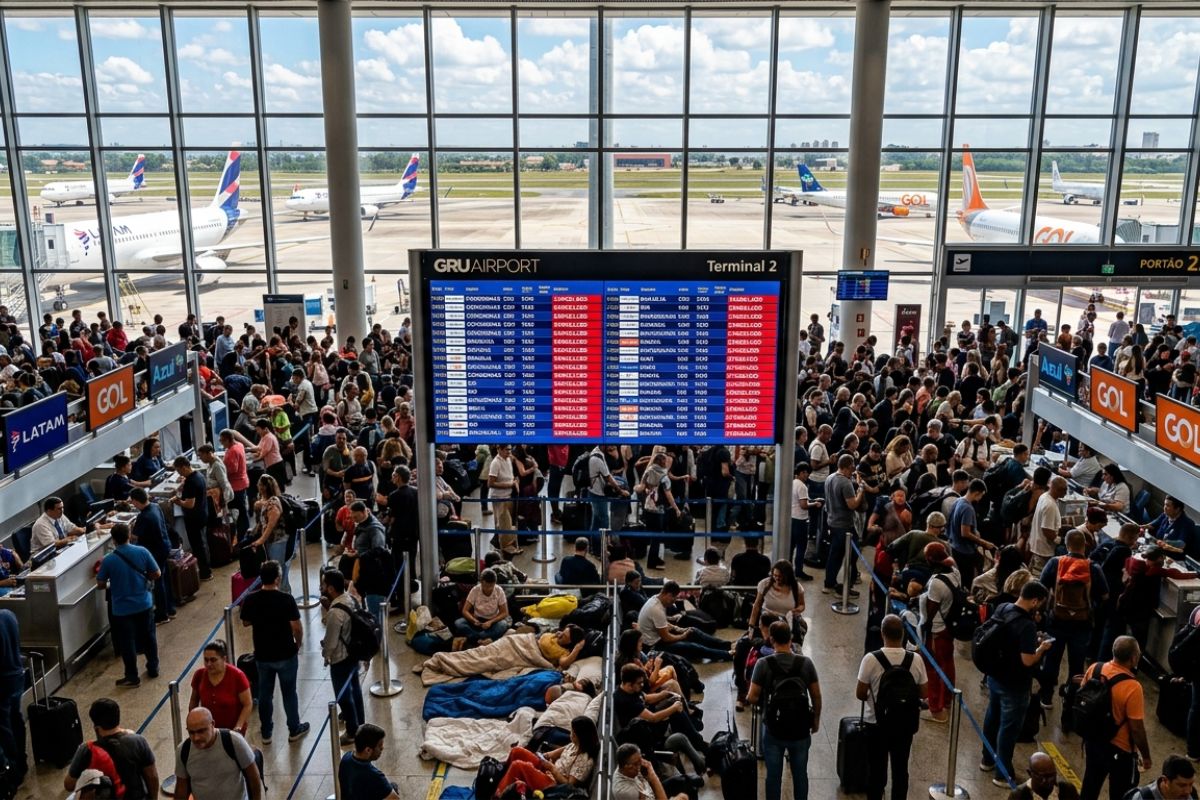
Smoke in air traffic control halts Guarulhos and Congonhas, cancels flights, and spreads delays across Brazil; with a tight schedule, the cascading effect leaves people sleeping in the airport and exposes their rights.
Bolsa Família and Uber have become targets, but the hole is deeper
Economist Daniel Duque, a researcher at FGV Ibre, investigated the most cited suspects in this debate: Bolsas Família, apps, turnover, and demographics. His conclusion is uncomfortable for those looking for a single culprit.
The social program did have an effect on the labor supply, but it was mainly concentrated among young men and in the North and Northeast regions, especially during the period of significant expansion of the benefit between 2020 and 2023.
Still, the study itself points out that this is not the main cause of the shortage. The central problem is structural.
This becomes clearer when looking at the recent trajectory of the program. The base text of the debate recalls that the number of families served dropped from 21 million to about 18 million, but the lack of workers only continued to worsen.
David Fratel, director of SindusCon-SP, rejects the simplistic thesis and went straight to the point: no one lives well on social benefits alone. For him, the sector suffers because it has lost attractiveness and needs to adapt to a worker who now sees the construction site differently.
With apps, the scenario is also less obvious than it seems. PNAD Contínua showed that Brazil had 1.7 million people working through platforms in 2024, with a strong presence of young men in large cities, exactly the profile that interests construction.
Even so, Duque’s reading is that this universe functions more as a buffer for professional transition than as a permanent vacuum for workers from other sectors.
Antonio Ramalho, from Sintracon-SP, summarizes the appeal of apps in a harsh way: in the app, the worker thinks he earns more and, above all, feels he controls his own schedule, even without FGTS, Social Security, and without deducting fuel and maintenance.
Brazil has changed, but construction remains stuck in the old model
The root of the crisis starts long before the pandemic. IBGE showed that Brazil’s fertility rate fell to 1.55 children per woman in 2022, below the population replacement level.
At the same time, the average education level also rose: in 2024, people aged 25 and older reached 10.1 years of schooling, the highest level in the historical series, according to IBGE’s educational indicators.
The result is a country with fewer young people available and with higher expectations about work, income, and professional status.
In wealthy countries, such a significant change was accompanied by more automation and often by immigration policies to bolster the workforce. In Brazil, demographics began to resemble those of a developed country, but the productive structure lagged behind.
Construction still operates in many ways as if the supply of cheap labor were infinite. Duque himself uses a strong domestic comparison: for a long time, the country preferred to pay for cheap human labor instead of investing in machines.
On construction sites, the logic was similar. In the United States, there tends to be fewer people and more equipment per project; here, there are still more hands and little automation. And importing technology remains expensive, pressured by taxes on capital goods.
Turnover, wear, and stigma push the profession down
There is another point that rarely appears prominently but weighs heavily: turnover. After the pandemic, job changes increased, and part of what employers see as a lack of workers is, in practice, an excess of people changing positions, leaving, and returning to the market more frequently.
When unemployment falls, this movement becomes even more visible and increases the costs of team replacement, training, and adaptation within projects.
However, the problem does not stop in the market. There is also a historical weight that construction has not yet managed to overcome. Manual labor in Brazil carries an old stigma, linked to the slave past and the social devaluation of manual trades.
This trait was already evident in the 19th century in accounts like that of Maria Graham, and Daniel Duque argues that structural racism helped lower the prestige of bricklayers precisely because this type of work has been historically associated with enslaved people and, later, poorly paid.
When a profession pays little, demands heavy effort, and still carries low recognition, rejection becomes a consequence, not a surprise.
Modernization has ceased to be a choice and has become a matter of survival
That is why the most serious solution involves true modernization. SindusCon-SP works with Senai on professional pathways, certification, revision of nomenclatures, and industrialization of construction methods.
The logic is clear: make the career more technical, more organized, and less tied to the image of raw work without perspective.
Fratel himself has already summarized this diagnosis in public: there is a lack of labor, a lack of qualification, and a lack of attractiveness.
Technology exists, but it still advances slowly. According to reports gathered in the sector’s material, precast panels can already assemble ten square meters of wall in ten minutes, something that in the conventional method can take an entire day.
Even so, about 70% of projects still use traditional processes, with material waste around 30%. The delay is not only on the construction site. It is also in management. Fratel admitted that Brazilian construction has lost track of its own productivity.
Unlike the automotive industry, which knows how many man-hours it needs per product, construction still outsources a lot, demands deadlines and budgets, but often does not even measure precisely how the work is being done.
This impasse helps explain why the debate about salary and working hours remains stalled. From the employers’ perspective, the sector needs to first resolve productivity, qualification, and industrialization before discussing better remuneration sustainably.
Meanwhile, the workers’ union reverses the order: without better pay now, none of this will be enough to attract new people. Deep down, both sides recognize the same urgency. The profession will only become desirable again if it stops seeming stuck in the past.
Fratel summed this up accurately by saying that the problem is not simply not wanting to be a bricklayer, but not wanting to work as it was done before.
The fear about the end of bricklayers draws attention because it makes for an easy headline. However, the real crisis in construction is deeper. The lack of labor did not arise from Bolsas Família, did not start with Uber, and will not disappear with a stroke of a pen.
Brazil will have to decide quickly whether it wants to continue building with an old logic or if it will finally transform the construction site into a more productive, more technological industry that is dignified enough to attract those who today stay far away from it.


And you, do you believe that construction can still reverse this scenario or has the sector taken too long to change? Leave your comment and share the article.










Seja o primeiro a reagir!