





 Portuguese
  English
  Spanish
  5 min of reading
  0 comments



Understand how Google created a new method that optimizes RAM memory use in AI, reduces costs, and increases the efficiency of Artificial Intelligence in modern applications.
The growing demand for RAM memory driven by Artificial Intelligence has created global pressure on infrastructure, raising costs and revealing increasingly difficult technical limits to overcome.
Thus, a recent study by Google brought a potential turning point in this scenario. The company revealed a new method of compression called TurboQuant, capable of significantly reducing the use of RAM memory during the execution of AI systems.
According to researchers, the technique can reduce memory consumption by up to six times, without a perceptible loss of quality or performance. According to a report from Xataka Brasil, this point is crucial, as efficiency has always been one of the main challenges of Artificial Intelligence.
-
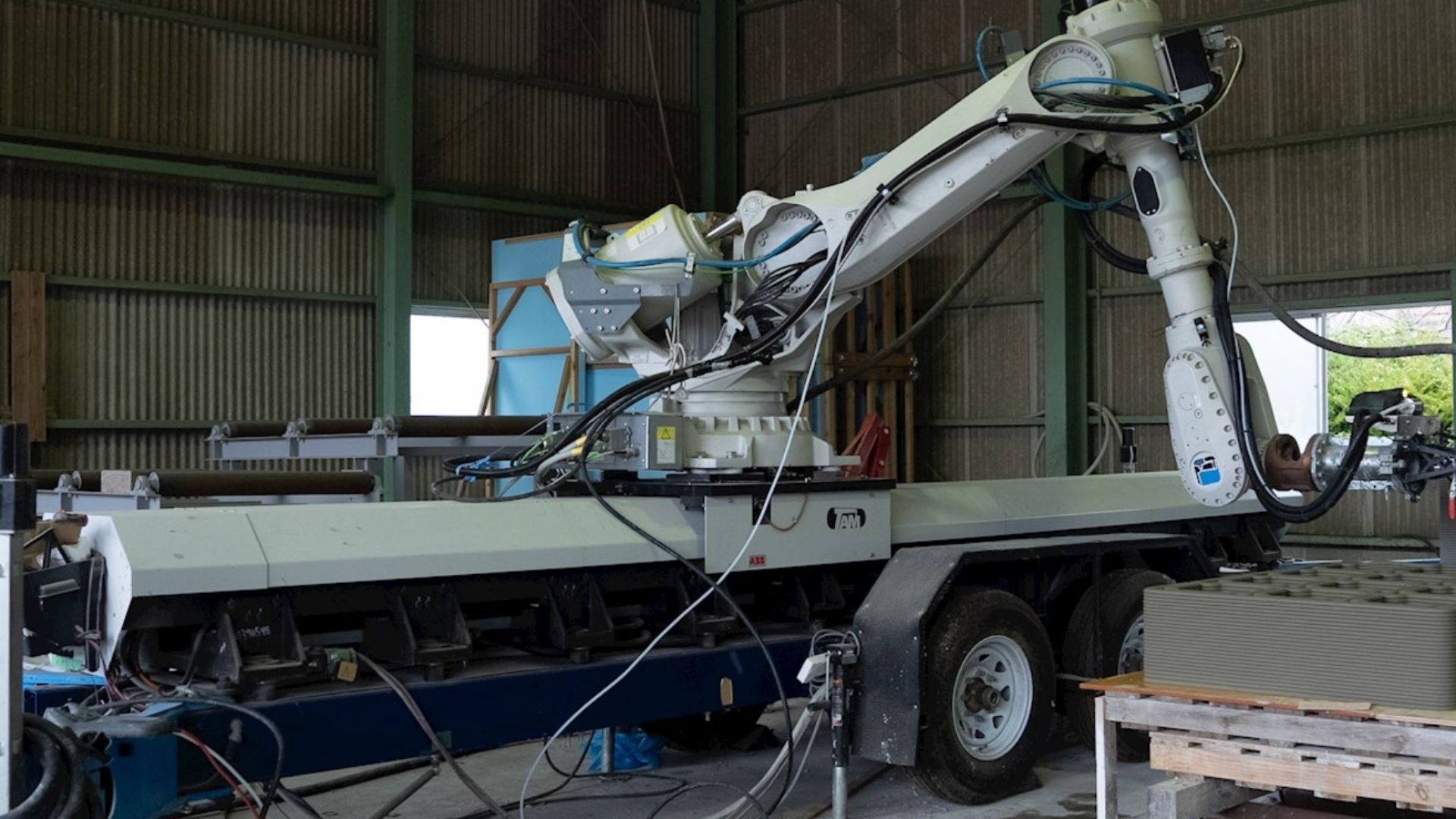
Japan builds a 3D-printed train station overnight, between the last train and the first of the morning.
-
Instead of manufacturing expensive and difficult-to-recycle lithium batteries, engineers introduced in 2026 a battery made of paper and salt that is completely biodegradable: the Flint Paper Battery costs a fraction of conventional batteries and, when discarded, decomposes in the soil like a piece of newspaper.

-
A ship with 500,000 silver coins and 45 tons of gold sank and was never recovered; meet Royal Merchant, the ship that became one of the greatest maritime disasters in history.

-
Frequently praised by astronauts aboard the International Space Station, the “desert” that shouldn’t exist in Lençóis Maranhenses encompasses 156,000 hectares of shifting dunes and thousands of blue lagoons that appear and disappear, reshaping the landscape with each season.

In practice, the advancement indicates that complex tasks can be executed with fewer resources, something that directly impacts operational costs and scalability.
The silent bottleneck of RAM memory in Artificial Intelligence
To understand the importance of this advancement, it is necessary to look at one of the biggest current challenges of AI: memory consumption during inference.
When a model processes a long conversation, it needs to store information to maintain context. This data resides in a structure called KV cache, which continuously grows as new data is processed.
This behavior generates an increasing demand for RAM memory, especially in more complex applications. As a result, companies need to invest heavily in infrastructure.
Among the main impacts of this scenario, the following stand out:
- High costs for specialized hardware
- Increased energy consumption
- Limitations to scale applications
- Dependence on high-performance memory
This set of factors helps explain why Artificial Intelligence still faces significant barriers to large-scale expansion.
How Google’s new method works in practice
The new method developed by Google uses an approach called vector quantization. This technique allows compressing the data stored in the KV cache without compromising the accuracy of the responses.
Instead of storing all data in full, the system creates more compact representations. This reduces the space needed in RAM memory, while maintaining processing quality.
The result is an important balance between efficiency and performance, something essential for modern AI applications.


Reduction of up to six times in RAM memory and its immediate effects
According to the study, TurboQuant can reduce the use of RAM memory by up to six times during inference. This number is noteworthy because it directly addresses one of the main costs of Artificial Intelligence.
With less memory requirement, data centers can operate more efficiently and with lower hardware investment.
In practice, this could mean:
- Significant reduction in operational costs
- Better utilization of existing infrastructure
- Greater processing capacity with fewer resources
Moreover, the impact is already beginning to show in the market. Companies like Samsung, Micron Technology, and SK Hynix have recorded recent fluctuations in their stocks.
In some cases, there was a drop of 24.2%, with values falling from 471 dollars to 357 dollars in a short period. This movement reflects the market’s sensitivity to technological advances that can alter the demand for memory.

Why Google’s advancement could change the AI game
The new method from Google reinforces an important trend: doing more with less.
This type of innovation is often compared to decisive moments in the industry, such as when more efficient models reduced development costs.
By decreasing dependence on RAM memory, the technology can:
- Make AI more accessible
- Reduce entry barriers for smaller companies
- Increase energy efficiency
- Allow faster and more responsive applications
This movement is essential in a scenario where infrastructure costs continue to be one of the main challenges for the expansion of Artificial Intelligence.

Limitations of the new method and challenges that still remain
Despite the potential, the new method still does not solve all problems related to RAM memory.
The main limitation lies in the training phase of AI models, which still requires large volumes of memory and computational power.
This means that:
- Training is still expensive and complex
- Large companies maintain competitive advantages
- The impact will be more visible in usage than in development
Another important point is that the adoption of this technology still depends on large-scale practical validation. Although preliminary tests indicate good results, the market is still waiting for concrete implementations.
Market impacts and possible changes in the industry
Google’s announcement has already generated ripples in the semiconductor and memory sector. Companies like Kioxia and SanDisk have also been impacted by recent fluctuations.
Additionally, there has been a drop in prices for some memory modules. One cited example involves memories that fell from 489.59 euros to 339.89 euros in just a few weeks.
Although these changes may be related to market factors, the technological advancement contributes to increasing the perception of risk in the sector.

What changes for companies and users in practice
If Google’s new method is adopted on a large scale, the effects can be felt quickly.
Companies will be able to operate more efficiently, reducing costs and increasing processing capacity. This opens up space for new applications and business models.
For users, the benefits are also clear:
- Faster and more stable applications
- Services with potential reduced costs
- Greater access to AI-based solutions
Another relevant impact is the possibility of running more advanced systems in less robust environments, which expands the reach of the technology.
A new phase for Artificial Intelligence and memory use
The advancement presented by Google represents not just a technical improvement. It signals a change in how Artificial Intelligence will be developed and utilized in the coming years.
The reduction in RAM memory usage shows that the evolution of AI does not solely depend on more powerful hardware, but also on intelligent solutions that optimize existing resources.
Even with limitations, the new method paves the way for a future where efficiency will be as important as raw performance.
If confirmed on a large scale, this advancement could mark the beginning of a new phase in computing, where RAM memory ceases to be a critical bottleneck and is used much more strategically.








Seja o primeiro a reagir!