





 Portuguese
  English
  Spanish
  2 min of reading


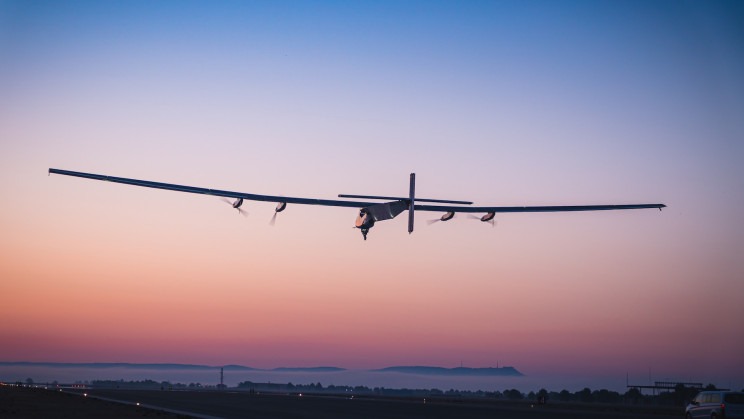
Company Works on Solar Aircraft Capable of Flying Continuously for 90 Days
The U.S. Navy will have in hand a solar aircraft with enormous autonomy, giving even more power to Americans in the sector. This is the Skydweller, an aircraft that will have solar panels installed on its wings. The equipment promises great autonomy and significant cost reduction.
Behind the project is Skydweller Aero, a Hispanic-American company that aims to develop the equipment to give even more power to the U.S. Navy in its operations at sea. The aircraft is expected to be used by the Navy as another way to monitor areas near its ships.
How Will It Stay in the Air So Long?
The company knows that to stay in the air for so long, a large wingspan from tip to tip is necessary. It has a total wingspan of 71 meters, with about 270 square meters of area to be covered by solar panels for solar energy generation.
-
Renewable energy advances globally with Asia taking the lead; Irena’s analysis indicates a strategic progress that drives the energy transition and reduces generation costs.

-
Globo broadcaster achieves 100% renewable energy and advances climate goal, strengthening environmental commitment, reducing emissions, and influencing large companies to adopt more sustainable and competitive strategies.

-
New mapping reveals the Brazilian states with the greatest potential for the production and use of green hydrogen in Brazil to lead the global market.

-
Historical drought and lack of snow in the Norwegian Alps threaten the largest clean energy reserve in Europe and could drive up electricity prices.

In addition to helping the environment, the aircraft had the pilot’s cabin removed, allowing for an increase in its autonomy. The payload capacity, such as radars and cameras, is approximately 400 kilograms. The project also envisions the installation of hydrogen cells as a backup.
“It’s a huge cost-saving for the U.S. government when you look at the total cost of carrying out many of the national security missions we have,” said John Parkes, one of the founders of Skydweller, to Aviation Today.
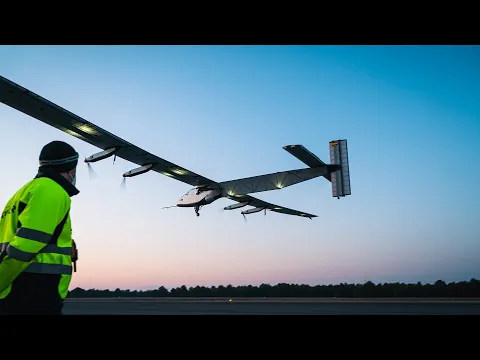

The project for the aircraft that will fly on solar energy will test in the coming months the autonomous flights of the Skydweller, including autonomous takeoffs and landings. After this phase, the testing phase for autonomy will begin, where engineers aim to keep the equipment in the air for 90 days or more.










Seja o primeiro a reagir!