






 Portuguese
  Spanish


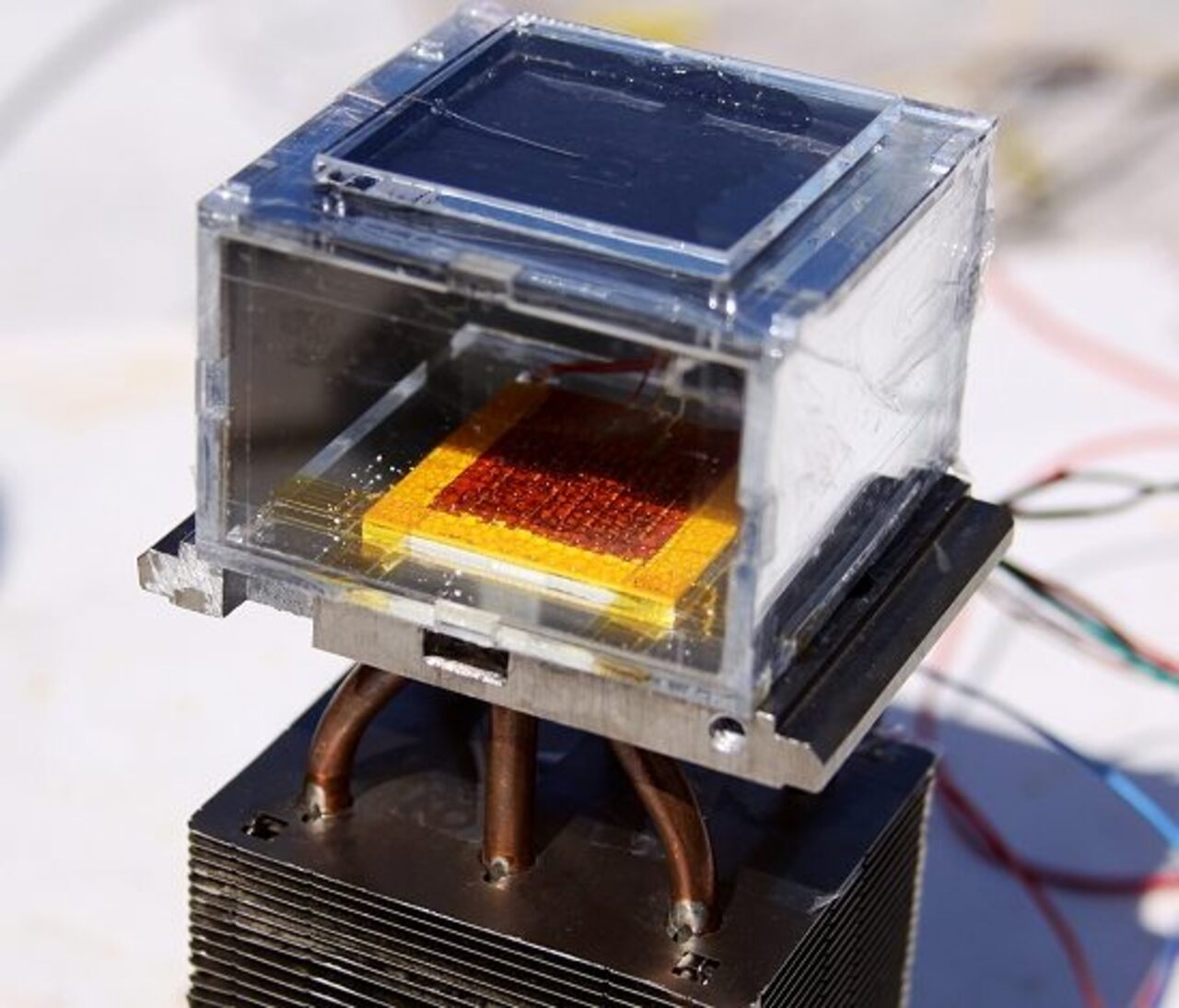

MIT Scientists Use Solar Energy to Extract Water from Air and May Revolutionize with This Study
The discovery could be one of the solutions to water scarcity in the world. According to scientists from the Massachusetts Institute of Technology (MIT), not stopping there, the equipment that extracts water from the air can also contribute to sustainability by using solar energy.
Also Read
The new technology could change the way science addresses water scarcity, according to results published in the scientific journal Joule. This global issue keeps scientists in a state of constant evolution. The intention is to create ways to solve water shortages, especially in regions affected by droughts.
Understand How the Solar Energy Equipment Created by MIT Scientists Works
Simplifying, the system created by MIT scientists works like other developed systems, but utilizes solar energy. A porous metallic structure, called MOF, captures moisture from the air.
-
Over 60 Tractors Take to the Streets in Lopera as Solar Parks Compete with Olive Groves, Affecting 13,000 to 100,000 Trees According to Conflicting Reports

-
Green Hydrogen Projects in Northeastern Brazil Stalled for 18 Months Awaiting Government Decree, Delaying Billions in Investments
-
Brazil Concludes Largest Energy Auction in History, Secures 18.97 GW and Mobilizes $12.8 Billion to Ensure Supply Until 2031
-
How Norway Produces More Energy Than It Consumes with Nearly 1,800 Hydropower Plants and Over 1,100 Reservoirs


The solar panel collects solar energy to extract the moisture present in the air and transform it into drinking water. Once this process occurs, the released water is stored in a condenser.
Currently, the MOF can absorb 20% of its weight in water, but scientists claim that there are other models capable of achieving up to 40% water release.
MIT scientists also conducted tests outdoors in dry environments. The results using solar energy were satisfactory, but it is still early for the product to be market-ready.
Water Scarcity in Brazil
Since 2014, a possible serious problem regarding water has emerged in Brazil. At that time, precipitation levels began to drop significantly. This is due to drought, as well as natural resource management.
In our country, the regions richest in water are not those with the highest population concentration. This is the case in São Paulo, which has the largest number of inhabitants in Brazil.
The Amazon River Basin, on the other hand, is the region that holds the most water in Brazil. However, transporting water from that region to others would be quite an expensive process. Additionally, extracting water from that location could pose a serious environmental problem.


