





 Portuguese
  English
  Spanish
  8 min of reading
  0 comments


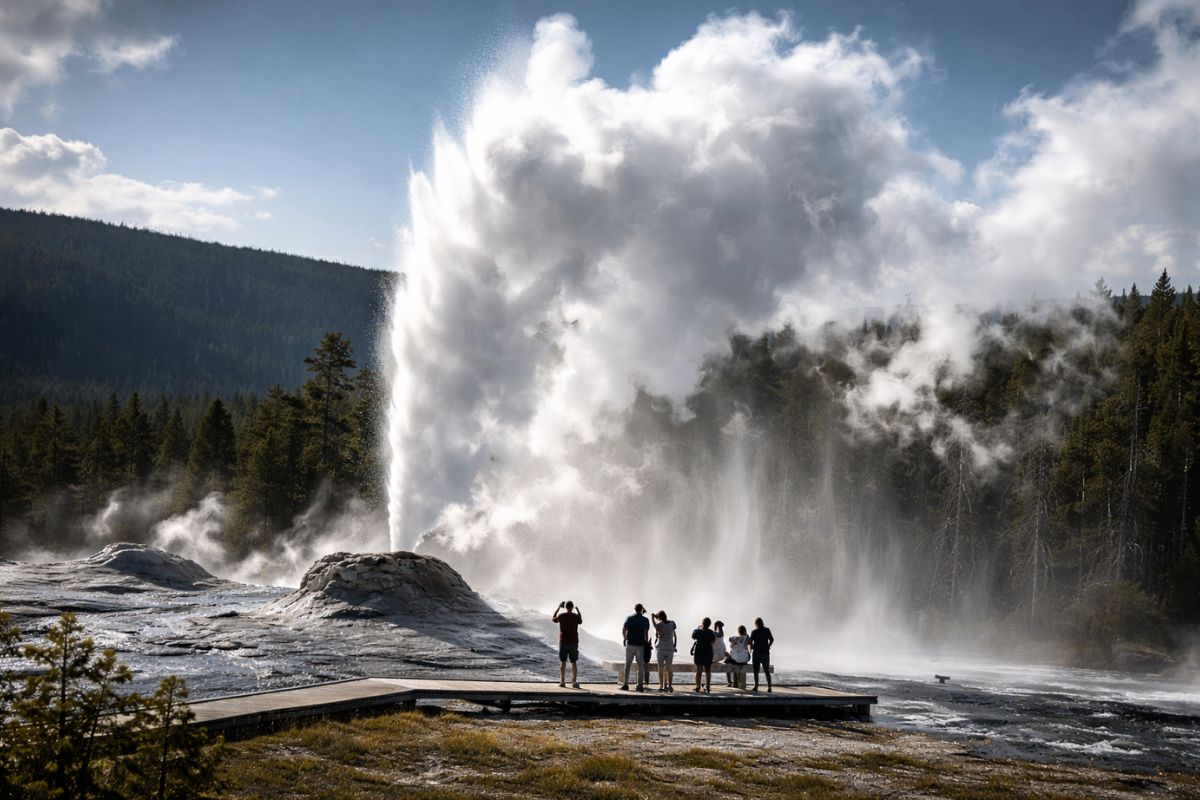
The New Eruption of the Echinus Geyser in the Norris Geyser Basin Ends a Quiet Period of Nearly Five Years, Revealing Again the Unusual Behavior of the Largest Acidic Geyser Known on Earth and Offering Researchers a Rare Window to Observe Cycles of Silence, Recovery, Temperature, Recharge, and Instability in Yellowstone Right Now.
The eruption of the Echinus has brought Yellowstone back into the spotlight with a phenomenon that mixes rarity, unpredictability, and scientific value. After nearly five years without activity, the geyser began to expel water again in the Back Basin of the Norris Geyser Basin, turning an already dynamic area into one even more closely watched by researchers and visitors.
The return draws attention not only for its visual impact but for what it reveals about the underground workings of the park. When such an unusual system awakens again, every minute of activity serves as a clue, especially in a hydrothermal environment known for alternating phases of apparent calm with abrupt changes in behavior.
The Return of the Echinus Changed the Routine of an Area Marked by the Unpredictable
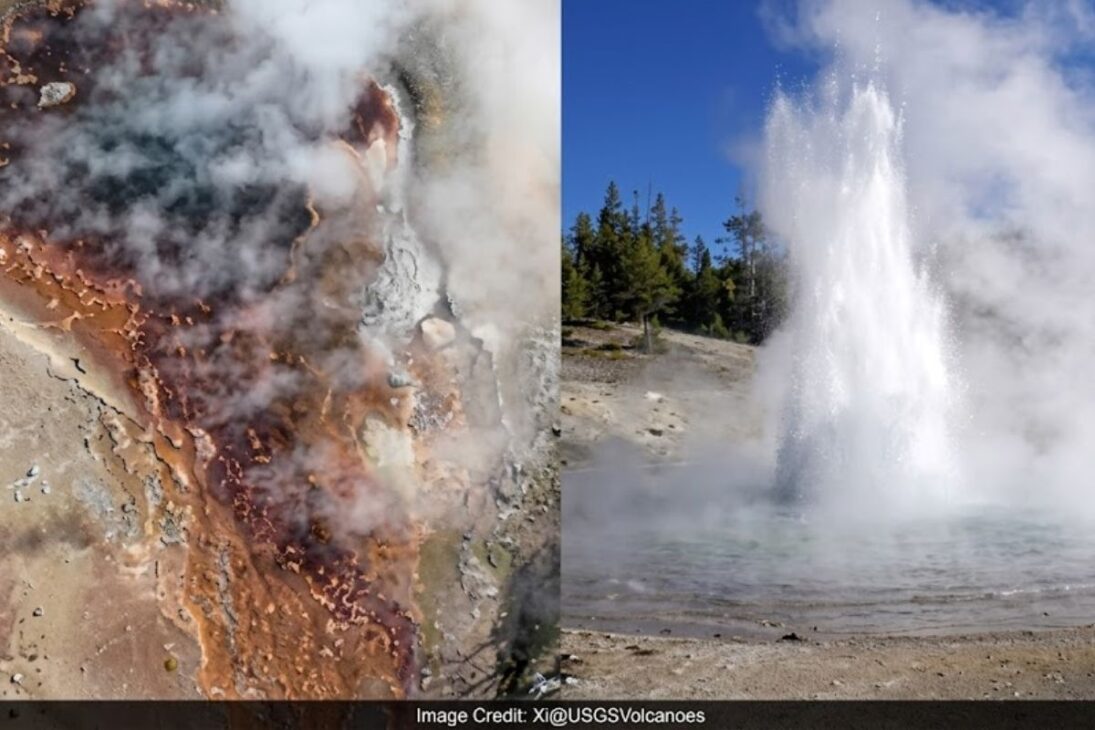
The new phase of activity began on February 7, reappeared on the 9th, 12th, and 15th, and, starting from the 16th, began to occur more frequently, with episodes happening every two to five hours. The most recent occurrences lasted between two and three minutes and ejected water to heights of about 20 to 30 feet, which is close to 9 meters at its highest point. This is not a continuous occurrence but an intermittent resurgence that has drawn attention precisely for the temporary regularity that has returned.
-
Extinct for over 100 years and considered one of the rarest birds in Brazil, a legendary species reappears in the Northeast, resumes breeding in the wild, and surprises researchers in 2026.
-
7,000-year-old bonfire in southern Israel reveals a rare scene from the past and uncovers ostrich eggs prepared by nomads in the desert.
-
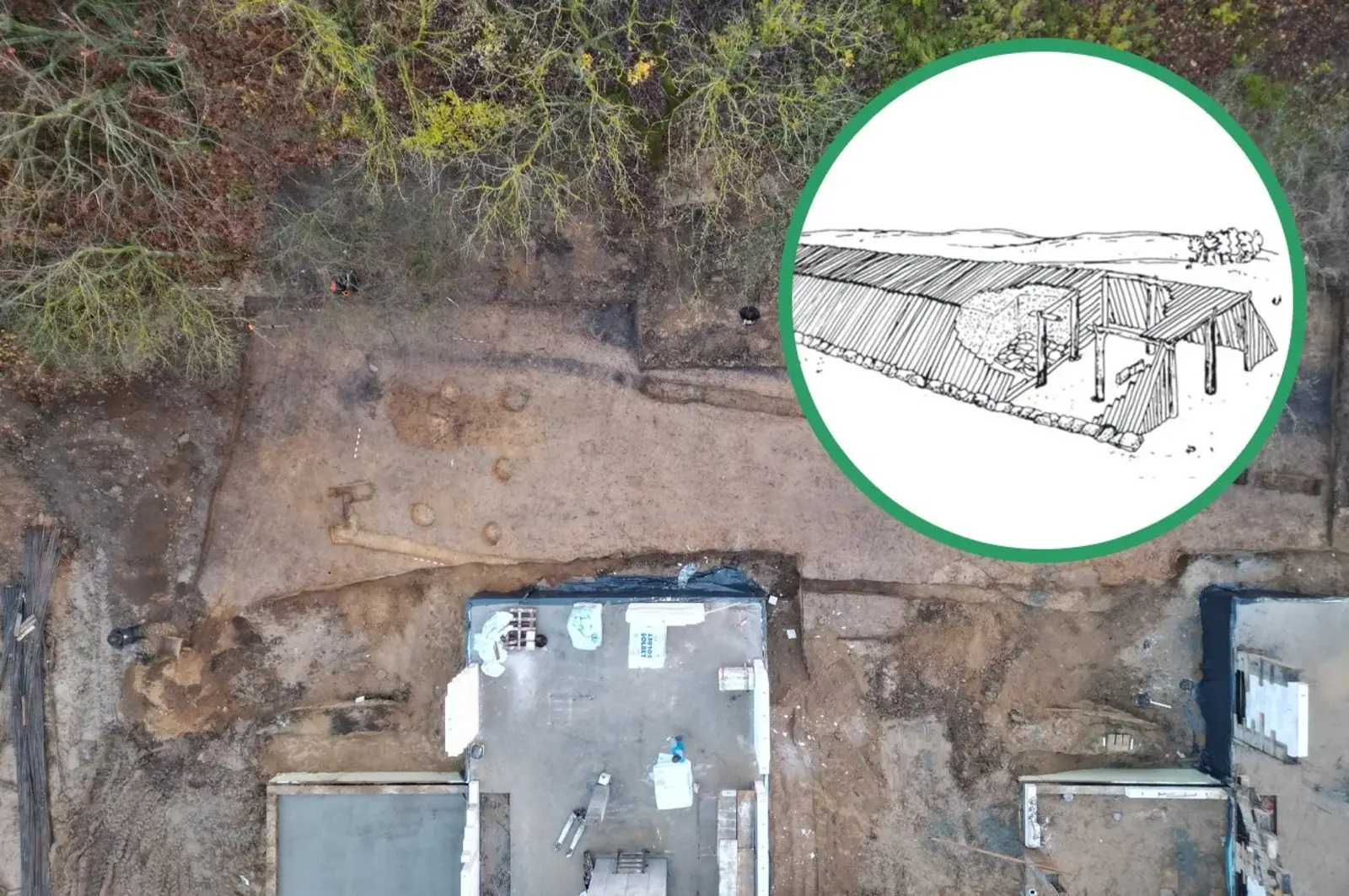
Gigantic megalithic mound of 42 meters emerges during housing construction in Lublin and reveals a Neolithic megadendron with a moat of nearly 30 meters.
-
The surprising fact: 1 in 3 Brazilians doubts the arrival of man on the Moon, while the majority still believes in the historic achievement, according to a Datafolha survey with more than 2,000 people.


After each episode, the water in the pool drops sharply, and it takes about an hour for the reservoir to recover. This detail helps explain why the eruption should not be viewed merely as a momentary jet of water but as part of a broader cycle of pressure, emptying, and recharge. This behavior also resembles what was observed at the end of 2017, reinforcing the idea that the Echinus may reactivate old patterns for short periods before changing again.
Where This Phenomenon Occurs and Why the Location Matters So Much
All this activity has been recorded in the Back Basin of the Norris Geyser Basin in Yellowstone National Park, one of the park’s most well-known hydrothermal areas. The Echinus is about 660 feet from the Steamboat Geyser, recognized as the tallest active geyser in the world. The proximity between two such impressive features helps illustrate how Yellowstone concentrates distinct underground systems and very different behaviors in one space.
In the case of the Echinus, location matters even more because the Norris Geyser Basin is an environment where temperature, pressure, and chemical composition can vary greatly. This explains why a new eruption there has relevance that goes beyond mere tourist curiosity. It offers scientists the chance to observe how a rare geyser responds to underground conditions when it resumes activity after a long period of silence in one of the park’s most active settings.
What Makes the Echinus So Unusual in the Yellowstone Context


The Echinus is described as the largest acidic geyser known on Earth, a classification that alone sets it apart from other hydrothermal systems. Its acidic water results from the mixing of acidic gases and neutral groundwater within an extremely complex underground geology. It is this uncommon chemical combination that makes the Echinus a special case, not just another geyser in Yellowstone, but a feature that operates under conditions different from those observed in many other parts of the park.
Despite the term “acidic” sounding alarming, the acidity recorded in this system does not correspond to something extremely corrosive. The comparison made by specialists is with mildly acidic substances, such as orange juice or vinegar. This helps clarify the phenomenon more accurately: the rare nature of the Echinus does not stem from any supposed extreme aggressiveness of the water, but from the fact that its eruption depends on a unique underground chemistry that is difficult to observe in operation for long periods.
The Appearance of the Geyser Also Helps Explain Its Fame
The Echinus pool is about 66 feet wide and is surrounded by an intense red band of minerals, including iron, aluminum, and arsenic. This mineral outline is not just a striking visual detail. It shows how the interaction between water, heat, and chemical composition leaves visible signs in the landscape, turning the geyser into a structure that catches attention even when it is quiet. In the Echinus, the landscape already announces that something out of the ordinary exists there.
The surrounding rocks, coated with silica and having a spiky appearance, have also helped build the identity of the site. It was this morphology that inspired the name Echinus, after a mineralogist linked the formation to sea urchins in 1878. The term has ties to scientific tradition in Latin and with the Greek root referring to “urchin” or “sea urchin.” The result is a name that nicely matches the image of the place: a strange, rough, visually unique system that is even more intriguing when it erupts.
The History Shows That Activity Was Once More Intense and Frequent
In the 1970s, the Echinus would become active every 40 to 80 minutes. By the 1980s and 1990s, some occurrences lasted over 90 minutes and ejected water to about 75 feet, sometimes wetting those nearby. This past shows that the current eruption does not necessarily represent the height of the system, but an important resurgence within a much longer history of fluctuations. What seems extraordinary today was, at another time, part of a much more vigorous routine.
This historical perspective is key to avoiding hasty readings. The reappearance of activity does not mean that the geyser will continue to increase in intensity nor that it will precisely repeat past patterns. What is known is that the Echinus has shown itself capable of alternating intervals of relatively predictable frequency with phases of prolonged silence. In other words, its history teaches that the eruption currently being observed is relevant, but does not allow for simple predictions about what will come next.
Temperature, Surges, and Explosions Form a Pattern That Scientists Are Trying to Decipher
The installation of a temperature monitoring system in 2010 has provided researchers with a more concrete basis to track the behavior of the geyser.
The data indicates that when the water reaches about 70°C, the chance of eruption increases. Temperatures around 40°C to 50°C tend to be more linked to surges of water, those active impulses that do not culminate in a large continuous ejection.
This difference between surge and eruption is crucial for understanding the system. Not every agitation means that the geyser is about to produce a stronger event.
Often, what is observed is merely a partial manifestation of the energy accumulated inside the structure. For scientists, this interval between heating, pressure, and visible response is one of the keys to understanding how a geyser enters dormancy, awakens, and then goes silent again.
The Return of the Echinus Offers Rare Data on Cycles of Silence and Reactivation
The new phase of activity provides researchers with recent information about how hydrothermal systems alternate between dormancy and operation. This type of record is valuable because such phenomena cannot always be tracked when they return.
When the Echinus again presents eruption, it allows the observation of a mechanism that, at certain points in the past century, seemed to operate with clock-like regularity and then submerged into long periods of low activity.
At the same time, this reactivation creates a limited opportunity for those visiting Yellowstone. Seeing the Echinus active does not mean witnessing a predictable spectacle, with guaranteed timings or lasting stability.
It means observing a system that may awaken for a short period, give consistent signs for a few days or weeks, and then return to silence. This blend of brief presence and uncertain behavior is precisely what makes the experience so unique.
What May Happen Now Remains Uncertain
Researchers do not know how long this sequence will last. For example, in the last days of February, there were no new occurrences, which aligns with the Echinus’s tendency to wake for a month or two before falling quiet again. This reinforces the main characteristic of this geyser: it does not offer guarantees of continuity. The new eruption is important but continues to be just a snapshot of a system that changes rhythm without warning.
This perspective also helps to dismiss dramatic interpretations. The assessment released by researchers clearly stated that there has been no general increase in activity and that geysers in Yellowstone turn on and off all the time.
In other words, the return of the Echinus draws attention for its rarity and scientific value, not because it indicates a broader transformation in the park. The fascination lies precisely in this: an extraordinary phenomenon can happen without representing a larger crisis, simply because Yellowstone continues to be Yellowstone.
Seeing the Activity Up Close Requires Caution and Distance
The return of the eruption also brings to light a practical point that should never be treated as a detail: safety. The recommendation for those wishing to observe the Echinus is to remain on boardwalks, respect closed areas, and keep a distance from thermal features. In a landscape like Yellowstone, the ground can be fragile, and underground heat can pose a real risk even when everything seems stable on the surface.
This caution makes even more sense in the face of a system that rapidly empties its pool, recharges over time, and can alternate surges with moments of calm.
The beauty of the phenomenon does not eliminate its unpredictability. Observing the Echinus requires precisely this combination of interest and respect, because the same dynamics that fascinate scientists and the public are what make the environment delicate.
The return of the Echinus brings back one of Yellowstone’s most unusual geysers and shows how a single eruption can concentrate rare chemistry, historical memory, scientific value, and visual appeal in just a few minutes. What appears to be merely a jet of water is, in practice, the visible expression of a complex underground system, capable of remaining silent for years before surprising again.
And for you, does this return of the Echinus draw more attention for its natural spectacle or for what it reveals about the mysteries of Yellowstone?
It is worth discussing whether such phenomena impress more due to the power of the landscape or the number of questions they leave unanswered.








Seja o primeiro a reagir!