





 Portuguese
  English
  Spanish
  4 min of reading
  48 comments


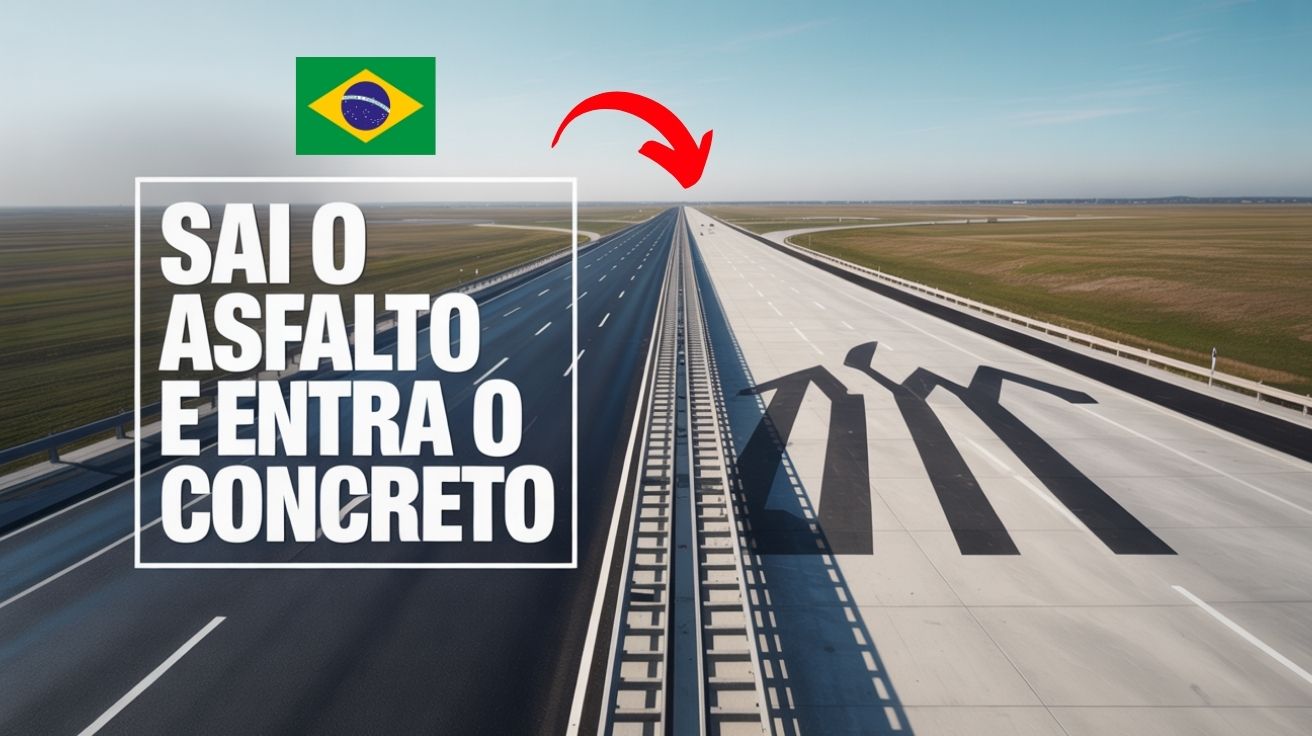


Concrete Begins to Replace Asphalt on Brazilian Highways, Bringing Much Greater Durability and Different Environmental Impacts. What Makes This Change Gain Strength Amid Rising Costs and Technical Challenges in the Sector?
In Brazil, where about 87% of the road network is still made up of dirt roads, asphalt dominates the remaining 12.3% of paved roads.
However, this supremacy of asphalt is beginning to be questioned with the advancement of Portland cement-based concrete, considered the main alternative for rigid paving in the country.
According to executives from government departments linked to roadway infrastructure, consulted by Valor Econômico, the use of concrete in paving Brazilian highways is expected to double in the next ten years.
-
Goodbye iron: new technology from Xiaomi promises to revolutionize the way we iron clothes with 500 kPa steam, continuous flow of 120 g/min, heating in 65 seconds, and six smart modes for different fabrics.

-
Rio Pardo, the most mysterious city in Rio Grande do Sul: untouched Pampas castle, the missing treasure of the Devil Boy, bride’s saint, invisible tunnels, and a 200-year curse today.

-
China retires the J-7 fighter after years of military protection and can now transform military items into drones, following more than 60 years of operation of the J-7, derived from the MiG-21, with thousands of units produced and strategic use in the PLAAF and PLANAF.

-
Volunteers are sought to live in the mountains for a month: a study pays people to stay at 2,500 meters, with 24-hour monitoring of sleep, metabolism, and blood pressure.


This projection is primarily associated with the rising price of the asphalt binder sold by Petrobras, as well as the effects of climate change, which increase asphalt’s vulnerability to high temperatures and extreme variations.
Durability and Cost Savings in the Life Cycle
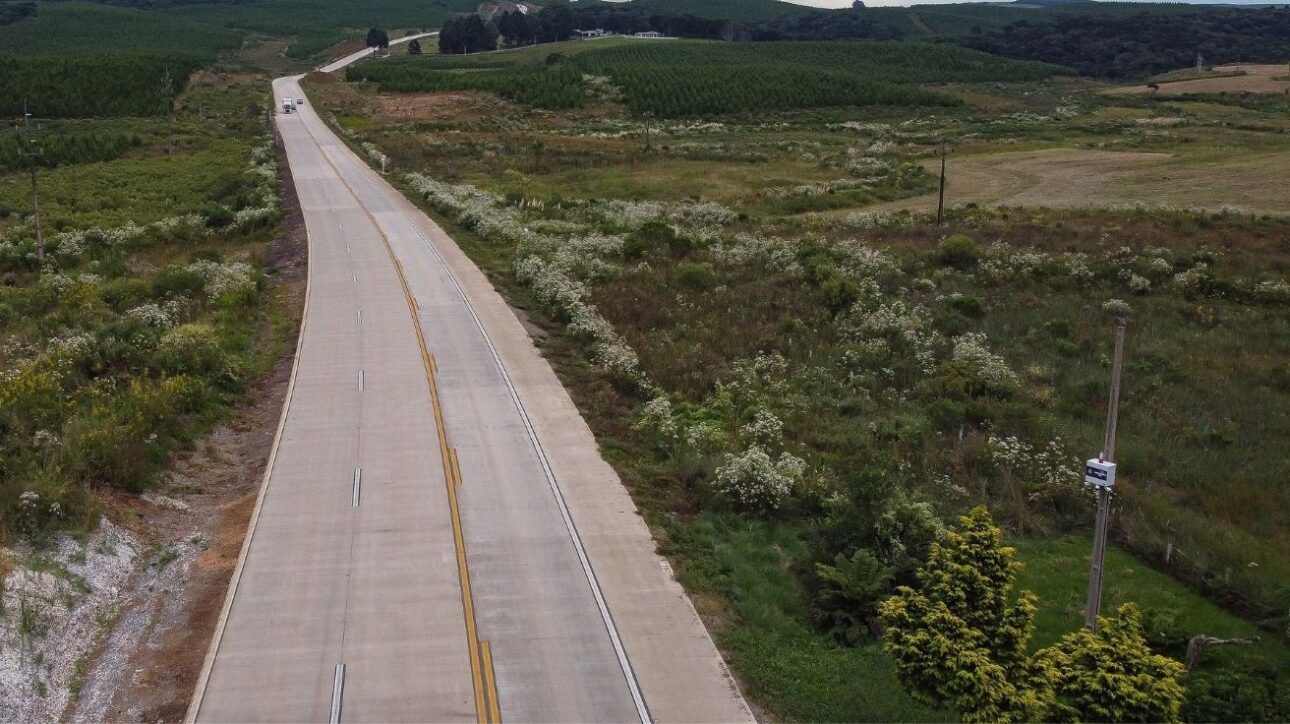
Technical studies indicate that concrete pavement can have a lifespan of between 20 and 30 years, requiring minimal intervention during that period.
On the other hand, asphalt requires resurfacing every 8 to 10 years to maintain safety and comfort conditions for traffic, which implies additional costs and longer periods of construction.
The Brazilian Portland Cement Association (ABCP) estimates that, considering the total life cycle cost – which includes implementation and maintenance –, rigid pavement can be up to 40% more cost-effective than asphalt.
In addition to financial savings, concrete reflects a larger portion of solar radiation, which reduces the surface temperature of the road, helping to minimize the phenomenon known as “urban heat island” in urban areas.
Environmental and Technical Impacts
From an environmental perspective, concrete also has advantages related to lower greenhouse gas emissions during its lifespan, especially when recycled materials are incorporated into its composition.
Asphalt, on the other hand, due to its petroleum derivatives, is subject to fluctuations in international prices and has higher carbon emissions during production and maintenance.
The durability of concrete is one of the main reasons for its growth.
Roadways paved with rigid concrete can remain in adequate conditions for up to three decades, while asphalt roads require more frequent repairs, resulting in additional costs and inconveniences for users.
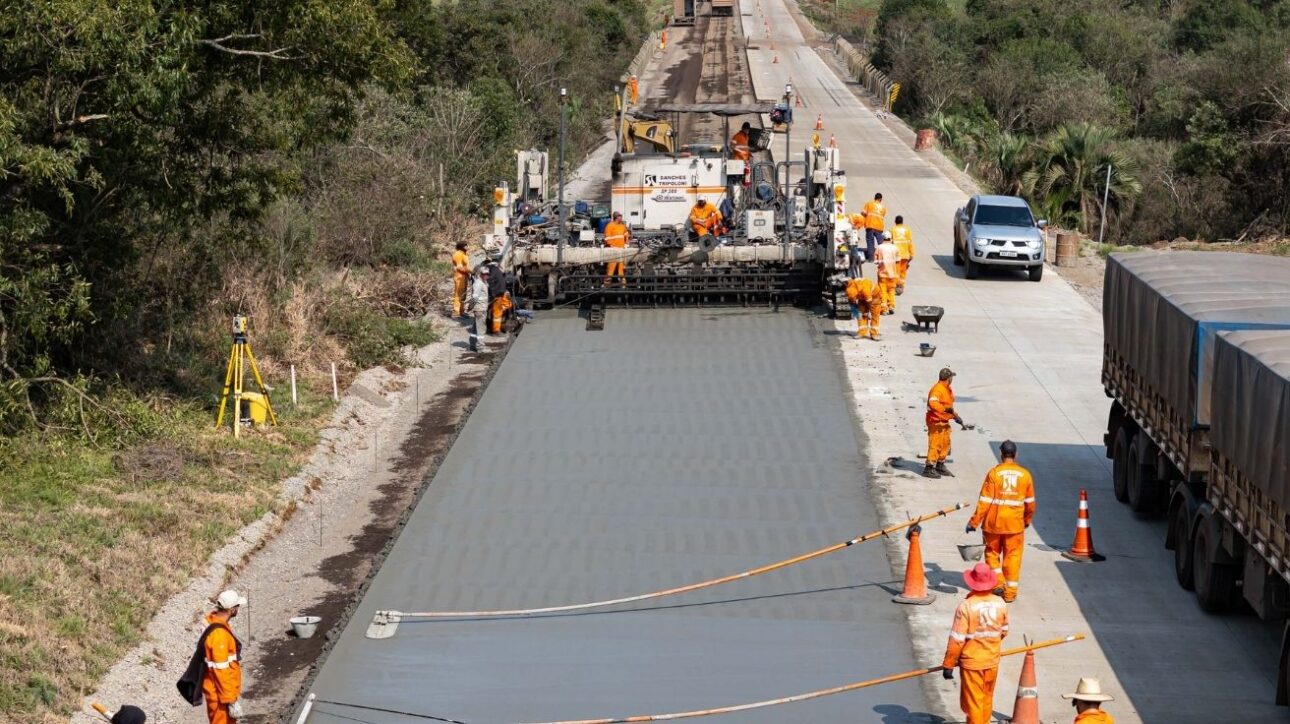
Photo: Roberto Dziura Jr/AEN
Experience of Brazilian States with Concrete Pavement
Some Brazilian states have already adopted concrete in their roadway projects.
Paraná, for example, has about 340 km of roads built in concrete, including important sections of SC-160 and PRC-280.
In Santa Catarina, initiatives for technical training aim to ensure the quality of rigid pavement works.
Similar projects are underway in Maranhão, Paraíba, Piauí, Rondônia, Sergipe, and Bahia.
Challenges for the Expansion of Concrete on Highways
Despite the advantages, concrete paving faces challenges, such as the higher initial cost and the need for qualified professionals for the execution and supervision of works.
The longer curing time of concrete, which may require more days before being opened to traffic, is also a factor considered in infrastructure projects.
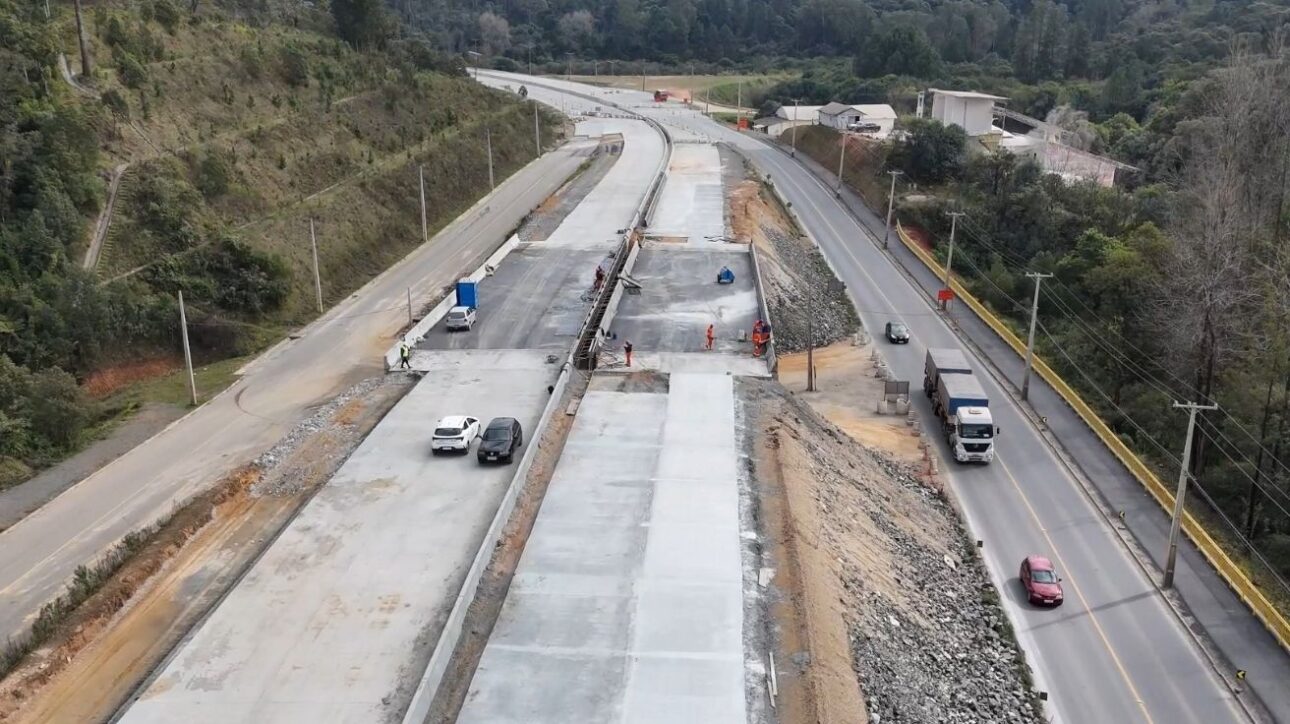
According to the National Department of Transport Infrastructure (DNIT), the share of concrete in the federal road network is currently about 2%, but growth is projected to around 10% in the next ten years, reflecting a gradual change in paving policy.
In addition to the technical and economic aspects, the environmental impact has also been considered in the decision regarding the type of pavement to be adopted.
Rigid concrete, with its greater durability and ability to reflect heat, helps reduce city heating and pollutant emissions related to road maintenance.
The advancement of concrete on Brazilian highways raises important questions about costs, adaptation to climatic conditions, and the technical training needed to ensure the quality of works.
With the higher initial cost and longer execution time, does it really make sense to invest in concrete for Brazilian highways, or will asphalt still maintain its dominance?








vai acabar com os pneus do carro em 6 meses o cimento é uma lixa para o pneu. já o asfalto ele é feito de borracha. que ajuda a diminuir o desgastes dos pneus
30 anos nem a **** , aqui na minha cidade já foram feitas duplicações com concreto , e já está cheio de remendas isto que só fazem 5 a 7 anos
Excelente ideia, o problema éque vão cobrar 30cm de concreto e colocar 10cm, como hoje acontece com o asfalto que antigamente era de 15cm de manta asfáltica e hoje é uma capa de 2cm…a corrupção corrói nossas estradas