





 Portuguese
  English
  Spanish
  4 min of reading
  0 comments


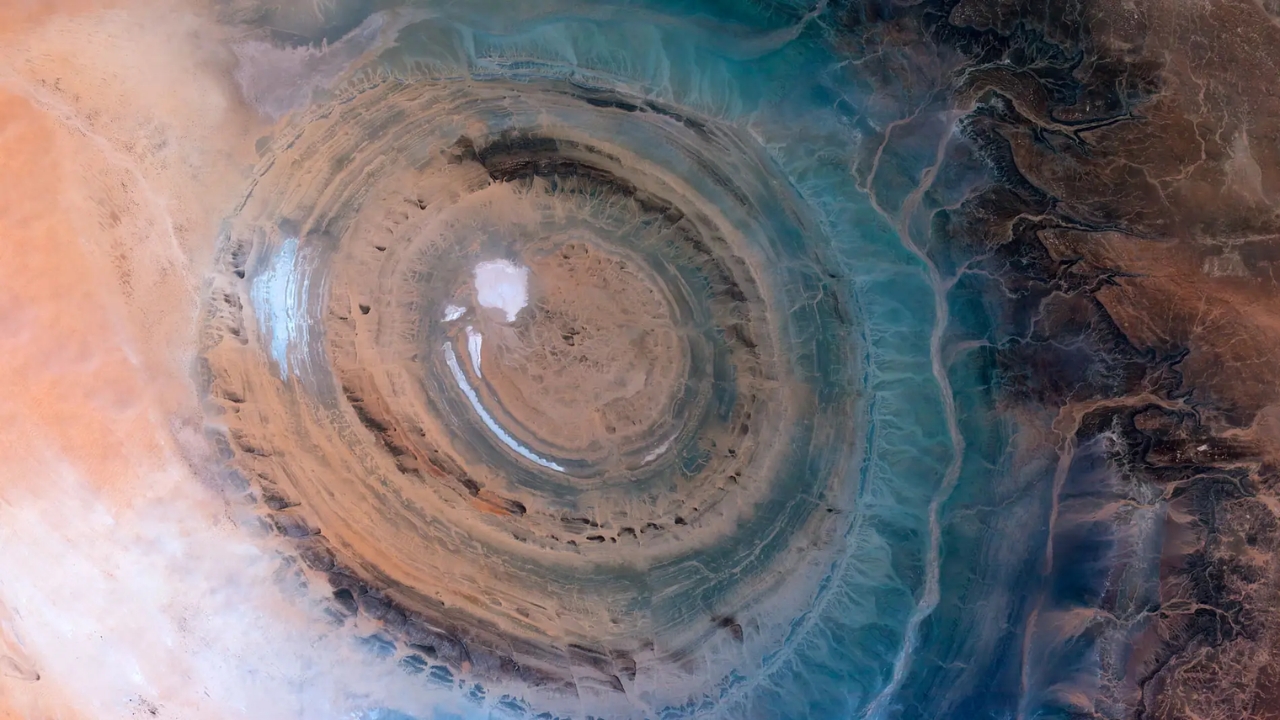
Clearly detected in the space flights of the 1960s, the Eye of the Sahara has become one of the most impressive natural landmarks on the planet, with a relief of up to 200 meters and an impact that changes the strategic reading.
In the heart of the desert of Mauritania, in Africa, a circular formation of impressive scale draws attention for a rare reason. Its complete shape only appears clearly when viewed from space, which has transformed the structure into one of the most curious natural landmarks on the planet.
Known as the Eye of the Sahara, the site brings together science, history, and extreme landscape in one point. The impact goes beyond the unusual image, as the structure helps researchers understand geological changes over millions of years and also enhances the region’s tourist appeal.
What makes the Eye of the Sahara so unusual
The formation is also called the Richat Structure and is located in the Adrar plateau in the north of the country. Viewed from above, it appears as an almost perfect circle, with rings that stand out among the sands of the Sahara.
-
With an unusual prize, Japan transforms office chairs into a resistance race on the streets, the ISU-1 Grand Prix grows, fills events, and pays 90 kilograms of rice.

-
With a façade that resembles a giant zipper, the building in Milan creates a sense of strangeness, featuring lighting that transforms engineering and attracts the attention of residents and tourists.

-
The Brazilian city has 319 crooked buildings built on sandy soil without proper deep foundations, houses the largest beach garden in the world, with over 5 km, and is still considered the birthplace of surfing — meet Santos, in São Paulo.

-
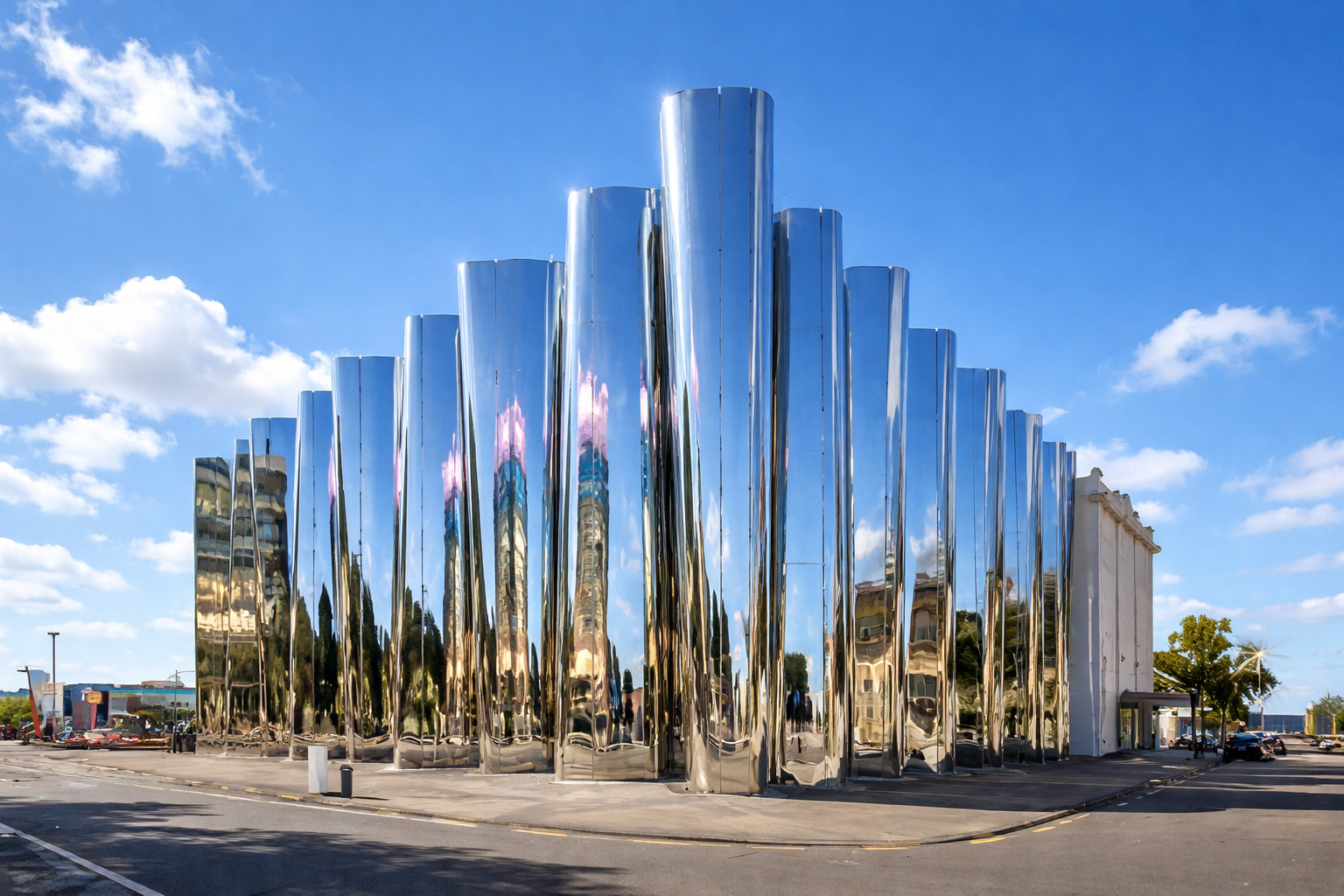
New Zealand builds a shimmering building that vibrates, featuring a 62-seat cinema, moving sculptures, and an environment where sound, light, and energy are felt in the body.

The set has about 50 kilometers in diameter and rises up to 200 meters above the surrounding area. This difference in relief helps reveal the bands of rocks that have taken on distinct shapes over time.

Why the structure only truly impresses from space
For a long time, the local population was already familiar with the area, but the real dimension of the formation only gained notoriety with the manned space flights in the 1960s. It was at this moment that the image of the gigantic circle began to intrigue scientists and observers.
The rings exhibit tones that vary between brown, blue, and red, resulting from the exposure of different rock layers. This visual contrast made the structure an easily recognizable point in orbital records.
The meteorite hypothesis lost strength
At the beginning of the investigations, there was the idea that the site could have emerged after the impact of a meteorite. With the advancement of field studies, this interpretation was gradually set aside.
The most accepted interpretation today points to an elevated geological dome, shaped by movements of the Earth’s crust and erosion caused by wind, water, and sand. The circular shape remained as a visual mark, but the origin began to be understood differently.

Ancient rocks help reconstruct millions of years
The exposed layers at the site serve as a natural record of the planet’s past. According to Infobae, an Argentine news portal for international news coverage, the structure gathers more resistant outer rings and more worn internal areas, which helps explain how erosion sculpted the relief over millions of years.
Research has also identified four types of igneous rocks, including gabbros, rhyolites, carbonatites, and kimberlites. This set indicates that the area preserves signs of deep Earth activity in a very remote past.
Human remains increase the importance of the site
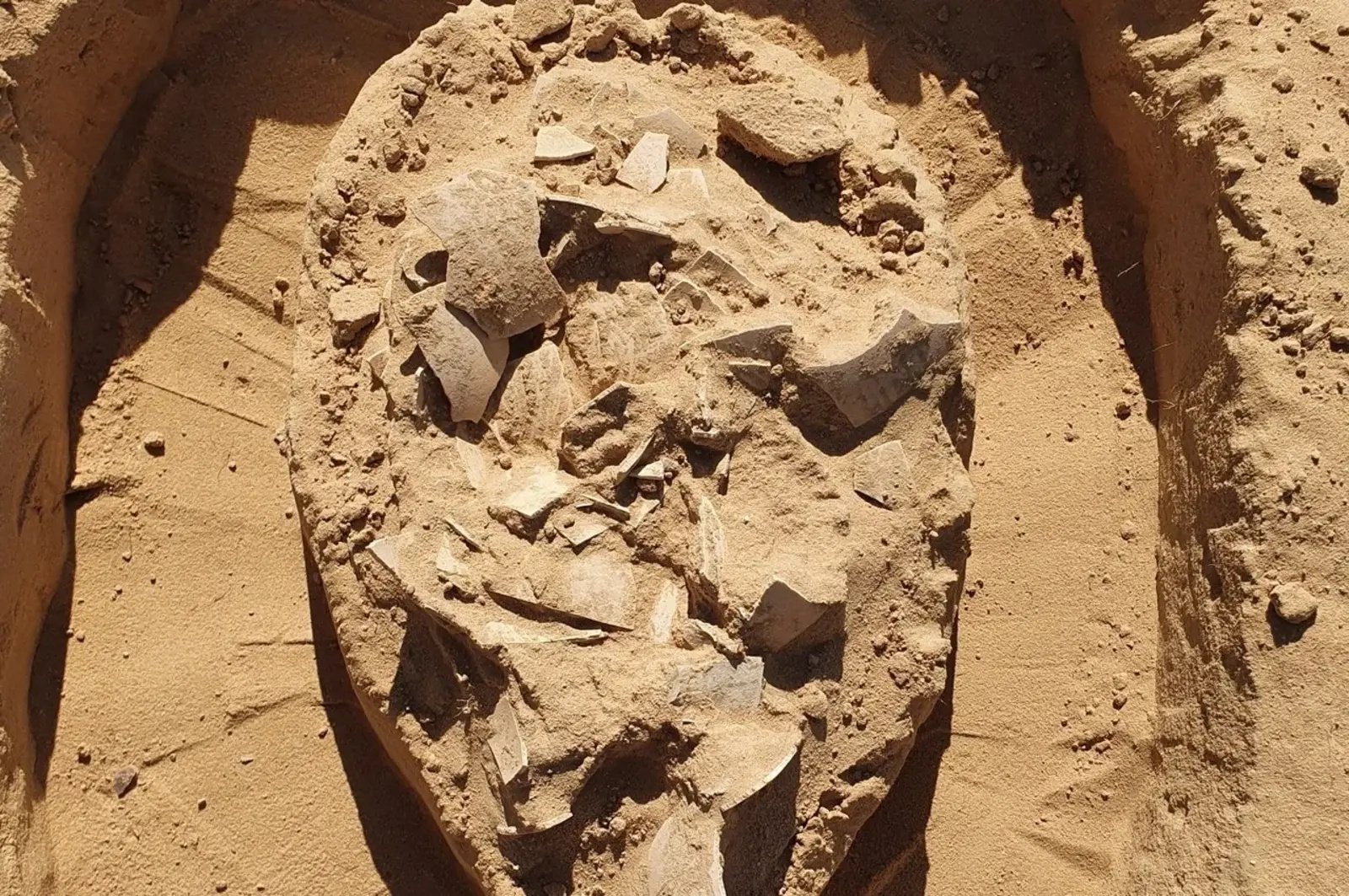
The value of the Eye of the Sahara is not limited to geology. Excavations have found stone tools associated with the Acheulean period, linked to very ancient human groups that passed through the region.
These remains reinforce that the current desert once had different environmental and climatic conditions. The distribution of artifacts helps to read ancient routes of human occupation in an area that today seems inhospitable.

Tourism grows based on science and extreme landscape
The city of Oudane serves as a starting point for those visiting the structure. Organized expeditions cross the dunes of the Erg Oudane and take explorers to one of the most unique landscapes of the African desert.
The visit requires preparation, specialized guidance, and attention to the severe conditions of the environment. In return, the traveler finds rocky rings, changes in color in the terrain, and a landscape that blends monumental scale with scientific value.
The Eye of the Sahara remains one of the most impressive examples of how nature can create shapes that are difficult to understand from the ground. While attracting tourists and the curious, it also offers concrete clues about the geological and human history of the region.
With about 50 kilometers in diameter and visible in its entirety only from space, the structure places Mauritania at the center of a rare narrative, where desert, science, and remote past intersect in a striking way and change the strategic reading.







Seja o primeiro a reagir!