






 Portuguese
  Spanish


Kerry Lynn entered college in 1972, dropped out in the second year, and built a career that included Apple, Cisco, and Oracle, with ten patents. In May 2026, half a century later, he finally received his computer science degree from WPI in the United States.
It’s never too late to finish what you started, and there is living proof of that. Kerry Lynn enrolled in college in 1972, at the Worcester Polytechnic Institute (WPI), in the United States, but only completed his academic journey half a century later. According to the university itself, in May 2026 he walked the stage to receive his bachelor’s degree, exactly 50 years after the date he had originally planned to graduate.
The math of time is impressive. Although he entered as part of the class of 1976, Lynn ended up graduating with the class of 2026 five decades after the original goal. Along the way, there was an entire career in technology, ten patents, and the certainty that the unfinished degree was still waiting for him.
The college that began in 1972
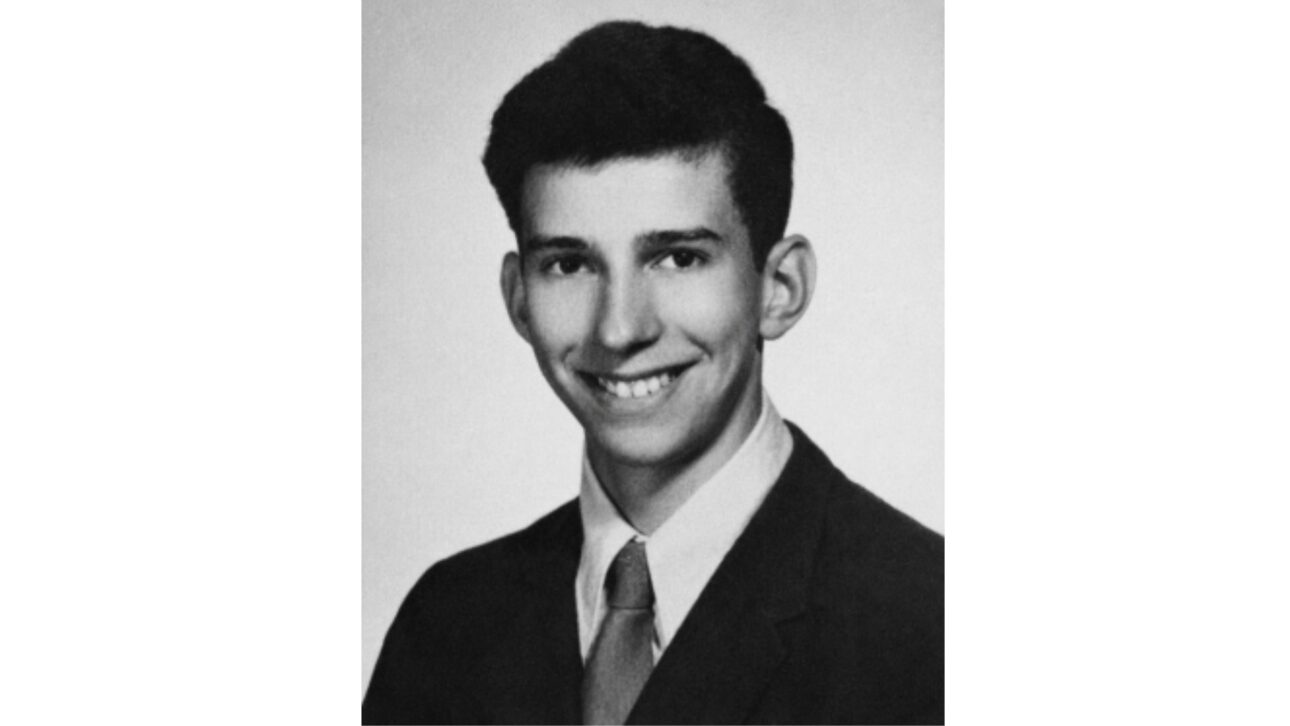
The story has roots in a machine shop. Kerry Lynn grew up in Connecticut and spent much of his childhood in the shop that his father, an industrial engineer, had helped to found, an environment that sparked his interest in engineering.
-
Transporting around 130 million passengers in a single year and totaling 28.5 million in international flights alone, Brazil’s airports broke a historical record in 2025 and received 2.6 billion reais in private investment.

-
Selling 67 million tons and generating around 27 billion reais in revenue, Brazil’s cement industry closed 2025 with a 3.7% increase, supported 85,000 jobs, and already has 27.5 billion reais projected until 2027.
-
The ship São Paulo Express docks in Southern Brazil and unloads 131 tons of highly specialized industrial machinery, marking an unprecedented operation at the terminal before two crushers and a vibrating screen head to the interior of Santa Catarina.

-
China deployed a 1.5-meter lifeguard robot equipped with GPS and two motors, which crossed strong waves for about 2 kilometers, reached three tourists in just 5 minutes, and helped bring them back when jet skis couldn’t enter the sea.


It was in high school that the passion that would define his life emerged. He began to take an interest in computers and, attracted by WPI’s focus on practical projects, decided to enroll in the institution. “It’s a place where you can chart your own path,” says Lynn.
His initial training, however, was different. Lynn entered college in 1972 to study mechanical engineering, arriving on campus shortly after the university approved the so-called WPI Plan, a bold educational model based on projects and the application of theory to real-world problems.
The departure in the second year and the leap into technology
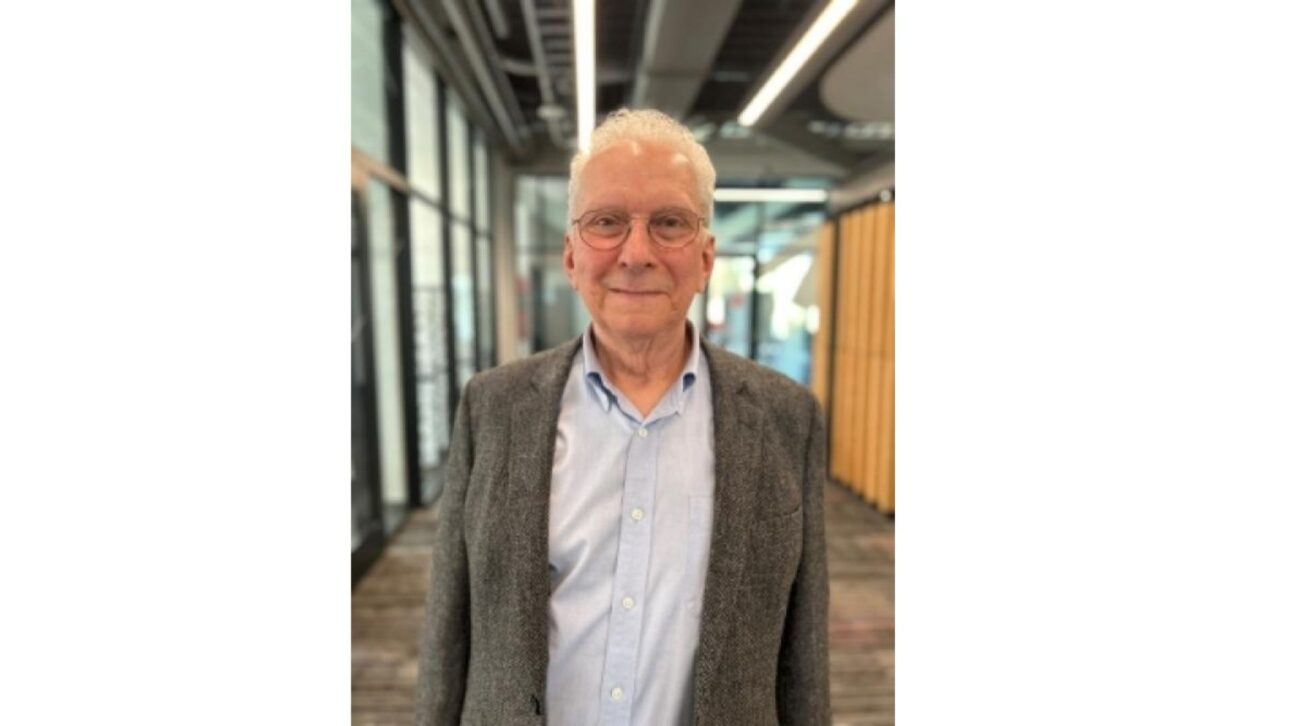
The university journey, however, was interrupted early. Lynn left WPI during the second year, while still trying to define his own professional path, without imagining how long it would take to return.
The interest in computers, however, only grew. It was this fascination that quickly led him to the then-emerging technology industry, at a time when the first microcomputers were beginning to appear.
He dove headfirst into this new area. He worked directly with the first microcomputers in Connecticut and, in 1982, returned to Massachusetts to resume part-time studies, now in computer science, at the same WPI he had left.
The Night in 1984 with Steve Jobs That Changed Everything
A specific episode became a turning point in Lynn’s life. As a member of the Boston Computer Society, he attended a presentation by Steve Jobs, co-founder of Apple, in 1984, where the Macintosh computer was unveiled.
The impact was immediate and profound. “That night in Boston was transformative for me”, recalls Lynn, about the moment he saw up close the machine that would help change personal computing.
The excitement turned into action immediately. He and others present formed a Macintosh developers group right there, which Lynn co-led until he moved to California in 1987 to work at Apple itself.
Ten Years at Apple and One of the World’s First Wireless Networks
The stint at the tech giant was long and remarkable. During his ten years at Apple, Lynn helped develop one of the world’s first wireless local networks, contributing to a technology that is now ubiquitous.
Recognition came in the form of a position. He eventually became an engineering manager in the PowerBooks division, the company’s line of notebooks, taking on increasingly larger responsibilities.
It was an experience that placed him at the center of the digital revolution. Being at Apple during that period meant participating in the creation of products that would define personal computing in the following decades.
Cisco, Oracle, and Ten Patents Along the Way
Lynn’s career did not stop at Apple. After returning to New England in 2000, he continued balancing family life with a career that included Cisco, Verizon Labs, and Oracle, always connected to the forefront of technology.
His work left marks on standards we use every day. He contributed to Wi-Fi and internet protocol standards and accumulated ten patents, including two focused on wireless network security methods.
This resume would lead to an interesting detail later. While writing his final graduation project report, Lynn discovered he needed to cite his own work done with standardization organizations decades earlier — something very rare in a student project.
“Now or never”: the decision to return in 2025
The unfinished degree never left his mind, but it was always postponed. “I have set graduation goals in the past to graduate with my children and things like that, but work always got in the way”, Lynn admits.
The turning point came in an unexpected way. In the fall of 2025, a layoff brought forward his retirement from full-time work, finally giving him the time he never had to complete the course.
The decision, then, was definitive. “I decided it was now or never, and ‘never’ was not an option. I was really determined to graduate on the 50th anniversary of my initial goal”, Lynn says about the final push.
The professor who received the unusual email
The comeback began with an unlikely message. While volunteering at the Fab Foundation, Lynn wrote to Professor George Heineman, of computer science, to explain his goal of finally graduating.
The professor’s reaction says a lot about the magnitude of the story. “It’s not every day you receive an email like this”, commented Heineman, who agreed to help the student close the gaps.
Together, they went after what was missing. Searching through old catalogs and talking to the administration, they discovered that Lynn still needed to complete a research seminar in humanities and arts and a qualifying project to receive the diploma.
A diploma under the original WPI Plan rules
Lynn’s journey has a rare historical value within the university. In the middle of his career, he had fulfilled a now-discontinued requirement of the original WPI Plan: the competency exam, an oral test conducted by professors to assess if the student was ready for the profession.
This places him in an almost unique position. Lynn believes he may be the last person to graduate from WPI under the original version of the WPI Plan, with that old requirement that practically no longer exists.
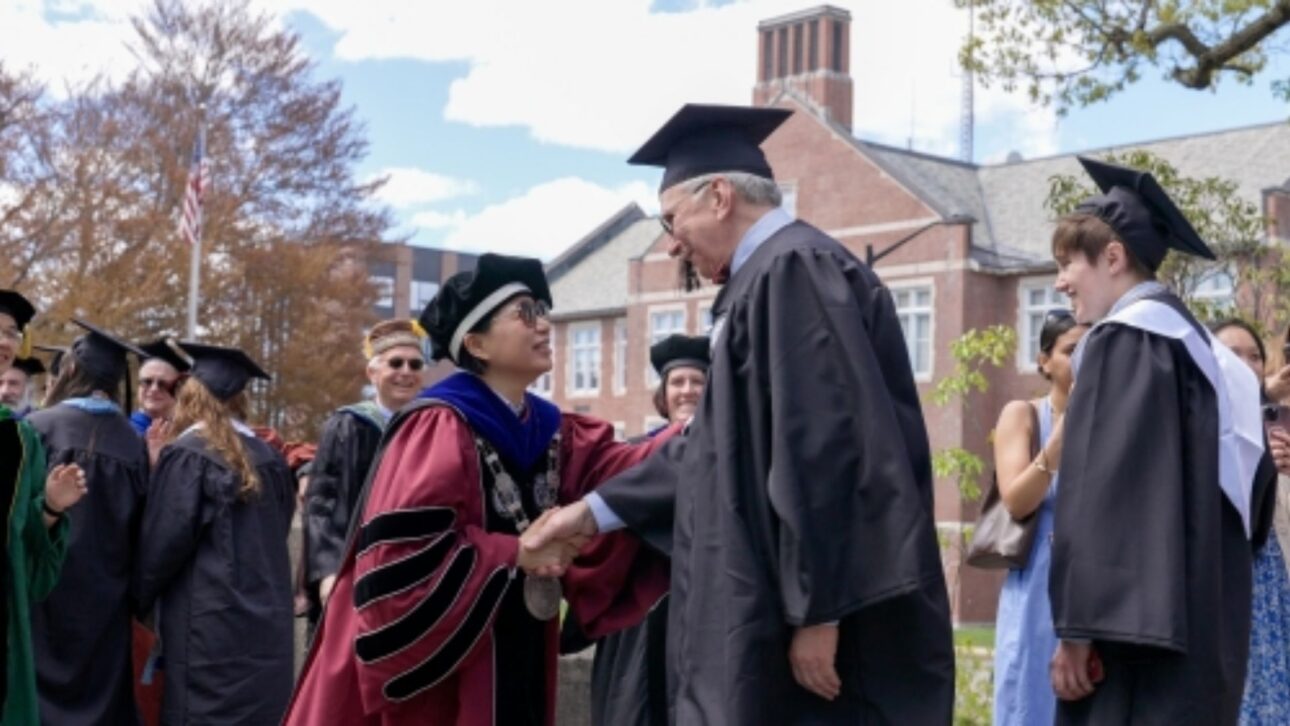
The explanation for such a delay is simple and honest. “During my career, I often didn’t have time to take courses”, says Lynn, about the intermittent way he gradually fulfilled the mandatory hours over the decades.
Back to the classroom, alongside young students
To complete the course, Lynn literally had to return to studying among much younger colleagues. He returned to the classroom of David Spanagel, a humanities and arts professor who had been his teacher years before, to fulfill one of the remaining requirements.
His presence changed the atmosphere of the class. “Kerry raised the level of sophistication of our entire learning community in the classroom, through the philosophical depth of his questions”, praised Professor Spanagel.
The topic of the final paper reflected his story. Alongside two other undergraduate students, Lynn produced a paper examining the impacts of technological disruptions from the 19th century to 2023 — precisely the kind of transformation he experienced firsthand.
The 98-year-old father and the value of persistence
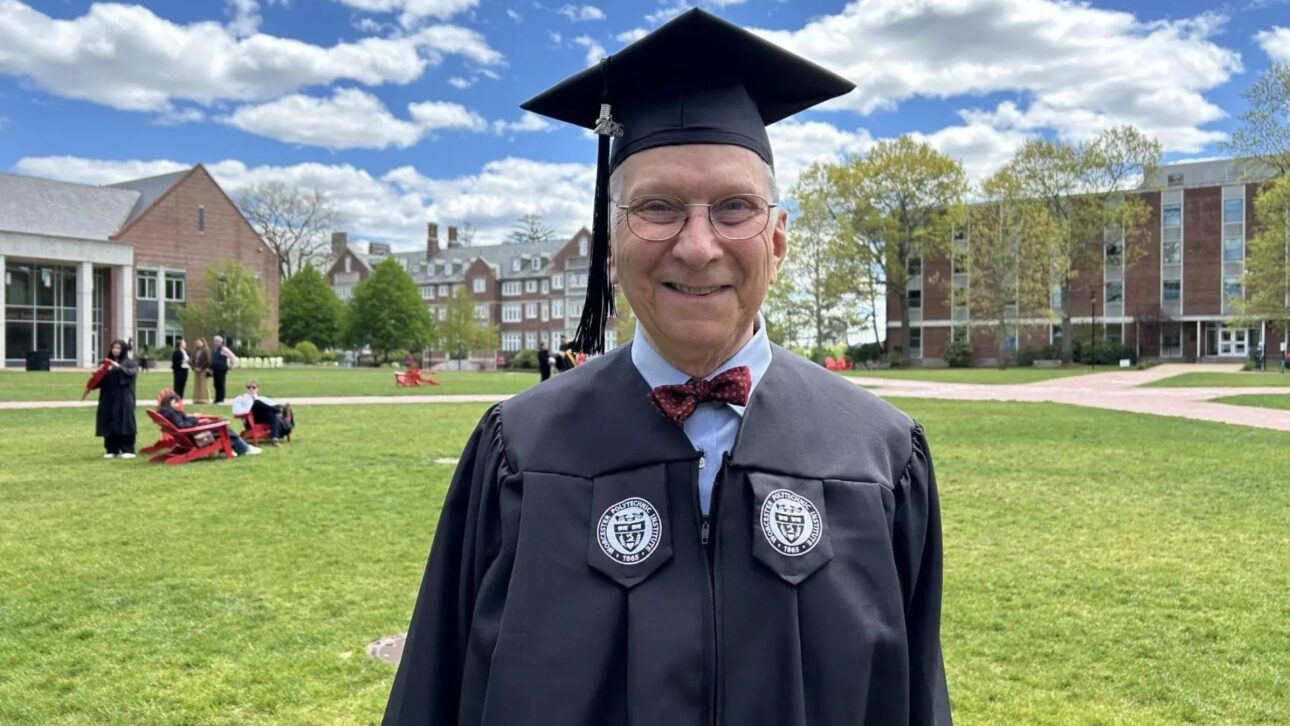
The achievement carries enormous family weight, albeit with a bittersweet detail. Lynn’s 98-year-old father could not attend the ceremony, but he is proud of his son for completing his studies — a recognition that closes a cycle started in that childhood workshop.
More than celebrating himself, Lynn wants the story to serve as an example. “I hope this achievement can inspire at least one person to realize the great value of persistence. I think persistence is underestimated”, he states.
For him, the message is clear and generous. “If my story helps someone take the initiative to go back to school or finish something they started a long time ago, I will consider it a victory”, says Lynn, who after graduation plans to divide her time between volunteering and consulting.
And you, did you leave any dream unfinished?
From an enrollment in 1972 to a diploma received in 2026, half a century later, Kerry Lynn’s story proves that an unfinished college degree doesn’t have to be a closed chapter.
And you, do you have any goals that you left behind and would still like to complete? Do you believe it’s never too late to go back to studying? Share your opinion in the comments and tag that person who needs this dose of motivation to resume an old dream.


