Portuguese
  Spanish


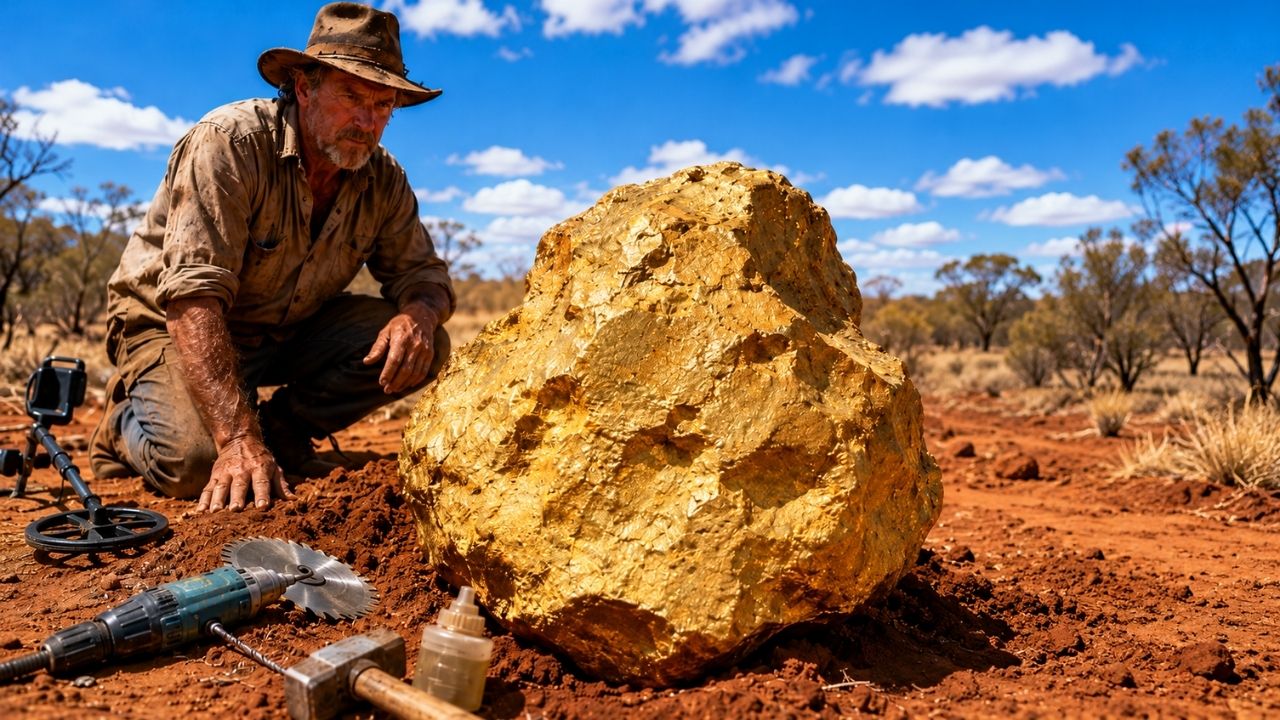

The Maryborough meteorite was found by David Hole in May 2015, in the Maryborough Regional Park, in Victoria, Australia, after a metal detector signal. Identified in 2018 at the Melbourne Museum, the block revealed 17 kg of ancient material from the primitive Solar System, rarer than gold.
The meteorite was found in May 2015 by David Hole, a resident of Maryborough, in the state of Victoria, Australia, while he was using a metal detector in the Maryborough Regional Park. The heavy, reddish rock was removed from an area linked to the old Australian gold rush, which led the prospector to imagine he had found a hidden nugget.
The information was published by the Daily Galaxy on July 9, 2026. According to the publication, the rock was only correctly identified in 2018, when David Hole took the block to the Melbourne Museum and geologists confirmed it was not gold, but a 17 kg meteorite formed at the beginning of the Solar System.
Metal detector indicated something strange in the ground
David Hole was in the Maryborough Regional Park, about two kilometers from the city, when the metal detector picked up a strong signal in the region’s clay soil. Upon digging, he found a dense, reddish rock marked by small cavities on the surface, quite different from the common stones he was used to seeing.
-
Just one message on WhatsApp: Belém launches “Plante Aqui” and plants a tree for free at your doorstep within 15 days, with a goal of 5,000 seedlings by the end of 2026 in the capital of Pará.

-
The most ‘stingy’ millionaire in Canada? Bill Holland saved money to retire at 32, led the management company that now manages $140 billion, and still takes public transportation, in the same club as Warren Buffett and Elon Musk.
-
At 79 years old, the businessman who led Burger King’s arrival in Brazil announces an investment of R$ 380 million to create a “Gaucho Tuscany” on 370 hectares, with private vineyards, olive groves, a luxury hotel, and its own wine and olive oil production, along with about 200 properties.
-
SpaceX launch turned Falcon 9 into a giant jellyfish in the night sky, with a colorful plume illuminated by the Sun at high altitude, confusing observers and showing how a routine flight can become a rare spectacle of atmospheric physics over Earth.





The location helped fuel the suspicion that there was gold inside the block. Maryborough is in a region famous for the 19th-century gold rush, where thousands of nuggets were extracted from the ground. For a prospector with a metal detector, that strong signal seemed like the start of a valuable discovery.
Rock resisted saw, acid, drill, and sledgehammer
Convinced that there could be a nugget hidden inside the rock, Hole took the material home and tried to open the block in various ways. He used a rock saw, grinder, drill, and even acid, but nothing could reveal what was inside.
The most impressive attempt came when he struck the rock with a sledgehammer. Even so, the block did not break. The unusual resistance was an important clue: it did not behave like a common terrestrial stone, nor like the type of material the prospector expected to find in the region.
Melbourne Museum solved the mystery
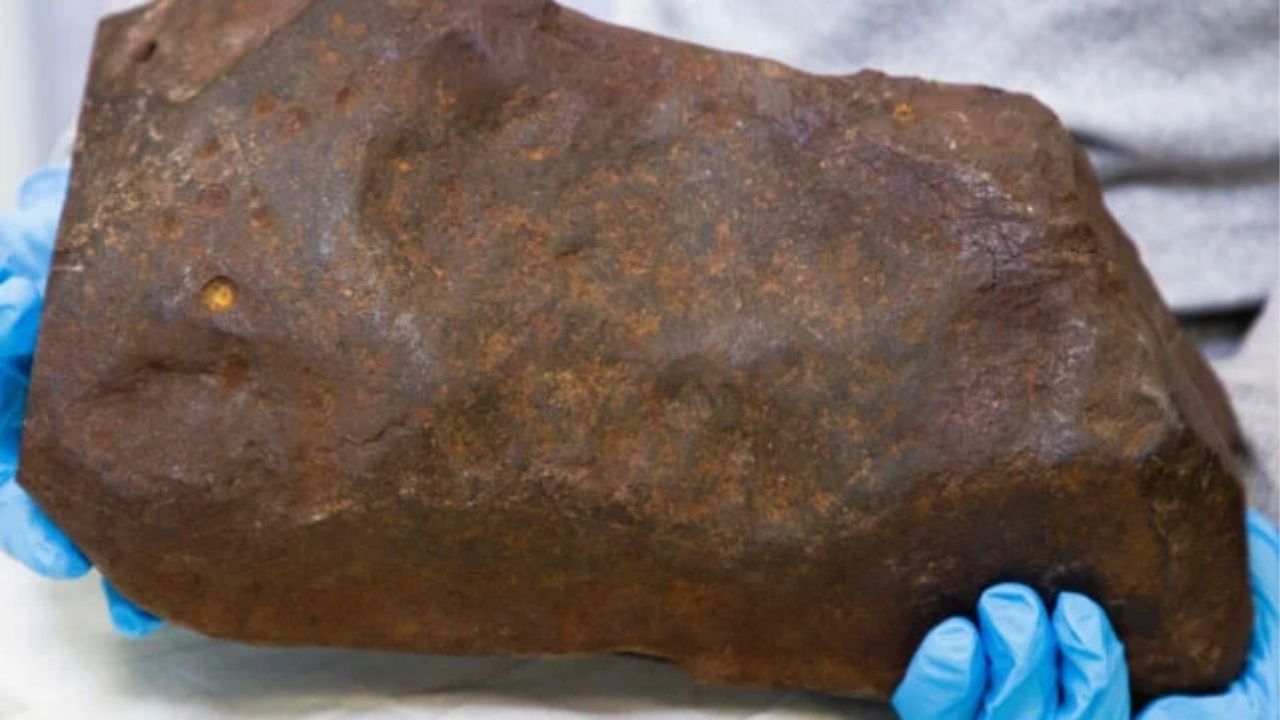
Still curious, David Hole took the rock to the Melbourne Museum in 2018. For geologists, this type of visit was not unusual, as many people come with stones they believe to be meteorites, but which usually turn out to be just terrestrial rocks with a different appearance.
This time, however, the case was out of the ordinary. Geologist Dermot Henry, who spent decades analyzing samples brought to the museum, noticed that the rock had unusual characteristics. After years of resisting household tools, the block was finally investigated as a possible true meteorite.
Surface full of cavities drew attention
The external texture was one of the first clues observed by the specialists. The rock had small rounded cavities, known as regmaglypts, marks that can form when an object passes through the Earth’s atmosphere and its outer layer undergoes intense heating.
These marks helped differentiate the block from a common rock. Upon entering the atmosphere, a space fragment can have its surface partially melted and sculpted by the high-speed air. The result is an irregular, almost molded appearance that can reveal the extraterrestrial origin of the material.
Weight of 17 kg reinforced the suspicion
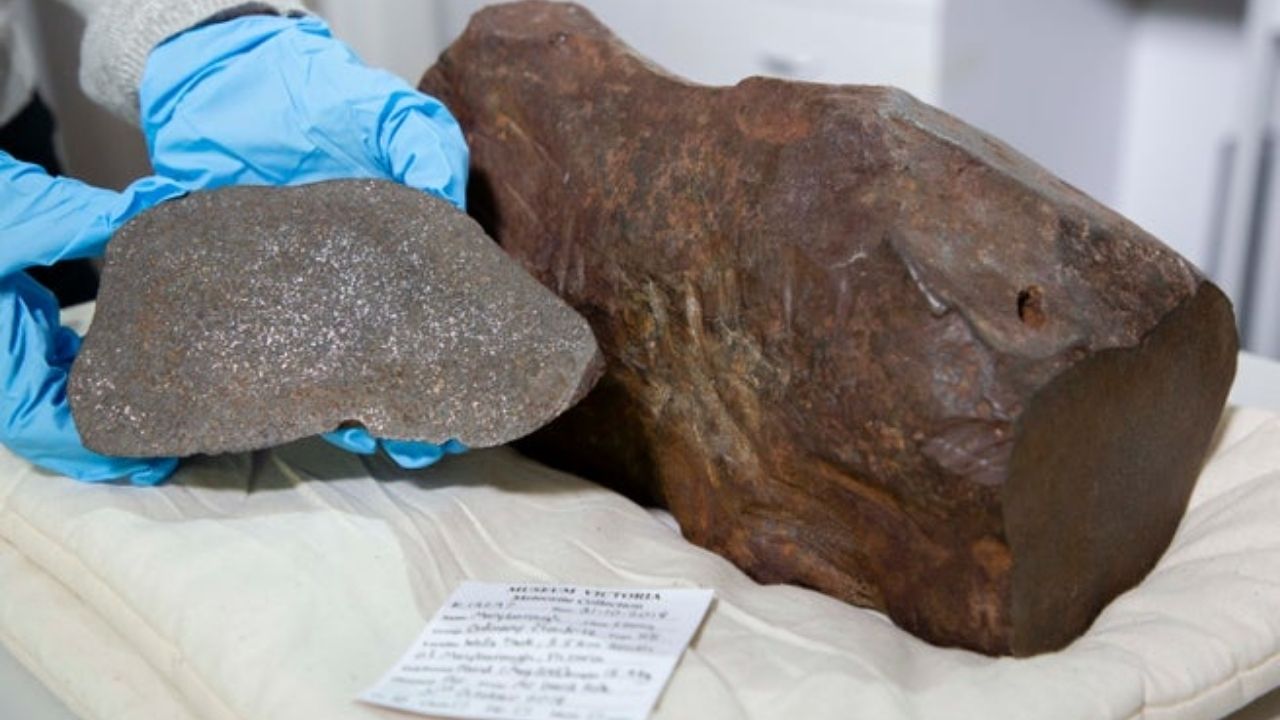
The geologists weighed and measured the sample. The block was 17 kg and approximately 38.5 by 14.5 by 14.5 centimeters. For a rock of that size, the weight was striking, indicating a higher density than expected in many terrestrial stones.
This unusual density reinforced the hypothesis that the material contained metals in significant quantity. The meteorite also explained why David Hole’s metal detector had reacted so strongly years before. The signal that seemed to point to gold actually came from a space fragment rich in iron.
Diamond cut revealed the interior
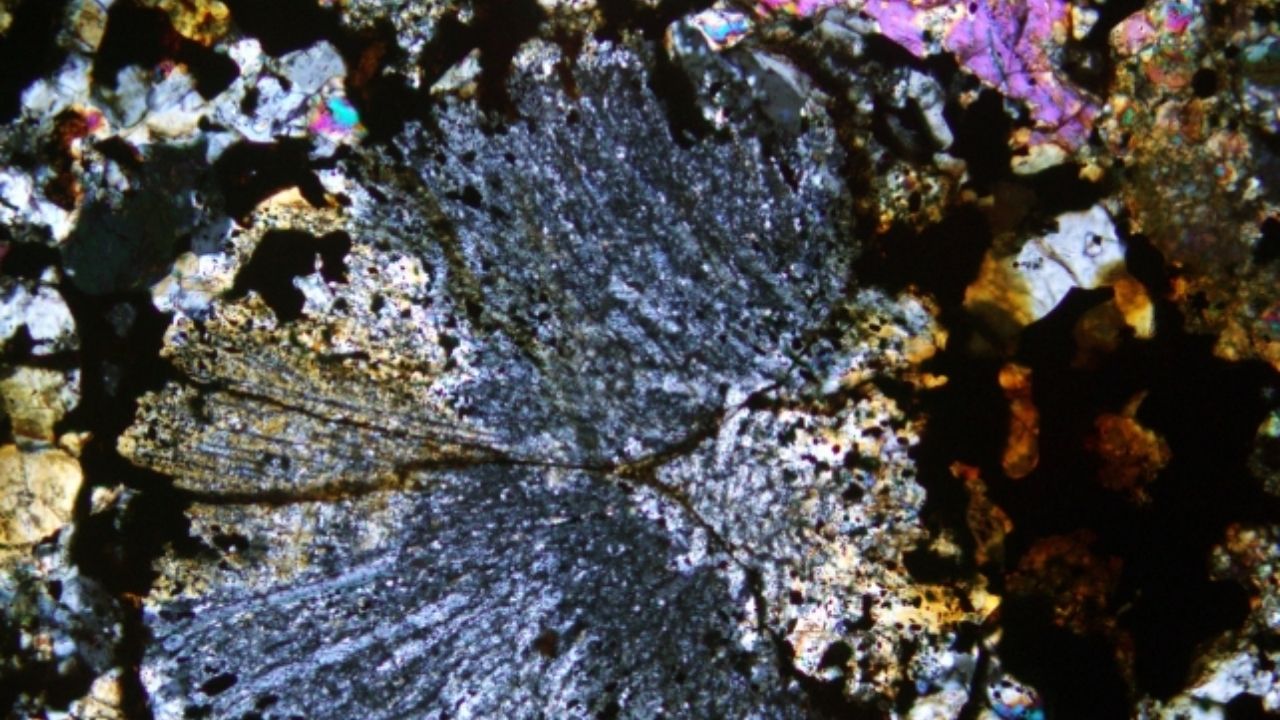
To open the block, the specialists used a diamond saw, a tool capable of cutting the dense rock that had resisted previous attempts. The cut revealed small rounded mineral structures called chondrules, which are essential for understanding the origin of the material.
The chondrules formed in the early Solar System when dust and minerals underwent rapid heating and cooling in conditions very different from those found on Earth. The presence of these structures confirmed that the sample was a chondrite, a type of meteorite that preserves ancient material from planetary formation.
Meteorite came from the beginning of the Solar System
The analysis classified the Maryborough meteorite as an ordinary H5 chondrite. The letter “H” indicates high total iron content, while the number “5” points to significant thermal metamorphism when it was still part of a larger body in space.
According to the publication, the meteorite formed about 4.6 billion years ago, even before Earth completed its formation. The probable origin is in the asteroid belt between Mars and Jupiter, where collisions can launch fragments on trajectories capable of crossing our planet’s path.
Fall may have occurred centuries before discovery
To estimate when the meteorite arrived on Earth, researchers resorted to carbon-14 and cosmogenic isotope analyses. The results indicated that the fragment may have fallen sometime between 100 and 1,000 years ago.
Historical records from the Maryborough region mention sightings of meteors between 1889 and 1951. There is still no confirmation that any of these reports are linked to the meteorite found by David Hole. The possibility exists, but scientists have not established a direct connection between the rock and a specific event observed in the sky.
Find is rarer than gold in Victoria
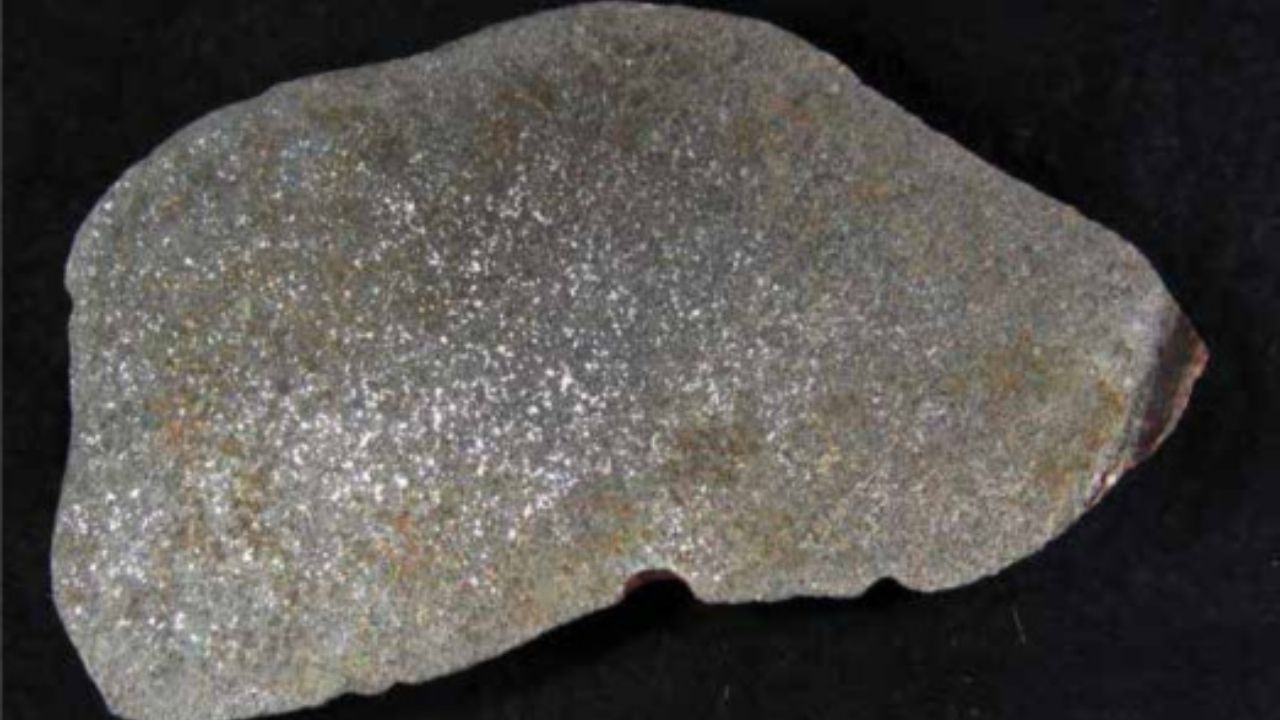
The Maryborough meteorite is only the 17th meteorite recorded in the Australian state of Victoria. This number is noteworthy because the region where it was found is famous precisely for the gold nuggets extracted since the 19th century.
The comparison shows why the find has special scientific value. While gold was found in large quantities in Victoria’s goldfields, confirmed meteorites are extremely rare. The prospector was looking for a nugget but ended up finding something much more unusual for science.
Fragment entered scientific collection
After identification, the meteorite became part of the collection maintained by Museums Victoria. The piece joined other specimens studied by the institution and was also put on public display at the Melbourne Museum.
For scientists, meteorites function as natural records of the Solar System’s history. They carry clues about age, chemical composition, and processes that occurred before the complete formation of the planets. Each fragment of this type is a direct sample of a past that Earth no longer easily preserves.
Indestructible rock became a window to space
The story draws attention because it began as a search for gold and ended with the identification of a meteorite older than the Earth itself. The block that resisted saw, acid, drill, and sledgehammer only revealed its origin when it underwent scientific analysis and was cut with a diamond tool.
The case also shows how an apparently common discovery can change in meaning when it reaches the right hands. Would you have insisted on trying to break the rock at home or would you take the find straight to a museum? Comment on what you would do if a metal detector pointed to something like this in the ground.