





 Portuguese
  English
  Spanish
  6 min of reading
  0 comments


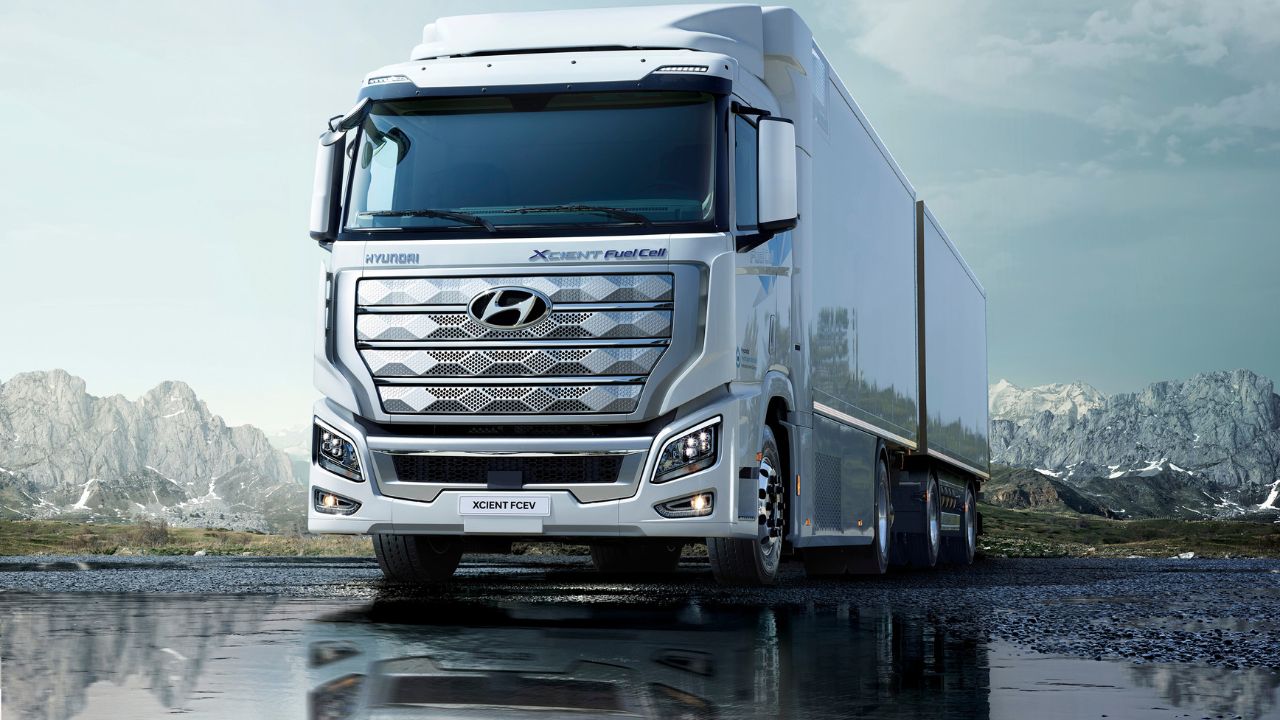
The Arrival of the XCIENT Fuel Cell in Latin America Marks a Major Advance in the Use of Green Hydrogen in Heavy Transport, Strengthening Hyundai’s Initiatives to Expand Sustainable Mobility in the Region
Hyundai has confirmed that the XCIENT Fuel Cell will officially arrive in Latin America in December, marking a strategic advance in the adoption of hydrogen-powered green hydrogen in heavy logistics. According to a report from Estradão this Thursday (20), the announcement was made by Airton Cousseau, president of the Americas division of the automaker, highlighting the start of operations in Uruguay as part of a broader effort to strengthen sustainable mobility in the region’s commercial transport.
Debut of Hyundai XCIENT Fuel Cell and the Strategic Role of Latin America
At a time when governments and companies discuss ways to reduce emissions and meet climate goals, the launch positions itself as one of Hyundai’s most relevant initiatives in the Latin American market, integrating clean technology, hydrogen infrastructure, and long-term logistical strategies.
The arrival of the XCIENT Fuel Cell in the region is significant because it reinforces Hyundai’s global strategy to expand its presence in markets seeking low-carbon solutions for road transport. As Latin America heavily relies on road transportation for cargo movement, initiatives like this become essential to drive environmental discussions and more efficient practices.
-
Revolution in the Northeast: Ceará accelerates investments in environmental technology and inaugurates an innovative plant that uses waste to promote sustainable sanitation.
-
Brazilian state reaches historic milestone in sustainability: Study reveals that nearly all the energy produced comes from clean sources and boosts the electric matrix of Minas Gerais.
-
Chinese startup expands sustainable mobility with a fleet of 11,000 hydrogen bicycles and reaches millions of trips.

-
Extreme heat and drought waves are expected to afflict billions of people with a frequency five times greater by the end of the century!

Moreover, the choice of Uruguay is not coincidental. The country has advanced renewable energy policies and has been preparing to be a reference in clean hydrogen. Thus, it serves as an ideal environment for the first large-scale operational tests of the truck in the region.
Project Kahirós: The Center of Green Hydrogen Operations
The Kahirós Project will be responsible for receiving the first six Hyundai XCIENT Fuel Cell trucks in Latin America. It is a consortium formed by Hyundai Fidocar, Banco Santander, Ventus, and Fraylog, which will operate in long-distance timber transport.
Estradão detailed that:
- There will be six 6×4 trucks designated for timber transport, traveling over 700 km on a single hydrogen refill.
- The production of the fuel will take place at a dedicated plant near Fray Bentos, featuring a solar park of 4.8 MW with the capacity to generate 77 tons of hydrogen per year.
- Banco Santander invested around US$ 40 million to enable all energy and refueling infrastructure.
- The solar energy used will be captured by bifacial panels, which increase efficiency in hydrogen production.
This integration of production, refueling, and operation creates a self-sufficient ecosystem aligned with the strictest environmental requirements. It is also a model that can be replicated in other countries if operational results are satisfactory.
Technical Details of the Hyundai XCIENT Fuel Cell
The truck incorporates advanced technologies already tested in markets such as Europe, the United States, and Asia. Among the key technical details disclosed by sources are:
- Two 90 kW fuel cells each, totaling 180 kW.
- 350 kW electric motor with a torque of 228 mkgf.
- Ten hydrogen tanks, with an approximate capacity of 69 kg.
- Three batteries with a combined capacity of 72 kWh, used to support electric traction.
- Declared range by Hyundai of up to 720 km per refueling.
Initially launched in 2020, the model has accumulated millions of kilometers driven worldwide. In Switzerland, for example, it has already surpassed 10 million kilometers in logistics operations, demonstrating reliability and consistent performance.
How Green Hydrogen Drives Sustainable Mobility
The use of green hydrogen is one of the pillars of this project. Unlike conventional hydrogen, green hydrogen is produced from renewable sources — in this case, solar energy — without emitting CO₂ during the process.
Thus, the adoption of the truck not only reduces emissions during operation but also ensures that the entire energy cycle is clean. This becomes essential for a sector like cargo transport, which predominantly relies on fossil fuels.
Additionally, using green hydrogen to refuel heavy trucks allows for the operation of long routes without the need for frequent electric recharging stops, something that still limits many battery electric vehicles. This makes the solution more compatible with the logistics reality in Latin America, where long distances and limited infrastructure are historical challenges.
XCIENT Fuel Cell and the Decarbonization of Heavy Logistics in Latin America
The introduction of the truck in the region is seen as an essential step toward the decarbonization of heavy transport. This is because:
- Reduces direct CO₂ emissions by replacing diesel engines.
- Validates a new operational model, especially when combined with local hydrogen production.
- Opens doors for investments, as it proves the viability of the technology in practice.
- Promotes new productive chains, encouraging the development of infrastructure and industrial partnerships.
- Contributes to climate goals, aligning companies and governments with international commitments.
As a result, cleaner transport routes become possible and economically competitive, as long as there is continuity in initial investments.
Hyundai’s International Experience with the XCIENT Fuel Cell
The global history of the model reinforces its credibility. In markets such as the United States and Switzerland, the truck has already demonstrated efficiency and reliability in complex operations.
In Switzerland, for example, the fleet has accumulated over 10 million kilometers in daily transport activities. In the United States, Hyundai operates 21 units with HTWO Logistics, especially on internal routes connected to the group’s factory in Georgia.
Furthermore, at ACT Expo 2025, the automaker highlighted new versions with additional driver assistance technologies and advanced safety systems. This technical history reinforces that the debut in Latin America is not experimental but part of a structured expansion based on real results.
Challenges and Opportunities for Hydrogen in Regional Logistics
Despite the optimism, challenges need to be considered:
- Hydrogen infrastructure is still limited and expensive, requiring investments in production, storage, and distribution.
- Initial operating costs may be high, until the technology reaches a broader scale.
- Public policies need to advance, ensuring incentives, regulation, and standardization of hydrogen use in heavy transport.
In contrast, the opportunities are vast:
- Countries like Brazil, Chile, and Colombia are already discussing or implementing national green hydrogen strategies, favoring the expansion of the technology.
- The region has vast solar and wind potential, which reduces fuel production costs in the medium term.
- Projects like Kahirós serve as references and increase the interest of private investors.
Therefore, despite the barriers, the Latin American market has favorable conditions to transform hydrogen into a competitive solution.
The Impact of the Project on the Future of Clean Transport in the Region
The arrival of the Hyundai XCIENT Fuel Cell in Latin America represents more than just the introduction of a new truck. It offers a practical and realistic vision of how green hydrogen can reshape heavy cargo transport in the coming years.
With a robust project like Kahirós, proprietary infrastructure, local production, and integration between renewable energy and logistics, the movement inaugurates a new phase for the sector. This positions Hyundai as a protagonist in the energy transformation of road transport and creates a replicable model for other countries.
As governments and companies seek alternatives to reduce emissions, initiatives like this gain relevance and demonstrate how technology, investments, and planning can build a solid path toward sustainable mobility in Latin America.







Seja o primeiro a reagir!