





 Portuguese
  English
  Spanish
  4 min of reading
  0 comments


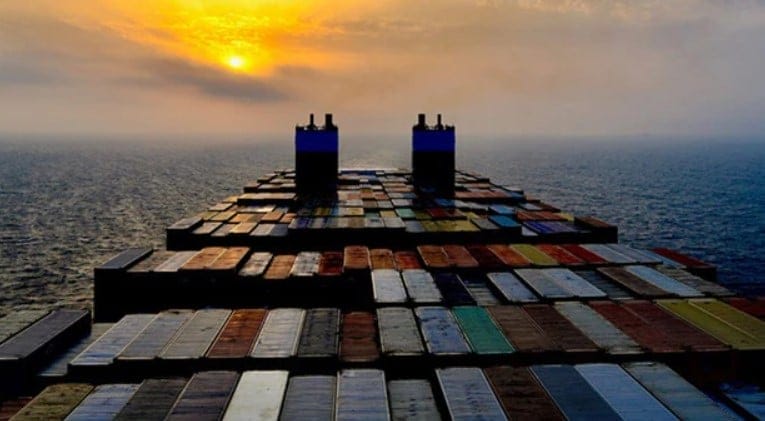
Maersk Detroit And Maersk Chesapeake Container Ships Targeted By Anti-Ship Missiles. Increase In Emissions, Redirecting Services And Deliveries Of Some Cargoes.
In January 2024, the Red Sea Crisis gained attention when two U.S.-flagged container ships, Maersk Detroit and Maersk Chesapeake, were targeted by anti-ship missiles while transiting through the Bab el-Mandeb.
The attacks, which were part of a potential conflict in the Red Sea, were confirmed by Maersk, which reported that the ships were being escorted by the U.S. Navy and were carrying military supplies for the country.
Specifically, the vessels are included in the U.S. Government’s Maritime Security Program and VISA (Voluntary Intermodal Sealift).
-
A study confirms that the natural gas sector will reduce greenhouse gas emissions in Brazil by 0.5% and accelerate the energy transition by 2026.

-
Petrobras implements a severe adjustment and confirms a 55% increase in the price of aviation kerosene with a proposal for installment payments for the companies.

-
The rise in oil prices could ensure an extra revenue of R$ 100 billion for the Federal Government, indicates a recent economic study.

-
Naturgy begins an investment of R$ 1.6 million to expand the gas network in Niterói and benefit thousands of new residences and businesses.


Red Sea Crisis
While en route, both ships reported seeing explosions nearby and the U.S. Navy’s monitoring also intercepted several projectiles. The crew, the ship, and the cargo are safe and unharmed. The U.S. Navy turned both ships around and escorted them back to the Gulf of Aden‘, Maersk said in a statement to Offshore Energy.
Maritime Crisis: Naval Attack In The Red Sea
‘The safety of our crews is of utmost importance. Following the escalation of risk, the MLL is suspending transit in the region until further notice. We are developing network contingencies and will keep you informed.’
According to U.S. Central Command, the Maersk Detroit was targeted by anti-ship ballistic missiles fired by Houthi forces from Yemen.
Conflict In The Red Sea And Anti-Ship Attacks
‘One missile fell into the sea. The other two missiles were successfully intercepted and shot down by the USS Gravely (DDG 107). There were no reports of injuries or damage to the ship’, USCM said.
The latest attack comes shortly after the U.S. and U.K. led strikes on Houthi positions in Yemen in response to their attacks on commercial shipping in the Red Sea.
The attacks were criticized by China and Russia at the UN as being too hasty, with concerns that they could result in a renewed escalation of tensions in the region and repercussions for the conflict in the Middle East.
Furthermore, the latest race to aerial attacks has further heightened tensions in an already fragile ceasefire in Yemen.
The Houthi forces initially stated that they would attack only ships linked to Israel and destined for Israel, demanding that humanitarian aid be delivered to Gaza and seeking a ceasefire in the Strip. Israel’s war against Gaza has killed over 25,000 Palestinians since it began on October 7. However, after a skirmish with a U.S. Navy ship and subsequent airstrikes, the Houthi forces are now targeting U.S.-flagged ships as well.
Impact On Maritime Transport Services
An increasing number of companies across all maritime transport sectors are redirecting their services around the Cape of Good Hope for security reasons.
QatarEnergy, one of the world’s largest LNG producers, stated yesterday that the conflict in the Red Sea may impact deliveries of some liquefied natural gas (LNG) cargoes as they take alternative routes, although shipments are being managed with buyers.
‘Qatar’s LNG production remains uninterrupted, and our commitment to ensuring a reliable supply of LNG to our customers remains unwavering,’ Reuters reported, citing a company statement.
Meanwhile, other companies, such as Hapag-Lloyd, are migrating to land solutions. Notably, the German major stated that it has introduced land service corridors from Jebel Ali, Dammam, and Jubail to Jeddah in response to the Red Sea crisis.
Increase In Emissions And Changes In Maritime Transport
The end of the growing conflict in the Red Sea does not appear to be in sight, forcing shipping companies to opt for routes that circle Africa in the near future, resulting in an increase in CO2 emissions.
As explained by Alan Murphy, CEO of Sea-Intelligence, there are three elements to consider: increased emissions due to longer sailing distances, potential increases due to faster sailing speeds (to maintain weekly departures), and whether there is a shift of vessels from large ships to smaller and less fuel-efficient vessels.
Using a container proxy service, Sea-Intelligence can estimate the scale of these increases in CO2 emissions.
‘If shipping companies use exactly the same ships, exactly at the same speed, then emissions increase in the ratio of 1:1 with the increase in sailing distances. As sailing distances around Africa are, on average, 31% and 66% longer to Asia to Northern Europe and the Mediterranean, respectively, CO2 emissions will increase by these factors at a minimum’, Murphy explained.
‘If the ships also sail faster, emissions will increase even further, as fuel consumption is not a linear function of sailing speed. For example, based on our fuel consumption model, an increase of 1 knot in speed, from 16 to 17 knots, will increase emissions by 14%.’
Finally, as shipping companies struggle to acquire additional capacity to cover the longer sailing distances, smaller and less fuel-efficient ships are being deployed on the Asia-Europe route.
Based on TEU, some of these smaller ships register a 141% increase in CO2 emissions compared to conventional ULCVs. Combining all three components could lead to increases in CO2 emissions of 260% and 354%, for Northern Europe and the Mediterranean, respectively, Murphy emphasized.
‘There is no realistic way to mitigate the increase in emissions, at least those due to the increase in sailing distances’, he concluded.
‘
Source: © Offshore Energy










Seja o primeiro a reagir!