






 Portuguese
  Spanish


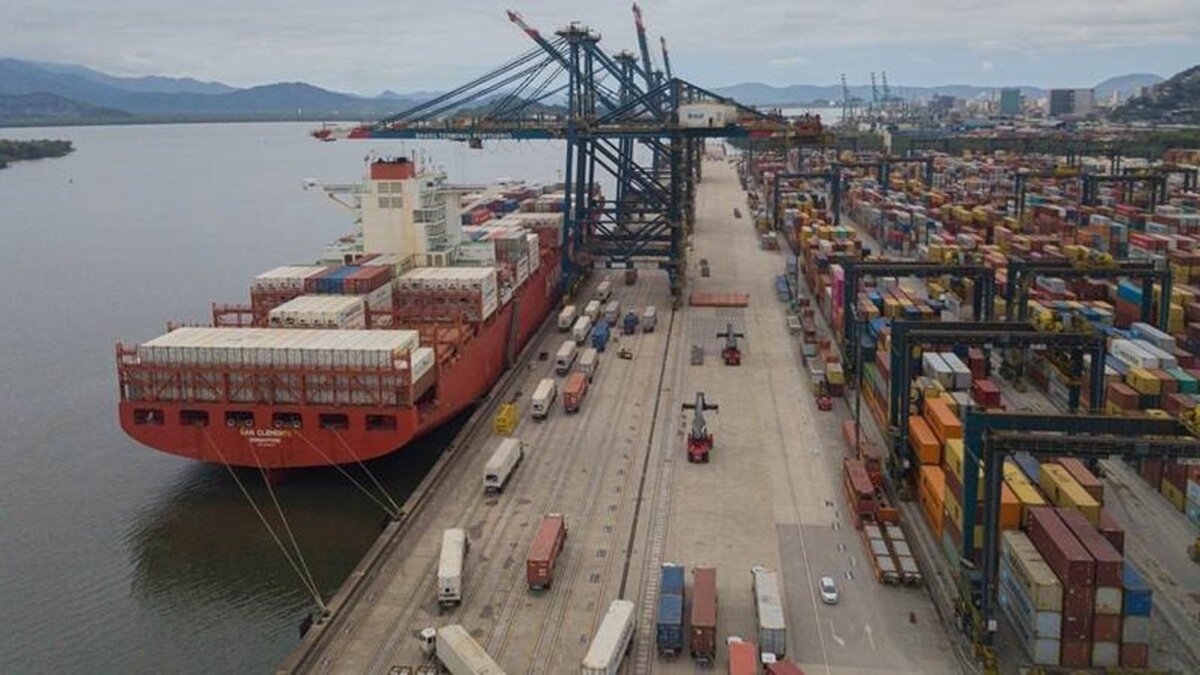

With the Delay in Export Operations and Ships Accumulating at National Ports, the Scenario for Cargo Transport in the Complex Worsens and Antaq Confirms a Worrying Bottleneck Within the National Port Sector This Month of May
The new dynamics in export routes within the national port sector concern the National Agency for Waterway Transportation (Antaq). Last Friday, (05/13), the agency confirmed the accumulation of ships with cargo at national ports and warned about the current situation at the Port of Santos, which is becoming the main target in the changes to the export routes due to its efficient infrastructure.
New Bottleneck in Export Operations at National Ports Confirmed by Antaq, and Cargo Transport Now Suffers from Ship Accumulation
After a series of meetings with shipowners, port terminals, importers, and exporters operating in Brazil, Antaq identified a new and worrying bottleneck in cargo transport operations at Brazilian ports. More precisely, the export routes are being affected due to the need for changes caused by the delay in activities. Thus, Brazilian ports are now suffering from an accumulation of ships waiting to unload, bringing a series of problems to the logistics of the complexes.
The information was provided by Antaq’s director, Flávia Takafashi, who explained that the delay in the routes of ships that carry out exports in Brazil is currently the biggest issue regarding international maritime cargo traffic in the national territory. Flávia also emphasized that this scenario is a direct reflection of canceled operations, changes in ship routes, and a series of delays in export operations. Consequently, the current situation of Brazilian ports concerns the agency regarding their capacity to meet this demand.
-
Abandoned Factory in Rio’s North Zone Becomes Urban Hazard with Standing Water and Debris

-
The U.S. Navy Conducts Submarine Tests in Idaho Lake to Detect Underwater Noises Hidden by the Ocean

-
British Factory Transitions from Mechanical Parts to Producing 420,000 Electric Power Units Annually, Supplying 70% of Ford’s Electric Cars Sold in Europe
-
France Launches Network to Recycle 20 Million Cookware Pieces by 2027, Accepting All Brands for Aluminum and Coating Separation


Additionally, one problem that contributed to the concerning situation at national ports was the container crisis witnessed during the first few months of the year. Despite this, this issue has been somewhat mitigated, and Antaq states that, currently, it is not the main problem. The matter of changing routes remains the primary issue at the ports, as Antaq confirmed that there were terminals that recorded 90% delays. This means that only 10% of those export operations were scheduled, while the rest were changed at the last minute, causing an accumulation of ships at the ports.
Port of Santos is One of the Main Affected by the Changes in Export Routes and the Accumulation of Ships for Cargo Transport
An important point in the current cargo transport scenario highlighted by Flávia is that there has been a significant increase in omittance of calls at the ports. This occurs as a way to circumvent logistical problems but ends up causing overcrowding of ships waiting for these bids without a projected completion. Thus, several ports with a large cargo capacity are being affected, and among them, the main one is the Port of Santos.
The Port of Santos is one of the largest in cargo capacity and unloading in Brazil, and with the changes in export routes, many ships end up going to the complex in an attempt to mitigate the situation. Thus, Flávia states that “Today, speaking of Santos, we can say that it also suffered from the increase in the number of omissions and delays (of ships). But the port complex as a whole, not the specific terminals, tends to always receive a large capacity and have a lower selection of omissions.”
Finally, Antaq’s director states that the agency is accumulating the necessary data to take action regarding the main issues presented within the national port sector and that, soon, it will have measures for the export bottleneck.







