Portuguese


$450 Million Complex Covers 37 Acres in Medora, Features Exhibits on Theodore Roosevelt, Green Roof, Trails, Restaurant, Auditorium, and Landscaping with Hundreds of Thousands of Native Plants in North Dakota’s Badlands
The Theodore Roosevelt Presidential Library was inaugurated in Medora, North Dakota, with an investment of $450 million, approximately R$ 2.3 billion. The complex spans 37 acres in the Badlands and includes exhibits, trails, a green roof, a restaurant, and educational spaces dedicated to the 26th President of the United States.
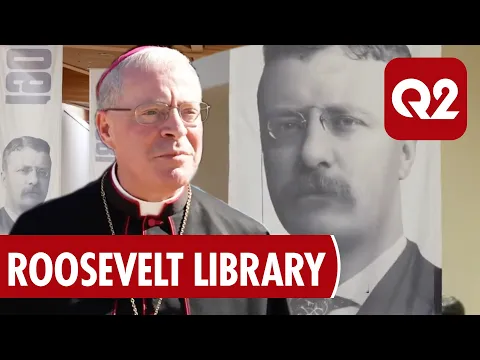

Theodore Roosevelt Presidential Library Features Exhibits in Nearly 9,000 Square Meters
Officially inaugurated on July 4, coinciding with the 250th anniversary of the United States’ independence, the library was built in Medora, a small town of approximately 130 residents known for its Old West-inspired architecture.
-
Andressa Suita Opens the Door to Gusttavo Lima’s Luxury Trailer with 2 Bedrooms, King-Size Bed, Full Kitchen, Beer Tap, Television, and Recreation Area for the Kids

-
Engineers Use 77 Giant Concrete Pontoons to Span 2.35 km Floating Bridge Without Pillars, Utilizing Buoyancy and Submerged Anchoring
-
Brazilian Couple Starts Over in Australia, Trading Corporate Life for Cleaning and Delivery, Citing Low Crime as Worthwhile Trade

-
Boeing’s Submarine Drone: An Autonomous Giant for Solo Ocean Missions


The main building covers nearly 9,000 square meters and houses exhibits, a restaurant, an auditorium, classrooms, and gathering spaces.
Once fully operational, the administration estimates that it will welcome between 150,000 and 200,000 visitors each year.
Over 3,700 square meters are dedicated to immersive exhibits about Theodore Roosevelt’s journey. The experience is organized into eight chapters, highlighting different moments of his life, from his childhood in New York to his presidency.
The narrative includes episodes related to the Badlands, Cuba, the White House, and the Brazilian Amazon. Between 1913 and 1914, Roosevelt participated in the Roosevelt-Rondon Scientific Expedition alongside Marshal Cândido Rondon.
The expedition traversed the then-named River of Doubt, later known as the Roosevelt River. The river originates in Rondônia and flows into the Aripuanã River in the Amazon.
The exhibit concludes with the former president’s return to Oyster Bay, New York.
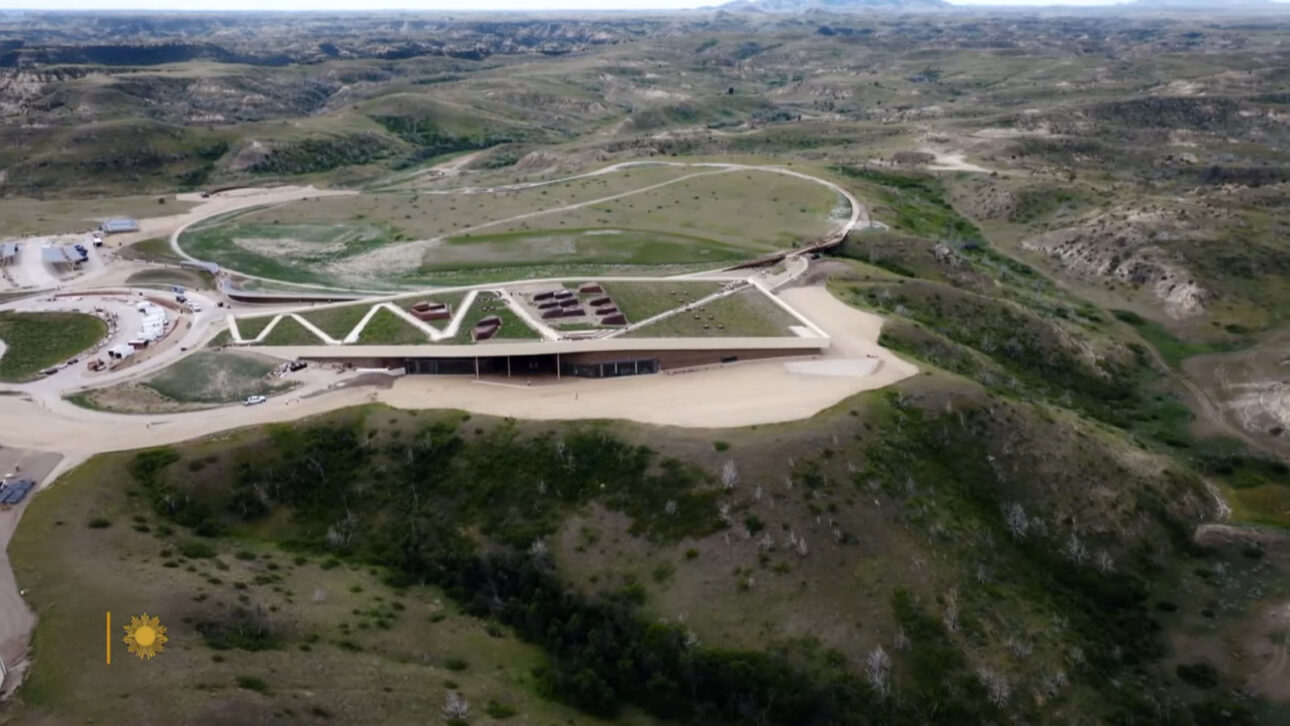
Complex Creates a Space Dedicated to the Legacy of the Former President
The establishment of the library also consolidates a public narrative about Roosevelt in one space. After his death in 1919, documents and artifacts related to the former president became scattered across various American institutions.
Part of this material has been allocated to the Library of Congress, Harvard University, and the American Museum of Natural History. Other collections remain in smaller libraries and historical societies.
In addition to exhibition areas, the complex features an auditorium with a capacity for 300 people, classrooms, and spaces designated for educational programs, lectures, and civic events.
The Salt+Scoria restaurant also enhances the experience. The venue is run by Chef Candace Stock, a member of the Ho-Chunk nation, and utilizes regional ingredients such as bison, elk, wild rice, corn, beans, squash, and native plants.
Preparations include techniques using fire, embers, and smoking. The restaurant also sells picnic lunches that visitors can take along during their outdoor journey.

11,000 m² Green Roof Open to Visitors
The Theodore Roosevelt Presidential Library is designed to integrate the building with the natural environment. The complex features an outdoor path of nearly 1.6 km through the prairie and trails connecting to the Badlands landscape.
A central element is the green roof covering over 11,000 m². The surface has received more than 140,000 native species seedlings and is accessible to visitors.
From above, the space offers 360-degree views of Theodore Roosevelt National Park, the town of Medora, and the Little Missouri River valley.
The landscaping also includes 400,000 seedlings of over 60 regional species, manually planted in different areas of the complex. A seed bank is being developed for future restoration projects.
In construction, the main structure uses engineered wood. The entrance features rammed earth walls made with compacted earth and local soil, built over three months to visually replicate the geological layers of the Badlands.
The architectural design is by the Norwegian firm Snøhetta, which is also responsible for projects such as the National September 11 Memorial Museum Pavilion in New York, the Beijing Library, and the underwater restaurant Under in Norway.
Library Expands Tourist Infrastructure in Medora
The project was structured as a public-private partnership. By early 2026, approximately $354 million, about R$1.8 billion, had been raised through donations.
Medora already receives approximately 285,000 visitors annually, despite having only about 130 permanent residents.
The town is located near one of the entrances to Theodore Roosevelt National Park, which welcomes over 700,000 visitors each year.
The library is located at 3410 Chateau Road. Tickets cost $26 (about R$134) for adults and $16 (approximately R$82) for children aged 3 to 12.
This article was prepared based on the information provided about the Theodore Roosevelt Presidential Library, with data, numbers, and information preserved as per the consulted material.