





 Portuguese
  English
  Spanish
  5 min of reading
  0 comments


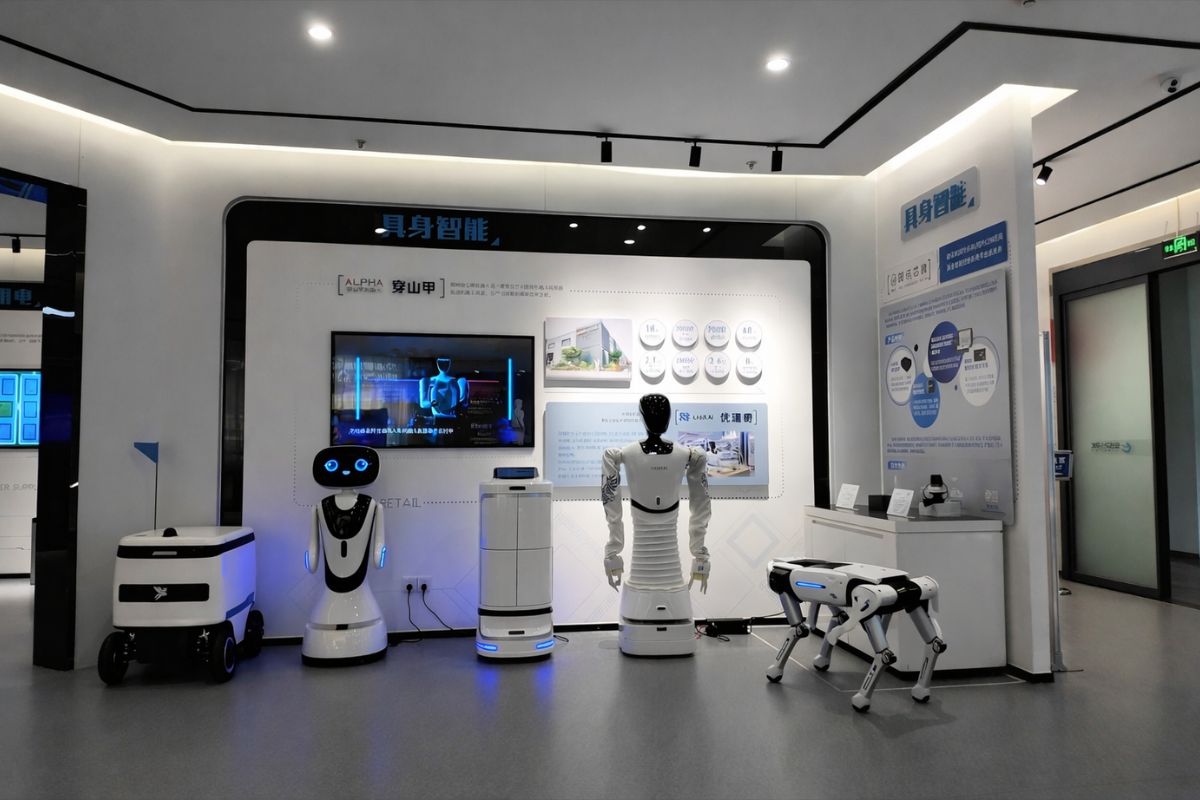
The 15th Five-Year Plan of China officialized the One Person Company model, in which artificial intelligence tools allow a single entrepreneur to compete with the production of traditional corporations. Suzhou, half an hour from Shanghai, is the center of this experience with state incubators and subsidized supercomputers.
The China has just transformed into state policy something that, until recently, seemed fictional: the idea that a single person, equipped with the right artificial intelligence tools, can manage a business with the efficiency of a company with 50 to 100 employees. The country’s 15th Five-Year Plan, which is already in effect, positions the One Person Company (OPC) as one of the pillars of the national strategy for industrial AI applications. The concept is straightforward: the entrepreneur handles innovation and business, while AI agents replace entire departments, taking on roles that previously required teams in marketing, accounting, design, logistics, and customer service.
The laboratory for this experience is Suzhou, a historic city located just half an hour by train from Shanghai. At the state incubator CISPARK, China has built the infrastructure that makes the model possible: the country’s first Tier 4 data center, specialized supercomputer clusters, and subsidized computing power that entrepreneurs access without needing to invest in their own hardware. The stated goal is to eliminate entry barriers so that individual founders can focus exclusively on research, development, and innovation, while the state provides everything else.
What is the One Person Company model that China is creating

The OPC (One Person Company) concept goes beyond a freelancer with access to ChatGPT. In China’s view, it is a new business model in which artificial intelligence tools take on complete operational functions, allowing one person or a minimal team to manage the entire value chain of a business. The entrepreneur defines the strategy and the product; AI executes marketing, financial analysis, customer service, design, and even prototyping.
-
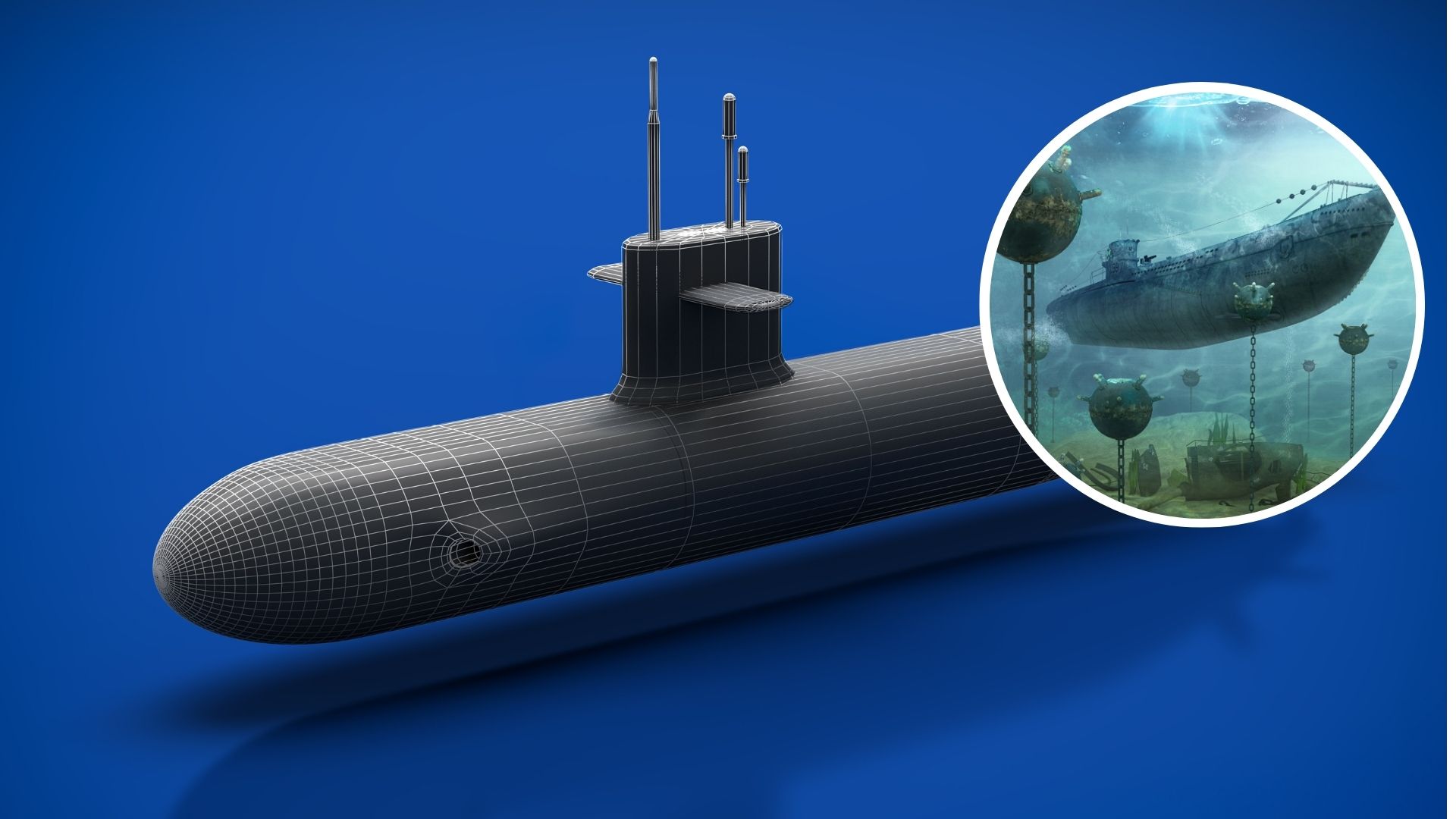
The USA accelerates the production of sensors launched into the ocean to hunt quieter submarines, and the new system promises to detect targets at greater distances in rough seas, shallow waters, and noisy areas, changing the game of anti-submarine warfare.
-
Science has discovered that white hair is not a sign of the body’s failure but rather a defense mechanism that sacrifices the color of the strands to protect the root against something much more serious.

-
Scientists believed that this marsupial had disappeared 6,000 years ago, but an expedition found two living specimens in a remote forest in New Guinea with a finger that no other animal on the planet possesses.

-
Extreme drought lowered the level of a reservoir in Iraq and revealed an entire city that is 3,400 years old, with walls, palaces, and over 100 clay tablets from an empire that almost no one knows about.

At CISPARK, the state incubator in Suzhou, this model is already in operation. “Thanks to the rapid development of the AI industry, even a single person can run a company with AI tools”, explained a representative of the park. “They do not need to hire many people. They can make good use of different types of AI models to meet all business needs.” China is not only encouraging tech startups; it is redefining what it means to be a company.
How Suzhou became the center of the OPC model in China
According to the channel CGTN, Suzhou was not chosen by chance. The city combines two attributes that China considers essential for the success of the one-person company model: proximity to manufacturing chains and cutting-edge digital infrastructure. While other tech hubs like Shenzhen and Beijing focus on software and platforms, Suzhou offers something that few places in the world can: the ability to go from a digital prototype to a physical product in a matter of hours.
Marco Lim, a designer who moved from Germany to Suzhou via Silicon Valley, founded the company Creation and describes this speed as China’s main differentiator. “I could go in the morning to a supplier or make a prototype and probably get something back in the afternoon”, he explained. “In Germany, if I was lucky, I would get something back by the end of the quarter.” For entrepreneurs working with AI and advanced manufacturing, this iteration speed is the difference between leading a market and arriving too late.
The role of the Chinese state in the infrastructure that supports one-person companies
The OPC model does not work without heavy infrastructure, and this is where the role of the state in China becomes decisive. CISPARK provides entrepreneurs access to subsidized computing power, high-performance servers, and supercomputer clusters specifically designed to train and run AI models. China’s first Tier 4 data center, the highest level of reliability and redundancy in data centers, was built within the park.
The logic of the Chinese government is that removing infrastructure barriers frees the entrepreneur to focus exclusively on innovation. “You just need to focus on your business and your R&D activities, and we take care of the rest”, summarized a representative of CISPARK. “We can provide everything you need: services and resources within the park.”
China is, in practice, nationalizing digital infrastructure to privatize innovation, a model that reverses the logic of Silicon Valley, where entrepreneurs need to raise capital to build everything from scratch.
What Marco Lim and Creation show about the future of work in China
The company Creation, founded by Marco Lim, is a concrete example of how the OPC model works in practice. Using AI to handle operations that previously required a large workforce, the company operates with a minimal team that produces results comparable to those of much larger organizations. “I believe that this concept of a one-person company is only possible because AI is at its current level,” Lim stated. “You can have an AI account and occupy several positions that were previously held by real people.”
For Lim, China offers an environment that no other country can replicate at this moment: manufacturing speed, subsidized AI infrastructure, and a government that institutionally bets on the model.
“In China, speed is key, and just like in the world of AI, if you are not fast enough, you die”, said the entrepreneur. Creation is not an anomaly: it is the type of company that the 15th Five-Year Plan wants to multiply by thousands, transforming Suzhou and other cities into global centers of a new type of entrepreneurship.
What the 15th Five-Year Plan foresees for artificial intelligence in China

The 15th Five-Year Plan of China goes beyond the one-person company model. The document defines AI and advanced manufacturing as priority strategic sectors, with public investments in computational infrastructure, talent training, and integration between artificial intelligence and industrial production chains. The stated goal is to secure strategic positions in industrial AI applications before other countries consolidate their own capabilities.
The co-founder of Creation highlighted that “China’s five-year plan emphasizes the creation of AI and advanced manufacturing, and the pioneering OPC model of the Suzhou industrial park is a perfect example of this trend”. In his view, the plan empowers individual entrepreneurs with technology and systematic support from the industry, transforming individual innovation into an engine of economic growth. Suzhou is confident that its combination of historical heritage and digital infrastructure will continue to attract talent from around the world for a new way of doing business within China.
China is betting that one person with AI can do the work of 50 to 100 employees. Do you think this model is the future of entrepreneurship or a utopia that ignores the real complexity of business? Would this type of public policy work in Brazil? Leave your opinion in the comments.









Seja o primeiro a reagir!