





 Portuguese
  English
  Spanish
  4 min of reading
  0 comments



Surprising Advance: Japan Builds the World’s First Wooden Satellite, Marking a Sustainable Revolution in Space Exploration. See Why This Is a Big Deal!
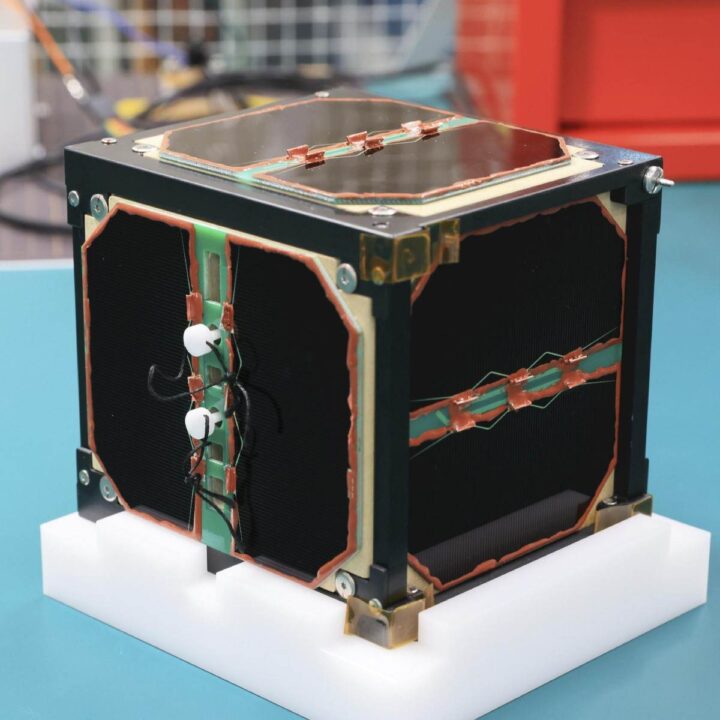
Japan, in partnership with Kyoto University and the company Sumimoto Forestry, has just achieved an unprecedented feat in space exploration: the construction of the world’s first wooden satellite, LignoSat.
The satellite will be launched in September aboard a SpaceX rocket from the Kennedy Space Center, headed for the International Space Station (ISS). This innovation promises to revolutionize how satellites are made, bringing significant benefits to both the environment and the aerospace industry.
A Sustainable Solution in Space
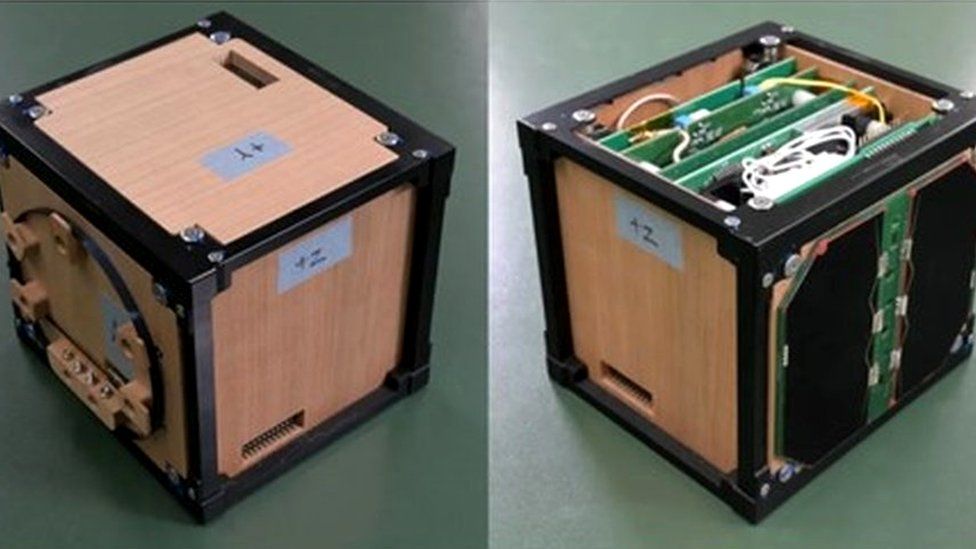
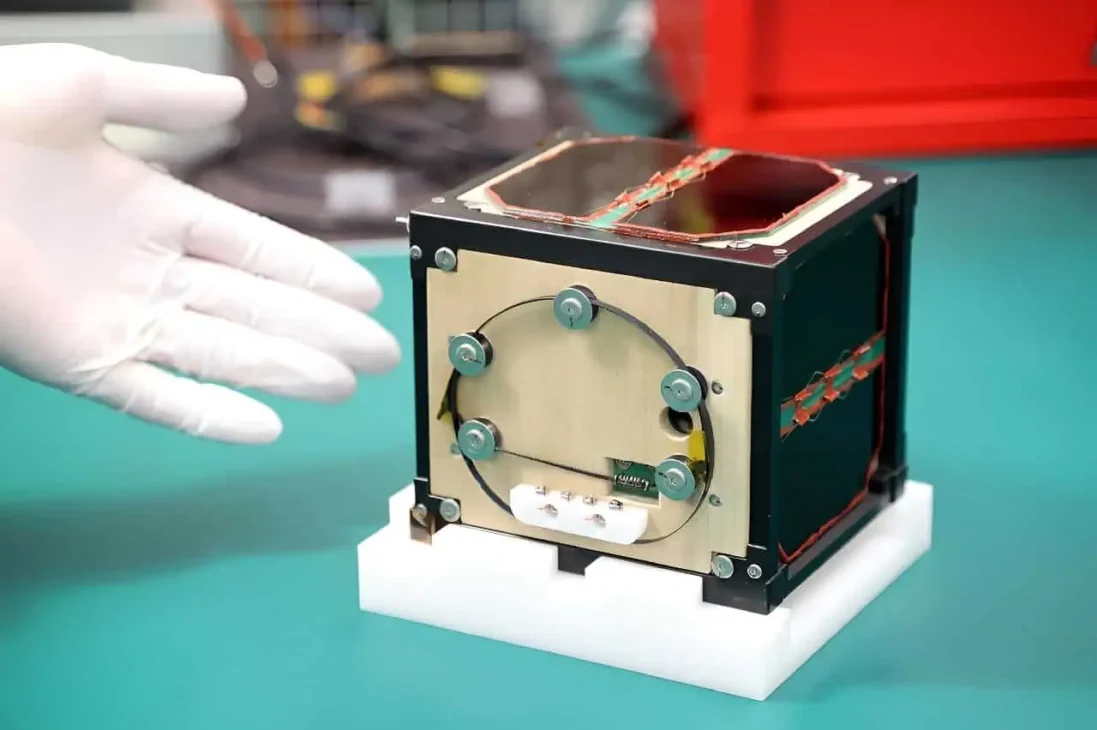
The collaboration between a forestry company and a renowned university in Japan is not common in the aerospace sector, but it could mark the beginning of a new era. The wooden satellite, which took four years to develop, measures 10 centimeters in all directions and is made of magnolia, a wood chosen after extensive testing with different types of wood.
-
They were brilliant! Scientists discover that our ancestors in China were already making super advanced tools 160,000 years ago, changing everything we knew.

-
Scientists unveil 3 million years of climate secrets hidden in the ice of Antarctica.

-
Ancient farmers created “aggressive plants” that changed nature forever.

-
Astronomers find a “backward” solar system that ignores all the rules of space and leaves scientists scratching their heads!


The idea of using wood in satellites may seem strange at first glance, but there is logic behind this choice. According to astronaut and professor at Kyoto University, Takao Doi, “satellites that are not made of metal will become common“.
The material has proven to be resilient in space conditions while also offering an ecological solution to a growing problem: the accumulation of space debris.
Benefits of Wooden Satellites in Space
Unlike conventional metal satellites, LignoSat offers a range of advantages due to its wooden construction. One of the main benefits is sustainability.
When wooden satellites re-enter the Earth’s atmosphere, they will burn completely, leaving no harmful residues, unlike metal satellites. This can significantly reduce the amount of space debris that pollutes the Earth’s environment.
Another important benefit is that wood is transparent to many wavelengths, meaning antennas can be housed within the satellite’s structure without the need for external devices.
In metal satellites, external antennas are essential and must be deployed after launch, a process that can fail. The use of wood thus simplifies satellite design, making them cheaper and more reliable.
The Problem of Space Debris
With the exponential growth in the number of satellites launched in recent years, the issue of space debris has become increasingly concerning. Currently, there are thousands of satellites orbiting the Earth, many of which are already inactive.
The lack of an efficient decommissioning system means many of these satellites remain in orbit, contributing to the increase in space pollution.
Space debris poses a real risk to crewed missions and the International Space Station (ISS). Even small metal pieces can cause severe damage if they collide with spacecraft or the station itself.
Furthermore, this debris interferes with astronomical observations, generating light pollution that affects ground-based telescopes and scientific research.
With the use of wooden satellites, this problem can be mitigated. When LignoSat and other similar satellites complete their missions and are deorbited, they will completely disintegrate upon re-entry, eliminating the risk of space and terrestrial pollution.
Testing and Expectations for the Future
Before reaching space, LignoSat will undergo a series of rigorous tests to ensure its resilience and durability. After its launch, it will be monitored at the ISS, where scientists will be able to check if the satellite withstands the extreme temperature variations and other harsh conditions of space.
Sumimoto Forestry, the project’s partner company, stated that data will be transmitted from the satellite to researchers, allowing for constant monitoring of its performance.
This is not the first time wood has been tested in space conditions. Two years ago, researchers at Kyoto University exposed three types of wood to the external environment of the ISS for 10 months. The results were promising, paving the way for the creation of LignoSat.
If the tests are successful, the expectation is that in a few years, wooden satellites will become a viable and widely used solution. “We would like to create a satellite, including the electronics substrate part, entirely made of wood in the future,” said Takao Doi, emphasizing the potential for innovation in the technology.
A Milestone for Space Sustainability
The launch of LignoSat is a milestone for space exploration and sustainability. As the number of satellites in orbit continues to grow, solutions like this become increasingly important to ensure that space does not become a dump.
By using natural and sustainable materials like wood, the aerospace industry can help protect not only space but also the Earth’s environment.
With the success of the wooden satellite, Japan once again proves that innovation and sustainability can go hand in hand, even at the frontiers of space.









Seja o primeiro a reagir!