






 Portuguese
  Spanish




Discover How NASA Will Deorbit The International Space Station (ISS) And What That Means For The Future Of Space Exploration
The International Space Station (ISS), a symbol of global cooperation and scientific advancements, is approaching the end of its operational life. Since the launch of its first module in 1998, the ISS has been a constant landmark in space, with a presence that many consider permanent. However, the reality is that the ISS was designed with a finite lifespan, and now, NASA and its international partners are preparing for its planned decommissioning in 2031.
Over 25 years, the ISS has been a stage for innovative scientific experiments, crucial medical research, and the development of new technologies. More than 270 astronauts from various nationalities have visited the station, contributing to a better understanding of the universe and life in space. Additionally, the ISS has played a key role in supporting commercial space ventures, marking a new era of space exploration.
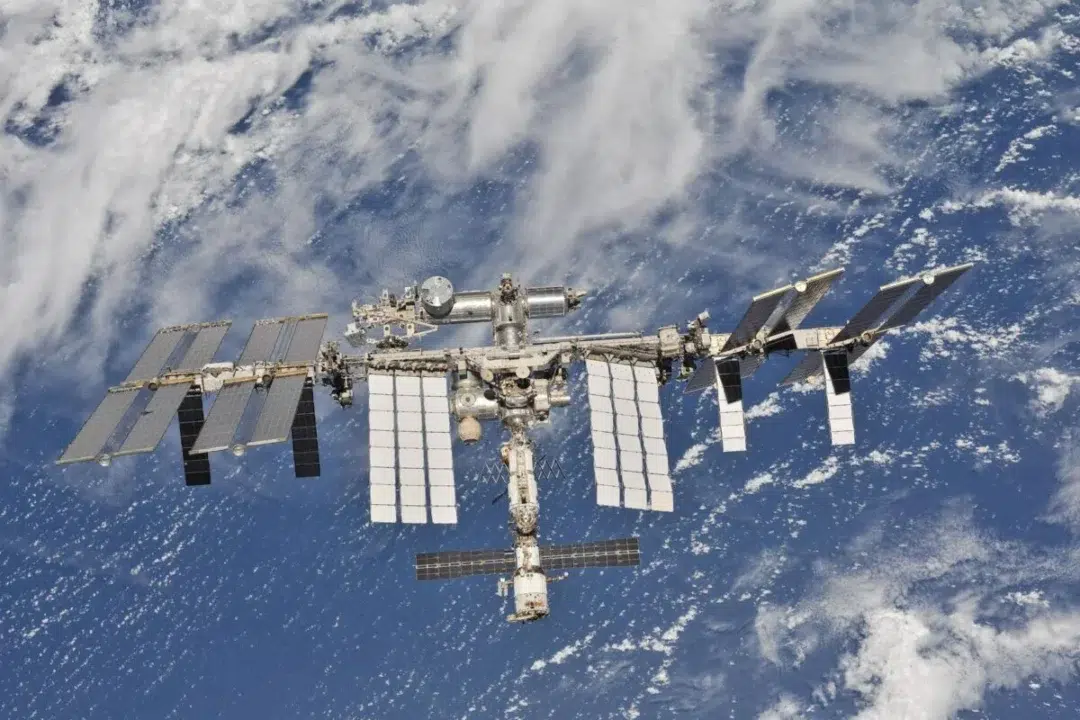
The Challenge Of Continuous Operations Of The ISS
Operating the ISS has become increasingly expensive and challenging. The station requires periodic boosts to maintain its orbit, and many of its systems are aging. With the advancement of technology and the construction of new space stations, like the Tiangong from China, the ISS is starting to appear obsolete by comparison.
-
Pennsylvania Mine Creates Ice in Summer Heat and Melts in Winter, Turning a Mountain Crevice into a Reverse Natural Refrigerator

-
China Accelerates Global Expansion of Robotics: From Smart Vacuums to Industrial and Humanoid Machines, Millions Exported to Over 150 Markets
-
Polar Air Mass to Hit Brazil: Temperatures to Plummet in Nine States, Near Freezing in the South with Frost Risk Until Monday
-
Chinese “dark factories” produce electric cars 24/7 with minimal human intervention, as Zeekr assembles 800 units daily, raising concerns in Brazil.




In light of this reality, NASA has decided that the ISS will be deorbited in 2031. Several options were considered for the station’s final destination. One was to move it to a higher, more stable orbit, where it could be decommissioned without the need for a crew. However, this option was discarded because, without maintenance, the station would deteriorate and eventually fall to Earth uncontrollably.
Another possibility would be to dismantle the ISS and bring its modules back to Earth. However, with the end of the space shuttle program, which transported large payloads, this plan became unfeasible. Moreover, the cost and complexity of dismantling and returning the modules to Earth would render this option impractical.
Nasa’s Controlled Deorbit Plan
The solution chosen by NASA is to deorbit the ISS in a controlled manner, ensuring that it reenters the Earth’s atmosphere safely and predictably. A controlled deorbit allows NASA to determine the exact timing and location of reentry, minimizing risks to populated areas and ensuring that debris falls into a remote region of the ocean.
Nasa’s experience with previous deorbits, such as that of the Skylab space station in 1979, showed that uncontrolled reentry can result in debris hitting populated areas. Although no one was injured in the fall of Skylab, parts of the station landed in Australia, causing concern. To avoid similar risks, NASA opted for a controlled approach for the ISS.
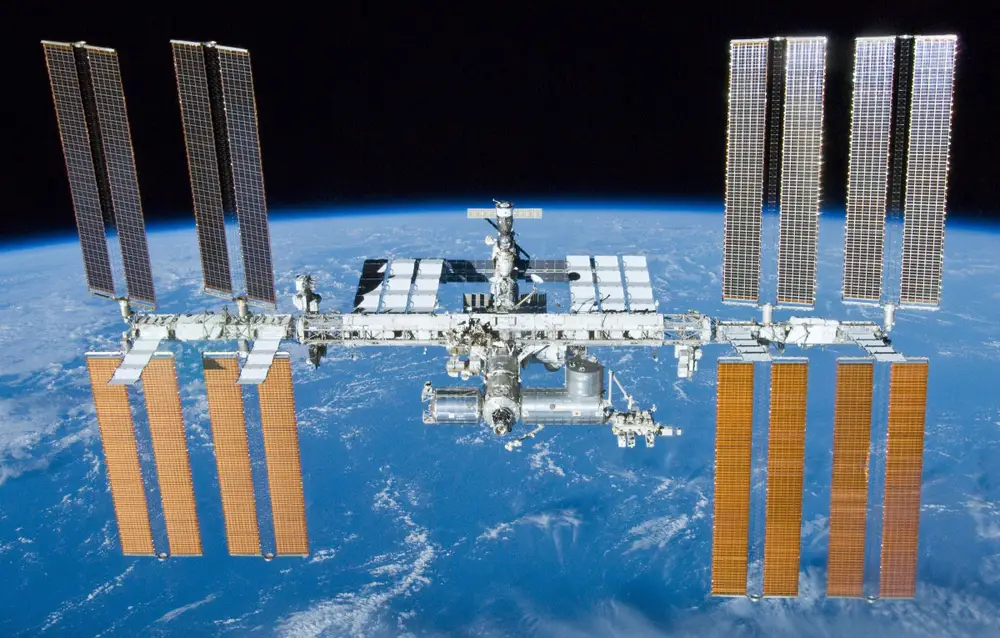
The plan involves allowing the ISS’s orbit to decay naturally over 12 to 18 months after the last crew departs. SpaceX, in partnership with NASA, is developing a modified version of the Dragon spacecraft, which will be used to carry out the final deorbit. This spacecraft, with six times more thruster and four times more propulsion power than a standard Dragon, will be tasked with performing multiple maneuvers to lower the ISS’s altitude until it is ready to reenter the atmosphere.
When the ISS begins its final descent, friction with the atmosphere will generate intense heat, causing most of the station to break apart and burn up during reentry. The surviving parts, such as the structural trusses, will fall into the South Pacific Ocean, in an area known as the “satellite cemetery,” far from any population.
SpaceX aims to complete the development of the deorbiting spacecraft by 2028, while NASA expects the final reentry of the ISS to occur in 2031. This event will mark the end of an era in space exploration, but it will also pave the way for new stations and advancements in deep space exploration.
The decommissioning of the ISS will be a moment of reflection on the incredible achievements made by humanity over more than two decades of the station’s operation, but it will also be a reminder of the ongoing need for innovation and adaptation in the field of space exploration.







Estou a precisar tanto de um trabalho