





 Portuguese
  English
  Spanish
  5 min of reading
  5 comments


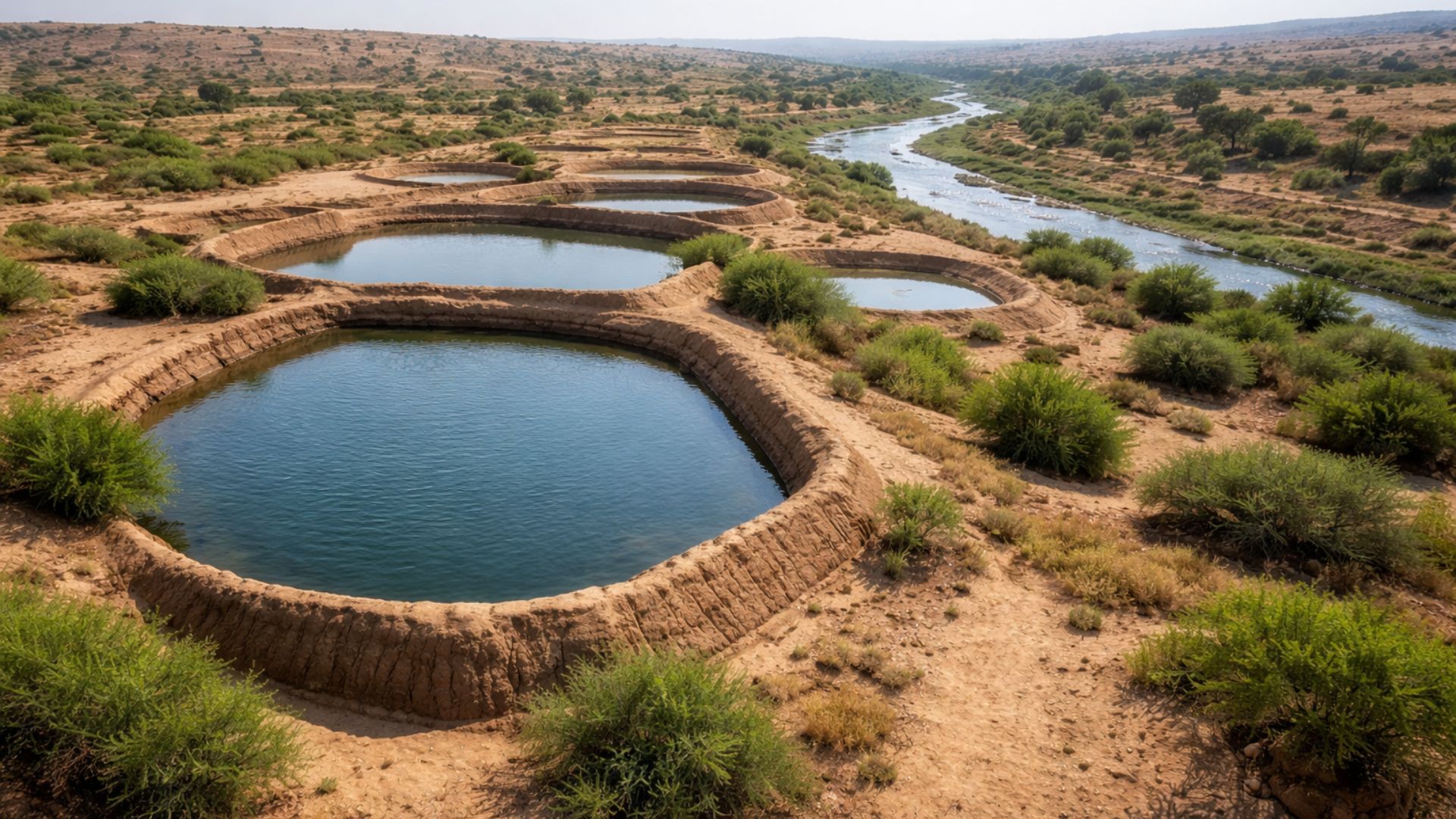


More Than 11 Thousand Traditional Rainwater Harvesting Structures, Community Work, and Rivers That Began to Flow Again in a Region Marked by Extreme Drought Place Rajasthan at the Center of an Internationally Recognized Water Restoration Case.
In the Indian state of Rajasthan, described by local authorities and financial institutions as the driest in the country, a strategy based on simple rainwater harvesting structures and community work has been cited as an example of water restoration in a semi-arid area: the construction of more than 11 thousand johads and other conservation works that, according to the Stockholm Water Foundation, helped to “bring water back” to more than 1,000 villages and to restore the flow of five rivers.
The initiative is associated with the work of activist Rajendra Singh and the organization Tarun Bharat Sangh (TBS), which received the Stockholm Water Prize in 2015, an international award granted to projects and leaders related to water.
Rajasthan, Extreme Drought and Pressure on Groundwater
The scarcity in Rajasthan is treated as a structural problem, with a direct impact on supply, agriculture, and competition for aquifers, rather than as an episodic phenomenon.
-
Archaeologists find 16th-century silver coin.

-
An 86-year-old farmer rejected a proposal of R$ 76 million to sell his land and surprised everyone by turning down an AI data center on his 105-hectare farm, negotiating for only R$ 10 million for environmental preservation.

-
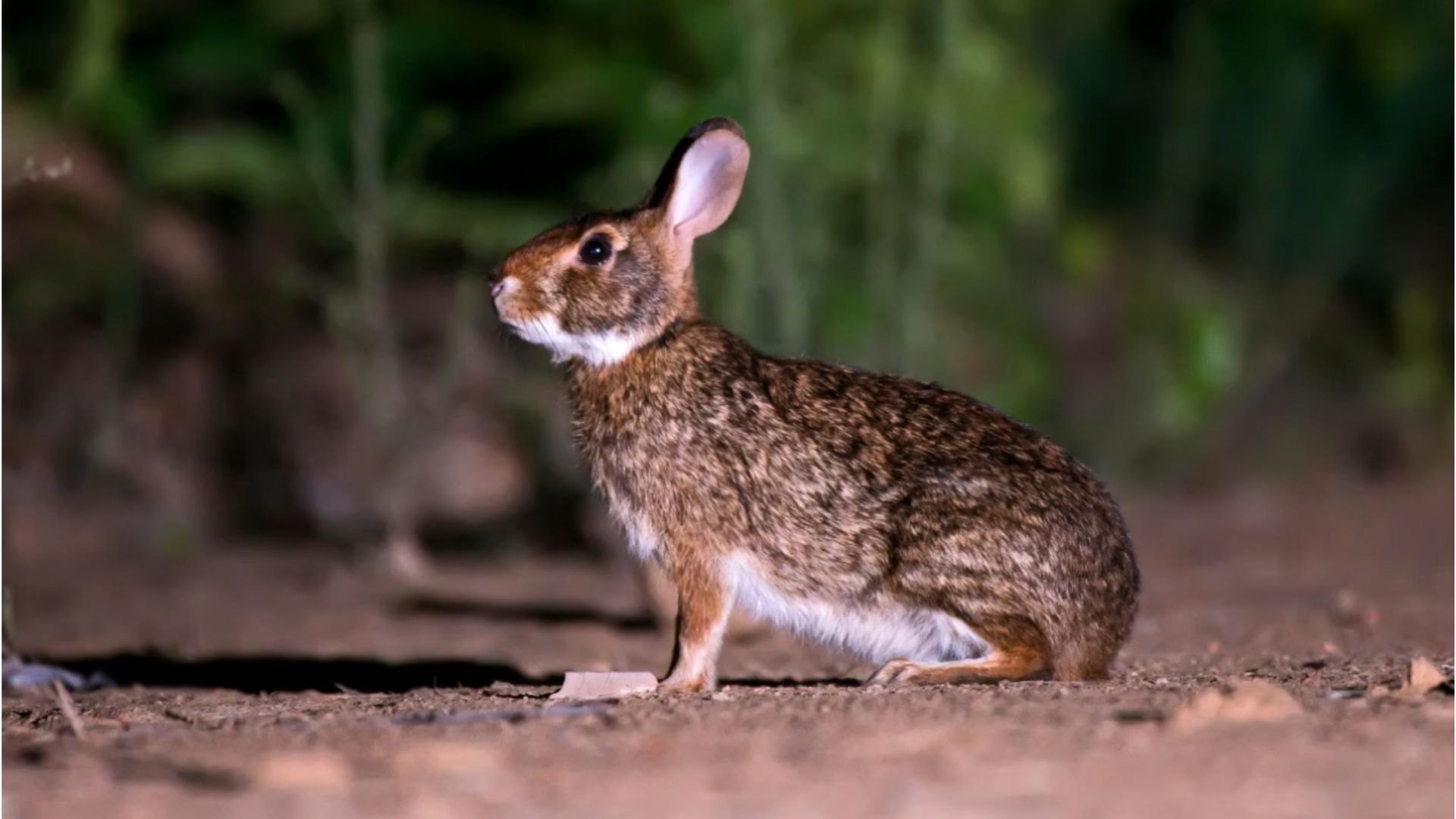
You have probably crossed paths with it and didn’t even notice: the Brazilian tapiti rabbit lives hidden in the forests and may be disappearing without anyone noticing.
-
Explorers investigate one of the most secret locations in the United States.
A public note from the state government states that Rajasthan is the driest state in India, mentions low availability of surface water, and highlights the high dependence on groundwater.
A project disclosure document from the New Development Bank also describes Rajasthan as the driest state in the country and points to limitations in usable water resources.
What Is Johad and How Does Rainwater Harvesting Work

The “johad,” the center of the strategy, is presented in studies and reviews as a traditional form of water harvesting: small earth and/or stone dams constructed to retain rainwater and slow runoff, allowing water to seep into the ground and contribute to the recharge of wells and shallow aquifers.
An article published in the annals of IAHS (Copernicus) describes johads as small earthen dams that capture and conserve rainwater, improving percolation and underground recharge.
Tarun Bharat Sangh and Community Mobilization in Alwar
The most cited trajectory in institutional sources begins in 1985, when TBS reportedly started work from a single village in the Alwar region of Rajasthan, later expanding to other communities with the recovery of local water conservation practices and the construction of additional structures such as storage tanks and small dams.
The Stockholm Water Foundation describes the model as a mobilization in which residents take a central role in planning and maintenance, focusing on “time-tested” solutions for capturing monsoon water and navigating dry periods.
The term “mutirão,” frequently used in Portuguese reports, corresponds to what international sources describe as intense community involvement: structures are made with locally available materials, on a scale compatible with the landscape of micro-catchments and natural drainage paths, with maintenance dependent on the direct interest of those who need storage and recharge.

The logic, according to the award in 2015, is cooperation with residents to solve water problems at the local level, rather than relying solely on centralized works.
Project Numbers: 8,600, 11,000 and More Than 1,000 Villages
The numbers vary according to the time frame and what is included in the count.
On the laureates page of the Stockholm Water Prize, the Stockholm Water Foundation records that, two decades after the start, 8,600 johads and other structures had been built.
However, in a text published by the foundation regarding the award presentation, the total appears as “more than 11,000 johads and other conservation structures”, indicating either subsequent expansion or different counts over time.
In both cases, the figure of “about 1,000 villages” served is repeated as a summary of the reach of the work.
Five Rivers Cited as Recovered and the Visible Impact
The recovery of rivers is one of the points that draws attention because it involves a visible indicator: watercourses that flow again for longer periods within the year.
Academic documents cite that five rivers — Bhagani-Teldehe, Arvari, Jahajwali, Sarsa, and Ruparel — that had become seasonal were reported as having become perennial in the mid-1990s, benefiting hundreds of villages, although the text itself uses language recognizing that available documentation may vary among sources and involved actors.
Aquifer Recharge and What Studies Describe About the Mechanism
In practical terms, the most recurring explanation for the mechanism is hydrological: by reducing the speed of surface runoff and increasing the time water remains on the land, infiltration increases, and the levels in wells tend to respond, especially where the soil and local geology allow for recharge.

Studies on the hydrological impacts of water harvesting structures in semi-arid regions of India analyze variations in recharge and show that results depend on the type of work, its position in the landscape, and local conditions, which helps explain why such projects are described as “micro-catchment work” and not as a one-size-fits-all solution applicable identically anywhere.
International Recognition and Persistence of Water Stress
The case gained international prominence by combining three elements that are usually seen separately: low-complexity technology, large scale through repetition, and community governance.
The SIWI press release regarding the 2015 Stockholm Water Prize states that the work “in close cooperation with local residents” has brought water and life back to about a thousand villages and generated hope in areas affected by scarcity.
The same material records a statement from the laureate associating the results with the “wisdom” of rainwater harvesting, without providing, in the text, a single series of hydrological measurements for the entire area of implementation.
The relevance of the topic remains current in Rajasthan because the pressure on aquifers continues to appear in the news.
A Reuters report published on December 26, 2025 describes the state as arid and mentions overexploited aquifers and social tensions surrounding water use, in the context of a broader water crisis in India.








Matéria excelente.
Espero que os tais ambientalistas do Brasil leam essa bela reportagem e aprendam com isso.
Ótima matéria sobre restauração do meio ambiente