





 Portuguese
  English
  Spanish
 5 min of reading
  0 comments


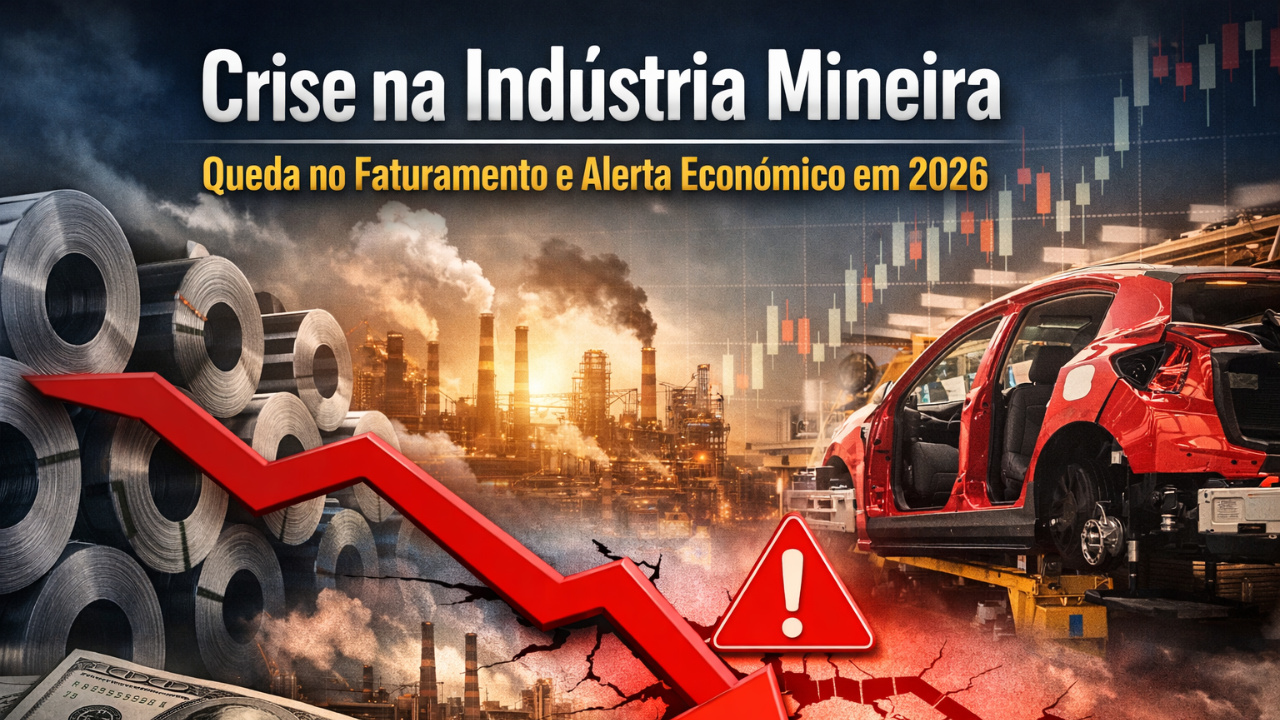
Decrease In Revenue Of The Mining Industry Raises Alert For The Mining Economy And Signals Slowdown Of Industrial Activity In 2026.
The mining industry began 2026 with a warning sign. A survey released by the Federation of Industries of MG (Fiemg) shows that the industrial revenue fell by 11.7% in January compared to December 2025, reflecting the reduction of orders in companies and the slowdown of industrial activity.
The decline was mainly recorded in the extractive segments and in the transformation industry, directly affecting the performance of the mining economy right at the beginning of the year.
The result was released at the beginning of 2026 and gathers data from industrial companies in Minas Gerais.
-
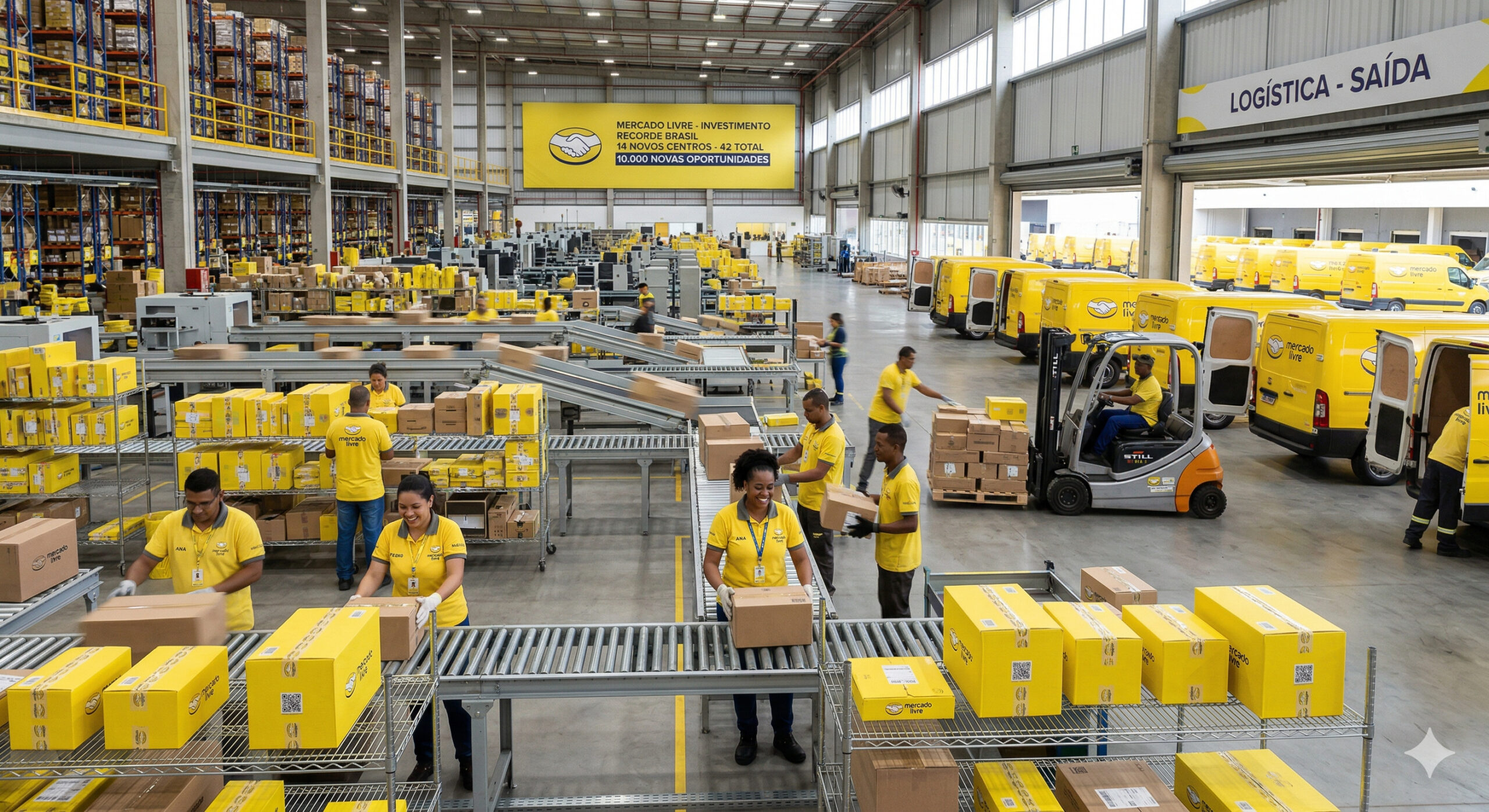
Mercado Livre “opens the vault” and announces a record investment of R$ 57 billion in Brazil in 2026, a value 50% higher than the previous year, with an expansion plan that includes 14 new logistics centers, totaling 42 units in the country and hiring an additional 10,000 employees.
-
How investment in technology can revolutionize the national economy and enhance industrial gains, according to a study that highlights the direct impact on productivity, innovation, and wealth retention within Brazil.

-
The largest food company on the planet, JBS, has just opened a 4,000 square meter laboratory in Florianópolis to develop customized proteins that modulate muscle mass gain, immune response, and metabolic performance.

-
After nearly 30 bids and competition among industry giants, a Spanish company purchases one of the largest airports in Brazil for almost R$ 3 billion and takes over the management of Galeão in a concession that will last until 2039.


According to Fiemg, the decline occurred mainly due to the decrease in orders, both in the domestic and external markets, in addition to seasonal factors such as collective vacations and production adjustments typical of the period.
Despite the negative result, experts claim that the performance does not necessarily indicate a continuous trend of contraction.
However, the more challenging macroeconomic scenario could reduce the pace of activity throughout the year.
Industrial Revenue Declines And Interrupts Growth Sequence
After four consecutive months of positive results, the industrial revenue of the mining industry showed contraction in January.
The survey by Fiemg indicates that the performance interrupted the growth sequence observed since September 2025.
The drop in revenue was mainly caused by the decrease in the volume of orders in the transformation industry.
This occurred both in the domestic market and in exports, reflecting a more cautious economic environment.
According to Fiemg’s economist, Arthur Augusto Dias, the result requires attention, although it does not yet represent a consolidated trend of decline in industrial activity.
“The drop observed in January does not necessarily indicate a continuous downward trend for the industry throughout 2026.
But the recent result raises an alert, especially in the context of a very adverse macroeconomic environment, with interest rates at historically high levels and an economy in significant slowdown.
This scenario points to a moderation in the pace of industrial activity in the state – more of a moderation than a persistent decline of the industry,” Dias explains.
Transformation Industry Feels The Effects Of Slowdown More
Among the industrial segments, the transformation industry was the most impacted by the reduction in demand.
This sector is responsible for turning raw materials into products with higher added value, such as steel, vehicles, and industrial parts.
According to the survey, sectors such as steelmaking, automotive parts manufacturing, and the automotive industry felt the effects of the slowdown in the mining economy more intensely.
This happens because this segment is more sensitive to market behavior and the pace of the economy.
When there is a reduction in consumption or exports, the impacts quickly appear in production and revenue.
“The transformation industry is a segment more sensitive to the economic cycle and the performance of the economy, which is in significant slowdown.
In January, there was a reduction in orders in the pipeline, both in the domestic and external markets, which ultimately impacted revenue and also the hours worked in production.
Revenue fell by 14.1% in the transformation industry, and hours worked in production declined by 2.5%.
The trend is that the decline in the pace of this segment will persist throughout this year,” he comments.
Fewer Hours Worked And Adjustments In Industrial Production
Another indicator reflecting the weakening of industrial activity was the reduction in hours worked in production.
In January, companies recorded a lower workload, mainly influenced by the period of collective vacations and the adjustment of hours worked.
Even with this scenario, the utilization of installed capacity in factories showed a slight increase.
The index reached 81.4%, indicating that some industries still operate at a significant level of production.
Meanwhile, the industrial labor market showed a more positive behavior.
There was a slight increase in the number of employees, as well as an increase in real wage mass and average earnings of workers.
This movement was partly driven by vacation payments and the maintenance of staff in companies.
International Uncertainties May Impact The Mining Economy
In addition to internal challenges, the mining industry is also closely monitoring the international scenario.
Conflicts in the Middle East and geopolitical tensions may generate indirect impacts on the mining economy, mainly through increased volatility in commodity prices.
Oil, the main product of the region, is considered one of the factors that may press logistics and industrial costs if global tensions escalate.
According to Arthur Augusto Dias, this type of scenario tends to increase economic instability and may directly influence international trade.
“International conflicts always increase the level of uncertainty in the global economy and affect the level of overseas trade. And, of course, also the prices of commodities.
In this specific case, mainly the price of oil that will rise. In the case of the mining industry, the impacts depend a lot on the intensity of these conflicts and, mainly, on the duration.
If there is increased volatility in the markets or a significant change in international trade, this may ultimately influence the performance of the industry,” the economist concludes.
Outlook For Industrial Activity In 2026
Although the drop in industrial revenue in January interrupted the recent positive cycle, experts evaluate that the scenario points more towards a slowdown than a crisis in the sector.
Still, factors such as high interest rates, slower economic pace, and global uncertainties should continue to influence industrial activity throughout 2026.
In this context, the mining industry is expected to face a year of greater caution, with companies closely monitoring market behavior, exports, and macroeconomic conditions that directly impact production performance.
See more at: Industry Has Decrease In Revenue In January, Says Fiemg








Seja o primeiro a reagir!