There was authorization to clear the vegetation in the path of the transmission line, but the factory chose not to use it. Drones carried the guide ropes through the air, resulting in 33.29 hectares of native forest standing and 4,566 tons of CO2 equivalent that remained stored.
Arauco used drones to launch the high-voltage cables that will connect the Sucuriú Project, a future pulp mill in Inocência, Mato Grosso do Sul, to the National Interconnected System, with a connection point in Selvíria, also in the state. The operation took place in July 2026 and, according to information from the company published by the portal ND Mais, preserved 33.29 hectares of native vegetation that would have been removed by the conventional method.
In specific sections of the route, aerial equipment replaced the traditional technique, which requires opening a strip through the forest and direct entry of teams into the vegetation. The drones carried the first guide ropes through the air, pieces that pull the high-voltage cables from one tower to another and enable the entire subsequent assembly of the line.
How the drone replaced the open strip in the forest
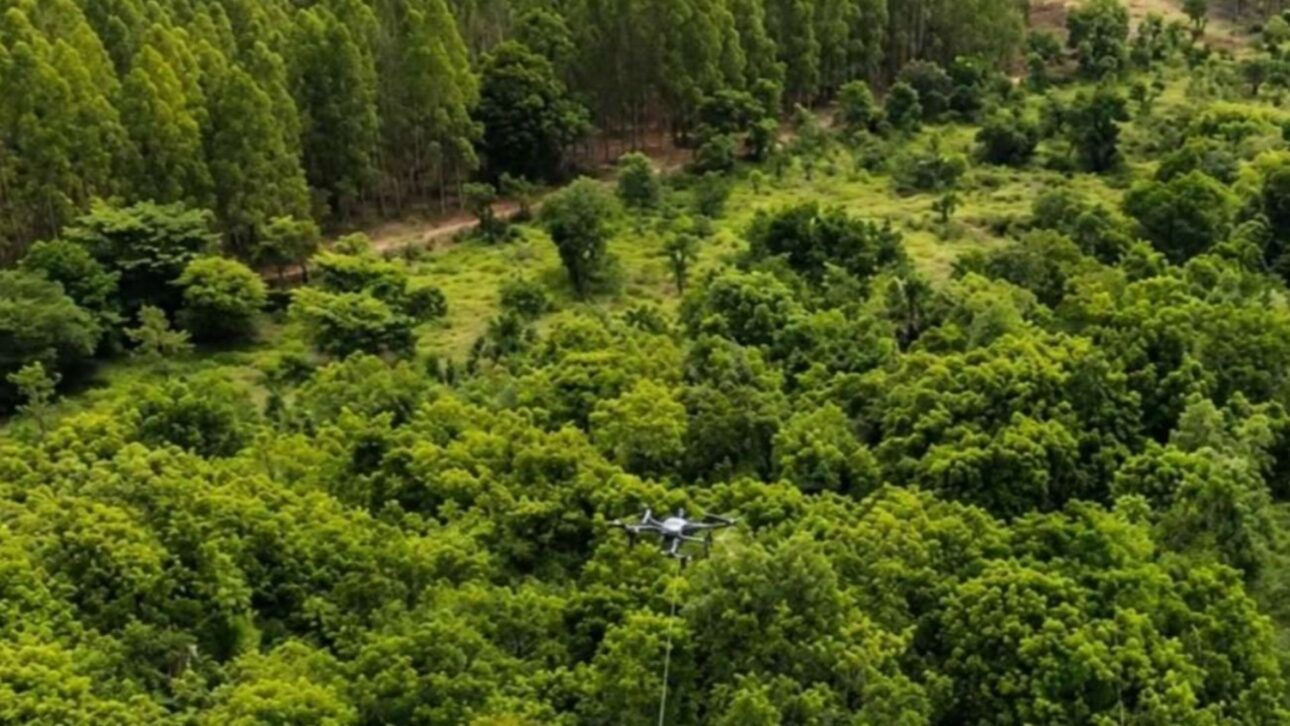
Photo: Arauco/Reproduction
The launch of cables in a transmission line begins with a detail that seems small: a thin rope, called a guide rope, needs to span the gap between two towers. It is this rope that pulls the actual cable afterward. In the conventional method, this rope goes along the ground, and the ground needs to be clear. This means cutting vegetation, opening a path, and placing people inside the forest carrying the material.
-
A rusty gate, decades of waiting, and R$ 94.7 million: what Santa Catarina is doing inside its largest dams before El Niño brings new extreme rains, storms, and floods to the already battered Itajaí Valley

-
He carried 175 tons of granite on his back, spent 5 years building a 28 m² cabin by himself without street lighting, and even installed a private one-seat cable car on the mountain.

-
A rural school in India, measuring 5,100 square meters, alternates red bricks with gray pieces made from industrial waste, opens the walls to expel hot air, and turns an ancient technique into a solution for cooler rooms.
-
For around R$ 34,900, it is possible to have an entire house made of containers, with vinyl flooring, a tiled bathroom, and ready electrical work, and for an additional R$ 5,000, you can even include a porch using the original doors of the structure.



The alternative adopted in the Sucuriú Project reversed the logic. Instead of opening the terrain for the rope to pass, the rope passed over the terrain. The drone carries the end from one span to another, the team connects, and the cable is pulled without the need to clear the strip. The environmental savings are not in the line itself, which continues to exist, but in the suppression that did not occur in the sections where the technique was applied.
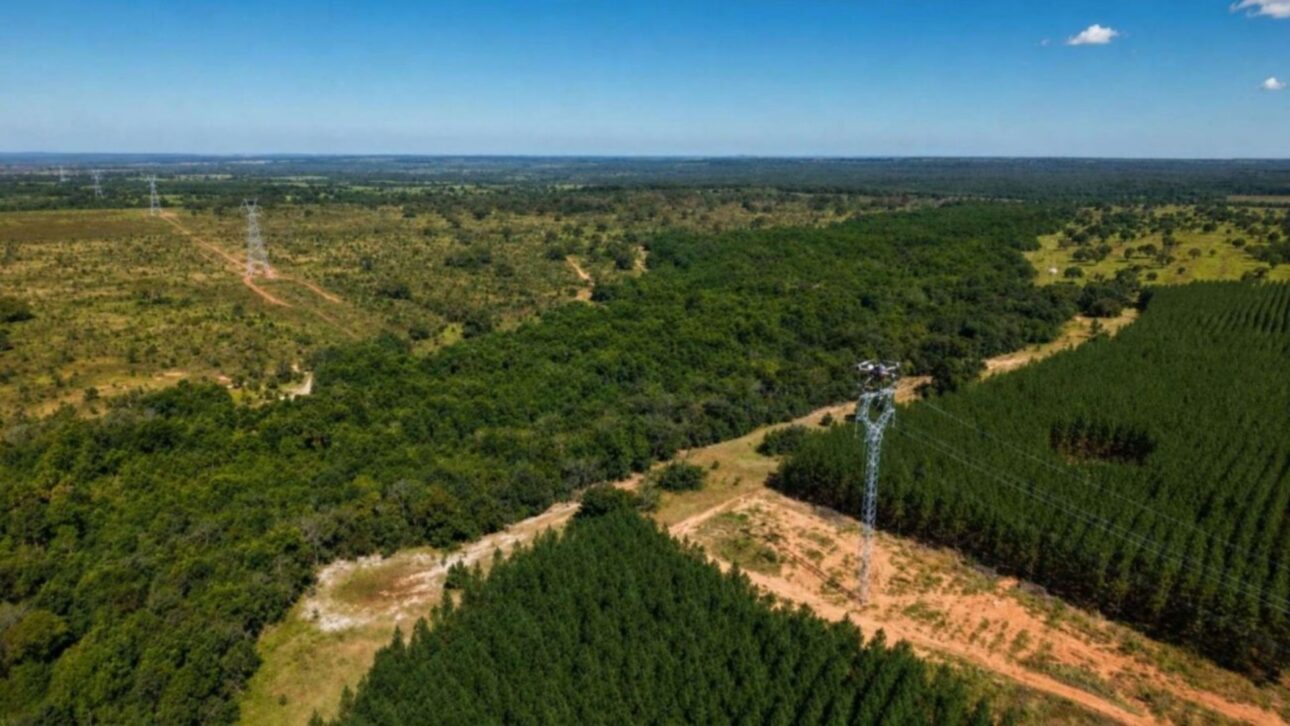
Photo: Arauco/Reproduction
A scale record is warranted. The technique was applied in specific sections of the route, not along the entire 91 kilometers of the line that will supply the factory. In other words, part of the route followed the conventional procedure, with an open strip and team in the field. The reported gain refers to what was avoided at the points where the drone was used, not the entire project.
The authorization that existed and was not used
The most unusual point of this story is not technical, it’s a decision. The company already had a license to clear vegetation along the route, which means that clearing was legal and planned. Even so, the aerial alternative was chosen to minimize intervention in areas of native vegetation as much as possible.
Decisions like this often encounter cost and time constraints, the two arguments that usually dismiss environmental alternatives in projects of this scale. In the case of the Inocência factory, the aerial solution was adopted even with the simpler path cleared on paper. Camila Paschoal, Environmental Manager at Arauco Celulose, explains the reasoning. According to her, the project was born from a clear technical and environmental decision, seeking a solution that would reduce the need to enter native areas even with the approval already granted. Authorization to clear does not oblige anyone to clear, and it is precisely this angle that makes the case a reference for other infrastructure projects.
33.29 hectares standing and 4,566 tons of CO2 that did not rise
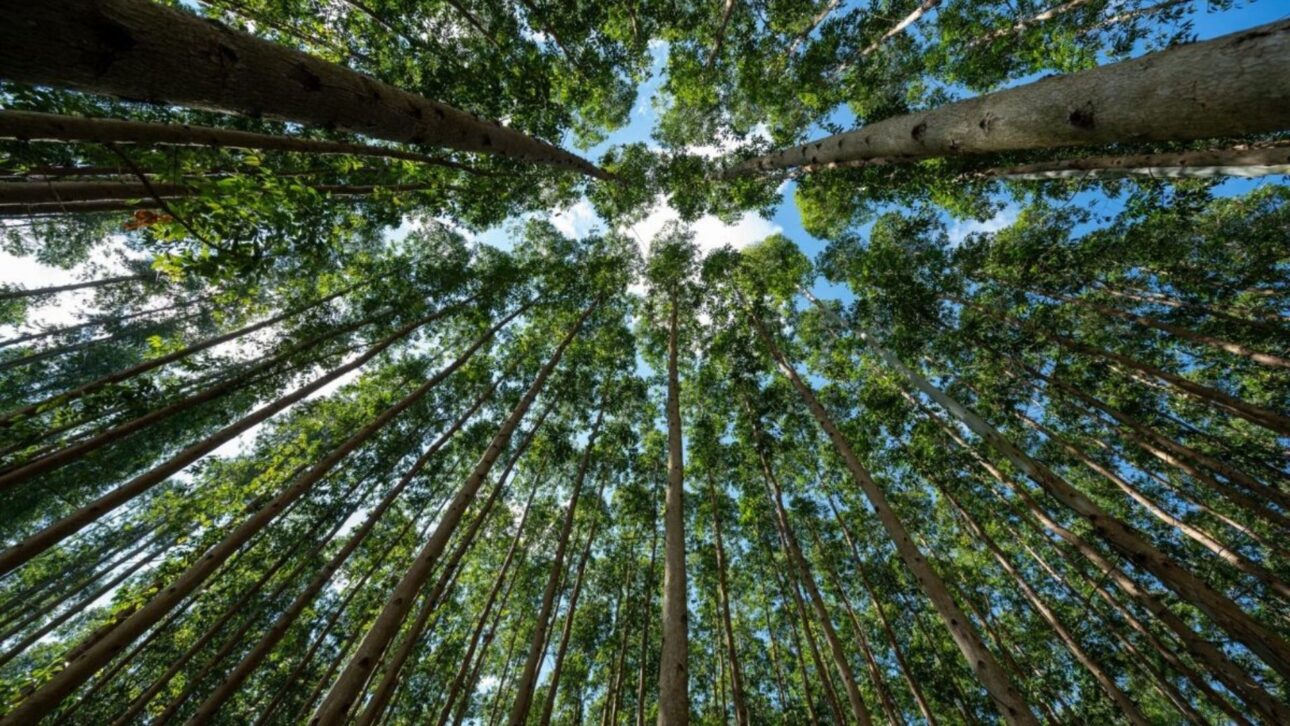
Photo: Disclosure/CMPC
The number that summarizes the result is 33.29 hectares of preserved native vegetation. For comparison purposes, it is an area equivalent to something close to 33 official-sized football fields that remained with trees on top instead of turning into open strips.
The calculation uses the standard unit of the sector. CO2 equivalent is the way to sum different gases into a single number, converting each by the warming power it has in relation to carbon dioxide. The company estimates that approximately 4,566 tons of CO2 equivalent remained stored in the soil and plants, without being released into the atmosphere. Cut down vegetation doesn’t disappear, it turns into gas. That’s why the carbon account is closely linked to the hectare account in any project that cuts native areas, and this sum is what the factory presents as the environmental gain of the method.
91 kilometers of line and over a thousand kilometers of cable
The size of the structure helps to understand the magnitude of the problem at stake. The transmission line is 91 kilometers long and totals 1,045 kilometers of high-voltage cables, a larger number because each tower carries several conductors along the same route.
Drones were not the only solution applied to the line that will connect the factory to the electrical system. To reduce interference in the Cerrado and Atlantic Forest biomes, engineering worked with variations in the height of the towers, ranging from 13.5 to 54 meters, and with the elevation of structures in sensitive points, a technique used to protect Permanent Preservation Areas. The higher the tower, the further from the ground the cable passes and the less needs to be cut underneath it. The distance of the cables from the ground varies between 13 and 50 meters along the route.
1,515 markers for birds crossing the route
Transmission lines have a known side effect: birds in flight paths cannot see thin cables against the sky. The solution adopted in the project was 1,515 anti-collision markers installed along the line, devices that make the cable visible to birds.
The distribution along the route serving the factory was not random. The equipment was concentrated in sections near wetlands and forest fragments, precisely where migratory birdlife circulates more frequently. These are the points where the risk of collision is higher, and therefore receive the highest density of signaling. The measure is part of the local biodiversity protection package presented by the company along with the preservation of hectares.
Fewer teams hanging in hard-to-reach places
The environmental gain was accompanied by a safety gain that often goes unnoticed. By dispensing with the opening of strips in certain sections, the technique reduced the need for physical access to hard-to-reach locations, those points where topography and vegetation turn any movement into a risk.
Fewer people on the field means less exposure of the teams hired for the factory construction to work accidents. In transmission line construction, the most dangerous section is usually the most enclosed one. The set of decisions led the project to become a finalist for the fourth Ipê Amarelo Environmental Award, promoted by the Regional Council of Engineering and Agronomy of Mato Grosso do Sul.
400 megawatts, half for the factory and half for the country
The line exists for a very practical reason: to connect the future unit to the Brazilian electrical system. When it becomes operational, the factory will have the capacity to generate 400 megawatts, energy produced within the industrial complex itself from the cellulose process.
This total is divided equally. Half, 200 megawatts, is for the plant’s internal consumption. The other half goes to the National Interconnected System, and the company compares the surplus to the demand of a city the size of Campo Grande. A factory that connects to the grid not only to consume but to sell energy, explains the need for a 91-kilometer line to Selvíria.
The numbers of the factory that wants to be the largest in the world
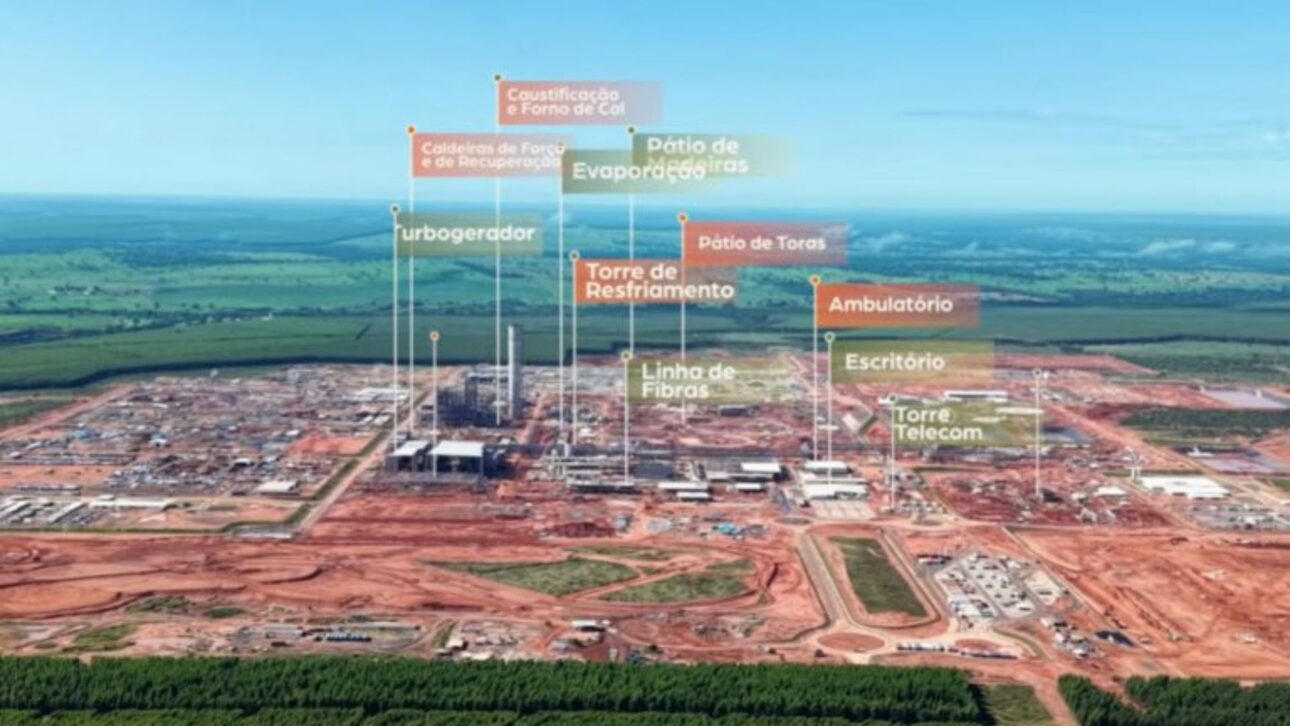
The Sucuriú Project is presented as the future largest cellulose factory on the planet. The announced investment is US$ 4.6 billion, an amount also presented in the report as R$ 25 billion. The plant will occupy 3,500 hectares on the banks of the Sucuriú River, 50 kilometers from the center of Inocência, and will have the capacity to produce 3.5 million tons of short-fiber cellulose per year.
The schedule is already underway. Earthmoving works began in 2024 and operation is scheduled for the end of 2027. The complex also includes a 54-kilometer railway, a necessary structure to transport a production volume of this scale. It is the type of enterprise that changes the logistics of an entire region even before the first ton leaves the line.
14 thousand jobs during construction and 6 thousand after the factory starts
The impact on the job market appears in two distinct phases, and confusing the two is the most common mistake when interpreting this type of announcement. During construction, the project foresees training and the creation of over 14 thousand job opportunities, jobs linked to the construction site and with a deadline defined by the project’s own schedule.
After the start-up, the scenario changes in size and nature. There are about 6,000 permanent positions distributed among industrial, forestry, and logistics operations. Adding the two phases, the number reaches 20,000 jobs that often appear in headlines, even though 14,000 of them exist only while the construction lasts.
The company’s first pulp unit in Brazil
Arauco is not new to the country, but it is new to this segment here. The company has been operating in Brazil since 2002 in the forestry and wood areas, has more than 3,000 own employees, and operates five industrial units in the states of Paraná and Rio Grande do Sul.
Inocência will be the company’s first pulp factory on Brazilian soil, which explains the institutional importance given to the project. The company reports maintaining FSC certification in its forests, a seal of responsible forest management. It is the entry of the group’s pulp division into a market where Brazil is already a global leader, and now with the promise of hosting the largest plant in the sector.
What do you think of this type of solution
The case of the Sucuriú Project puts two things on the same table. On one side, a gigantic construction, with billions invested, its own railway, a 91-kilometer transmission line, and a factory that promises to be the largest in the world in the sector. On the other, a specific decision that avoided the clearing of 33.29 hectares in a route where the cut was already authorized.
Now it’s your turn to give your opinion. Do you think solutions like the use of drones should become a requirement in environmental licenses for large projects, or is it enough for them to remain a voluntary initiative by companies? And more: is preserving 33 hectares in a project that occupies 3,500 hectares a significant environmental gain or is it little compared to the size of the enterprise? Comment below what you think about this.