





 Portuguese
  English
  Spanish
  4 min of reading
  0 comments



New Sino-Brazilian Brand Will Be Presented at the 2025 Auto Show and Will Arrive with Three SUVs, Including a Luxury Electric Model, Promising High Power and Extended Range.
A Caoa is preparing a new Sino-Brazilian brand for the national market: Caoa Changan. The information was revealed by the website Autoesporte, which dug into the details of the operation.
The presentation is scheduled for the São Paulo Auto Show in November 2025, and the start of sales has been set for the second quarter of 2026, with three SUVs at the start — two combustion and one high-standard electric.
The operation will be independent of Caoa Chery, which remains active in the country. The information has also been confirmed by industry vehicles; the event will take place between November 22 and 30, 2025.
-
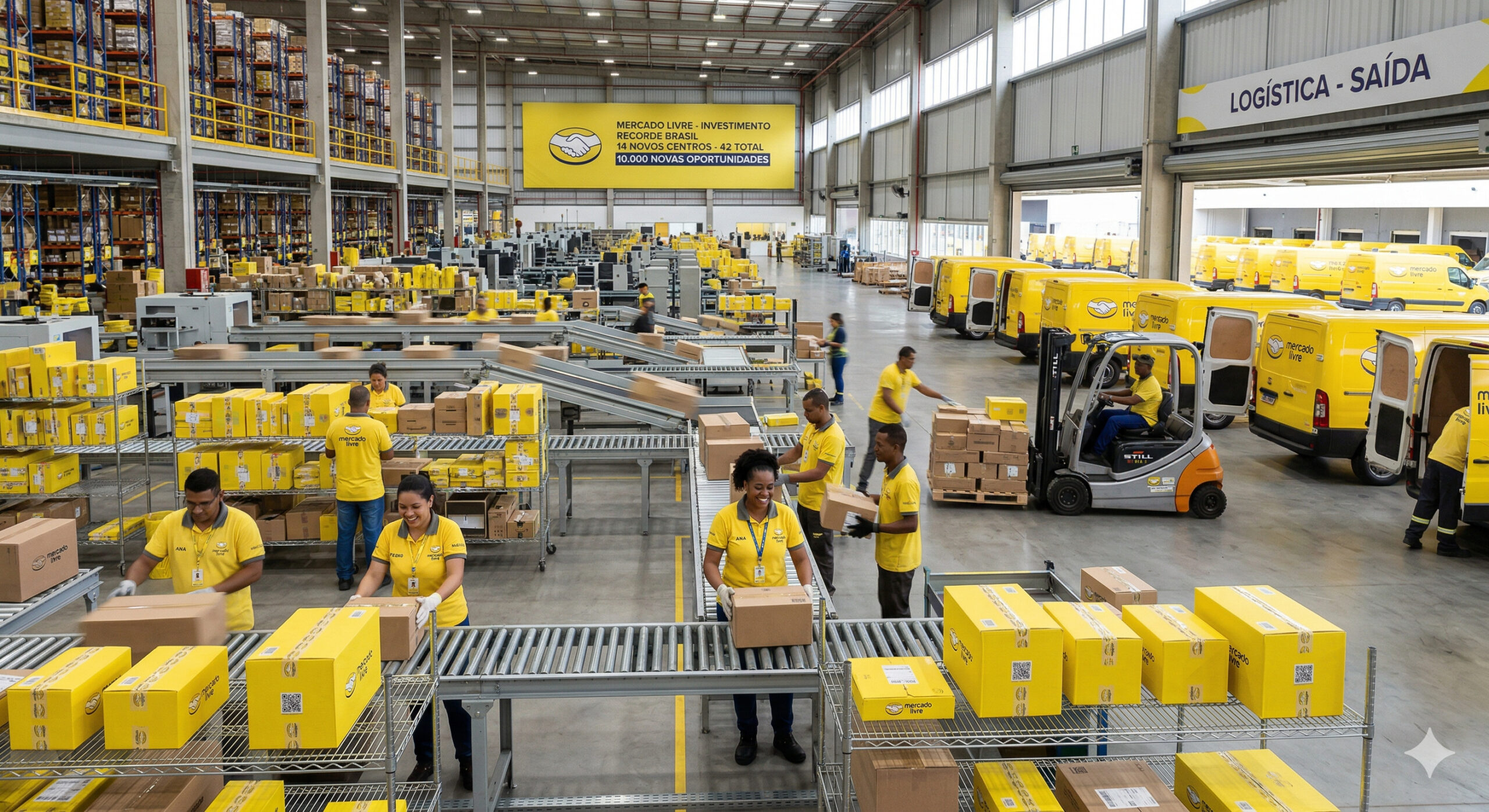
Mercado Livre “opens the vault” and announces a record investment of R$ 57 billion in Brazil in 2026, a value 50% higher than the previous year, with an expansion plan that includes 14 new logistics centers, totaling 42 units in the country and hiring an additional 10,000 employees.
-
How investment in technology can revolutionize the national economy and enhance industrial gains, according to a study that highlights the direct impact on productivity, innovation, and wealth retention within Brazil.

-
The largest food company on the planet, JBS, has just opened a 4,000 square meter laboratory in Florianópolis to develop customized proteins that modulate muscle mass gain, immune response, and metabolic performance.

-
After nearly 30 bids and competition among industry giants, a Spanish company purchases one of the largest airports in Brazil for almost R$ 3 billion and takes over the management of Galeão in a concession that will last until 2039.


Debut at the Auto Show and Launch Schedule
The official announcement is expected to take place at the 2025 Auto Show, at the Anhembi District. The event’s organization has already defined the period from November 22 to 30.
The product and network strategy will be detailed throughout 2025, but sales will only begin from April 2026, according to information published by Autoesporte and echoed by other portals like Terra.
Although they will share a corporate structure, Caoa Chery and Caoa Changan will have distinct positions in Brazil.
The former maintains its portfolio and production; the latter is born focusing on imported SUVs at the start of operations.
The coexistence of the brands, including in exhibition areas at the Auto Show, is seen as part of the debut communication plan.
Initial Trio of SUVs: Uni-T, CS75 Plus, and Avatr 11
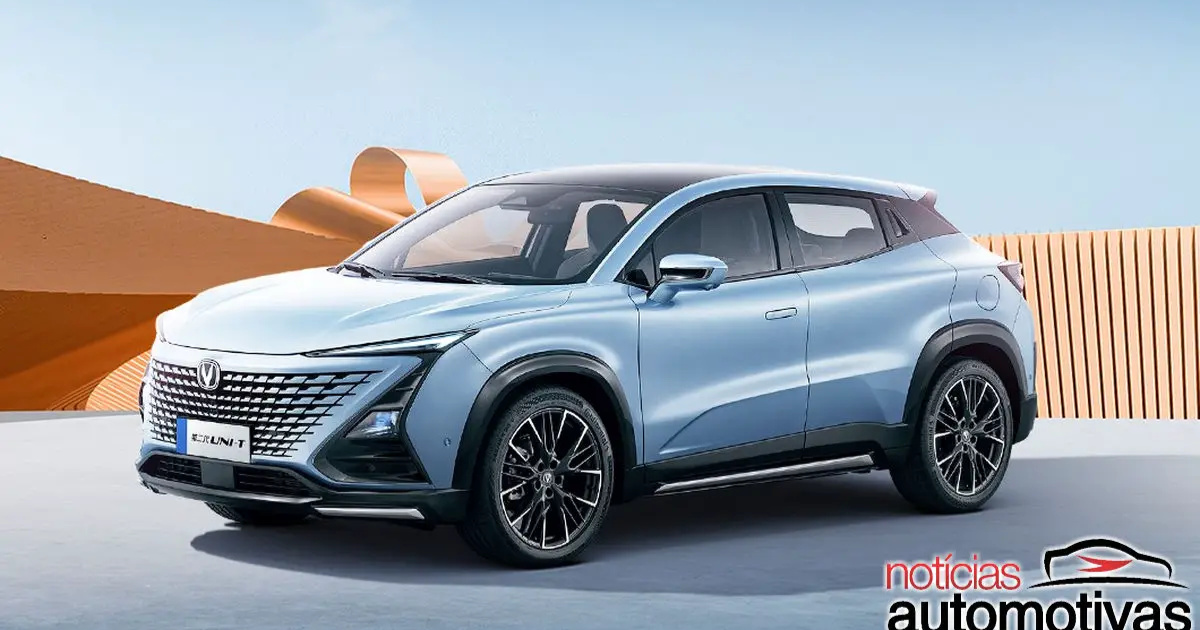
The Changan Uni-T is expected to pave the way as a volume car. It is a medium SUV with a sporty design, 4.515 m long, 1.870 m wide, and a wheelbase of 2.710 m.
The model uses a 1.5 turbo engine coupled with a 7-speed dual-clutch transmission; in the global catalog, the set delivers 132 kW (≈188 hp) and 300 Nm.
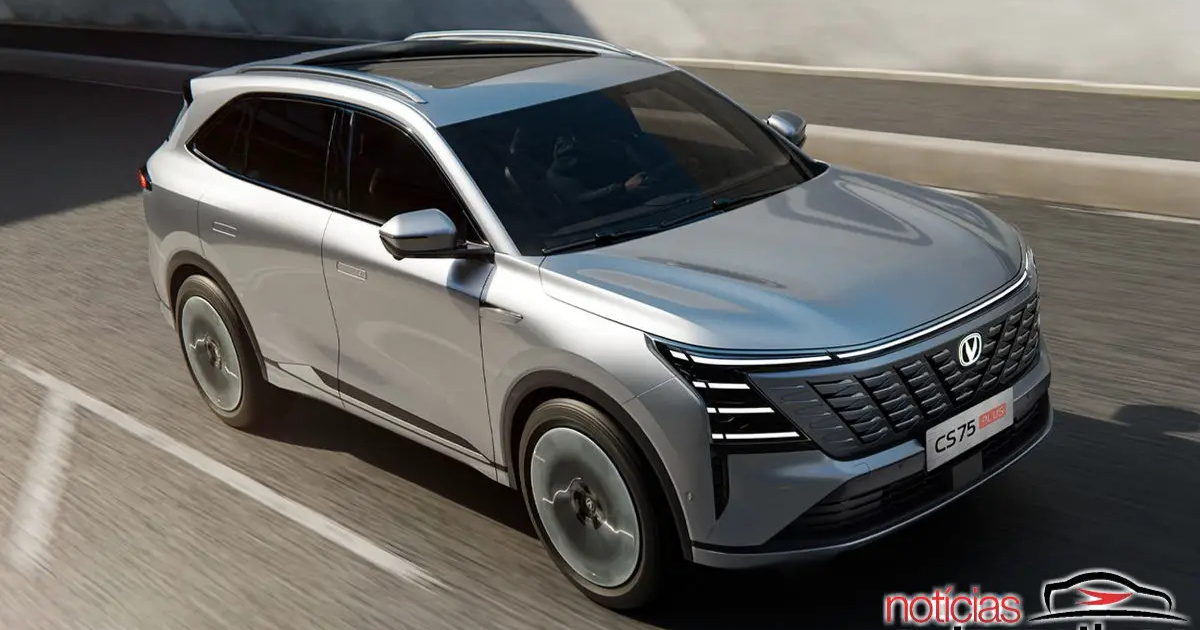
Test units are already running in Brazil. Above it, the brand is preparing the CS75 Plus, an SUV of similar size to the Jeep Commander, with 4.77 m long and 2.80 m wheelbase.
The interior stands out with a dashboard featuring three screens totaling 37 inches, a format already seen in units spotted testing in the country.
In the Chinese market, there are 1.5 turbo and 2.0 turbo versions, both with Aisin automatic transmission.
It is worth noting that the latest generation prioritizes the 1.5T, while the 2.0T remains in catalogs and selected markets.
The third pillar will be the Avatr 11, a luxury electric SUV linked to the Changan/CATL ecosystem and with technology from Huawei.
The all-wheel-drive BEV version accelerates from 0 to 100 km/h in 3.9 s and, depending on the battery, can reach up to 815 km in the Chinese CLTC cycle.
The EREV variant (gasoline hybrid with range extender) claims combined range of up to 1,065 km on the CLTC.
In Brazil, the price positioning is expected to be around R$ 600,000, competing with electric SUVs from premium brands. Prototypes of the Avatr 11 have also been seen in local tests.
In terms of performance, different international sources report power ratings of 402 kW (≈547 hp) for the AWD configurations, with combined torque of up to 687 Nm and batteries of 90 to 116.8 kWh, values consistent with local measurements and available technical material.
Network and After-Sales Without Mixing with Caoa Chery
The dealership network of the new brand will be separate from Caoa Chery. According to Autoesporte, the points may be neighbors, but with separate operations and after-sales, since Changan and Chery are competitors and do not share components.
The initial structure is expected to prioritize company-owned stores, coordinated by Caoa, in a model similar to groups managing more than one brand within the same conglomerate.
Portfolio Strategy and Industrial Context
The option for a new Chinese partner comes in the wake of the end of Hyundai’s production by Caoa in Anápolis (GO) and the reorganization of the commercial agreement between the companies, reported in June.
With the end of the cycle of the New Tucson and the HR at the Goiás complex, the Brazilian group has opened up space for new Asian brands and new industrial projects, a scenario that favors the arrival of Changan and, in the future, the evaluation of local assembly.
In recent years, executives from Caoa have reached out to different Chinese groups.
Changan gained traction due to the viability of an agreement in production and commercialization, as well as its potential to complement the current portfolio without direct overlap.
The choice reinforces the strategy of diversification and expands the possibilities of operating in higher value-added segments, especially with the Avatr 11 at the top.
What Caoa Says
Contacted by Autoesporte, the company stated that it “is unaware of this information” and reiterated its position of not anticipating strategies, launches, and ongoing negotiations.
The official statement maintains a reserved tone regarding the new brand until the presentation at the Auto Show.
Do you think that the massive arrival of Chinese automakers in Brazil represents a threat to the national industry or an opportunity for consumers?







-

-

-

-

-

-

13 pessoas reagiram a isso.