





 Portuguese
  English
  Spanish
  4 min of reading
  0 comments



Even Without American B-2 Bombers, Israel May Be Developing a New Way to Launch the World’s Most Powerful Non-Nuclear Bomb and Strike at the Heart of the Iranian Nuclear Program
The GBU-57 Massive Ordnance Penetrator, a 14,000-kilogram bomb capable of <strong penetrating up to 61 meters of concrete before exploding, has always been seen as the exclusive trump card of the American B-2 Spirit bombers. However, in light of the rising tensions between Israel and Iran and the American refusal to intervene directly, speculation arises about an alternative route for using the super weapon: the Israeli Air Force’s C-130 Hercules.
Sources like the specialized site The War Zone indicate that Israel may be exploring innovative attack methods with its own assets, especially following reports that KC-130H aircraft have flown over critical areas in Syria and Iraq in recent days. As they advance towards Iranian aerial positions, the possibility of a direct strike against Fordo, Iran’s most protected underground nuclear complex, increases.
ARTICLE CONTINUES BELOWSee also
Goodbye iron: new technology from Xiaomi promises to revolutionize the way we iron clothes with 500 kPa steam, continuous flow of 120 g/min, heating in 65 seconds, and six smart modes for different fabrics.

Rio Pardo, the most mysterious city in Rio Grande do Sul: untouched Pampas castle, the missing treasure of the Devil Boy, bride’s saint, invisible tunnels, and a 200-year curse today.

China retires the J-7 fighter after years of military protection and can now transform military items into drones, following more than 60 years of operation of the J-7, derived from the MiG-21, with thousands of units produced and strategic use in the PLAAF and PLANAF.

Volunteers are sought to live in the mountains for a month: a study pays people to stay at 2,500 meters, with 24-hour monitoring of sleep, metabolism, and blood pressure.

GBU-57: The Super Bomb That Can Destroy Fordo, the Nuclear Base 80 Meters Beneath the Mountain
The GBU-57A/B, known as the Massive Ordnance Penetrator, is the most powerful conventional bomb in the American arsenal. At 6.2 meters long and weighing about 14,000 kg, the weapon is specifically designed to destroy highly protected underground targets like the Fordo complex in Iran. This uranium enrichment center is hidden beneath about 80 meters of rock, making it inaccessible to traditional munitions.

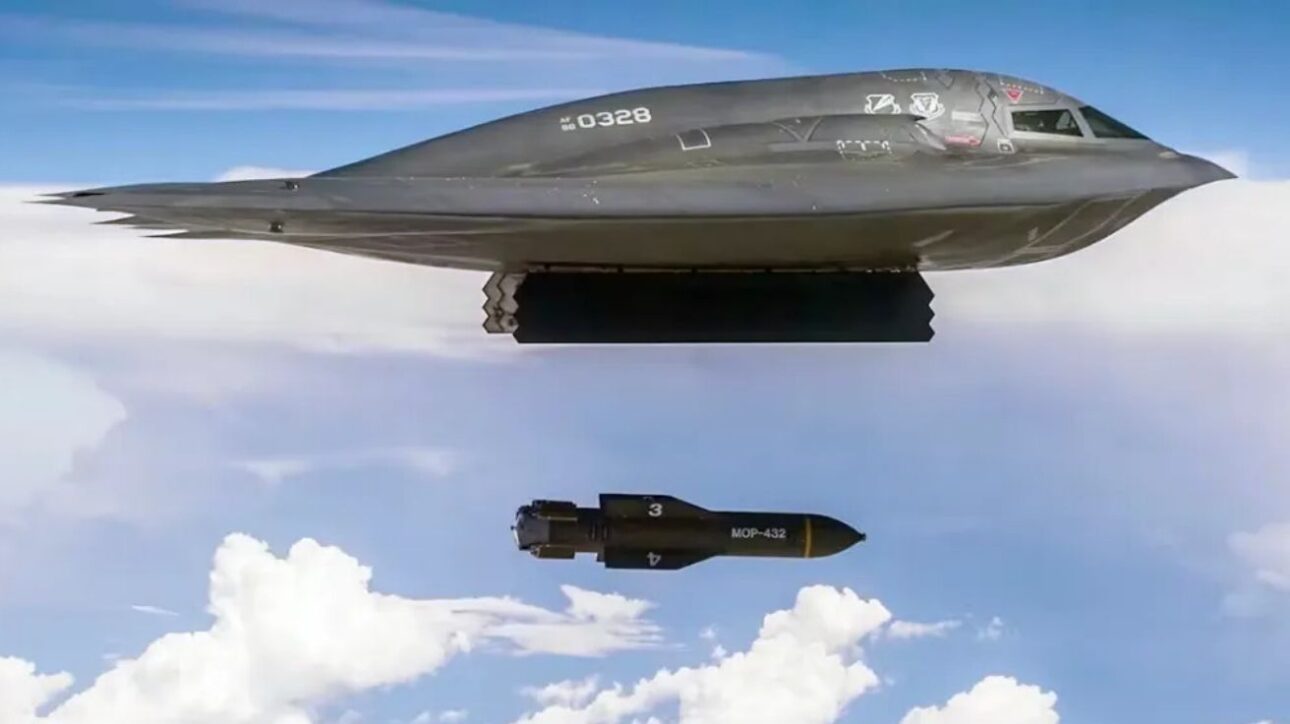
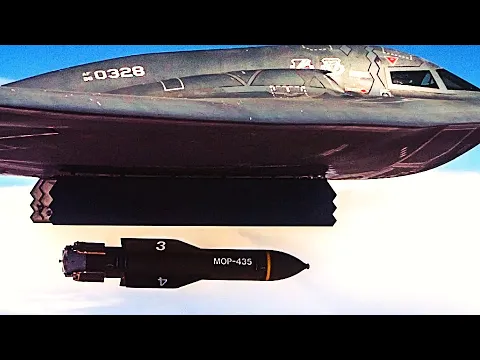
This super weapon carries about 2,400 kg of AFX-757 and PBXN-114 explosives, optimized for controlled detonations at depth. When launched from high altitudes, it gains kinetic energy and penetrates layers of soil or concrete before exploding, using smart fuses called LPSF that determine the exact moment of detonation.
So far, the only aircraft capable of transporting and launching the GBU-57 is the B-2 Spirit, which can carry two of these bombs per mission. Israel does not possess this bomber, which makes its dependence on the U.S. a strategic issue. The American refusal to directly engage in a war with Iran raises questions about Israel’s viability to use this weapon without external support.

However, according to The War Zone, Israel could adapt its C-130 Hercules to launch bombs similar to the GBU-57. There are historical precedents for this: during the Vietnam War, the U.S. used the C-130 to drop the BLU-82 Daisy Cutter, and more recently, the GBU-43 MOAB, also known as “Mother of All Bombs,” was dropped from a C-130 using a pallet and parachute system.
Although the GBU-57 weighs nearly 30,000 pounds, engineers could develop a tailored version that maximizes the C-130’s payload limit while maintaining its lethality. This type of adaptation could represent an unprecedented advance in Israel’s offensive capability, especially against underground targets like Fordo, which is enriching uranium at 83.7%, according to the International Atomic Energy Agency (IAEA).
Israeli C-130: From Humanitarian Aid to Transporting Super Bombs to Destroy Iranian Bunkers
The idea of using the C-130 Hercules as an attack platform with penetrating bombs raises a series of technical and strategic implications. Despite being a slow transport aircraft flying at lower altitudes than the B-2, the C-130 has been widely employed in heavy cargo drop operations and even large weaponry.
Israel operates a fleet of about 15 KC-130H, C-130H, and C-130J aircraft, which have carried out increasingly bold missions in Middle Eastern airspace. Recent images show these planes flying over southern Syria and areas near Iran, possibly with the aim of preparing forward arming and refueling points (FARP) or even launching deep attack drones.
The possibility of adapting a C-130 to launch a GBU-57 or a local variant would depend on modifications to the cargo hold and flight path. The lower launch speed and altitude of the Hercules may reduce the bomb’s impact, which would require the use of multiple successive units to enhance penetration or the addition of auxiliary boosters, a solution inspired by Disney bombs from World War II.
Still, sources indicate that, with the weakening of Iranian air defense, thanks to previous drone and Israeli stealth fighter attacks, Iran’s vulnerability is increasing. This opens the door for deeper incursions with aircraft like the C-130, especially if combined with special operations and intensive military intelligence use.
Another relevant factor is that the Fordo base is not the only target. There are several other critical facilities in Iran, many of which are buried under layers of rock but not as fortified as Fordo. Utilizing an alternative penetrating arsenal could be efficient to neutralize these sites without the need for direct U.S. involvement.
In times of asymmetric warfare, turning transport aircraft into strategic attack platforms could be a revolution in Israeli warfare doctrine. Although there is currently no concrete evidence that Israel has a GBU-57 or something similar operational on its C-130s, the window for technical and tactical possibilities is rapidly opening.










Seja o primeiro a reagir!