





 Português
  Inglês
  Espanhol
  4 min de leitura
  0 comentários


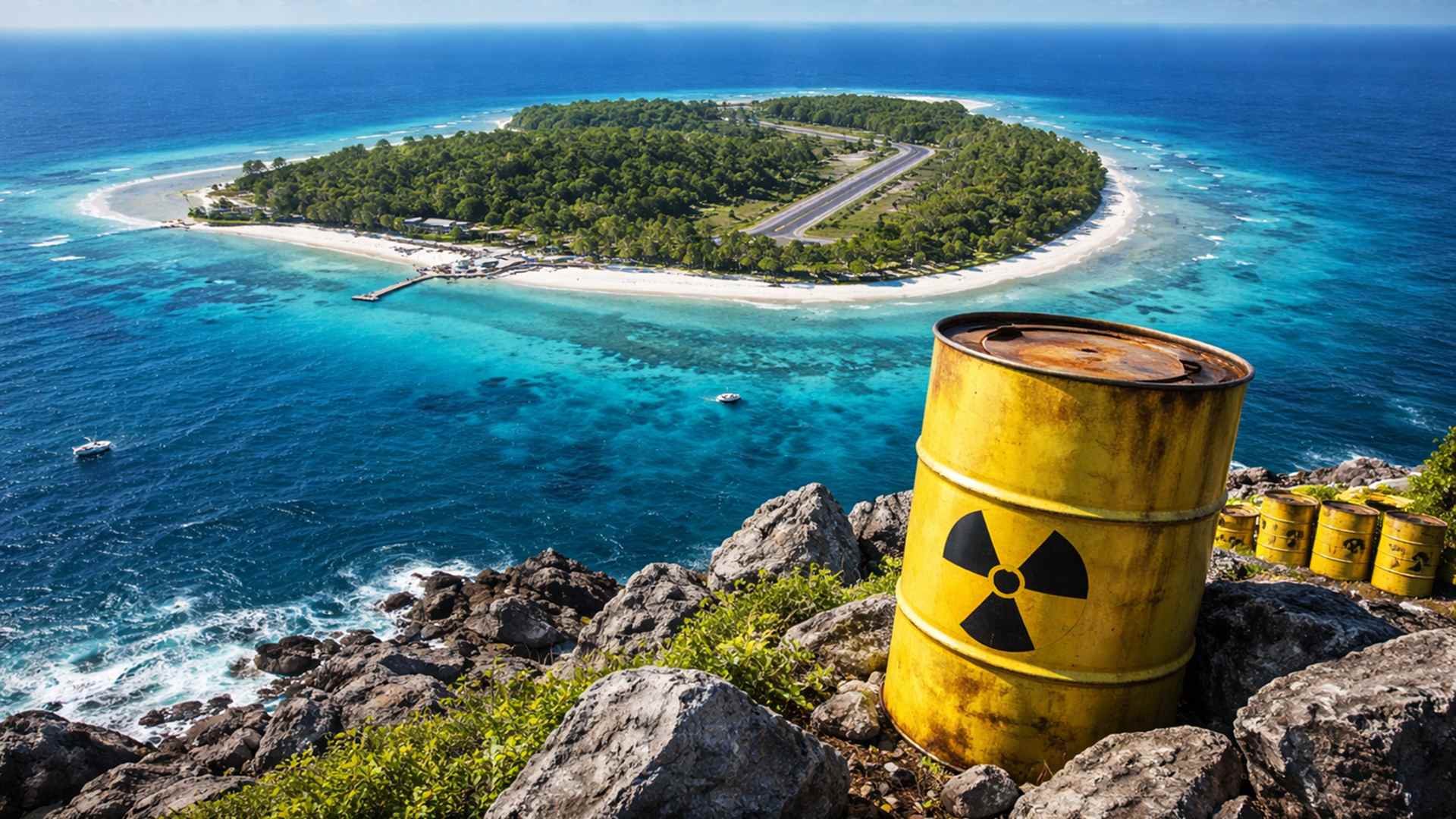
The choice of a remote island of only 1.51 km², 1,900 kilometers from Tokyo, to assess the storage of nuclear waste for up to 100 thousand years has placed Japan at the center of a debate about safety, geology, transport, and environmental risks in the Pacific.
Japan has begun to evaluate the remote island of Minamitorishima in the Pacific as a possible final destination for high-level nuclear waste, in an initiative that has reignited concerns about safety and environmental impacts. The plan is in its early stages and involves studies to verify whether the atoll can accommodate a long-term repository.
Minamitorishima is a coral atoll located in the northwest Pacific Ocean and represents Japan’s easternmost territory. The island is about 1,900 kilometers southeast of Tokyo and has only 1.51 square kilometers.
The remote island has no permanent civilian population and is home to only a small number of government officials and military personnel. This isolation is cited as one of the factors that make the site attractive for the permanent storage of radioactive waste that may remain active for up to 100 thousand years.
-
A 1,900-year-old papyrus found in the Judean Desert reveals a crime of the Roman Empire involving fraud, forgery, and a detailed court hearing.

-
New technology transforms the human body into a “machine”: centaur robot reduces effort when carrying up to 20 kg, improves balance during walking and impresses in practical tests in China.

-
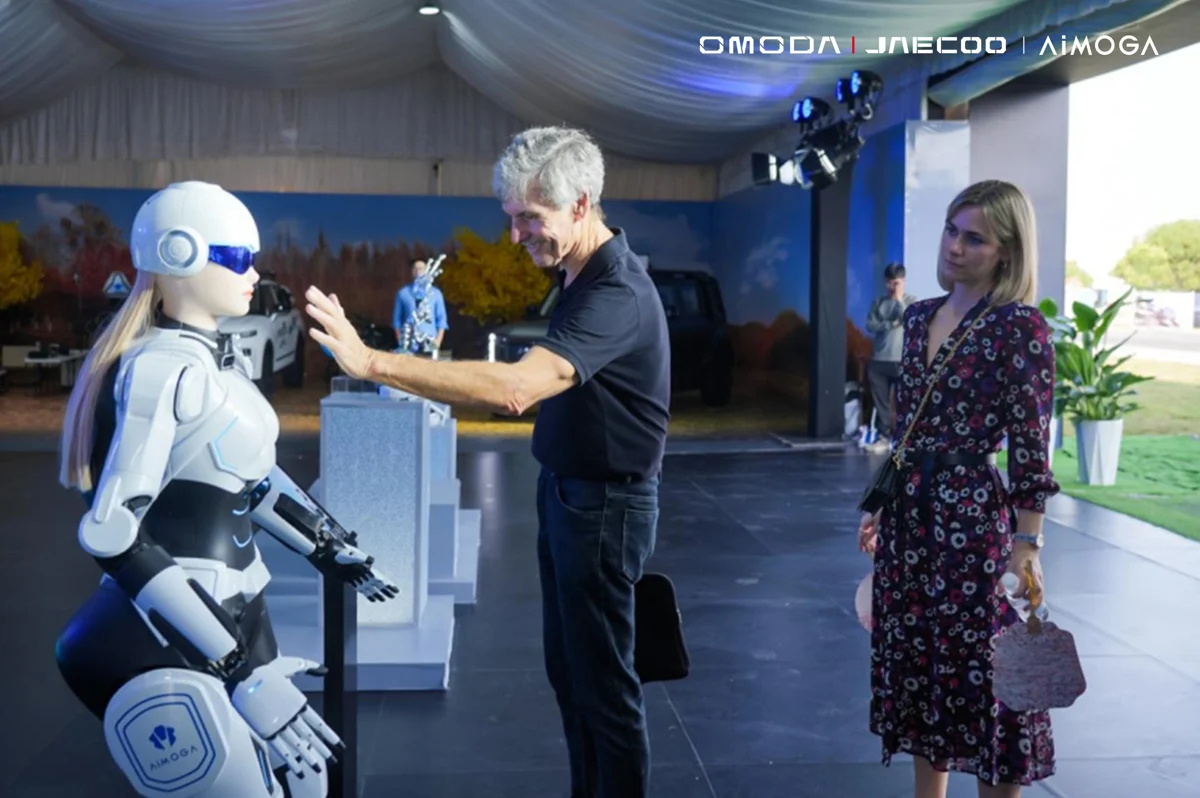
A traffic police robot has started operating at a school, technology from Omoda & Jaecoo expands the use of artificial intelligence in smart cities.
-
44 minutes on the cosmic scale: mysterious object in the Milky Way emits simultaneous radio and X-ray signals and raises an intriguing question about what is really happening in deep space.

Formal request reignites debate on nuclear waste destination
A formal request to assess the suitability of Minamitorishima was submitted in March 2026 to Kazuo Morishita, the mayor of Ogasawara, responsible for the administration of the island. The initiative quickly provoked reactions among experts and environmental groups, who point out risks associated with the proposal.
The storage of nuclear waste is one of the environmental challenges still without a definitive solution in several countries. Worldwide, more than 440,000 tons, equivalent to 400,000 metric tons, of irradiated fuel have already been discarded from reactors.
In Japan, the accumulation of this material has been occurring since 1966, when the country’s first reactor, the Tōkai Nuclear Power Plant, Unit 1, began operations. Since then, the country has gathered thousands of tons of used nuclear fuel and high-level vitrified waste.
Remote island enters the radar due to lack of permanent solution
Currently, about 2,500 containers of high-level vitrified radioactive waste are stored in facilities in the Aomori and Ibaraki prefectures. However, these units are treated only as temporary solutions.
In light of this scenario, Japanese authorities have begun to seek a permanent repository capable of isolating radioactive material at great depths. The reference considered is an underground facility typically located at least 300 meters deep for long-term containment.
Finland has already implemented this model by developing the deep geological repository of Onkalo in Olkiluoto. The facility stores waste in copper containers buried up to 451 meters deep in stable granite rock, designed for isolation for up to 100 thousand years.
Inspired by this experience, Japan has begun to explore the potential of Minamitorishima for the permanent storage of nuclear waste. Similar requests have also been submitted to two cities in Hokkaido.
Experts and environmentalists point out risks in the atoll
The request for the survey on the remote island was made by the Nuclear Waste Management Organization of Japan, NUMO. According to Kazuto Suzuki, a professor of science and technology at the University of Tokyo, there are pros and cons to choosing Minamitorishima as a repository.
The absence of a civilian population is seen as a factor that would reduce local opposition faced in other regions. The island also already has basic infrastructure, including a runway and port facilities.
Criticism, however, focuses on points considered sensitive. The Citizens’ Nuclear Information Center, an anti-nuclear organization based in Tokyo, released a report highlighting the lack of detailed geological research on the atoll and the seabed around it.
Compared to continental areas that have been extensively studied, Minamitorishima is still relatively unexplored. The porous limestone and volcanic base of the island also raise doubts about stability, as well as the risk of leaks impacting marine ecosystems.
Transport, extreme weather, and strategic use increase concerns
Another point raised involves the atoll’s exposure to typhoons, coastal storms, and rising sea levels in the long term. This would require any underground facility to withstand saltwater, extreme weather events, and possible tsunamis.
The logistics of transporting nuclear waste to the remote island also appear among the main concerns. William A. Parkinson, a senator in the Guam legislature, stated that the issue involves handling, transporting, storing, and possibly prolonged burial of the most persistent and dangerous radioactive waste produced by human industry.
However, Minamitorishima is not only of interest due to the nuclear issue. The remote island is also considered a base for the extraction of rare earth minerals from the seabed, while the plan for waste deposition remains in its early stages, with studies planned to assess the atoll.







Seja o primeiro a reagir!