





 Portuguese
  English
  Spanish
  5 min of reading
  1 comment





Promotion Places JBL Boombox 3 Among The Most Sought-After Large Speakers Of The Moment, Highlighted By Three-Way Sound, IP67 Resistance, Advertised 24-Hour Battery, And Powerbank Function.
The JBL Boombox 3 appeared this week for R$ 1.759 at online retailers in Brazil, a price that has positioned it among the most aggressive pricing options in the category of large speakers geared towards outdoor use.
The line is known for prioritizing power, long battery life, and reinforced construction, and the discount has rekindled competition with models that usually sell for lower prices but deliver fewer features overall.
Price Of JBL Boombox 3 On Sale
The Boombox 3 is a large model designed for spacious environments and for those who want mobility without sacrificing sound pressure.
-
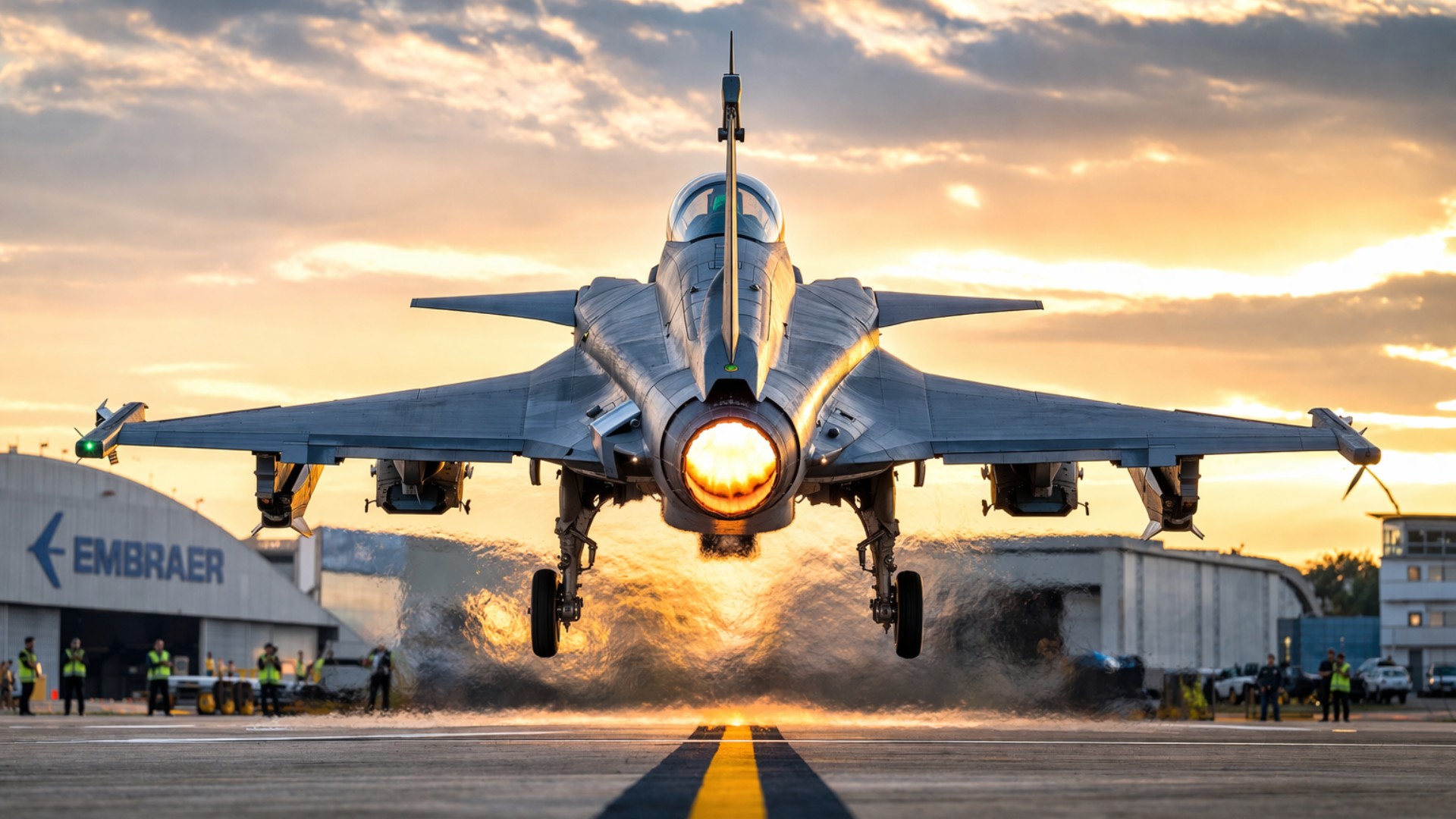
Brazil joins the select group of countries by producing a supersonic fighter that reaches 2,400 km/h with advanced electronic warfare technology, US$ 4 billion in investments, 36 units planned, 350 trained engineers, and unprecedented national production by 2032.
-
At the bottom of the sea, scientists have found a true underwater cathedral measuring 62 meters at the base, 31 meters at the top, and 1,347 square meters of giant coral in the Maug Islands, estimated to be 2,050 years old.

-
Surrounded by the sea, the airport will have a system to prevent airplanes from falling into the water; technology will be installed in Ilhéus (BA), with an investment of R$ 70 million.

-
With a cost per shot close to zero, the DragonFire laser could change naval warfare in 2027 and provide British ships with nearly unlimited defense against drones.


In addition to the “party sound” proposition, the speaker also caters to scenarios like trips, beaches, and pools due to its IP67 certification, which indicates resistance to dust and temporary submersion in water, according to the manufacturer.
This repositioning at R$ 1.759 draws attention because the Boombox 3 typically competes against speakers that, during promotions, drop to mid-range price points.
The practical effect is simple: consumers looking for something smaller due to budget may find themselves facing a model above average for a price closer to the “standard” of the market.
Three-Way Sound And Performance At High Volume


The sound of the Boombox 3 is based on JBL Original Pro Sound with a three-way architecture, featuring dedicated speakers for bass, mids, and highs.
In the brand’s technical description, the idea is to increase the sensitivity of the acoustic enclosure and reduce distortions, which tends to be especially relevant when the speaker operates near the volume limit.
An important point is that power varies depending on the power source.
When plugged in, the Wi-Fi version of the Boombox 3 is listed with 1 subwoofer of 80 W RMS, 2 midranges of 40 W RMS, and 2 tweeters of 20 W RMS.
In battery mode, the setup shifts to 1 subwoofer of 60 W RMS, 2 midranges of 30 W RMS, and 2 tweeters of 10 W RMS, according to specifications published by JBL.
In practice, this difference helps explain why models of this size often sound fuller when connected to power, while still maintaining robust performance away from the outlet.
Nonetheless, power numbers are not the only factor: the internal design of the enclosure and the tuning of the three-way system weigh in on the final result, especially in the definition of mids and the presence of highs.
24-Hour Battery And Powerbank Function
The advertised autonomy is up to 24 hours.
JBL describes the Boombox 3 as capable of supporting a whole day of usage in different situations, from daily routines to meetings with friends.
Meanwhile, the recharge time appears as about 6.5 hours in retail listings and specialized publications detailing the product specifications.
This scenario favors everyday use: the idea is to recharge at the end of the day and resume the next day, without relying on outlets during playback time.
Another feature that typically comes into play is the integrated powerbank, mentioned in materials and content that describe the Boombox 3 as capable of charging devices via USB.

This enhances its appeal for travel and outdoor environments when the phone runs out of battery mid-use.
Design, Transport, And Resistance To Water And Dust
The design follows the characteristic silhouette of the family, with an oval body and a top strap designed for transport.
In the official material, JBL mentions an update in the visual with a more durable metal strap, silicone parts, and fabric prepared for contact with water and dust, as well as internal changes that include a new subwoofer.
The IP67 resistance, in turn, is the most objective data when it comes to outdoor use.
According to the IP standard, the number helps the consumer compare products and understand the level of protection against dust and water, something essential for those intending to take the speaker to pools, beaches, and open areas.
Comparison With LG XBOOM Go And AIWA Boombox
In comparison with the LG XBOOM Go XG9S, LG advertises power of 80 W + 40 W RMS, as well as IP67 and mentions up to 24 hours of battery on their official page in Brazil.
This means, at least on paper, the maximum autonomy can be similar to the Boombox 3, depending on the usage conditions.
Nonetheless, there are differences in proposal and how each brand delivers sound.
The Boombox 3 highlights separation into three ways and the variation of power between plugged in and battery in the specifications published by JBL.
Meanwhile, LG emphasizes unique features like Sound Boost and lighting elements in some retail materials.
Comparing side by side, therefore, requires looking beyond the watt numbers, as each manufacturer adopts different architecture and tuning.
When the focus is on the AIWA Boombox Plus (AWS‑BBS‑01), the brand describes a three-way system with 1 subwoofer, 2 midranges, and 2 tweeters, and announces 200 W RMS, plus a battery that can reach 30 hours, depending on the scenario.
The certification indicated in AIWA materials for the line appears as IP66, varying according to the version displayed on the manufacturer’s page.
This contrast shows that the market has alternatives with strong specifications in different directions: JBL bets on the tradition of the Boombox line, on IP67 certification, and on the promise of 24 hours.

AIWA reinforces declared power and greater maximum autonomy under specific conditions.
LG positions a set that also aims for outdoor use, with IP67 and relevant power numbers.
For consumers, the central point is often understanding which of these items weighs more in real use, such as typical volume, type of environment, and need for phone recharge.
What To Observe When Buying
Since power changes between plugged in and battery in JBL’s technical sheet, it’s worth observing where the speaker will be used most frequently, as this can alter the experience at higher volumes.
It is also advisable to check if the retailer clearly informs the offered version and the warranty conditions, as promotions change quickly and marketplace descriptions do not always standardize all data.
In addition, connectivity features and inputs can influence daily usage.
Publications detailing the Boombox 3 mention a 3.5 mm audio input, which may be relevant for those still using cable in specific situations, such as laptops and devices without reliable Bluetooth.
With the Boombox 3 priced below R$ 1.800, the practical question becomes whether the set of three-way sound, IP67, up to 24 hours of battery, and powerbank meets what the user expects for parties, trips, and outdoor use, or if some competitor provides a better fit within the same budget.
In your case, what weighs more in the decision: autonomy, power when plugged in, water resistance, or sound quality at high volume?







Donde lo puedo adquirir compre uno en mercado libre pero era un clon, nada que ver con la fecha tecnica