





 Portuguese
  English
  Spanish
  6 min of reading
  4 comments


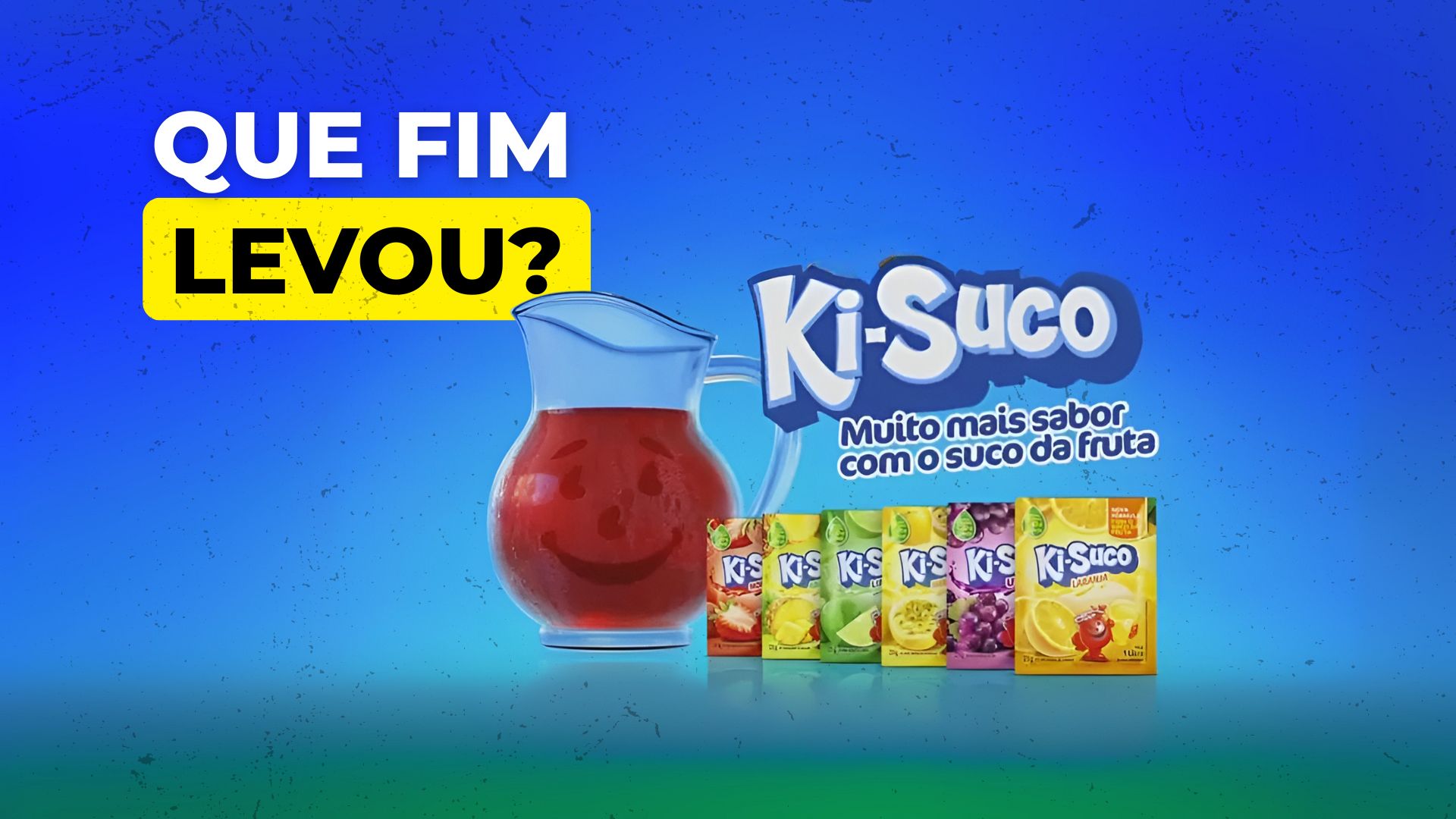


Brand That Crossed Decades, Conquered Consumers With Low Prices and Iconic Campaigns, and Today Tries to Reinvent Itself by Betting on the Value of Nostalgia to Recover Space in the Market.
The powdered drink Ki-Suco marked the routine of millions of Brazilians for about thirty years, becoming synonymous with afternoon snack throughout the country.
Originally created in the United States in 1927 under the name Kool-Aid, the product landed in Brazil in 1961 and quickly dominated the shelves with its affordable price, ease of preparation, and advertising campaigns that stood out for the famous mascot “Jarrão.”
The simple formula — mix the contents of the sachet in two liters of water, add sugar, and serve — won consumers from different age groups, ensuring an economical, practical drink with a distinctive flavor.
-
These are the drivers who may stop paying tolls on highways in a project that promises to reduce costs for those who live from transportation in Brazil.

-
(Video): Italian pilot lands plane on moving train at 120 km/h and achieves unprecedented feat in aviation, even with a narrow runway and without direct visual contact.

-
It seems to have come out of a science fiction movie: A Brazilian city where it rains almost every day, recording over 4,000 mm per year, driven by climatic factors — a direct result of its strategic location in the Amazon.

-
The water crisis that could change everything this year has already begun; it’s not just about the climate, it affects technology, raises product prices, and can halt entire companies without warning.

History of Ki-Suco and Its Impact in Brazil
In the 1970s until the mid-1990s, Ki-Suco reached its peak, when it established itself as the absolute leader in the powdered drink segment.
The product was adapted to Brazilian tastes by what was then General Foods, now part of Kraft Heinz, and began to feature illustrated instructions on the packaging, as well as coupons that allowed for the exchange for exclusive plastic jars.
These strategies boosted not only sales but also household consumption, with flavors like rosehip, orange, raspberry, and grape gaining ground in school lunches and family gatherings.
The character Pitcher Man, created in 1954 in the United States, was nationalized as “Jarrão” and became an icon in campaigns in magazines, comic books, and TV commercials, encouraging children to prepare the drink alone and enthusiastically challenging their thirst.
Factors That Consolidated the Leadership of Powdered Drink
Three factors consolidated Ki-Suco’s position in the market: the low price compared to competitors, the diverse portfolio of flavors, including diet versions and citrus variations, and the wide distribution, present in bakeries, grocery stores, and even school lunch programs.
In the early 1980s, the product accounted for about 70% of national powdered drink sales, according to company data.
The absence of foreign competitors and the rising prices of soft drinks, driven by inflation, further favored the growth of the colorful powder in Brazilian homes.
The Arrival of Tang and Market Changes
The scenario, however, changed drastically in 1987 with the official arrival of Tang in the Brazilian market.
Also belonging to the Kraft group, Tang came in a reformulated version, enriched with vitamins and supported by campaigns that highlighted the product’s connection to American NASA space missions, such as the Gemini and Apollo missions.
The argument of modernity and innovation allowed Tang to quickly gain ground among consumers attentive to international trends.
In contrast, Ki-Suco maintained traditional communication centered around “Jarrão” and was slow to innovate in flavors or formats, while Tang focused on sweetened sachets, ready for immediate consumption and more practical for those seeking speed in preparing drinks at home.
Decline in Sales and Challenges of the 1990s
The economic opening of the early 1990s brought new challenges for Ki-Suco.
With the entry of imported products, the popularization of boxed juices and private-label soft drinks, along with the concentration of retail in large chains, profit margins were compressed and shelf space diminished.
Consequently, there was a significant reduction in points of sale and production lines.
Reports from the time show that the sales of the drink fell by more than 50% between 1994 and 1999, making operations in several licensed factories unviable and distancing the brand from the main media.
The Disappearance From the Shelves and The Power of Nostalgia
From the 2000s onwards, Ki-Suco’s presence on the shelves became residual, while Tang and regional brands divided the spotlight in the segment.
Despite the retraction, the name Ki-Suco remained alive in collective memory.
Nostalgia forums and social networks began to gather accounts from consumers reminiscing about school lunches with rosehip drink or the ten-cent economical sachet that yielded two liters of drink.
The Relaunch and The Bet on Affective Memory
Aware of the nostalgic potential of the brand, Kraft relaunched Ki-Suco in a limited edition in 2013, using affective memory as the main strategy.
The experience served as a test for the definitive return four years later, when Enova Foods acquired the rights to the product and promoted adjustments to the recipe, reducing sodium content, adding vitamin C, and maintaining the traditional yield of two liters per envelope.
The packaging began to highlight these differentiators, while campaigns migrated from television to digital platforms, seeking to engage different generations: adults attracted by retro aesthetics and teenagers interested in customizing the sugar of their own drink.
Current Strategies and Challenges in the Powdered Drinks Market
The new communication actions invest in interactive content, such as filters for social media that refer to the “Jarrão” and partnerships with digital influencers, who teach creative recipes using Ki-Suco in desserts and popsicles.
Even so, the market imposes obstacles.
According to the 2024 report from Euromonitor Consulting, the powdered drinks segment recorded modest growth of only 1.7% in volume, pressured by the rise of ready-to-drink teas and low-calorie flavored waters, options increasingly sought by health-conscious and convenience-seeking consumers.
Additionally, the centralization of negotiation power in large retail chains favors fast-moving products, making it difficult for traditional brands without significant media investments to expand.
To navigate these barriers, Enova Foods bets on smaller packages, 25 grams for individual consumption, and seasonal flavors like green apple or yellow fruits, launched in short cycles to stimulate repurchase.
There is no official disclosure of revenue numbers, but the company claims to work with outsourced production, flexible to market demand.
Nostalgia as a Main Asset and New Initiatives
The main asset of Ki-Suco, however, remains nostalgia.
Special editions with 1980s layouts are among the most sought-after items on e-commerce platforms in the collectible food category.
The “Jarrão” has become a collector’s item, even in Funko Pop dolls, and themed festivals held in Hastings, Nebraska — the birthplace of Kool-Aid — maintain booths dedicated to the Brazilian version, celebrating the cultural impact of the colorful powder.
Profiles dedicated to “products that marked childhood” garner millions of views in reminiscing about the distinctive flavor and ease of preparation.
Popular Consumption, Recovery in Grocery Stores, and the Future of Ki-Suco
With out-of-home consumption recovering after the pandemic and the demand for economical drinks growing in urban peripheries, Ki-Suco tries to regain space in neighborhood grocery stores through promoters distributing gifts inspired by the old jars, now reusable and graduated for easier preparation.
The company is also negotiating with fast-food chains to offer powdered juice refills in food courts, a measure that could lower the cost per cup compared to traditional soft drinks.
The lingering question is whether these initiatives will be enough to challenge Tang’s dominance or whether the power of nostalgia will continue to ensure the survival of the powder that has won generations.
Have you ever tried Ki-Suco at any point in your life, or did you only get to know it now? Which flavor is marked in your affective memory?







Groselha, laranja e guaraná eram os meus preferidos.
Guaraná e groselha.
Quando criança o ksuco era o máximo para mim e meus irmãos!
Eu gostava dos sabores guaraná, morango e framboesa e comprávamos picolé!
Sentimos falta do produto, hoje, adultos, mas vez por outra é bom!