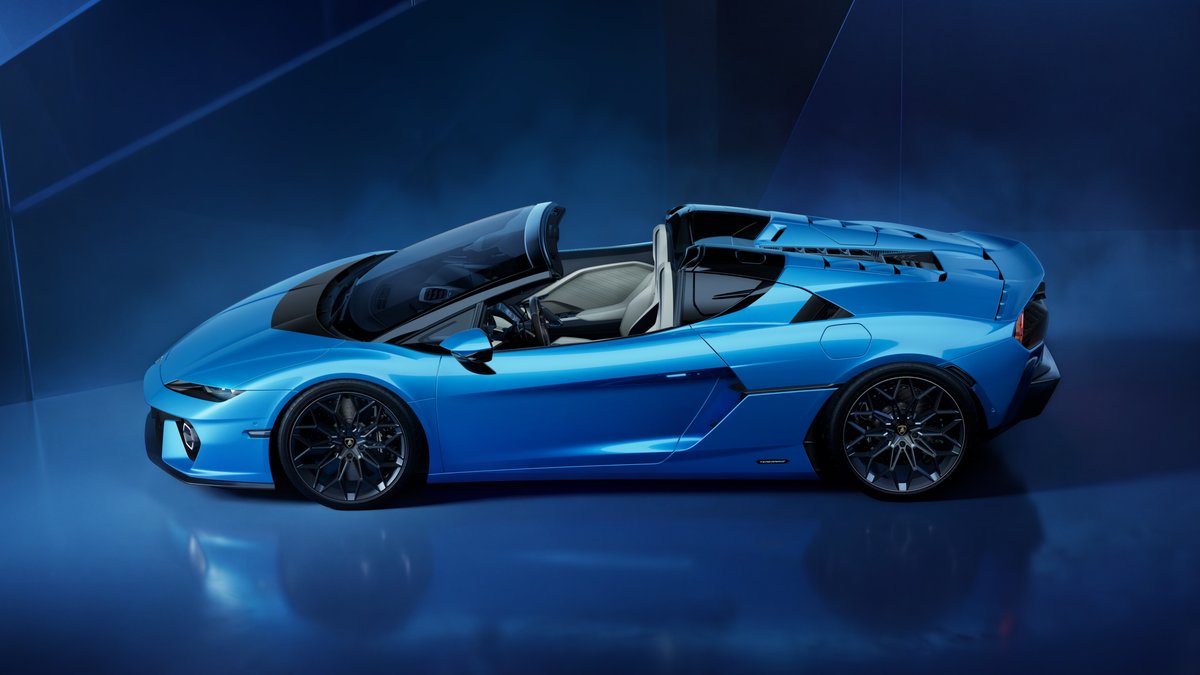
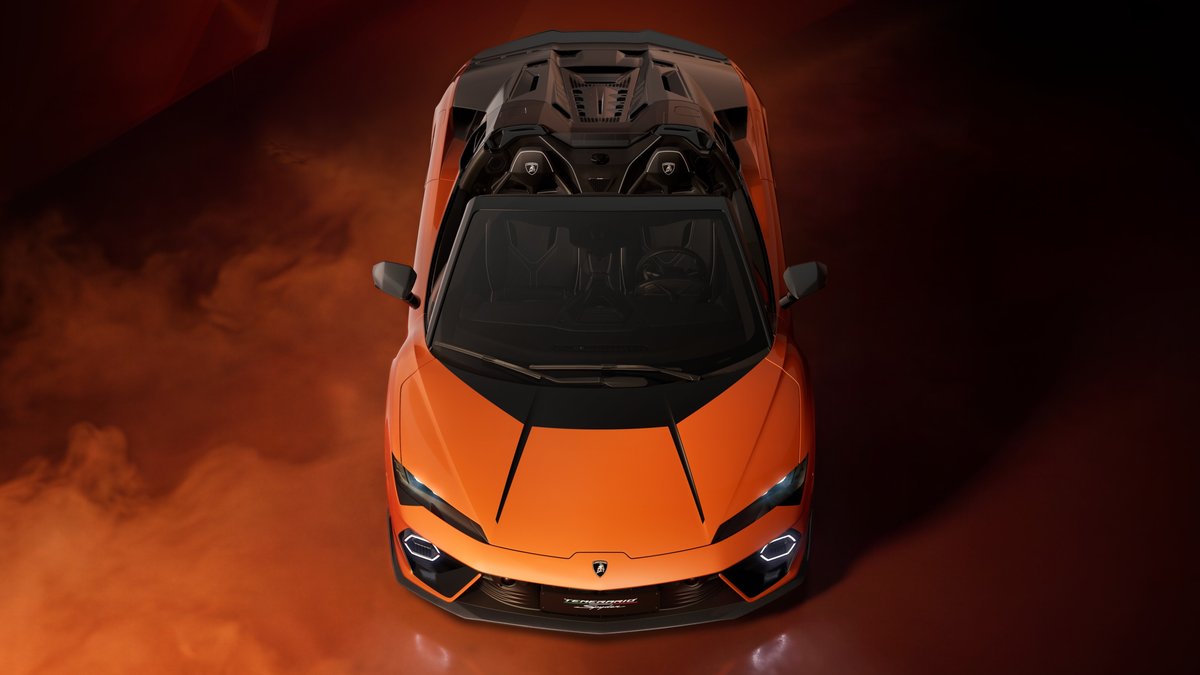
Lamborghini unveiled the Temerario Spyder in Sant’Agata Bolognese and Los Angeles, the first Spyder in the brand’s history with a retractable hard top instead of a fabric roof.
The open-top car keeps the full hybrid drivetrain of the Temerario coupé. Lamborghini quotes 920 CV, or 677 kW, which works out to roughly 907 horsepower on the American scale.
The company says the Spyder runs from 0 to 100 km/h in 2.8 seconds, from 0 to 200 km/h in 7.3 seconds, and reaches a top speed of 343 km/h, about 213 mph.
What the chief executive promised
Stephan Winkelmann, chairman and CEO of Automobili Lamborghini, framed the car as a second way to live with the same machine, not a softer version of the coupé.
-
REO founder Zach De Bernardi says he couldn’t buy the truck he wanted, so his revived brand will sell the Runabout from $21,500 with a manual gearbox, four-wheel drive and a 500,000-mile engine target

-
GWM Unveils New SUV with 223 HP, Nearly Double the Cargo Space, and Two Powertrain Options

-
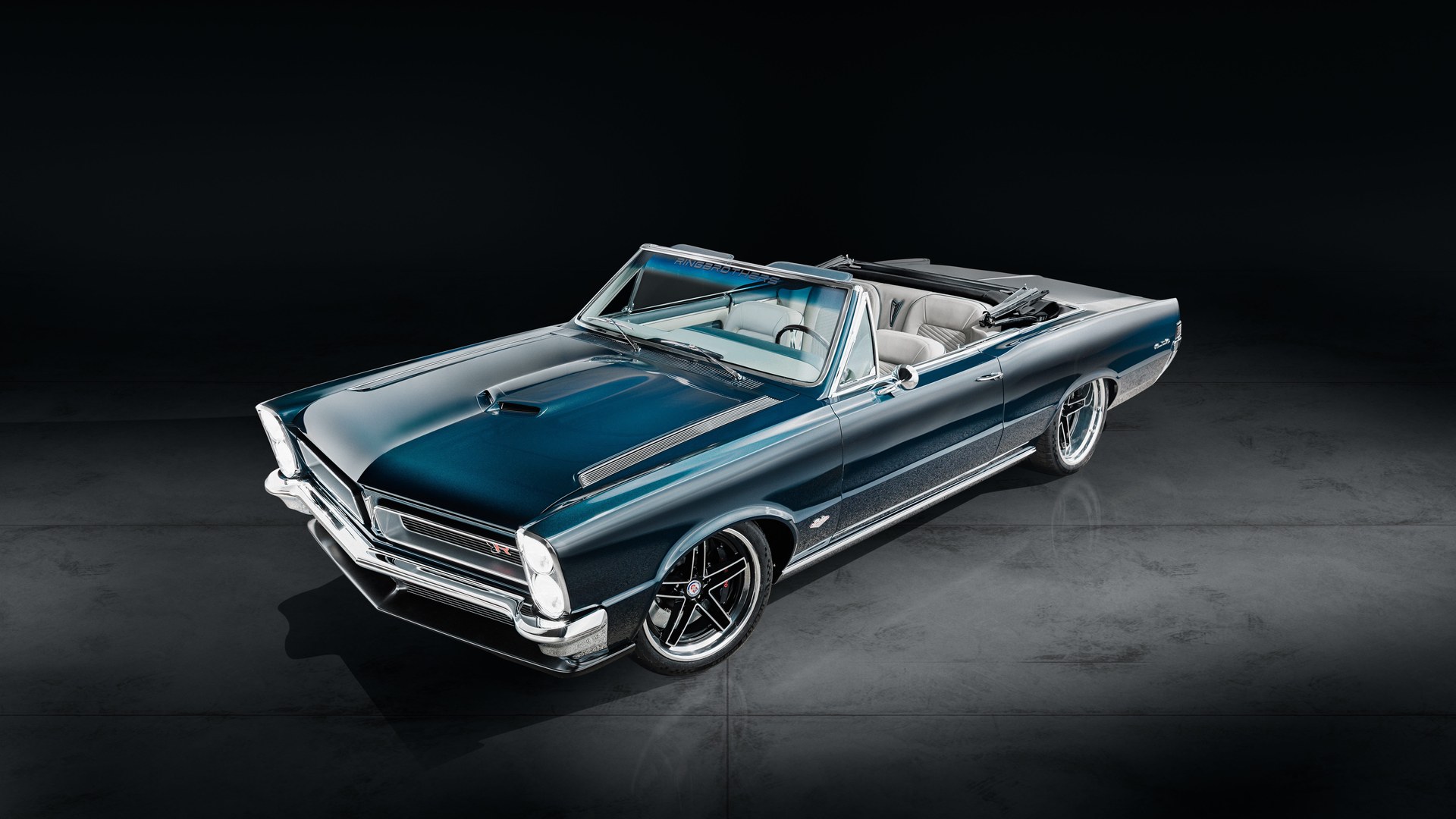
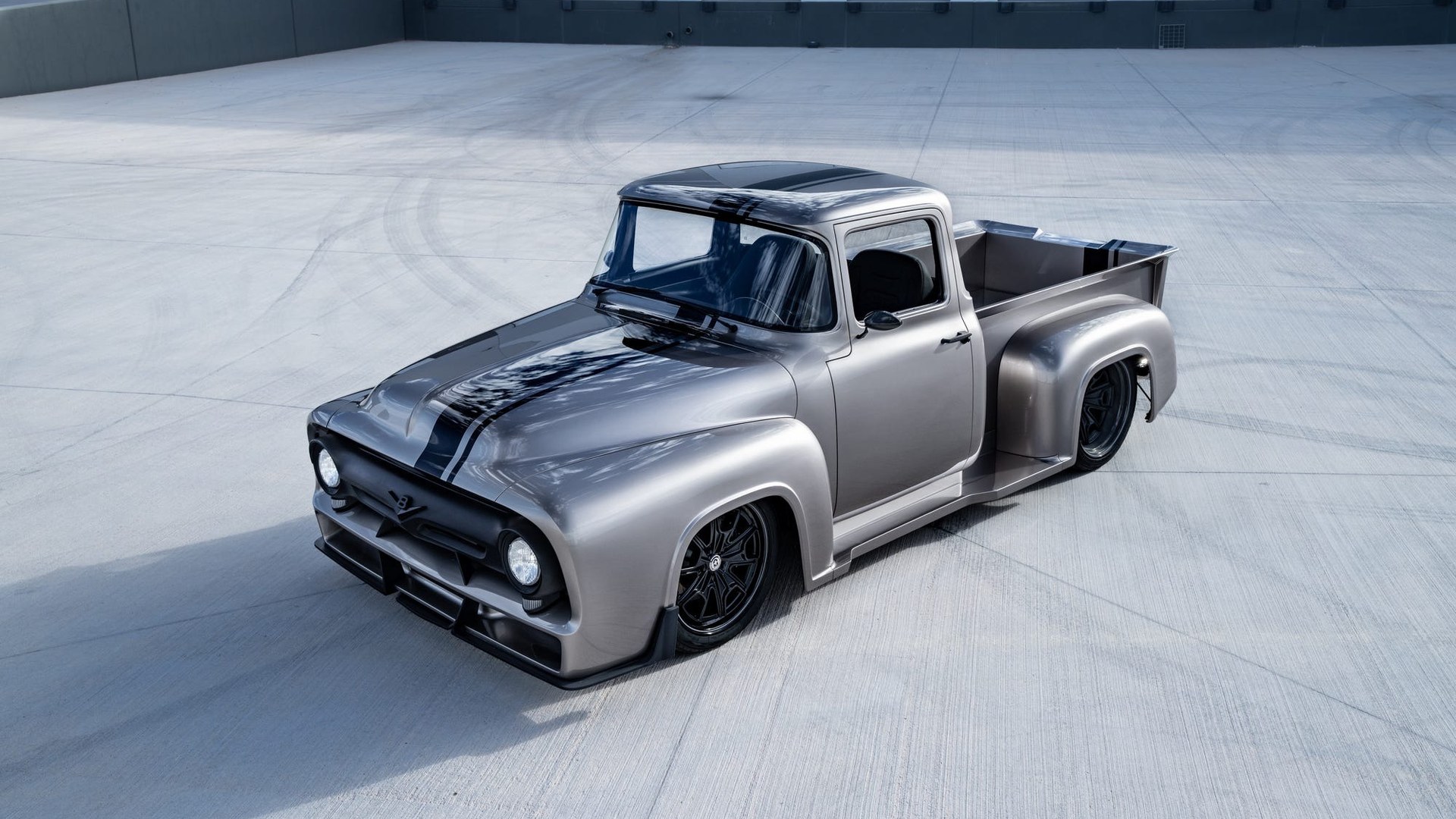
Fat Fender Garage founder Jason Noel says his team spent more than 15,000 hours turning a 1956 Ford F-100 into the GT/FX, an 800-horsepower supercharged pickup built to bring the attitude of a Ford GT to a classic truck
-
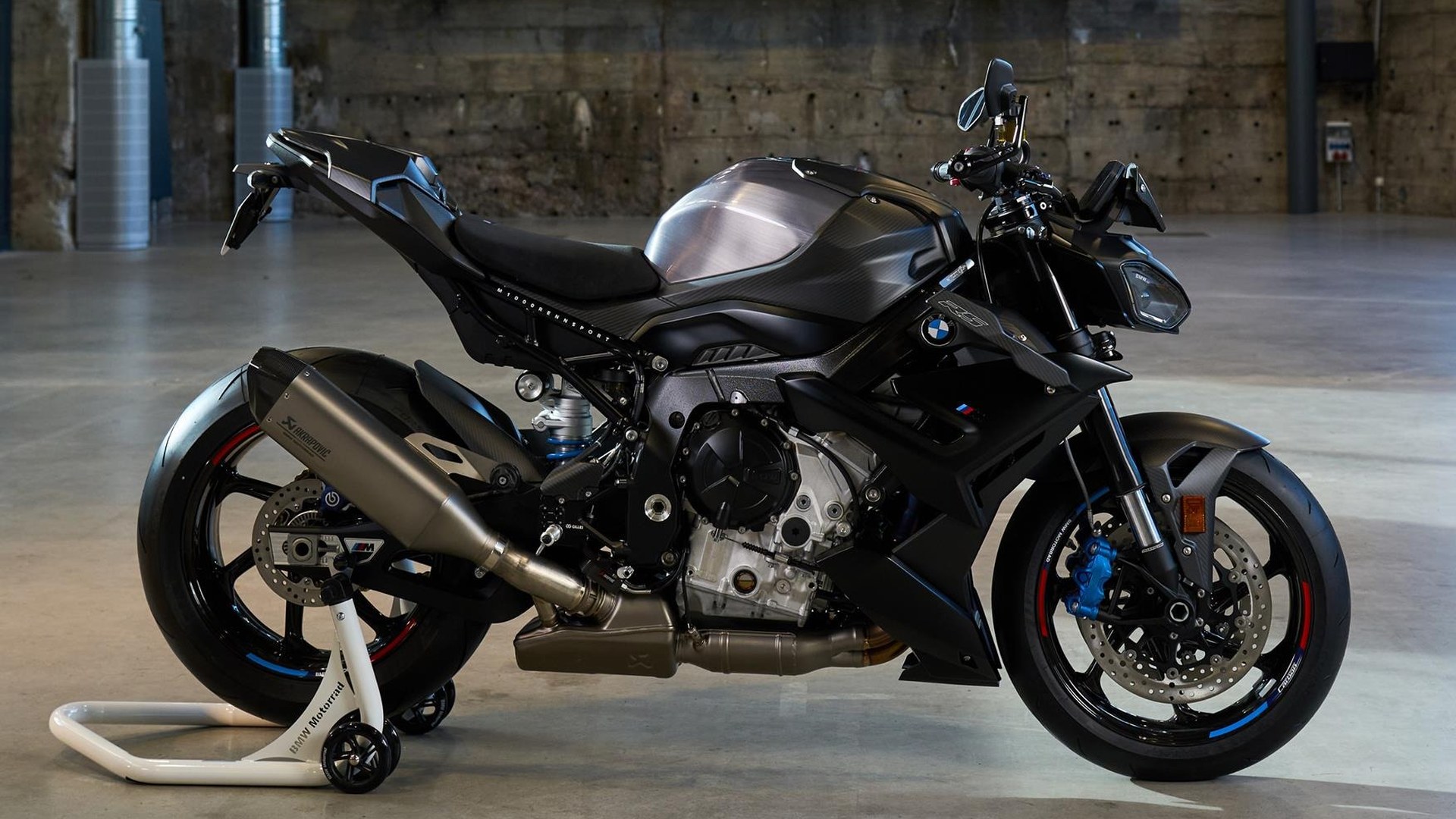
BMW Motorrad CEO Markus Flasch says the M 1000 RS, a 218-horsepower naked bike with the engine of the M 1000 RR superbike, is the world’s most powerful hyper naked, and only 1,000 will be built


“With 920 CV and the first retractable hard top ever fitted to one of our Spyders, we offer customers two different experiences of the same car, with no compromise in emotion, technology or driving pleasure,” he said.
He added that the Spyder “raises the bar still further for performance and driving dynamics”, while adding what he called the unique engagement of driving with the roof open.
A roof moved by ten electric motors
The hard top is fully electric. It uses ten electric actuators and a patented layout that stows the panels vertically behind the seats, so the car needs no electro-hydraulic circuit at all.
Because the roof folds upright and low, Lamborghini says the centre of gravity drops by 3 mm when the top is open compared with the closed car, and the weight distribution does not change.
An electronically adjustable rear window sits between the two occupants and the engine. Lowering or raising it changes how much air and how much V8 sound reaches the cabin.
Design director Mitja Borkert said the hardest part was fitting a complex roof mechanism without making it look like an add-on. “We did not simply want to take the roof off the coupé,” he said.
A V8 that spins to 10,000 rpm
The heart of the car is a 4.0-litre twin-turbo V8. On its own it delivers 800 CV, or 588 kW, and it revs to 10,000 rpm, a ceiling that rises to 10,250 rpm when Launch Control is engaged.
Lamborghini lists a 180-degree flat-plane crankshaft, titanium connecting rods and two turbochargers mounted inside the 90-degree V, running at up to 2.5 bar of boost pressure.
Three axial-flux electric motors complete the system. One sits at the rear, between the engine and the gearbox, and two drive the front axle, which gives the car electrified all-wheel drive.
Combined, the engine and motors produce the headline 920 CV and 800 Nm of torque. The company describes the sound as a crescendo dominated by a fourth-order harmonic all the way to 10,000 rpm.
Silent mode and drift mode
The driver can pick from 13 driving experiences, built by combining the Città, Strada, Sport, Corsa and Corsa ESC Off modes with Recharge, Hybrid and Performance battery strategies.
In Città mode, the Spyder can move on electric power alone, with up to 190 CV, or 140 kW. At the other extreme, a three-level Drift Mode manages controlled oversteer.
A stiffer body without a roof
Removing a fixed roof usually costs a car stiffness. Lamborghini says its all-aluminium spaceframe instead gains on the Huracán Spyder it replaces, with 6% more static torsional rigidity.
The company also lists 9% more dynamic bending stiffness and 6% more dynamic torsional rigidity. Compared with the Huracán EVO Spyder, it uses 50% fewer structural parts and 80% fewer heat-input welds.
More room for tall drivers
Inside, the cabin grows compared with the Huracán EVO Spyder. Legroom rises by 46 mm, headroom by 22 mm, and shoulder and elbow room by 9 mm.
Lamborghini says that is enough for occupants up to two metres tall. The seats get a three-level neck warmer for open-air driving in cooler weather, and the front luggage compartment holds 112 litres.
The suspension tuning, according to the brand, cuts secondary vibrations on uneven surfaces by 20%, a figure aimed at drivers who plan to use the car on ordinary roads.
Brakes and tyres for 343 km/h
Stopping power comes from the CCB Plus carbon-ceramic system. The front discs measure 410 by 38 mm and are gripped by 10-piston calipers, while the rear discs are 390 by 32 mm with four-piston calipers.
Bridgestone developed bespoke tyres for the car in 20-inch and 21-inch sizes, including Potenza Sport, a run-flat version, the track-focused Potenza Race and Blizzak 6 winter tyres.
Options that cut weight or add sound
An optional titanium exhaust from Akrapovič weighs 11.40 kg, which Lamborghini says is 12% lighter than the standard system. It comes with black tailpipes.
Buyers who prefer to hear music instead can order a 750-watt, seven-speaker Sonus faber sound system. The Ad Personam programme offers around 400 exterior colours, plus special harlequin finishes and Italian Tricolore liveries.
Fifty years of open-top Lamborghinis
The launch also marks 50 years of open-top series-production Lamborghinis. That line began in 1976 with the Silhouette and continued with the Jalpa, the Diablo Roadster, the Gallardo Spyder and the Huracán Spyder.
Every one of those cars relied on fabric tops or removable panels. The Temerario Spyder is the first to put a folding hard top on a model in that family.
What is still missing
The official release did not list a price, a delivery date or a final weight for the Spyder. Those figures will decide how far the open car sits above the Temerario coupé in the range.
For now, Lamborghini is betting that a roof that disappears in a vertical stack, a 10,000-rpm V8 and three electric motors can win buyers who once chose a fabric-top Huracán.
Would a hard top that folds away behind the seats be enough to make a 920 CV hybrid feel like a true open-air Lamborghini?